


When it comes to baby food, you need to be aware of choking hazards. Whole grapes, hot dogs, hard candies, nuts, and popcorn can easily block a baby’s airway. Always cut grapes lengthwise and into small pieces for safety. Additionally, serve food in a calm, supervised environment to reduce risks. Watch for signs of choking, like inability to cough or speak. To keep your little one safe, there’s more helpful information on creating a choking-free mealtime.
Key Takeaways
- Whole grapes must be cut lengthwise and quartered to prevent airway blockage for children under four.
- Hot dogs should be sliced lengthwise and into small pieces to minimize choking risks.
- Avoid hard candies, nuts, and seeds until the child is older due to chewing difficulties.
- Supervise mealtimes closely to quickly address any choking hazards.
- Always prepare foods into small, manageable pieces appropriate for the child’s age and chewing ability.
Understanding Choking Hazards for Babies
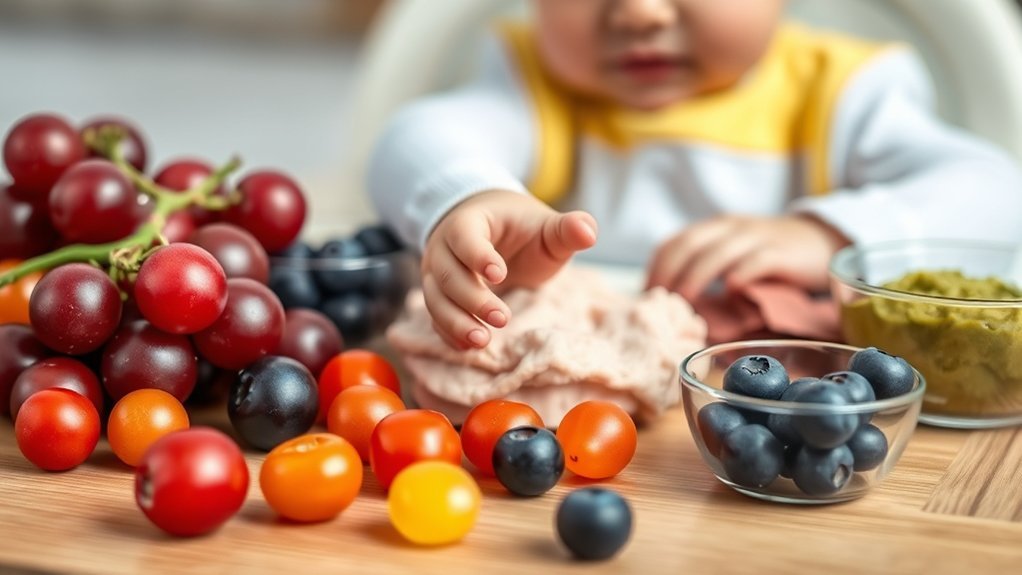
Understanding the choking hazards for babies is important, especially since choking is a leading cause of injury and death among young children.
To guarantee infant safety, be aware that foods like whole grapes, hot dogs, and hard candies can pose significant risks. Introduce solid foods only when your baby can sit up well and has good head control, typically around six months.
Be cautious with foods like whole grapes and hot dogs; introduce solids only when your baby can sit up well.
Proper food preparation is essential; cut hot dogs lengthwise and into small pieces, and quarter grapes to minimize choking hazards.
Supervision during meals is critical, so eliminate distractions and regularly check for small objects nearby that could also pose risks.
How to Create a Safe Eating Environment
Creating a safe eating environment for your baby is essential in preventing choking incidents. Follow these guidelines to guarantee safety during mealtime:
- Safe Seating: Always seat your baby upright in a high chair or booster seat to promote safe swallowing.
- Distraction Reduction: Minimize noise and movement around the eating area to help your baby focus on chewing and swallowing.
- Supervision: Keep a close eye on your little one while they eat to address any potential hazards quickly.
- Food Preparation: Cut foods into small, manageable pieces that are age-appropriate to facilitate safe chewing.
Regularly check the eating space for small objects that could pose a choking risk.
These steps can greatly enhance your baby’s safety during meals.
Top 10 Foods to Avoid for Baby Safety

When it comes to keeping your baby safe during mealtime, knowing which foods to avoid is essential. For effective choking prevention, steer clear of whole grapes; always cut them lengthwise and quarter them.
Hot dogs also pose a risk—slice them lengthwise and into small pieces for kids under four. Hard and gummy candies can easily block your baby’s airway, so avoid these altogether.
Nuts and seeds are healthy but should wait until your child is older, as they can’t chew effectively. Finally, be cautious with raw vegetables; make sure they’re prepared properly and cut into small pieces.
Embracing baby led weaning? Stick to soft, manageable foods to guarantee a safer and enjoyable eating experience.
Why Are Whole Grapes Dangerous for Infants?
Whole grapes can be a serious choking hazard for infants because their round shape and slippery texture can easily block a child’s airway.
Infants might struggle to chew them properly, especially with the skin potentially separating from the fruit.
To keep your little one safe, always cut grapes lengthwise and quarter them before serving.
Risk of Airway Blockage
Why are whole grapes regarded such a significant choking hazard for infants? Their round shape and size can easily block a child’s airway, posing serious risks for grape choking. Here are key reasons to reflect on:
- The skin can separate from the fruit during chewing, creating a slippery surface.
- Whole grapes are the perfect size to fit directly into an infant’s airway.
- Infants often lack the chewing skills necessary to manage whole grapes effectively.
- Safety guidelines recommend cutting grapes for children under four to minimize airway blockage.
Understanding these risks enhances airway safety, empowering you to make informed choices for your child’s diet.
Always prioritize proper preparation to mitigate choking hazards and guarantee your little one enjoys their food safely.
Proper Preparation Methods
Proper preparation of grapes is crucial to guarantee infants can enjoy them safely. Whole grapes are particularly dangerous due to their round shape and slippery skin, which can easily block an infant’s airway.
To minimize choking risks, always cut grapes lengthwise and quarter them before serving. Removing the skin further reduces hazards associated with food texture, making them easier to chew and swallow.
Remember, serving size matters too; small, manageable pieces guarantee that your child can handle them without difficulty. For children under four years old, proper food preparation is critical, as they may not have developed the necessary chewing skills.
Awareness and careful preparation can make mealtime a safer, more enjoyable experience for your little ones.
How to Serve Hot Dogs Safely

When serving hot dogs to young children, it’s essential to cut them lengthwise and then into small pieces to minimize choking risks.
Avoid serving them in a way that encourages large bites, like cutting into strips, as this can increase danger.
Always supervise your child while they eat to guarantee they chew properly and stay safe.
Proper Cutting Techniques
Cutting hot dogs correctly is essential to keep young children safe during mealtime. Follow these safety guidelines to minimize choking hazards:
- Cut lengthwise: Slice the hot dog down the middle to expose the inner portion.
- Create bite-sized pieces: After cutting lengthwise, chop the hot dog into small, manageable pieces.
- Avoid strips: Don’t cut hot dogs into strips, as this can lead to larger bites that are hard for toddlers to chew and swallow.
- Supervise eating: Always watch young children while they eat to quickly address any choking incidents.
Educating caregivers about proper cutting techniques is vital to promoting safety during mealtime and ensuring that children enjoy their food without risk.
Safe Serving Methods
Serving hot dogs safely is just as important as cutting them correctly. Always cut hot dogs lengthwise into quarters, then slice them into small, manageable pieces to minimize choking risks for young children.
Avoid serving whole hot dogs; their shape can easily block a child’s airway if not prepared properly. For children under four, it’s vital to prepare hot dogs with care, as whole ones pose a high choking hazard.
Supervise your child closely while they eat, ensuring they chew properly and don’t swallow large pieces. Consider mixing hot dogs with other foods or mashing them to create safer food combinations.
Adjust serving sizes to suit your child’s age and eating ability, promoting a safer dining experience.
Common Snack Foods That Pose Choking Risks
Many common snack foods can pose serious choking hazards for young children, especially those under four years old.
To keep your little ones safe, be mindful of these risky snacks:
- Whole grapes – Their shape allows them to easily block airways.
- Hard candies – They’re difficult to chew and can stick in the throat.
- Sticky snacks (gummy candies, marshmallows) – These can adhere to the throat, obstructing swallowing.
- Popcorn – Its texture can be tricky for toddlers, increasing choking risks.
Instead of these, consider snack alternatives with safe textures, like cut fruits, soft cheeses, or yogurt.
Always supervise your child during snack time to guarantee their safety and enjoyment!
How to Prepare Safe Foods for Self-Feeding
Ensuring your child’s safety during mealtime goes beyond avoiding risky snacks. To prepare safe foods for self-feeding, focus on using effective self-feeding techniques.
Cut foods into small, manageable pieces—ideally no larger than a pea—to minimize choking risks. Steer clear of round and hard foods like whole grapes and nuts, as these can easily obstruct your child’s airway.
For softer food textures, mash or puree fruits and vegetables, making them easier to handle and chew. Always serve meals while your child is seated, promoting focus and reducing distractions that could lead to choking.
Regularly consult guidelines from reputable sources like the USDA WIC to stay informed about safe food preparation for infants and young children.
How to Recognize Signs of Choking
How can you tell if your child is choking? Recognizing the signs promptly is essential for choking prevention and ensuring an effective emergency response. Look for these indicators:
- Inability to cough, speak, or make sounds, suggesting a blocked airway.
- Distress signals like panic, gasping for air, or clutching their throat.
- A change in skin color, turning blue or pale, indicating a lack of oxygen.
- Unresponsiveness, which requires immediate action to prevent brain damage or death.
If you notice any of these signs, act quickly.
Educating yourself and caregivers on these symptoms can notably improve response times in emergencies, ensuring your child’s safety during mealtime.
Building Confidence in Eating: Gradually Introducing Safe Foods
Creating a safe eating environment is essential for your child’s development and confidence at mealtime. Gradually introducing safe foods helps your baby build chewing skills and learn to self-feed effectively, reducing choking risks.
Start with soft, easily mashable foods like pureed fruits and vegetables, then progress to finely chopped or soft-cooked pieces as they gain experience. Encourage self-feeding by offering foods in manageable shapes and sizes, such as small, soft pieces or finger foods.
Regularly exposing them to various food textures and flavors enhances their palate while boosting chewing abilities. Consistent supervision during mealtimes and a calm atmosphere will support a positive experience, helping your baby navigate new foods safely and confidently.
Frequently Asked Questions
At What Age Can Babies Safely Start Eating Solids?
You can safely start introducing solids around six months, aligning with baby milestones. Begin with smooth purees and gradually progress to more textured foods, ensuring a solid introduction while monitoring for any potential choking hazards.
How Can I Tell if a Food Is Safe for My Baby?
To guarantee your baby’s safety, choose soft, squishy textures like mashed bananas or pureed veggies. Watch for choking risk indicators, such as gagging or difficulty swallowing. Trust your instincts; your baby’s safety comes first.
What Should I Do if My Baby Chokes?
If your baby chokes, act quickly. Call for help, perform back blows, or chest thrusts if needed. Familiarize yourself with first aid techniques and prioritize choking prevention to keep your child safe during mealtime.
Are Homemade Baby Foods Safer Than Store-Bought?
Homemade baby foods can be safer, but it depends on preparation. You’ve got homemade nutrition’s freshness versus store-bought convenience. Always make certain you’re selecting appropriate textures to avoid choking hazards, regardless of your choice.
Can Teething Affect My Baby’s Ability to Eat Safely?
Teething symptoms can impact your baby’s eating readiness. Discomfort might lead to reluctance in trying new foods or chewing effectively. Monitor their reactions and adjust textures to guarantee safe eating during this developmental phase.
Conclusion
In summary, staying informed about choking hazards is essential for keeping your baby safe during mealtime. By avoiding high-risk foods and preparing safe options, you can help your little one develop healthy eating habits without fear. Remember, an ounce of prevention is worth a pound of cure. Keep a watchful eye for signs of choking, and create a safe environment that encourages confidence in self-feeding. Your vigilance now will pave the way for enjoyable and safe dining experiences in the future.