


Starting your baby on solid foods around 6 months is essential for growth. Look for signs of readiness like sitting up with support and showing interest in food. Begin with single-ingredient purees, such as iron-fortified cereals and pureed fruits or veggies. Introduce common allergens like eggs and peanuts slowly, waiting a few days to observe reactions. As your baby grows, shift to soft finger foods and diversify their diet. There’s much more to explore about age-specific feeding practices.
Key Takeaways
- Start introducing solid foods around 6 months with single-ingredient purees and monitor for allergic reactions.
- Recommended first foods include iron-fortified cereals, pureed fruits, and vegetables, introduced one at a time.
- For 10 to 12-month-olds, provide a balanced diet rich in iron, calcium, and a variety of fruits and vegetables.
- Incorporate safe finger foods like soft, cooked vegetables, ripe fruits, and small protein pieces while avoiding choking hazards.
- Encourage diverse flavors early and engage in regular family meals to build good eating habits.
Understanding When to Start Solid Foods
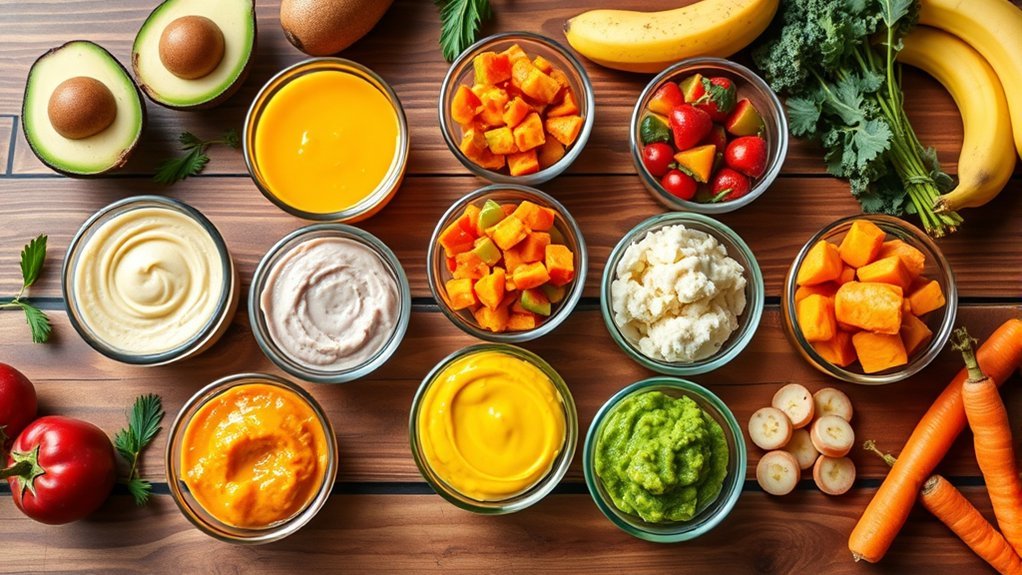
As your baby approaches 6 months, you’ll notice signs that they’re ready to start solid foods, which can be an exciting milestone.
Following solid food guidelines is essential to guarantee you’re supporting their developmental milestones. Until this age, exclusive breastfeeding or formula feeding is recommended to provide the primary nutrition they need.
Following solid food guidelines is crucial for supporting your baby’s developmental milestones and ensuring they receive essential nutrition.
Look for key indicators such as your baby’s ability to sit up with support, control their head and neck, and transfer food from spoon to throat.
When introducing solids, start with single-ingredient purees, allowing 3-5 days between new foods to check for allergies.
Always consult your pediatrician before starting solids, as they can advise on individual readiness and any necessary supplements like vitamin D and iron.
Signs Your Baby Is Ready for Solids
When your baby starts showing interest in food around 6 months, it’s a clear sign they’re ready to begin their journey with solids.
Look for feeding cues like opening their mouth when food is offered or swallowing rather than pushing it out with their tongue. By this age, they should also be able to sit up with support and have good head and neck control. Doubling their birth weight and reaching at least 13 pounds indicates readiness too.
As they grasp small objects and transfer food to their mouth, they’re exploring self-feeding.
Best First Solid Foods for Your 6-Month-Old Baby
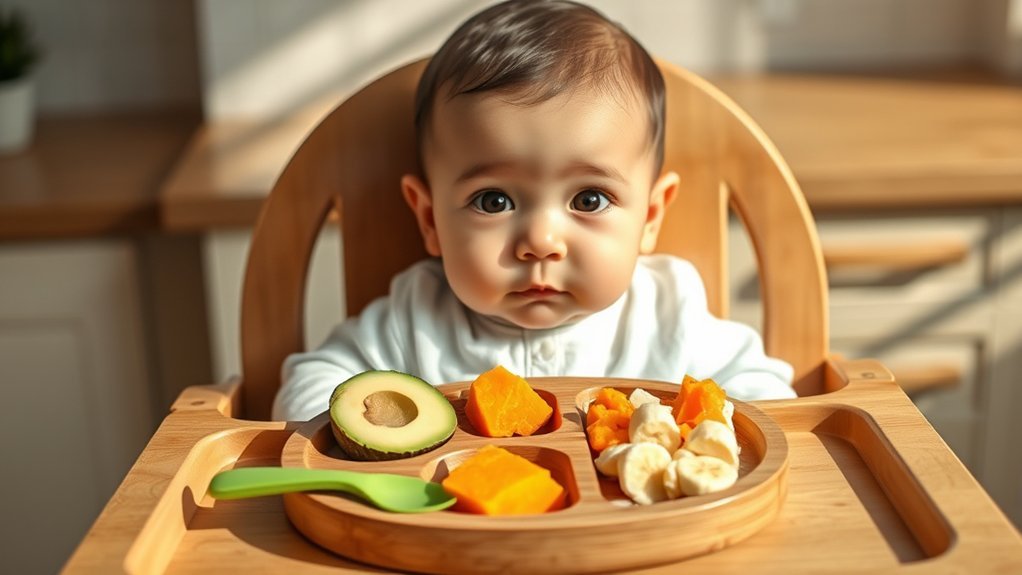
As your baby reaches 6 months, it’s time to introduce solid foods, starting with single-ingredient purees.
Iron-fortified infant cereals, pureed fruits like apples or pears, and vegetables such as carrots or sweet potatoes are excellent choices.
Remember to introduce each new food individually and wait a few days to watch for any allergic reactions.
Single-Ingredient Purees
Introducing single-ingredient purees to your 6-month-old baby is an exciting milestone that lays the foundation for their journey into solid foods.
These purees offer numerous single ingredient benefits, making it easier for you to monitor for allergies and guarantee peak nutrition. Here are some popular options for puree preparation:
- Sweet potatoes
- Carrots
- Peas
- Apples
Start with one new puree at a time, waiting 3 to 5 days before introducing another. This cautious approach allows you to observe any adverse reactions.
Make sure the purees are smooth and suitable for infants, avoiding added sugars and salt. As your baby’s swallowing skills improve, you can gradually introduce thicker textures to enhance their eating experience!
Iron-Fortified Cereals
Iron-fortified cereals are an excellent choice for your 6-month-old baby, providing essential iron needed for healthy growth and development. These cereals boost iron absorption and can be easily mixed with breast milk or formula for a smooth texture. Start with single-grain cereal varieties, like rice or oatmeal, as they’re less allergenic and easy to digest. Remember to introduce one new food at a time and wait 3-5 days to monitor for any allergic reactions.
| Cereal Type | Iron Content (mg) | Best Mixed With |
|---|---|---|
| Rice Cereal | 4.5 | Breast Milk |
| Oatmeal Cereal | 4.0 | Formula |
| Barley Cereal | 3.5 | Water or Milk |
| Multigrain Cereal | 5.0 | Fruit Purees |
| Wheat Cereal | 4.0 | Vegetable Purees |
Common Allergens: When and How to Introduce Them
Introducing common allergens like eggs, peanuts, and dairy around 6 months can help reduce the risk of allergies.
Make sure to introduce one allergenic food at a time and wait 3 to 5 days before trying another to watch for any reactions.
Always consult your pediatrician, especially if there’s a family history of food allergies.
Timing For Allergen Exposure
As you begin the weaning process, it’s crucial to take into account the timing of allergen exposure to help reduce the risk of food allergies in your baby.
Introducing common allergens early—ideally between 4-6 months—can be beneficial. Here are some guidelines to follow:
- Start with small amounts of single-ingredient purees.
- Introduce allergen types like peanuts, eggs, and dairy one at a time.
- Wait 3-5 days after introducing a new allergenic food to monitor for reactions.
- Consult with a pediatrician for high-risk infants on personalized exposure methods.
Safe Allergen Preparation Methods
When you’re ready to introduce common allergens, it’s important to know the best preparation methods for safety and nutrition.
Start with single-ingredient foods like peanut butter thinned with water or mixed into cereals, avoiding whole peanuts to prevent choking. For eggs, scrambled or cut into small pieces are great options once your baby is ready for solids, providing essential protein.
Introduce these foods between 4-6 months, waiting 3-5 days between new allergens for proper allergen testing. Always consult your pediatrician, especially if there’s a family history of food allergies, to verify you’re using safe preparation techniques.
Transitioning to Textures: What to Offer by 8 Months
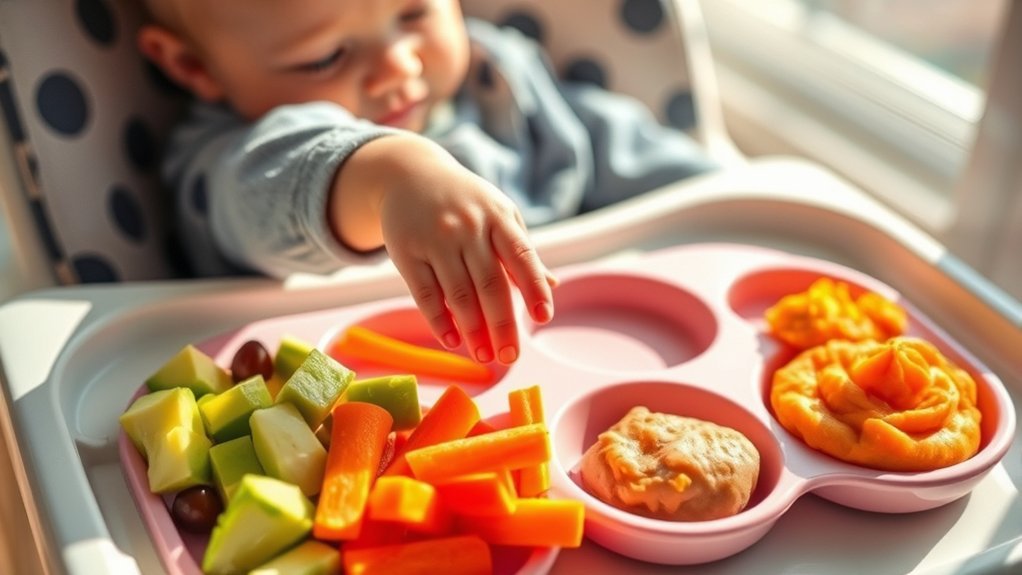
By 8 months, your baby’s palate is ready for a more exciting culinary adventure, shifting from smooth purees to textured foods that encourage exploration.
Introducing a variety of textures not only enhances their eating experience but also supports their development. Here are some great options to take into account:
Exploring diverse textures enriches your baby’s eating journey while fostering vital developmental skills.
- Small pieces of ripe banana or avocado for easy grasping
- Cooked sweet potato or carrots, cut into manageable bites
- Mashed or finely chopped fruits and vegetables
- Soft cooked meat, poultry, or beans for protein
These texture exploration opportunities will promote self-feeding techniques and help your baby develop essential chewing skills.
Make sure food is cut small to prevent choking while aiming for balanced meals with grains, fruits, vegetables, and proteins.
Enjoy this delightful stage!
What Nutrients Does Your 10 to 12-Month-Old Need?
At 10 to 12 months, your baby needs a balanced diet rich in iron, calcium, and a variety of fruits and vegetables to support their rapid growth and development.
Aim for 24-32 ounces of breast milk or formula daily, along with solid foods like iron-fortified cereals and protein sources.
Essential Nutrients Overview
As your baby shifts into the 10 to 12-month stage, ensuring a balanced diet rich in essential nutrients becomes critical for their growth and development.
At this age, focus on these key nutrient sources:
- Iron and Zinc: Found in meats, iron-fortified cereals, and legumes for growth and immune support.
- Calcium: Vital for bone development; aim for 700 mg daily from dairy or fortified alternatives.
- Vitamin D: Essential for calcium absorption; consider supplements if dietary sources are lacking.
- Variety of Foods: Include fruits, vegetables, proteins, and starches to cover a broad spectrum of vitamins and minerals that support developmental milestones.
Daily Serving Recommendations
Ensuring your 10 to 12-month-old gets the right nutrients is essential for their growth and development. Aim for 24-32 ounces of breast milk or formula daily as their primary nutrition source.
For solid foods, focus on meal frequency with portions of about 5-8 tablespoons of dry infant cereal, mashed fruits, bite-sized veggies, and small protein bits like meat or beans. Incorporate ½ to 1 cup of soft starches each day to create a balanced diet.
Healthy snacks like yogurt, cottage cheese, toast, and crackers can complement meals and foster good eating habits. Prioritize nutrient-rich foods high in iron, zinc, and calcium to support your little one’s thriving growth and overall health.
Safe Finger Foods: What Works and What Doesn’t
When you’re introducing finger foods to your baby around 8 months, it’s important to choose options that are safe and easy to manage.
Following finger food guidelines can help you make the right safe food choices. Here are some great options:
Following finger food guidelines ensures you choose safe and manageable options for your baby’s mealtime.
- Soft, cooked vegetables like sweet potatoes and carrots
- Small pieces of ripe fruits such as bananas and avocados
- Soft toast or bread cut into manageable sizes
- Soft protein sources like scrambled eggs or cooked chicken
Avoid hard, small, or round items that could pose choking hazards.
Always supervise your little one during mealtimes, as they may still struggle with textures.
Gradually introduce new foods, waiting 3-5 days to monitor for any allergic reactions.
How to Introduce New Foods and Track Reactions
Introducing new foods to your baby can be an exciting yet cautious endeavor, especially as you aim to identify any potential allergies. Start with single-ingredient purees and introduce them one at a time, waiting 3 to 5 days before adding another. This allows for effective reaction monitoring.
Keep a food log to track your baby’s responses, noting any signs of allergies or digestive issues. If your baby rejects a food, try again after a few days, as they may need multiple exposures to accept new flavors.
Begin with 1-2 teaspoons and gradually increase to 1-2 tablespoons as your baby becomes more comfortable. Always consult your pediatrician before introducing potentially allergenic foods for safety and timing.
How to Build Good Eating Habits for Your Baby
Building good eating habits for your baby starts with offering a variety of healthy foods early on, as this encourages their palate to embrace diverse flavors and textures.
Encouraging your baby’s palate with a variety of healthy foods early on fosters diverse flavor appreciation.
To foster these habits, consider the following:
- Engage in meal planning to include nutrient-rich foods.
- Create regular family meals where your baby can observe and participate.
- Monitor fullness cues and allow self-feeding to help them recognize hunger signals.
- Gradually introduce common allergens like eggs and peanuts for adventurous flavor exploration.
Resources for Parents: Tools and Support for Feeding Decisions
Steering through the world of baby feeding can feel overwhelming, but numerous resources are available to support you in making informed decisions.
BabyCenter is an excellent starting point, offering digital tools like a Due Date Calculator and Baby Growth Chart that help you track feeding milestones.
Explore thousands of articles that provide evidence-based practices, addressing common feeding challenges you might face. Their community platform fosters moderated discussions, allowing you to ask questions and receive expert insights on pediatric care and nutrition.
Additionally, you’ll find templates for meal planning and tracking food introductions.
Don’t forget to schedule regular check-ups with your pediatrician to discuss your baby’s unique nutritional needs and receive tailored advice for ideal growth and development.
Frequently Asked Questions
How Do I Know if My Baby Dislikes a Food?
You’ll know your baby dislikes a food if they turn their head, spit it out, or refuse to taste it. Observing these reactions helps you understand their baby food preferences during taste testing.
Can I Mix Different Foods Together for My Baby?
Mixing different foods together for your baby’s meals is great! Research shows that 90% of infants enjoy flavor exploration. Try food combinations like sweet potatoes and peas to enhance nutrition and introduce exciting tastes.
What Should I Do if My Baby Refuses to Eat?
If your baby refuses to eat, try different mealtime strategies. Explore varied textures and flavors to cater to their baby food preferences. Stay patient; repeated exposure often encourages acceptance and curiosity about new foods.
How Can I Ensure My Baby Is Getting Enough Iron?
Imagine a tiny knight, forging strength with iron-rich foods like spinach and lentils. Pair these with vitamin C sources to boost iron absorption, ensuring your little one’s health thrives like a blossoming garden, full of life.
Is Homemade Baby Food Better Than Store-Bought Options?
Homemade baby food offers nutritional benefits tailored to your baby’s needs, while store-bought options provide convenience. You can choose homemade for freshness and control or store-bought for quick meals; both have their advantages depending on your lifestyle.
Conclusion
As you begin this journey of introducing solid foods, think of each new taste as a stepping stone on your baby’s path to healthy eating. Just like nurturing a garden, patience and attention are key. By providing a variety of flavors and textures, you’re planting the seeds for lifelong healthy habits. Remember, every bite is a building block for their future. Stay informed and supportive, and watch your little one flourish in their culinary adventure!