


When baby food separates after freezing, it’s due to water expansion disrupting the cell structure. To fix the texture, blend the thawed mixture thoroughly, and consider gentle heating to enhance integration. Adding a small amount of water, breast milk, or formula can further improve consistency. Avoid refreezing thawed food to guarantee safety and quality. For more insight on best practices and ingredient choices for homemade baby food, you’ll find valuable tips ahead.
Key Takeaways
- Blend the thawed baby food to restore a smooth consistency and reintegrate separated ingredients.
- Gently heat the mixture to improve texture and encourage ingredient re-integration.
- Stir thoroughly after blending to ensure an even and well-mixed meal.
- Add a small amount of water, breast milk, or formula to enhance texture during blending.
- Microwaving the thawed puree briefly before blending can make mixing easier.
Understanding Why Baby Food Separates After Freezing

When you freeze baby food, the process can disrupt its cell structure, leading to separation and texture changes upon thawing. This disruption primarily occurs due to the expansion of water in purees, which can create a grainy or lumpy texture after defrosting.
To mitigate these issues, consider your freezing techniques and ingredient quality. High-quality, fresh ingredients will help maintain the integrity of the food during freezing, while starchy vegetables, like regular potatoes, are notorious for not freezing well, often resulting in gelatin-like chunks.
Understanding these factors empowers you to make better choices when preparing and freezing baby food, ultimately ensuring a smoother experience for your little one when it’s time to eat.
How to Fix Separated Baby Food After Thawing
When you find your baby food separated after thawing, you can easily restore its consistency.
Start by blending the mixture for a smooth texture, then gently heat it to improve the overall quality.
Finally, stir thoroughly to reintegrate any components, ensuring your baby enjoys a well-mixed meal.
Blend For Smooth Consistency
To restore the smooth consistency of thawed baby food, blending is an effective method that re-integrates any separated ingredients.
Employing blender techniques, like using a high-speed blender or food processor, helps break down lumps and guarantees uniform texture throughout the puree. If blending alone doesn’t achieve the desired puree consistency, try adding a small amount of water, breast milk, or formula. This addition can help further smooth out the mixture.
Additionally, microwaving the thawed puree briefly before blending can warm it up, making it easier to mix and enhancing the overall texture.
Always stir the blended puree well to guarantee even distribution of ingredients before serving to your baby, ensuring a nourishing meal.
Heat To Restore Texture
Heating thawed baby food is an effective way to restore its original texture, as warmth encourages the ingredients to re-integrate. You can use various heating techniques to achieve this, such as the microwave on the “defrost setting” or a saucepan over low heat. Avoid overheating to prevent hot spots. Adding a small amount of liquid like water or milk during the warming process can promote a smoother texture.
| Heating Method | Tips |
|---|---|
| Microwave | Use the defrost setting; stir well. |
| Saucepan | Warm over low heat; add liquid for smoothness. |
| Re-purée | Blend again after heating to eliminate lumps. |
| Stirring | Mix thoroughly post-heating for consistency. |
Stir To Reintegrate Mixture
After warming your thawed baby food, stirring the mixture is key to reintegrating any ingredients that may have separated during freezing.
Utilize effective stirring techniques, like using a whisk or spoon, to break down lumps formed in the freezing process. This gentle mixing helps restore the original consistency, making the food more palatable for your little one.
It’s important to heat the baby food slightly before stirring, as warmth can enhance the blending of ingredients. If separation persists, consider employing reintegration methods like re-blending the mixture in a food processor or blender.
This can greatly improve the texture, ensuring your baby enjoys every bite without the unpleasantness of separation.
Ingredients That Lead to Texture Problems in Frozen Baby Food
When you freeze baby food, certain ingredients can cause significant texture problems.
Starchy vegetables like regular potatoes often result in graininess, while high water content foods may expand and disrupt the puree’s structure.
Understanding these factors and experimenting with ingredient pairings can help you achieve a smoother consistency in your frozen baby food.
Starchy Vegetables Issues
Although starchy vegetables like regular potatoes are often used in homemade baby food, they can lead to significant texture issues once frozen. The high starch content in these vegetables often results in graininess and lumps when thawed, creating an unappetizing consistency.
Even cooking methods like steaming or baking, which help retain nutrients, don’t fully prevent these texture issues. To improve the texture of thawed purees, blending them can restore a smoother consistency, but it’s not a foolproof solution.
For a more reliable option, consider using low-starch vegetables, such as carrots or squash, which minimize separation and maintain a more pleasing texture in your frozen baby food. This choice can liberate you from the frustration of dealing with undesirable textures.
High Water Content
High water content ingredients can also pose significant challenges for frozen baby food, complicating the texture of your purees. Foods like cucumbers and watermelon contain high moisture levels, leading to separation and undesirable texture changes upon freezing.
The expansion of water disrupts the cell structure, resulting in a less appealing consistency after thawing. Starchy vegetables, too, can create grainy textures due to their natural starches forming gelatin-like chunks.
To address these issues, you might need to use specific freezing techniques, such as additional blending or gentle heating after thawing, to reintegrate separated components.
To minimize texture problems, consider using low-water content ingredients like carrots and sweet potatoes, which freeze better and maintain a smoother texture.
Ingredient Pairing Considerations
Choosing the right ingredients for your frozen baby food is essential, as certain combinations can lead to undesirable textures that affect the final product. Starchy vegetables like regular potatoes can create graininess, while pairing them with non-starchy options, such as sweet potatoes and peas, helps achieve texture balance. High-nitrate vegetables like spinach and beets should be avoided to prevent further texture issues.
| Starchy Ingredients | Non-Starchy Ingredients | Recommended Liquid |
|---|---|---|
| Potatoes | Peas | Broth |
| Sweet Potatoes | Carrots | Milk |
| Beets | Green Beans | Water |
Experimenting with liquid additions can also help restore desired texture after thawing.
Best Practices for Freezing Your Homemade Baby Food
When you freeze homemade baby food, employing best practices can greatly enhance its quality and safety. Start with careful ingredient selection, using high-quality, fresh produce. Blend your mixture until smooth to achieve an ideal texture.
Adopt effective freezing techniques by storing the food in airtight containers, ensuring minimal air or headspace to prevent freezer burn. For convenience, consider using ice cube trays to create individual 1-ounce servings, which can then be transferred to freezer bags for efficient storage.
Freeze your purees quickly after preparation to limit microorganism growth and maintain flavor and nutrients. Finally, label each container with preparation dates, and aim to consume the food within 1-3 months for peak taste and nutritional value.
How to Safely Thaw Your Homemade Baby Food?
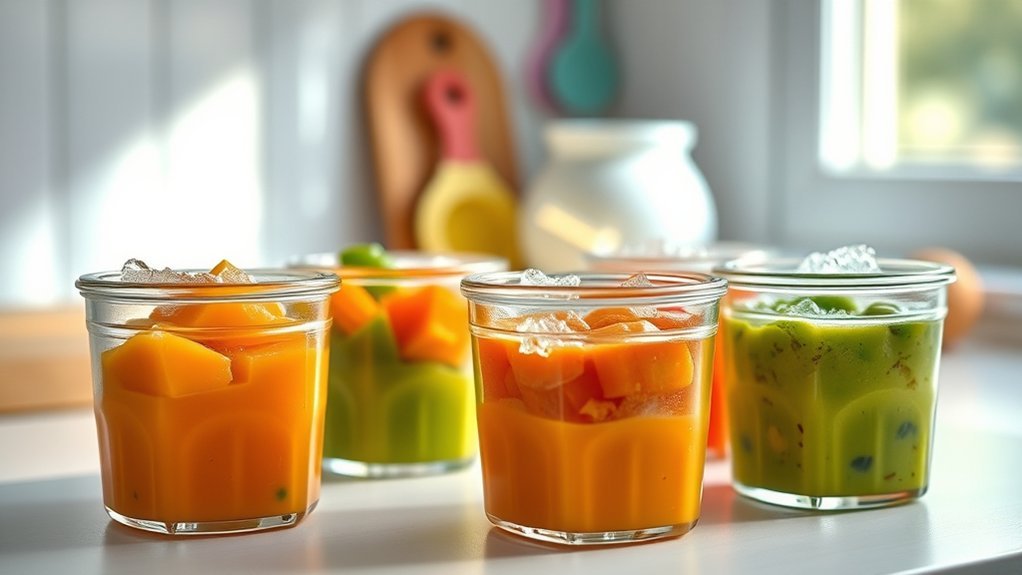
After successfully freezing your homemade baby food, the next step is guaranteeing it’s thawed properly for safe consumption.
The safest method is to place the food in the refrigerator overnight, allowing it to thaw at safe temperatures while preserving texture. If you’re pressed for time, use the microwave on the “defrost setting,” but remember to stir thoroughly to eliminate any hot spots before serving.
Thaw baby food safely in the refrigerator overnight or use the microwave’s defrost setting, stirring well to avoid hot spots.
For a gentler approach, consider a baby food warmer or a water bath, which maintains consistent heat.
It’s essential to avoid refreezing thawed baby food to prevent harmful microorganisms from developing. Always check the temperature of the thawed puree before serving to verify it’s safe for your little one to enjoy.
Enhancing Texture: Adding Ingredients for Smoothness
To enhance the texture of thawed baby food, consider incorporating various ingredients that can create a smoother, creamier consistency. A few effective options include:
- Milk addition: Adding a small amount of milk can enrich the puree’s creaminess.
- Rice cereal: Mix in rice cereal to improve consistency and boost nutritional value.
- Liquids: Introduce broth or vegetable juice for added flavor and smoother texture.
- Re-pureeing: Use a blender or food processor to eliminate lumps and guarantee uniformity.
Experimenting with gentle heating before serving can also help re-integrate ingredients, enhancing the overall texture of your baby food.
Storage Tips to Prevent Baby Food Separation
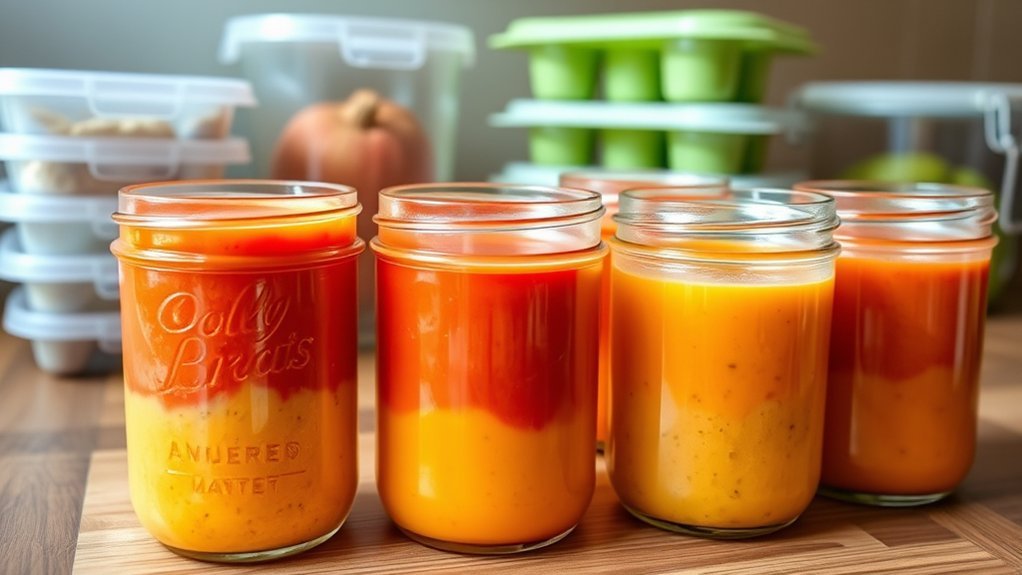
Proper storage techniques are essential for preventing separation in frozen baby food, ensuring your little one’s meals remain nutritious and appealing.
Start with smart container selection; use airtight containers with limited air or headspace to prevent freezer burn.
Choose airtight containers with minimal air exposure to keep your frozen baby food fresh and free from freezer burn.
When employing freezing techniques, quickly freeze purees right after preparation to minimize microorganism growth, which can lead to separation.
Consider using ice cube trays for portioning—this not only maintains consistency but also makes it easier to thaw only what you need.
After transferring cubes to freezer bags, always label them with the date.
Consuming frozen baby food within 1-3 months helps retain peak taste and nutrients, allowing you to serve the best for your baby without the worry of separation.
What Nutritional Factors Should You Consider for Baby Food?
When it comes to preparing baby food, focusing on nutritional value is vital for supporting your child’s growth and development. Achieving nutritional balance involves selecting diverse ingredients to guarantee your baby receives all necessary nutrients.
Consider the following factors:
- Use high-quality, fresh ingredients to boost nutritional value.
- Incorporate iron-rich foods like meats, beans, and leafy greens, especially around six months.
- Avoid adding salt and sugar, which can create unhealthy habits.
- Gradually introduce a variety of flavors and textures to develop a diverse palate.
Monitoring allergy risks by introducing new foods every three days is essential. This approach not only enhances ingredient variety but also contributes to a safer and more nutritious feeding experience for your little one.
Why Choose Homemade Baby Food?
Making your own baby food offers numerous benefits that align with your commitment to providing the best nutrition for your child. One significant advantage is the nutritional benefits; homemade options retain more nutrients than store-bought varieties, which often lose value through processing.
Making your own baby food ensures optimal nutrition, as homemade options preserve more nutrients than processed store-bought varieties.
You can also enjoy ingredient flexibility, allowing you to select fresh, organic produce that meets your baby’s dietary needs. This control reduces reliance on jarred products that may contain preservatives and additives.
Additionally, preparing baby food at home can be more cost-effective, as you can cook in bulk and freeze, saving both time and money.
Introducing a variety of flavors and textures through homemade food encourages healthy eating habits and expands your baby’s palate from an early age.
Frequently Asked Questions
Can I Refreeze Baby Food After It Has Been Thawed?
You shouldn’t refreeze baby food after it’s thawed, as doing so can compromise food quality. Always use safe thawing methods, and remember, it’s best to only thaw what you plan to use immediately.
How Long Can I Store Frozen Baby Food?
You can store frozen baby food for up to three months. Studies show proper frozen storage maintains 90% of essential baby nutrition, ensuring your little one gets the crucial nutrients they need while enjoying variety.
Is It Safe to Freeze Baby Food With Added Spices?
Yes, it’s safe to freeze baby food with added spices, but consider spice safety and flavor impact. Some spices may change in taste or potency after freezing, affecting your baby’s experience. Always introduce cautiously.
Can I Use Glass Containers for Freezing Baby Food?
Yes, you can use glass containers for freezing baby food. They offer benefits like durability and non-toxicity. For freezing tips, make certain containers are airtight and leave space for expansion to prevent breakage.
What Are Signs That Baby Food Has Gone Bad?
You’ll know baby food’s gone bad if it has an off smell or shows a color change. Always perform the smell test and inspect visually before serving, ensuring your little one’s meals are safe and nutritious.
Conclusion
To summarize, while it’s common for baby food to separate after freezing, you can easily fix it and prevent future issues. Don’t let texture concerns discourage you from making homemade baby food; the nutritional benefits and control over ingredients far outweigh the challenges. By following best practices and understanding the reasons behind separation, you can provide your little one with delicious, wholesome meals. Remember, your effort in preparing their food fosters a healthy start to their culinary journey.


