

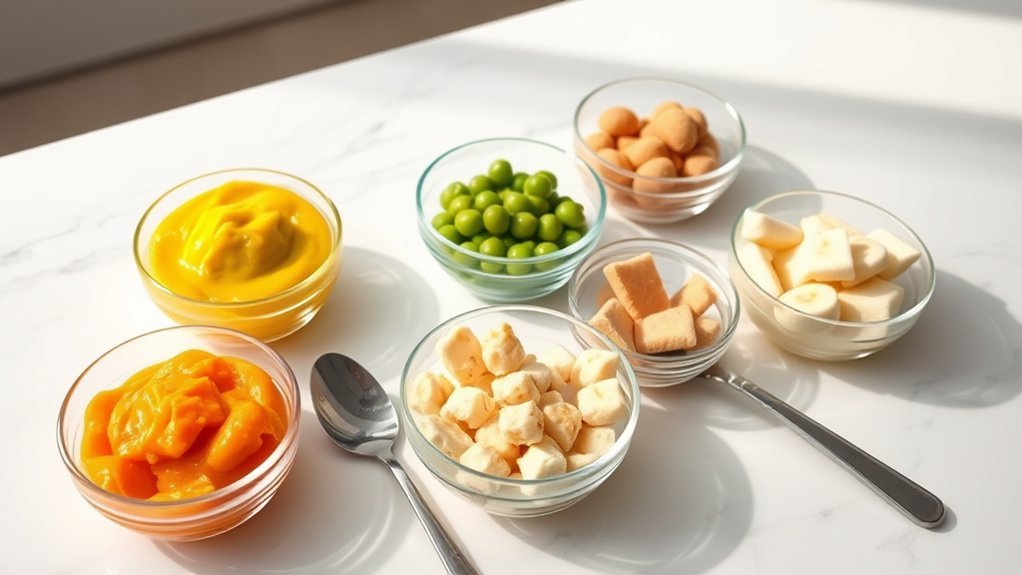
If your baby shows disinterest in food or struggles with different textures, you’re not alone. Many babies prefer mushy purees to solids due to developmental stages or texture sensitivities. To help, gradually introduce softer foods and create a calm mealtime environment. Allow self-feeding to build confidence, and celebrate their explorations. Confirm safety by monitoring for choking hazards. With patience and supportive strategies, you can enhance your baby’s eating experience. There’s plenty more to uncover about nurturing their adventurous side!
Key Takeaways
- Gradually introduce softer textured foods like mashed bananas and cooked vegetables to encourage exploration and acceptance of new textures.
- Create a calm and positive mealtime environment to reduce anxiety and foster a willingness to engage with food.
- Allow babies to self-feed and explore food with their hands to build confidence and comfort with different textures.
- Monitor for choking hazards by serving age-appropriate food sizes and closely supervise during mealtime.
- Seek professional guidance if persistent gagging, vomiting, or resistance to textures continues beyond typical developmental milestones.
Understanding Your Baby’s Disinterest in Food and Signs of Texture Sensitivity
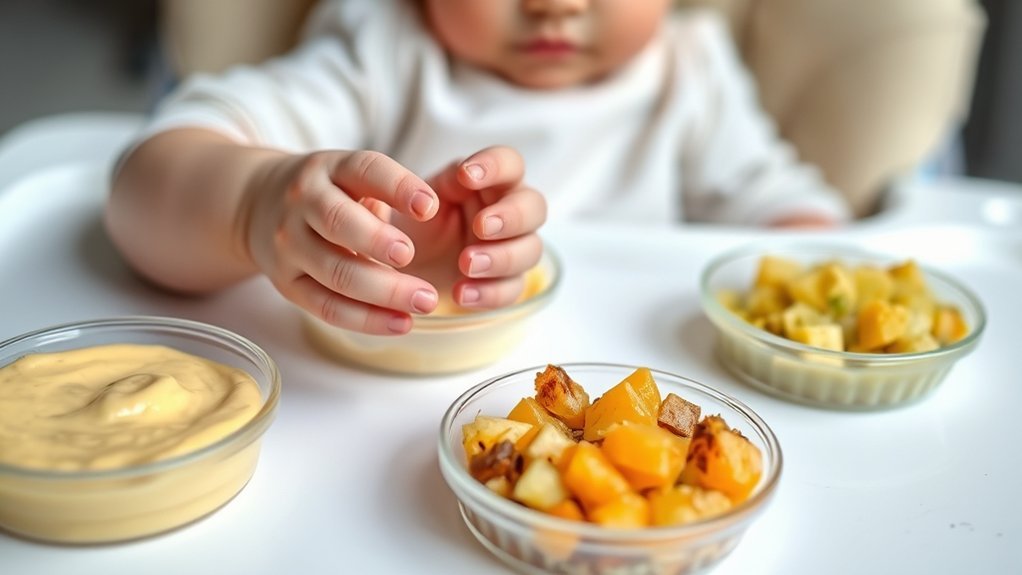
Why does your baby seem disinterested in food? It might stem from their developmental milestones or previous negative experiences. Don’t worry; this is common.
Babies often show strong food preferences and may resist certain textures, preferring pureed foods over solids. You might notice signs of texture sensitivity, like gagging or aversion to certain consistencies.
Babies can display strong food preferences, often favoring pureed foods and showing sensitivity to different textures.
It’s important to approach mealtime with patience and a calm demeanor. Your confidence can help ease their anxiety around food.
Try observing and modeling positive eating behaviors, describing textures and flavors to create familiarity.
Strategies for Encouraging Exploration of Textures
To help your baby explore different textures, start by gradually introducing softer foods like mashed bananas or cooked carrots.
Make mealtime fun by letting them engage in sensory play with food, allowing them to touch and squish as they become comfortable.
Gradual Texture Exposure
As you introduce your baby to new textures, starting with soft, easy-to-chew options like mashed bananas or well-cooked sweet potatoes can make the change smoother.
Gradually exposing your little one to texture variety is key. Encourage flavor exploration by allowing them to touch, smell, and play with different foods before they eat. Incorporate foods that provide gum relief, like cucumber spears, to create a fun experience.
Celebrate each small success and let your baby explore at their own pace—there’s no rush. Don’t shy away from offering previously rejected textures alongside familiar favorites; this repetition can reduce anxiety and boost acceptance.
Embrace this journey, creating a positive, liberating mealtime atmosphere for your baby.
Fun Sensory Play
Exploring textures can be a delightful adventure for your baby, and incorporating fun sensory play is an excellent way to encourage this exploration. Engage your little one with cooked pasta, soft fruits, or yogurt, allowing them to feel, squish, and manipulate different textures.
Activities like finger painting with pureed foods or creating edible art make mealtime playful and promote sensory exploration. Setting up sensory bins filled with safe items like rice or oats offers tactile experiences that complement their introduction to solid foods.
Embracing messy play not only aids in texture acceptance but also supports fine motor skills as babies learn to grasp and manipulate various food shapes. Let your baby enjoy this liberating journey into the world of textures!
Positive Mealtime Environment
Creating a positive mealtime environment is essential for encouraging your baby to explore new textures. A calm atmosphere, along with your confident demeanor, can greatly influence your baby’s willingness to engage with food. During mealtimes, incorporate mealtime rituals that promote exploration, like tapping their tray and making eye contact. Allow your baby to self-feed at their own pace, fostering confidence and reducing anxiety. Consider introducing sensory play before meals, letting them touch different textures. This approach encourages curiosity and enjoyment.
| Strategy | Positive Reinforcement |
|---|---|
| Engage with Eye Contact | Builds connection and trust |
| Allow Self-Feeding | Empowers exploration |
| Incorporate Rituals | Creates familiarity and comfort |
| Use Sensory Play | Sparks interest and reduces stress |
Gradual Transitioning From Purees to Textured Foods
Shifting your baby from purees to textured foods can be an exciting milestone, especially when you notice signs of readiness like sitting up independently and showing interest in food.
Typically, this change happens between 6 to 9 months. Start by gradually increasing the lumpiness of purees and introducing soft finger foods, allowing your baby to explore different texture preferences.
This approach not only helps develop their chewing skills but also makes the experience enjoyable. Remember to continue offering previously introduced textures to reinforce familiarity and acceptance.
As you navigate these feeding milestones, stay alert for choking hazards by serving age-appropriate food sizes and supervising closely.
Embrace this journey, knowing you’re empowering your little one to explore a world of flavors!
Safety Tips for Keeping Mealtime Safe With New Textures

When introducing new textures at mealtime, it’s essential to supervise your baby closely to prevent choking.
Always serve age-appropriate food sizes and steer clear of small, hard, or sticky items that could pose risks.
Supervise During Mealtime
Mealtime can be a delightful yet challenging experience as your baby explores new textures. Always stay within arm’s reach during these moments, ready to respond to any baby cues that may indicate choking or distress.
Secure your little one in a highchair to encourage safe swallowing and prevent choking. As you introduce new textures, closely monitor their mealtime interactions; they may need extra supervision while adapting to solids.
Embrace the inevitable messiness of self-feeding—it’s part of the learning journey! However, prioritize safety by keeping potential hazards out of reach and serving foods in suitable sizes and textures.
With your attentive supervision, you can create a safe and joyful mealtime experience for your baby.
Age-Appropriate Food Sizes
To guarantee a safe and enjoyable mealtime, it’s crucial to offer age-appropriate food sizes that your baby can easily manage. Aim for pieces no larger than a pea or a quarter of a grape. Focus on soft finger foods, like cooked vegetables, banana, or avocado, which encourage exploration and independence.
| Food Shape Variations | Ideal Food Textures |
|---|---|
| Small cubes | Soft and easy to mash |
| Thin strips | Tender and dissolvable |
| Tiny pieces | Smooth and manageable |
Always supervise your baby while they eat, ensuring they’re seated securely in a highchair and upright. By prioritizing these food sizes and textures, you’ll promote a positive mealtime experience, allowing your little one to embrace new flavors safely.
Avoid Choking Hazards
Keeping your baby safe during meals is essential, especially as they explore new textures. Supervise your little one closely to catch any signs of choking or distress quickly.
For effective choking prevention, make certain food sizes match your baby’s developmental stage—avoid small, round, hard, or sticky items. Cut foods into manageable pieces, ideally no larger than half an inch, to promote safe chewing and swallowing. Gradually introduce new textures, starting with soft, easy-to-chew options before moving to more challenging consistencies.
Finally, secure your baby in a highchair with proper posture to help establish safe eating habits. Prioritizing food safety during mealtime guarantees a positive experience as your baby learns and grows.
Managing Gagging and Spitting During Mealtime

While it’s normal for babies to gag occasionally as they navigate new food textures, managing this reflex can be a challenge for parents.
To minimize the gag reflex, start with softer foods before progressing to lumpier textures. Offer small, manageable bite sizes that your baby can handle. Encourage self-feeding; this helps them develop chewing skills and can reduce spitting food.
Repeated exposure to different textures can also build confidence over time, making mealtimes smoother. However, if gagging persists or your baby seems distressed, consult a pediatrician to rule out any underlying issues.
The Importance of a Positive Mealtime Environment
Creating a nurturing mealtime environment can greatly impact how your baby interacts with new textures. A positive atmosphere fosters safety and comfort, encouraging sensory exploration. When you engage in calm and encouraging interactions, your baby develops a favorable attitude toward food, reducing picky eating later on. Modeling enjoyment and curiosity about different foods can greatly influence their willingness to try new textures. Allowing your baby to self-feed at their own pace promotes independence and confidence.
| Positive Mealtime Practices | Benefits |
|---|---|
| Calm interactions | Reduces anxiety |
| Modeling enjoyment | Increases curiosity |
| Self-feeding opportunities | Builds confidence |
| Joyful routines | Enhances overall experience |
| Encouragement of exploration | Invites openness to new foods |
When to Seek Professional Help for Feeding Issues?
Recognizing when to seek professional help for feeding issues can be vital for your baby’s development. If your little one shows persistent gagging, retching, or vomiting at the sight of food, consult a pediatrician.
By 8 months, if they’re not consuming solid foods or struggle to swallow chewable items whole by 12 months, it’s time for a professional evaluation. Additionally, watch for lack of weight gain despite adequate nutrition; this could indicate underlying problems.
If your baby strongly resists different textures or new foods after several attempts, seeking guidance from a feeding specialist may be necessary. Monitoring for signs of distress during feeding is important, as these may signal the need for intervention to support your baby’s feeding milestones.
Community Support and Resources for Parents
Finding community support and resources can make a significant difference when managing your baby’s food texture challenges. Online communities and forums provide a space to share parent experiences, fostering a sense of connection and understanding.
Engaging with social media influencers, like mothercould on Instagram, can inspire you with tips and recipes tailored for texture exploration. Consider joining support groups focused on baby-led weaning, where you can exchange collaborative strategies and encouragement surrounding feeding challenges.
Additionally, accessing expert resources, such as articles and videos, will equip you with effective dietary recommendations. Don’t hesitate to reach out to occupational therapists and dietitians, as their insights can enhance your feeding journey through personalized sensory activities for your little one.
Baby Led Weaning: Building a Diverse and Healthy Diet
Exploring baby-led weaning can be a transformative experience for both you and your little one. By allowing your baby to self-feed, you’re encouraging them to explore a variety of textures and flavors, essential for developing diverse and healthy eating habits.
Introducing textured foods between 6-9 months can help reduce future feeding issues and promote acceptance of different consistencies. As your baby meets feeding milestones, gradual exposure to new textures enhances their oral motor skills, making chewing and swallowing easier.
Participating in family meals fosters social interactions and adventurous eating, reducing the chances of picky eating later on. Engaging in playful food activities builds tolerance for various textures, making mealtimes enjoyable while expanding their diet.
Frequently Asked Questions
What Are Common Signs of Texture Intolerance in Babies?
If your baby’s showing signs of discomfort like fussiness, gagging, or refusing to eat, they might have texture intolerance. These feeding challenges can be frustrating, but observing their reactions helps you adjust their meals effectively.
How Can I Make Mealtime More Enjoyable for My Child?
To make mealtime enjoyable, try fun mealtime activities like singing songs or playing games. Create an engaging eating environment with colorful plates and interactive utensils. Your child will feel excited and more willing to explore new foods!
What Textures Should I Introduce First to My Baby?
Start with pureed fruits like apples and pears, then introduce soft vegetables such as sweet potatoes and carrots. These textures are gentle on your baby’s palate, making mealtime enjoyable and helping them explore new flavors confidently.
How Often Should I Offer New Textures to My Baby?
You should introduce new textures every few days, allowing your baby to adapt. Gradually increasing feeding frequency helps them explore different sensations and flavors, making texture change smoother and more enjoyable for both of you.
Can My Baby’s Texture Preferences Change Over Time?
Yes, your baby’s texture preferences can evolve over time. As they grow and experience different flavors and textures in baby food, they may become more adventurous, embracing variety and discovering new favorites along the way.
Conclusion
Steering your baby’s food journey can feel like walking a tightrope, but you’re not alone. Embracing new textures might just take a little time and patience. Celebrate the small victories and remember that each mealtime is an opportunity for exploration. If challenges arise, don’t hesitate to reach out for guidance or support. With love and encouragement, you can help your little one develop a healthy relationship with food, paving the way for a lifetime of delicious adventures.