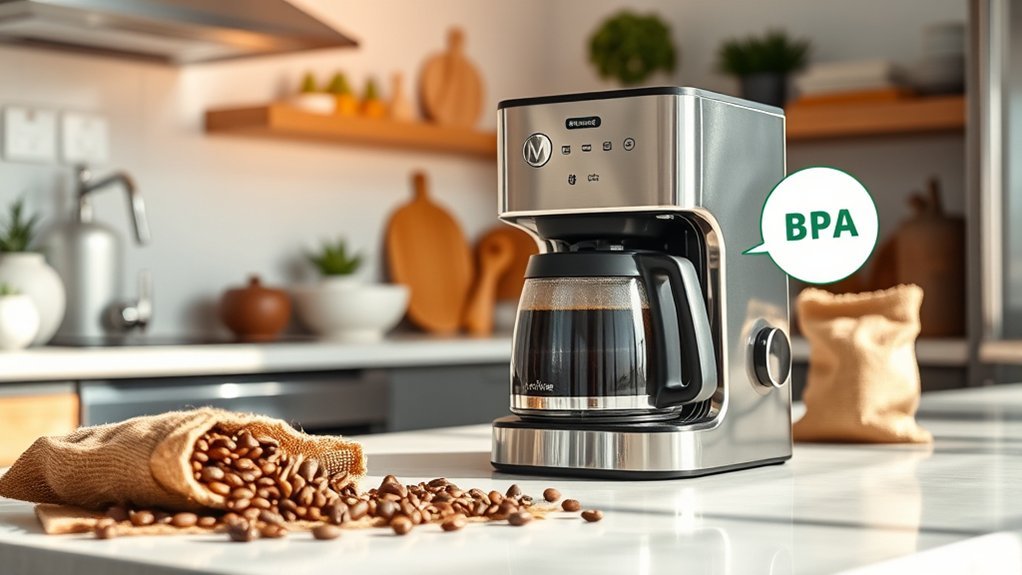
When choosing a BPA-free coffee maker, look for materials like stainless steel, borosilicate glass, and porcelain. These options resist leaching harmful chemicals and provide a safer brewing experience. Avoid plastic parts near hot water, even if they’re BPA-free, and seek certifications like NSF and Prop 65 for added safety assurance. Prioritizing these materials not only protects your health but also enhances your coffee’s flavor. Explore more to discover essential maintenance tips for your BPA-free machine.
Key Takeaways
- Choose coffee makers made from materials like stainless steel, borosilicate glass, or porcelain to avoid harmful chemical leaching.
- Look for products explicitly labeled as “BPA-free” and research alternatives like BPS and BPF for safety.
- Ensure coffee makers have certifications like NSF, SCA, or Prop 65 to guarantee safety and quality standards.
- Avoid plastic parts in direct contact with hot water, even if they are labeled BPA-free, for better health safety.
- Regularly clean BPA-free coffee makers with natural alternatives like vinegar to maintain performance and prevent harmful buildup.
Understanding BPA and Its Risks in Coffee Makers
While you mightn’t think twice about the materials in your coffee maker, understanding the risks associated with BPA (bisphenol A) is essential for your health. This industrial chemical is found in many plastics and is linked to significant health implications, like hormonal disruptions and reproductive issues.
Even low levels of BPA exposure can interfere with your endocrine function, potentially leading to metabolic disorders, particularly in children. You should also be cautious of BPA alternatives, such as BPS and BPF, which may carry similar risks.
The heat and acidity from brewing coffee can worsen chemical leaching, so choosing appliances made from safer materials like stainless steel or glass can help minimize your exposure to harmful substances and protect your well-being.
Why Choose BPA-Free Materials for Your Coffee Maker?
Choosing BPA-free materials for your coffee maker is essential for your health, especially considering the potential dangers of harmful chemicals. BPA is an endocrine disruptor linked to serious health issues like heart disease and cancer.
By opting for BPA-free options, you’re minimizing exposure to toxic substances that could leach into your morning brew. Many BPA-free coffee makers use safer materials like stainless steel and borosilicate glass, which don’t release harmful chemicals when heated.
This choice not only offers significant health benefits but also positively impacts the environment by reducing reliance on plastics. By selecting BPA-free coffee makers, you’re taking a proactive step toward safeguarding your well-being and making a responsible choice for our planet.
Essential Materials for Safe Coffee Makers: Glass, Stainless Steel, and Porcelain

When it comes to selecting a safe coffee maker, understanding the materials used is essential for guaranteeing a healthy brewing experience.
Here are three materials to take into account:
- Glass: Opt for borosilicate glass—its advantages include thermal shock resistance and minimal chemical leaching, making it a safer choice for your coffee.
- Stainless Steel: High-quality 18/8 stainless steel boasts inert properties, which means it won’t leach heavy metals, even with acidic liquids.
- Porcelain: While porcelain can be safe, verify it meets Prop 65 standards to avoid heavy metal contamination, especially in colorful designs.
Identifying Safe BPA-Free Plastics in Coffee Makers
Selecting a coffee maker can feel overwhelming, especially with the myriad of options on the market. To identify safe BPA-free plastics, look for products explicitly labeled as “BPA-free.”
However, don’t stop there—check for BPA alternatives like BPS and BPF, which can still pose risks. Research each brand’s safety standards and material sourcing to guarantee you’re making a safe choice.
Don’t overlook BPA alternatives like BPS and BPF; investigate brands’ safety standards for a truly safe choice.
Prefer coffee makers made from materials like stainless steel or borosilicate glass, as these are less likely to leach harmful substances when brewing. Avoid makers with plastic parts in direct contact with hot water, even if they’re BPA-free.
Finally, consider eco-friendly options with certifications like NSF or SCA for added assurance regarding plastic safety and overall quality.
What Certifications Mean for Coffee Maker Safety

Understanding the significance of certifications can greatly enhance your confidence in choosing a safe coffee maker.
These certifications not only indicate compliance with safety standards but also guarantee you that harmful substances are absent.
Here are three important certification types to look for:
- NSF Certification: Guarantees that the coffee maker meets high safety and sanitation standards.
- SCA Certification: Indicates adherence to rigorous quality and safety standards specific to coffee equipment.
- Prop 65 Compliance: Confirms that the product has been tested for chemicals known to cause cancer or reproductive harm.
Top BPA-Free Coffee Makers to Consider
When you’re in the market for a BPA-free coffee maker, it’s essential to evaluate key features like safety certifications and how they affect your brewing experience.
Top-rated models, such as the Technivorm Cup-One and Cuisinart DCC-3200P1, combine convenience with BPA-free materials, ensuring your coffee is both safe and delicious.
Let’s explore these standout options and what makes them worthy additions to your kitchen.
Key Features To Consider
As you explore the world of BPA-free coffee makers, it’s essential to prioritize materials that promote safety and enhance your brewing experience.
Here are three key features to evaluate based on your user preferences and brewing methods:
- Material Quality: Look for stainless steel, borosilicate glass, and BPA-free polymers that minimize chemical leaching, ensuring a healthier cup.
- Programmability: Choose models like the Cuisinart DCC-3200P1 that offer programmable features for convenience, catering to both individuals and families.
- Durability: Opt for machines like Breville’s Bambino Plus, built with robust materials to withstand daily use while delivering rich flavors.
Top-Rated BPA-Free Models
If you’re searching for the best BPA-free coffee makers, you’ll find a diverse range of options that prioritize safety without compromising on taste or convenience.
Top-rated brands like Technivorm offer the elegant Cup-One Coffee Brewer, a single-serve model made from high-quality BPA-free materials, ensuring no plastic contact with hot water.
Cuisinart’s DCC-3200P1 Perfectemp Coffee Maker excels in brewing efficiency, featuring programmable settings and multiple serving sizes.
For espresso lovers, Breville’s Bambino Plus delivers rich flavors with its stainless steel body, free from harmful chemicals.
If you’re on a budget, Mr. Coffee provides a reliable 12-cup option without sacrificing quality.
Finally, the Melitta Pour Over Coffee Cone offers a safe, flavorful brewing experience at an affordable price.
Safety Certifications And Standards
To guarantee you’re choosing a safe and reliable BPA-free coffee maker, it’s crucial to pay attention to safety certifications and standards. These certifications verify that manufacturers comply with safety regulations and use quality materials.
Here are three key certifications to look for:
- NSF: This certification verifies that the coffee maker meets public health and safety standards.
- SCA: The Specialty Coffee Association certification confirms ideal brewing practices and high-quality materials.
- Product Labeling: Always check for clear labeling indicating BPA-free components.
Models like the Technivorm Cup-One, Cuisinart DCC-3200P1, and Breville Bambino Plus exemplify these standards, guaranteeing you enjoy your coffee without compromising safety.
Prioritize these certifications for peace of mind in your brewing experience!
Maintenance Tips for Your BPA-Free Coffee Maker
To keep your BPA-free coffee maker in top shape, establish a regular cleaning schedule that fits your routine.
Avoid harsh chemicals that can damage the materials; instead, opt for natural solutions like vinegar to keep it fresh and functional.
Regular Cleaning Schedule
Regularly maintaining your BPA-free coffee maker is essential for keeping it in top shape and ensuring you enjoy the best flavor from your brews.
To establish an effective cleaning schedule, consider these techniques:
- Daily Cleaning: After each use, wash removable parts like the brew basket and carafe to prevent coffee oil buildup.
- Biweekly Maintenance: Every 2-4 weeks, run a mixture of equal parts water and white vinegar through your machine to eliminate mineral deposits and bacteria.
- Storage Tips: Store your coffee maker in a dry environment to avoid moisture accumulation, which can lead to mold.
Following these cleaning frequency guidelines will prolong your coffee maker’s lifespan and maintain peak performance.
Avoid Harsh Chemicals
Keeping your BPA-free coffee maker in ideal condition means being mindful of the cleaning products you use. Regular cleaning is essential, so disassemble removable parts and rinse them thoroughly after each use to prevent moisture buildup.
For a deeper clean, opt for natural alternatives like a mixture of equal parts water and white vinegar every 2-4 weeks. This method provides effective chemical-free cleaning, removing mineral deposits without harming your coffee maker’s materials.
Always check the manufacturer’s guidelines to verify you’re using appropriate methods. Steer clear of abrasive cleaners or scrubbers, as they can damage BPA-free plastics.
How Material Choices Affect Coffee Flavor and Quality
While you mightn’t think much about the materials used in your coffee maker, they can profoundly affect the flavor and quality of your brew.
Here’s how material choices impact your coffee experience:
- Inert Properties: Stainless steel and borosilicate glass don’t leach chemicals, ensuring a pure flavor profile.
- Heat Retention: Stainless steel retains heat efficiently, promoting ideal extraction without burning the coffee or altering its taste.
- Brewing Consistency: Borosilicate glass resists thermal shock, allowing you to monitor brewing while maintaining the desired richness and aroma.
Choosing the right materials is essential for brewing consistency and achieving that perfect cup.
Best Cleaning Practices for BPA-Free Coffee Makers
To guarantee your BPA-free coffee maker remains in top condition and brews delicious coffee, proper cleaning practices are essential.
Regularly clean your machine using a mixture of equal parts water and white vinegar every 2-4 weeks. This helps prevent mold and bacteria buildup.
After each use, disassemble detachable brew heads and components, washing them with warm soapy water to maintain peak performance and flavor quality.
Avoid abrasive cleaners or scrubbers, as they can scratch the surface and harbor bacteria. Always rinse removable parts thoroughly to eliminate soap residue that could affect future brews.
Finally, always consult your manufacturer’s cleaning instructions for specific guidance, ensuring the longevity and safety of your BPA-free coffee maker.
Frequently Asked Questions
Are All Bpa-Free Coffee Makers Safe for Daily Use?
Not all BPA-free coffee makers are safe for daily use. Check for safety certifications and read consumer reviews to guarantee you’re choosing a reliable product that meets safety standards and won’t compromise your health.
How Can I Verify a Coffee Maker’s Material Safety?
To verify a coffee maker’s material safety, check for material certification and scrutinize product labeling. Look for trusted safety certifications like FDA approval or similar standards that guarantee the materials used are safe for daily use.
What Are the Signs of Harmful Plastic in Coffee Makers?
Look for signs like plastic warnings, unusual odors, or discoloration. These often indicate harmful plastics containing toxic chemicals. If you notice any of these, it’s best to avoid using that coffee maker for safety.
Do Stainless Steel Coffee Makers Retain Flavors?
Imagine sipping from a perfectly brewed cup, where stainless steel coffee makers shine like a trusty old friend. They don’t retain flavors like plastic, making them fantastic metal alternatives for pure, untainted coffee enjoyment.
Can I Use My Bpa-Free Coffee Maker for Hot Beverages?
Yes, you can use your BPA-free coffee maker for hot beverages. For ideal coffee safety, make sure it’s designed for high temperatures, and consider hot beverage recommendations to maintain flavor and quality in your drinks.
Conclusion
Choosing a BPA-free coffee maker is like selecting the right beans for your brew—quality matters. Just as the finest beans yield a rich, flavorful cup, the materials in your coffee maker influence both safety and taste. By opting for glass, stainless steel, or safe plastics, you’re ensuring your morning ritual is both delicious and healthy. So next time you sip your coffee, remember: the right choice not only perks you up but also protects you. Cheers to a safer brew!