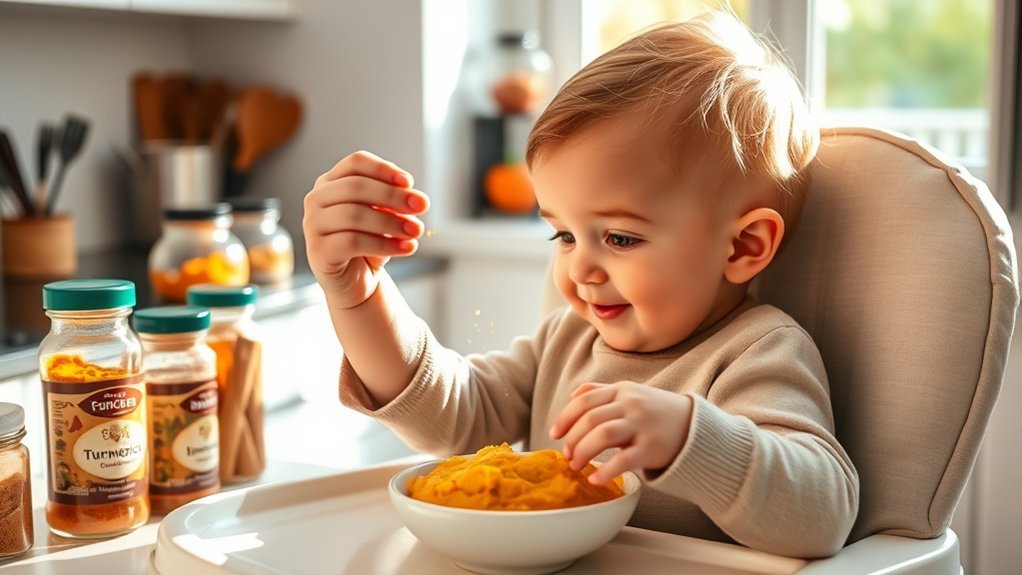
You can start introducing spices to your baby’s diet around 4-6 months, but stick to mild options like cinnamon and turmeric. It’s best to introduce one spice at a time to monitor reactions and avoid strong flavors until after age one. Adding spices enhances flavor and nutritional value without salt or sugar. Just keep an eye out for any adverse reactions. There’s so much more to learn about safely incorporating spices into your baby’s meals.
Key Takeaways
- Introduce mild spices like cinnamon, turmeric, and cumin to babies around 4-6 months of age.
- Monitor for reactions by introducing one spice at a time and waiting 2-3 days between new spices.
- Avoid strong flavors like curry and hot peppers until after the age of one.
- Use spices to enhance flavor, promote adventurous eating, and improve nutritional value without added salt or sugar.
- Always consult a healthcare professional if observing severe reactions or allergy concerns after introducing new spices.
When Can Babies Start Having Spices in Their Diet?
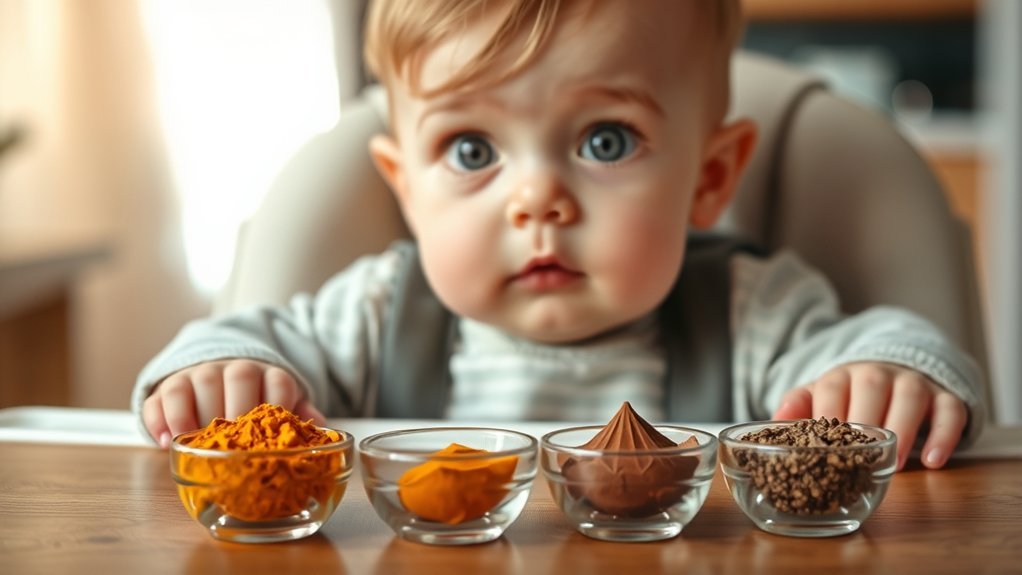
As you begin introducing solids to your baby around 4-6 months of age, you might wonder when it’s appropriate to start adding spices to their diet.
Spice safety is essential, so start with mild options like cinnamon, turmeric, and cumin. Introducing one spice at a time allows you to monitor baby digestion and watch for any allergic reactions.
Start with mild spices like cinnamon, turmeric, and cumin, introducing them one at a time to monitor for any reactions.
Wait 2-3 days between new spices to guarantee your little one tolerates each addition. Avoid stronger flavors, like curry or hot peppers, until your baby is at least one year old to prevent digestive irritation.
This gradual approach not only enhances flavor but also helps your baby develop a diverse palate, encouraging acceptance of various tastes in their developing diet.
Why Add Spices to Baby Food?
Adding spices to your baby’s food can enhance their flavor palate and promote adventurous eating habits.
Early exposure to a variety of mild spices helps reduce pickiness as they grow, making mealtime more enjoyable.
Expanding Flavor Palate
Introducing spices to your baby’s food can be a game-changer for their developing palate. Starting around 8 to 10 months, you can encourage flavor exploration by gradually adding mild spices. This practice helps create a diverse taste experience and could reduce picky eating later on.
Here are some benefits of using spice combinations:
- Enhances the nutritional value of meals
- Introduces new tastes without added salt or sugar
- Promotes openness to different foods
- Helps babies develop a positive relationship with food
Encouraging Adventurous Eating
Exploring a variety of flavors in baby food not only enhances your child’s eating experience but also sets the stage for adventurous eating habits later in life. By introducing mild spices as early as six months, you can promote spice exploration and reduce food pickiness in toddlers. This practice encourages acceptance of diverse flavors, fostering healthy eating patterns.
| Spice | Benefits | Cultural Significance |
|---|---|---|
| Cinnamon | Antioxidants, anti-inflammatory | Widely used in various cultures |
| Turmeric | Anti-inflammatory properties | Staple in Indian cuisine |
| Cumin | Aids digestion | Common in Middle Eastern dishes |
| Ginger | Soothes tummy aches | Key in Asian culinary traditions |
Incorporating spices creates a family-friendly dining experience, reflecting your cultural traditions and making mealtime more inclusive.
How to Introduce Spices to Your Baby Safely
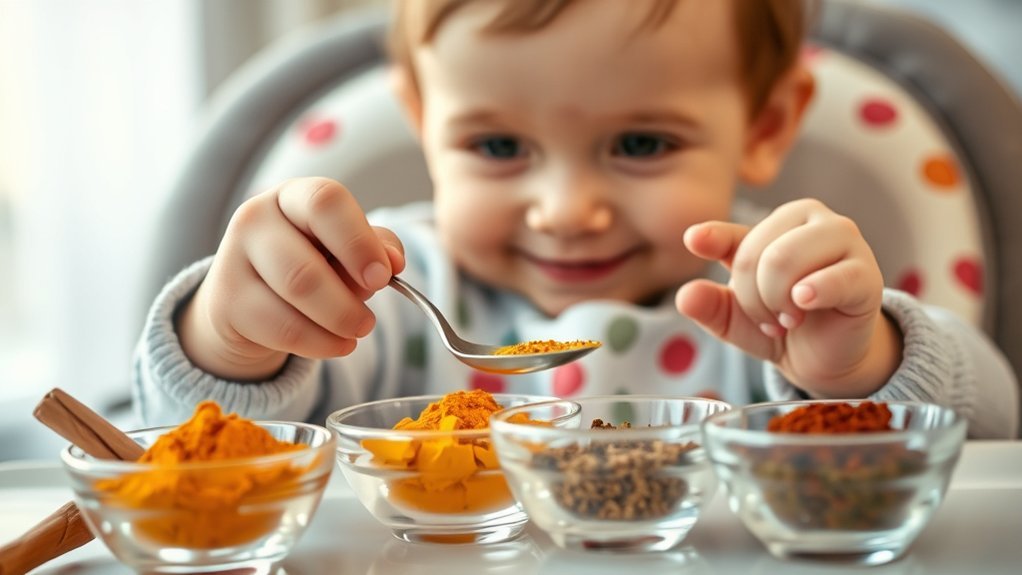
When introducing spices to your baby, start with mild flavors like cinnamon and nutmeg around 8 to 10 months.
Use small amounts of one spice at a time and monitor your baby’s reactions for a few days before adding anything new.
This cautious approach helps guarantee your baby develops a taste for a variety of flavors while minimizing allergy risks.
Start With Mild Flavors
As your baby approaches 8 to 10 months, it’s a great time to start incorporating mild spices into their diet to help develop their taste preferences.
Begin with small amounts to guarantee safety and monitor reactions. Here are some tips for introducing spices:
- Use a tiny pinch of spices like cinnamon or nutmeg.
- Mix spices into familiar foods, such as cinnamon in pureed apples.
- Wait until they’re one year old for stronger flavors like curry.
- Always watch for signs of intolerance, like rashes or gastrointestinal issues.
These simple spice combinations can enhance baby nutrition while keeping mealtime enjoyable.
Gradual Spice Introduction
Introducing spices to your baby’s diet can be an exciting journey that opens up a world of flavors. Start around six months with mild options like cinnamon or nutmeg to avoid overwhelming their taste buds.
Gradually introduce one spice at a time, waiting 2-3 days between each new addition. This allows you to watch for any allergic reactions or sensitivities.
Use finely ground spices and serve them in small amounts, mixing them into familiar foods—try a pinch of cumin in pureed vegetables.
These spice combinations can create delightful flavor profiles without the need for salt or sugar, keeping your baby’s diet healthy and natural.
Embrace this flavorful adventure, and enjoy the process of expanding your baby’s palate!
Monitor Baby’s Reactions
Monitoring your baby’s reactions after introducing spices is essential for ensuring a safe and enjoyable feeding experience. Use effective monitoring methods to observe how your baby responds to new flavors.
Here are some key points to keep in mind:
- Start with mild spices like cinnamon or nutmeg around 8 to 10 months.
- Wait 2-3 days before introducing another spice to watch for adverse reactions.
- Serve small amounts initially to avoid overwhelming their taste buds.
- Keep a food diary to track spices and baby observations for future reference.
Stay vigilant for signs of discomfort, such as fussiness or changes in stool. If severe reactions occur, consult your healthcare professional promptly.
Your careful monitoring will help create a positive culinary adventure for your little one!
Top Safe Spices for Babies
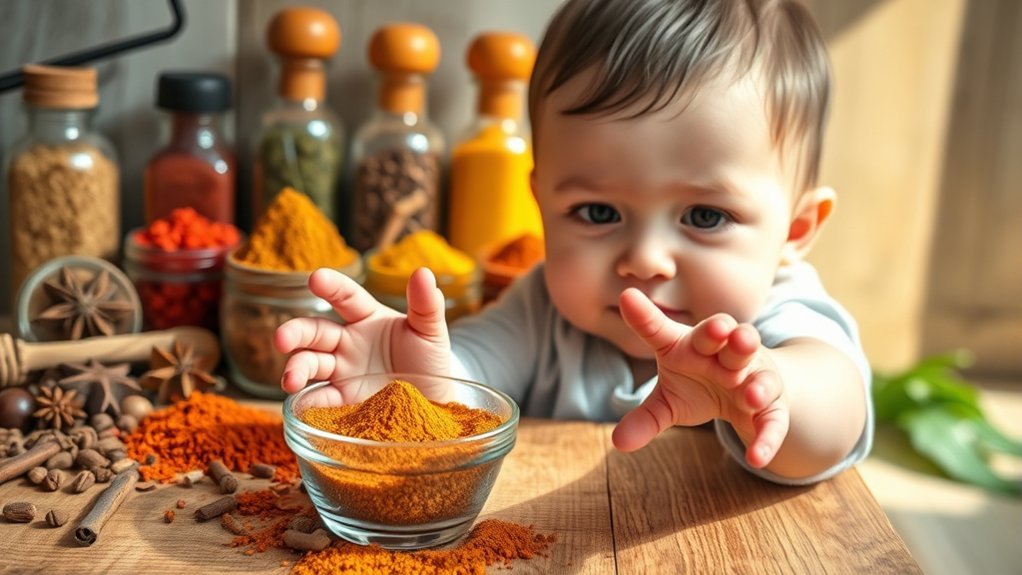
What spices can you safely introduce to your baby’s diet? Start with mild options like cinnamon, turmeric, and cumin, which can be added as early as 6 months. Fresh herbs like basil and cilantro, along with dried herbs such as oregano and thyme, are also great for flavor enhancement. Always introduce spices gradually, mixing them into familiar foods to avoid overwhelming your baby’s taste buds.
| Safe Spice | Notes |
|---|---|
| Cinnamon | Adds sweetness naturally |
| Turmeric | Anti-inflammatory properties |
| Cumin | Earthy flavor profile |
| Basil | Fresh and aromatic |
Spices to Avoid for Babies?
While exploring new flavors for your baby, it’s important to be mindful of certain spices that could pose risks.
Here are some spice types to avoid to guarantee your little one’s digestive health:
- Added Salt: Babies need a low sodium diet for healthy development.
- Cayenne Pepper & Chili: These strong spices can irritate your baby’s digestive system.
- Whole Peppercorns: They pose a choking hazard and should be removed from any food.
- Spicy Flavors: It’s best to limit these until after age one to reduce the risk of food sensitivities.
Identifying Allergic Reactions to Spices
As you introduce new flavors to your baby’s diet, it’s important to be aware of potential allergic reactions to spices. While rare, allergic symptoms can occur, such as hives, rashes, or gastrointestinal issues. Severe reactions may include throat tightness or difficulty breathing, necessitating immediate medical attention. To identify potential allergens, wait 2-3 days between introducing new spices. Common spices like black pepper can also lead to Oral Allergy Syndrome, causing temporary mouth irritation. If you suspect any allergic reaction, consult a healthcare professional for evaluation.
| Spice | Common Allergic Symptoms | Notes |
|---|---|---|
| Black Pepper | Mouth irritation | Oral Allergy Syndrome possible |
| Cinnamon | Rashes | Monitor closely |
| Paprika | Hives | Rarely causes issues |
| Oregano | Gastrointestinal issues | Less common |
| Ginger | Skin reactions | Usually well-tolerated |
Tips for Flavoring Baby Food Without Salt or Sugar
When you want to introduce your baby to new flavors, using spices and herbs can be a great way to enhance their meals without relying on salt or sugar.
Here are some tips for flavoring baby food:
- Start with mild spices like cinnamon and nutmeg around 8-10 months.
- Use herbs such as basil, oregano, and rosemary to add depth to purees.
- Incorporate spices into familiar foods, like adding cinnamon to apples or ginger to sweet potatoes.
- Gradually build your baby’s palate by using small amounts of various spice combinations.
Always monitor for any adverse reactions and consult a healthcare professional if you have concerns about allergies.
Creating flavorful baby food can encourage your little one’s acceptance of diverse tastes while keeping it healthy!
Frequently Asked Questions
Can Spices Cause Digestive Issues in Babies?
Spices can cause digestive sensitivity in babies, especially during initial introductions. It’s essential to start with mild options, watch for reactions, and consult a pediatrician for guidance, ensuring your little one’s tummy stays happy and healthy.
How Do I Know if a Spice Is Safe?
To determine if a spice’s safe, research its potential allergenic properties and start with small amounts. Watch for any reactions, as early exposure can shape your baby’s flavor preferences and help avoid spice allergies.
Are There Any Spices That Help With Teething?
When it comes to teething, “a stitch in time saves nine.” Clove offers pain relief, while ginger can soothe discomfort. However, always consult your pediatrician before introducing any spices to your baby’s diet.
Can Spices Change the Texture of Baby Food?
Yes, spices can impact food consistency. They might thicken or alter textures, especially with certain combinations. When introducing spices, observe how your baby’s digestion responds to guarantee a smooth shift to new flavors and textures.
Should I Avoid Spicy Foods Altogether for My Baby?
You shouldn’t avoid spicy foods altogether. Instead, consider gradual spice introduction for flavor development. Start with mild spices, observing your baby’s reactions, and guarantee they enjoy diverse tastes, enriching their culinary journey without overwhelming them.
Conclusion
Incorporating spices into your baby’s diet can be a delightful journey, sparking curiosity about flavors and cultures. Just remember to introduce them gradually and watch for any allergic reactions. Coincidentally, as your little one explores these new tastes, you might find your own palate expanding too! By choosing safe spices and avoiding those that could pose risks, you’re not just feeding your baby; you’re enriching their culinary experience. So, enjoy this flavorful adventure together, one spice at a time!