

You can use softened water in a coffee maker, but it might compromise flavor. Softened water typically contains higher sodium levels, which may mute coffee’s natural aromas and tastes. Essential minerals like calcium and magnesium, vital for flavor extraction, are often stripped away during softening. This can lead to a less enjoyable brew. To achieve the finest flavor, consider testing your water quality and exploring ways to enhance it for ideal results.
Key Takeaways
- Softened water can prevent limescale buildup in coffee makers, promoting easier maintenance and longevity of the equipment.
- The high sodium content in softened water can mute coffee flavors and hinder ideal extraction, negatively impacting taste.
- Specialty Coffee Association recommends water hardness of 50-175 ppm for optimal coffee brewing, which softened water often fails to meet.
- Regular cleaning and maintenance are essential when using softened water to prevent sludge buildup in brew baskets.
- Consider adding mineral additives to restore essential minerals lost during softening and enhance coffee flavor.
Understanding Softened Water and Its Composition
When you use softened water, it’s important to understand what that means for your coffee brewing process.
The water softening process replaces calcium and magnesium ions with sodium ions through sodium exchange. This alteration affects the water’s chemical composition, potentially leading to high sodium levels that can mute coffee’s natural flavors and aromas.
The water softening process replaces essential minerals with sodium, altering the chemical balance and potentially dulling coffee’s flavors.
Additionally, the softening process strips away essential minerals like calcium and magnesium, which are vital for ideal coffee extraction and flavor development.
Many coffee enthusiasts advise against using softened water due to these reasons.
To guarantee quality coffee, testing the mineral content of your softened water is essential, as conventional softened water often lacks the necessary hardness levels for effective brewing.
How Softened Water Affects Coffee Flavor
Softened water can greatly impact the flavor profile of your coffee, often leading to a less vibrant brew. Elevated sodium levels in softened water can interfere with the natural characteristics of coffee beans, resulting in muted flavors.
Additionally, the absence of essential minerals like calcium and magnesium hinders ideal flavor extraction during coffee brewing. You may notice sludge buildup in brew baskets, which affects your coffee maker’s performance and overall brewing quality.
The high alkalinity associated with softened water further dulls coffee flavors, making it less enjoyable than brews made with mineral-rich water. To achieve a more balanced and flavorful cup, many coffee enthusiasts recommend using filtered or bottled water that maintains beneficial water chemistry for brewing.
Pros and Cons of Using Softened Water in Coffee Makers
Using softened water in your coffee maker presents both advantages and disadvantages.
While it helps prevent limescale buildup and eases equipment maintenance, the high sodium content can mute flavor profiles and impact extraction.
Additionally, the lack of essential minerals may compromise your overall coffee experience, making it vital to weigh these factors carefully.
Flavor Profile Impacts
While many coffee makers can function with softened water, the impact on flavor profile can be significant.
Here are some considerations regarding taste balance and coffee extraction:
- Muted Flavors: High sodium content in softened water can mask the natural characteristics of coffee beans.
- Sludge Buildup: Softened water may create sludge in brew baskets, affecting performance and flavor.
- Hindered Extraction: The absence of essential minerals like calcium and magnesium can lead to less flavorful coffee.
- Over-Extraction: High alkalinity may cause bitterness, compromising the overall taste.
For a better flavor profile, many coffee enthusiasts recommend using filtered or bottled water to achieve ideal coffee extraction and maintain a balanced taste.
Mineral Content Considerations
When brewing coffee, the mineral content of the water greatly influences the final taste and extraction process.
Using softened water can disrupt the mineral balance necessary for efficient extraction. Its lower mineral content may mute coffee flavors, while the sodium present can interfere with the natural characteristics of the beans, altering the overall taste profile.
Additionally, high alkalinity in softened water can lead to over-extraction, resulting in bitter or unpleasant coffee.
The Specialty Coffee Association recommends water hardness between 50-175 ppm for ideal brewing, which softened water often fails to meet.
Ultimately, these factors can negatively affect not only the flavor but also the performance of your coffee maker, leading to sludge buildup and increased maintenance needs.
Equipment Maintenance Effects
Although softened water can help reduce mineral buildup in coffee makers, it presents both advantages and challenges regarding equipment maintenance. Here are some key points to evaluate:
- Reduced Scale Formation: Softened water minimizes mineral deposits, enhancing performance longevity.
- Sodium Levels: Elevated sodium can alter coffee flavors, affecting your brewing experience.
- Sludge Buildup: Softened water may cause sludge in brew baskets, leading to maintenance challenges and potential brewing issues.
- Regular Cleaning Needed: Even with softened water, you’ll still need to descale and clean your coffee maker to guarantee peak performance.
Ultimately, while softened water can extend your machine’s lifespan, it may require more diligent maintenance to keep your coffee tasting its best.
Softened Water vs. Other Brewing Waters
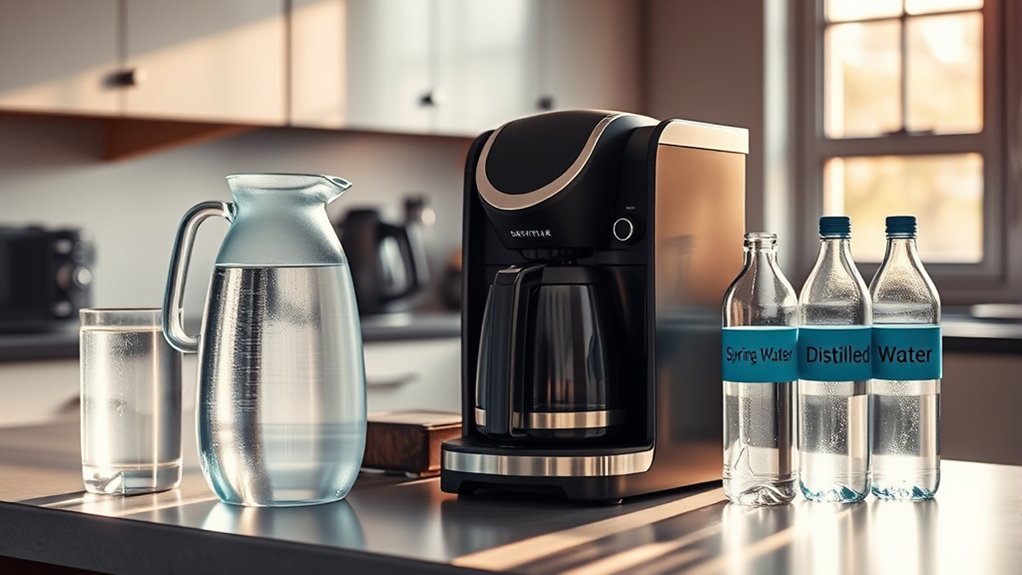
Choosing the right water for brewing coffee is essential, as the quality and composition can greatly affect the final taste. Softened water, with its elevated sodium levels, often leads to muted flavors and lacks essential minerals like calcium and magnesium, limiting ideal extraction. In contrast, medium-hard water (50-175 ppm hardness) is recommended for enhancing coffee flavor. The table below summarizes key differences:
| Water Type | Characteristics |
|---|---|
| Softened Water | High sodium, low minerals, muted taste |
| Filtered Water | Balanced minerals, enhances flavor |
| Spring Water | Natural minerals, best for brewing |
| Bottled Water | Good mineral balance, convenient choice |
| Medium-Hard Water | Ideal for brewing techniques, rich flavor |
For the best results, opt for filtered or bottled water over softened water, especially regarding water temperature during brewing.
How Sodium Affects Coffee Taste
Sodium levels in softened water markedly impact coffee’s flavor profile, often leading to a less satisfying brew.
Sodium in softened water significantly affects coffee flavor, often resulting in a less enjoyable brew.
Here’s how sodium affects your coffee:
- Flavor Masking: High sodium levels can obscure the natural flavors of coffee beans, resulting in a muted taste.
- Over-Extraction: The exchange of calcium and magnesium for sodium may lead to bitterness or a flat taste due to over-extraction.
- Acidity Balance: Elevated sodium alters acidity, vital for flavor complexity and brightness in your cup.
- Mouthfeel: Softened water creates a slippery mouthfeel, diminishing the richness and body that enhances your coffee experience.
Understanding sodium’s impact helps you make informed choices for a more flavorful brew.
Maintaining Your Coffee Maker With Softened Water
When you use softened water in your coffee maker, it’s vital to establish a routine for maintenance to guarantee peak performance and flavor. Softened water can lead to sludge buildup in brew baskets, affecting machine performance and causing overflow issues. Regular coffee maintenance, including descaling, is essential to prevent clogs.
Here’s a quick guide to help you maintain your coffee maker:
| Maintenance Task | Frequency |
|---|---|
| Clean Brew Basket | After each use |
| Descale | Every 1-3 months |
| Replace Water Filter | Every 2 months |
Using softened water may mask the natural characteristics of coffee beans, so consider using filtered or bottled water for best flavor extraction.
Testing Water Quality for Brewing Coffee
To brew the perfect cup of coffee, you need to test your water quality by measuring mineral content and pH levels.
High sodium or imbalanced mineral profiles can greatly alter the taste and extraction efficiency.
Testing Mineral Content
How do you guarantee that the water you’re using for brewing coffee has the right mineral content? Testing mineral content is essential, as improper levels can lead to dull flavors.
Here are some effective testing methods to take into account:
- Water Quality Testing Kits: Use kits that measure key parameters like total dissolved solids (TDS) and hardness.
- Total Hardness Measurement: Aim for a hardness of 50 to 175 ppm, as recommended by the Specialty Coffee Association (SCA).
- Regular Mineral Analysis: Test softened water frequently since its mineral content can fluctuate considerably.
- Assess Alkalinity Levels: High alkalinity can negatively impact flavor extraction, so it’s important to keep it in check.
These steps help guarantee you’re brewing with ideal water quality.
Measuring pH Levels
Measuring pH levels is essential for ensuring the water you use for brewing coffee enhances flavor extraction. Ideally, you want your water to have a pH around 6-7, as slightly acidic water is preferred for ideal brewing.
Conduct regular pH testing to identify any water quality issues that might lead to under-extraction or over-extraction in your coffee. If you’re using softened water, be aware that its higher sodium content can raise the pH, negatively impacting taste by dulling flavor profiles.
Utilizing a pH meter or test strips allows you to accurately measure water acidity, guiding necessary adjustments. Understanding your water’s pH levels can considerably improve the overall quality of your coffee, ensuring a more balanced taste.
Evaluating Taste Differences
While many coffee enthusiasts focus on bean quality and brewing techniques, the water you use plays a fundamental role in determining the final taste of your brew.
Softened water can alter flavor profiles, so it’s important to evaluate its quality. Here are some key factors to keep in mind during your taste test:
- Mineral Content: Check for calcium and magnesium levels, as these are essential for flavor extraction.
- Sodium Levels: Be aware that softened water may contain higher sodium, potentially muting flavors.
- Total Hardness: Aim for 50-175 ppm, as recommended by the Specialty Coffee Association.
- Alkalinity: High alkalinity in softened water can dull your coffee’s taste, making it significant to assess your water sources for ideal brewing.
Mineral Additives to Improve Coffee Flavor
To enhance the flavor of your coffee, consider adding specific mineral additives back into softened water, which typically lacks essential minerals like calcium and magnesium.
Divalent cations such as calcium and magnesium play an essential role in flavor enhancement, promoting better coffee extraction compared to sodium found in softened water.
Experimenting with additives, like Epsom salts, can help restore mineral balance, though they may not fully substitute for the minerals removed during softening.
Experiment with additives like Epsom salts to restore mineral balance in softened water for better coffee flavor.
The Specialty Coffee Association suggests a total hardness level of 50-175 ppm for ideal brewing.
Taste tests reveal that reintroducing specific minerals can make your coffee more vibrant and complex, greatly improving the overall flavor profile compared to using softened water alone.
Choosing the Best Water for Brewing Coffee
When choosing water for brewing coffee, consider both water quality and mineral content.
Ideal extraction requires a balance of minerals, and using water with appropriate hardness can greatly enhance flavor.
Experimenting with different types of water, like unsoftened or filtered, allows you to find the best profile for your taste preferences.
Water Quality Considerations
Choosing the right water for brewing coffee is vital, as it directly impacts flavor and extraction quality.
Consider the following water quality factors:
- Sodium Levels: Softened water often has higher sodium, which can dull flavors.
- Total Hardness: The Specialty Coffee Association recommends hardness between 50 – 175 ppm; softened water usually lacks essential minerals.
- Alkalinity: High alkalinity can slow draw down and create an undesirable foam, affecting taste.
- Water Filtration: Regular testing of your water’s mineral content is essential, as filtered or bottled water maintains a balanced mineral profile, enhancing flavor extraction.
Using proper water filtration and avoiding conventional softening methods can greatly elevate your coffee experience.
Mineral Content Importance
Mineral content plays an essential role in brewing quality coffee, greatly influencing flavor and extraction efficiency. The Specialty Coffee Association recommends total hardness levels between 50-175 ppm to achieve ideal coffee extraction.
Essential minerals like calcium and magnesium enhance flavor, while softened water often lacks these critical components, resulting in muted coffee flavors. Additionally, high alkalinity in softened water can lead to over-extraction, dulling your coffee’s flavors.
Regularly testing the mineral content of softened water is important to verify it meets SCA guidelines. For the best results, opt for unsoftened or properly mineral-balanced water.
Achieving the right mineral balance not only enhances flavor but also guarantees you enjoy a rich, satisfying cup every time.
Debunking Myths About Softened Water in Coffee Brewing
How does softened water really impact your coffee brewing experience? Understanding softened water effects is vital for achieving the best flavor. Here are four key points to reflect on:
- Altered Taste: Elevated sodium levels can mute the flavor profiles of your coffee beans.
- Extraction Issues: The absence of essential minerals like calcium and magnesium can lead to less vibrant flavors and increased bitterness.
- Equipment Performance: Softened water can cause sludge buildup, affecting your coffee maker’s efficiency.
- Expert Recommendations: The Specialty Coffee Association suggests water hardness of 50-175 ppm, which softened water typically lacks.
Using proper brewing techniques with filtered or bottled water often yields superior taste, ensuring an ideal coffee experience.
Frequently Asked Questions
Can Softened Water Cause Mineral Buildup in My Coffee Maker?
Yes, softened water can cause mineral buildup in your coffee maker. The sodium ions exchanged during the softening process may contribute to deposits over time, affecting performance and flavor. Regular cleaning is essential to prevent this.
Will Using Softened Water Void My Coffee Maker’s Warranty?
Using softened water won’t typically void your coffee maker’s warranty, but always check warranty terms. Think of it like brewing; the right water enhances coffee quality, just as following guidelines guarantees your machine’s longevity.
Can I Mix Softened Water With Regular Tap Water?
Yes, you can mix softened water with regular tap water. This blending can create a taste difference in your coffee, as softened water may enhance flavors while tap water retains minerals that contribute to overall taste.
How Does Softened Water Compare to Distilled Water for Brewing?
When brewing, softened water offers benefits like improved flavor extraction, while distilled water has drawbacks such as lacking essential minerals. You’ll find softened water enhances your coffee experience, unlike the flat taste of distilled options.
Is It Safe for My Health to Drink Coffee Made With Softened Water?
It’s generally safe for your health to drink coffee made with softened water, as it improves water quality. However, be mindful of sodium levels; excessive intake might lead to health concerns. Always balance your overall diet.
Conclusion
To summarize, while you can use softened water in your coffee maker, it’s crucial to contemplate how it might alter the flavor profile of your brew. Imagine taking a sip of your favorite cup only to find it lacking the richness you crave. By testing water quality and possibly adding minerals, you can enhance your coffee experience. Ultimately, choosing the right water makes all the difference in achieving that perfect cup you deserve.