


If your coffee maker’s brewing too slowly, check for blockages in the brew basket and water reservoir. Coffee grounds can accumulate and impede water flow, so clean these parts regularly. Inspect the one-way valve in the hoses for jams, as a stuck valve restricts water movement. Fine grind sizes can clog filters, so consider using coarser grounds for better extraction. These steps can greatly improve brewing speed. Continue to explore effective maintenance techniques for ideal performance.
Key Takeaways
- Regularly clean the brew basket and water reservoir to prevent coffee grounds from blocking water flow.
- Inspect the one-way valve in hoses for jams that can restrict water movement.
- Ensure the grind size of coffee matches the brewing method; coarser grounds improve extraction speed.
- Disassemble the coffee maker to remove accumulated coffee grounds and inspect internal components for blockages.
- Clean the coffee maker every 1 to 3 months, or immediately if you notice slow brewing or gurgling noises.
Quick Fixes for Slow Brewing in Coffee Makers

Are you frustrated by a coffee maker that brews slowly? One common culprit is the accumulation of coffee grounds that block water flow. Regularly clean the brew basket and water reservoir to prevent buildup.
Also, inspect the one-way valve in the hoses; a jammed valve can considerably hinder water flow. Additionally, verify your grind size matches your brewing method. Using overly fine grounds can clog the filter and slow down the process. Adjusting your grind size can also affect brew strength, as coarser grounds allow for faster extraction.
Finally, descale your coffee maker every few months to remove mineral buildup, particularly if you live in an area with hard water. These steps will enhance your brewing speed and efficiency.
Easy Steps to Clean Your Coffee Maker
Cleaning your coffee maker regularly is vital for maintaining its performance and guaranteeing great-tasting coffee.
Start by disassembling your coffee maker to remove accumulated coffee grounds that can cause brewing slowdowns. Turn the unit upside down to access and take out rubber plugs, which will help you clean the internal components effectively.
Inspect the hoses and one-way valve during this process to verify they’re free from blockages that could impede water flow. Rinse the one-way valve at the sink to clear any debris, checking for the free movement of the internal ball.
Once everything’s clean, carefully reassemble your coffee maker, making sure all parts are correctly oriented and securely fastened to restore peak performance.
Identifying Common Blockages in Your Coffee Maker
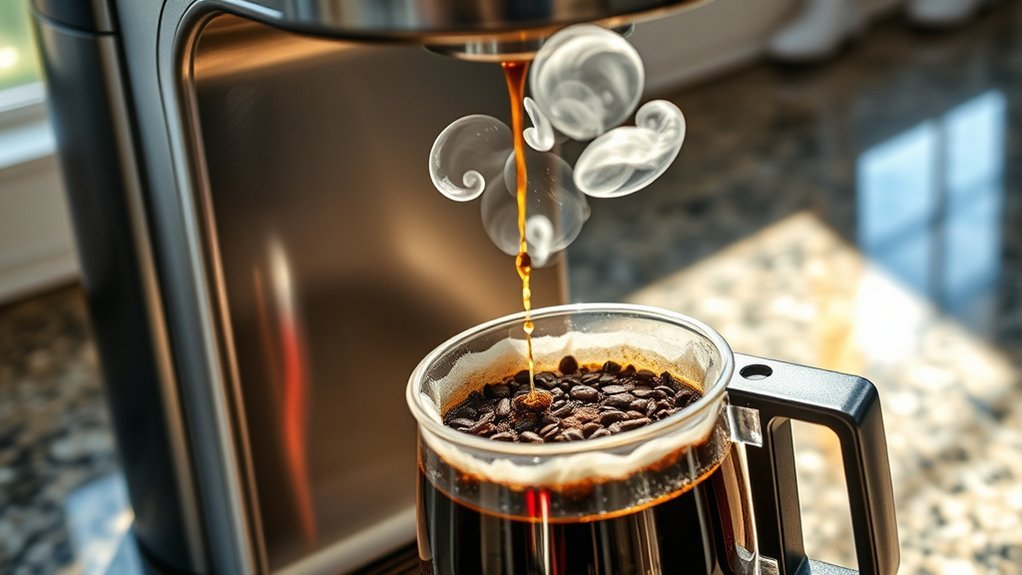
A common issue with coffee makers is the accumulation of blockages that hinder performance and slow down brewing. Often, these blockages are traced back to coffee grounds getting stuck in the system, particularly through a specific hole at the bottom of the unit.
To identify these clogs, you’ll need to disassemble the coffee maker, removing rubber plugs and screws for a thorough inspection. Pay special attention to the hoses; a jammed one-way valve can restrict fluid movement, indicated by a hard spot in the hose.
Regular cleaning of this valve, including rinsing it at the sink, is essential. By maintaining clean components and preventing grounds from entering the bottom, you can greatly enhance your coffee maker’s brewing speed.
Why the One-Way Valve Is Crucial for Your Coffee Maker’s Function
Understanding the role of the one-way valve in your coffee maker is essential for ideal brewing performance. This component guarantees water flows in the correct direction, playing a significant role in backflow prevention.
When the one-way valve is jammed, it restricts water flow, resulting in slow brewing times and incomplete extraction of coffee flavors. Regular inspection is key, as blockages from coffee grounds or mineral buildup can occur, which you can clear using compressed air or rinsing.
Proper placement and functionality of the one-way valve are necessary to maintain the pressure required for effective heating during brewing. By confirming the internal ball moves freely, you’ll enhance the overall performance and lifespan of your coffee maker, highlighting the one-way valve’s importance.
How Often Should You Clean Your Coffee Maker?
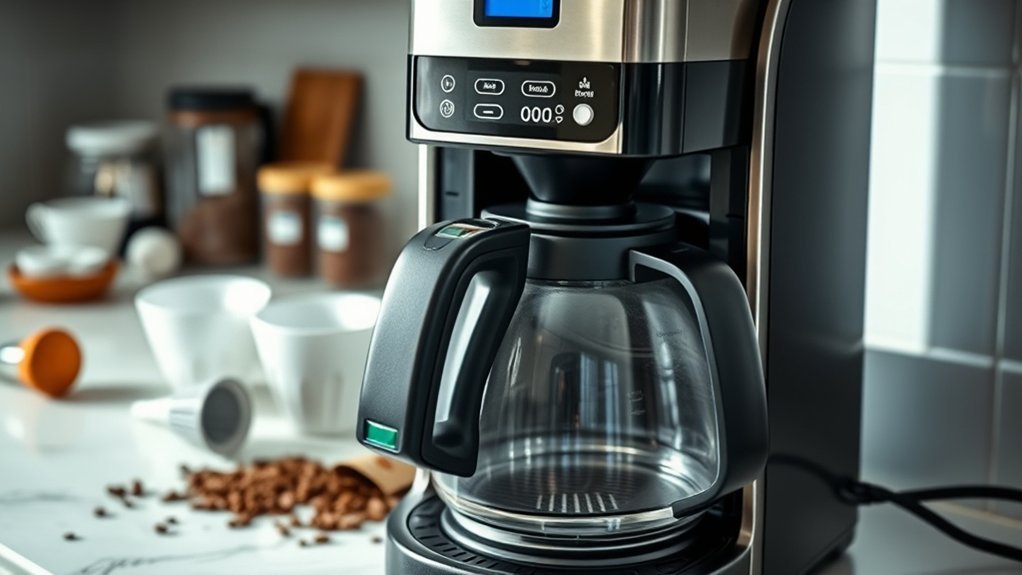
Maintaining the functionality of your coffee maker involves more than just checking the one-way valve; regular cleaning is essential for peak performance.
It’s recommended to clean your coffee maker every 1 to 3 months, depending on your cleaning frequency and water quality. Regular maintenance helps prevent the buildup of coffee grounds and mineral deposits, which can slow down brewing times.
If you hear gurgling noises or notice reduced water flow, it’s time for immediate cleaning. For effective results, use a mixture of equal parts water and vinegar to sanitize and remove buildup.
Following these maintenance tips not only enhances your coffee’s flavor but also extends your coffee maker’s lifespan, ensuring you enjoy ideal brews every time.
Frequently Asked Questions
Can I Use Baking Soda Instead of Vinegar for Descaling?
You can’t use baking soda instead of vinegar for descaling. While baking soda has cleaning benefits, it doesn’t effectively dissolve mineral buildup like vinegar alternatives do. Stick to vinegar for best results in descaling your appliance.
What Type of Vinegar Is Best for Cleaning Coffee Makers?
Think of white vinegar as the knight in shining armor for your coffee maker. It’s the best choice for cleaning, while apple cider vinegar can work too, but might leave a slight residue. Choose wisely!
How Do I Know if My Coffee Maker Needs Descaling?
You’ll know your coffee maker needs descaling if you notice slower brewing times, unusual noises, or a bitter taste. Regular maintenance tips include checking for these descaling signs to guarantee peak performance and longevity of your machine.
Does the Type of Coffee Grounds Affect Brewing Speed?
The grind size dramatically influences brewing speed. Finer grounds increase surface area, enhancing extraction at ideal brewing temperatures. If you’re using coarse grounds, your coffee might brew slower than a glacier melting in the sun.
Can Hard Water Damage My Coffee Maker?
Yes, hard water can damage your coffee maker. The mineral buildup from hard water clogs internal components, affecting performance and potentially leading to malfunctions. Regular descaling helps mitigate these issues and prolongs your machine’s lifespan.
Conclusion
By addressing slow brewing in your coffee maker with these troubleshooting steps, you can guarantee that each cup flows like a well-oiled machine. Regular cleaning and vigilance against blockages will keep your coffee experience enjoyable and efficient. Remember, your coffee maker isn’t just a device; it’s the heart of your morning routine. So, nurture it, and it’ll reward you with rich, flavorful brews that kickstart your day with a burst of energy.


