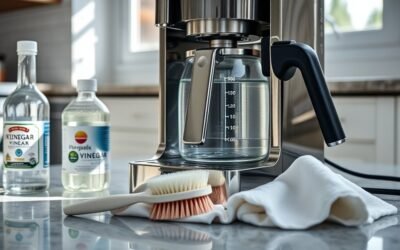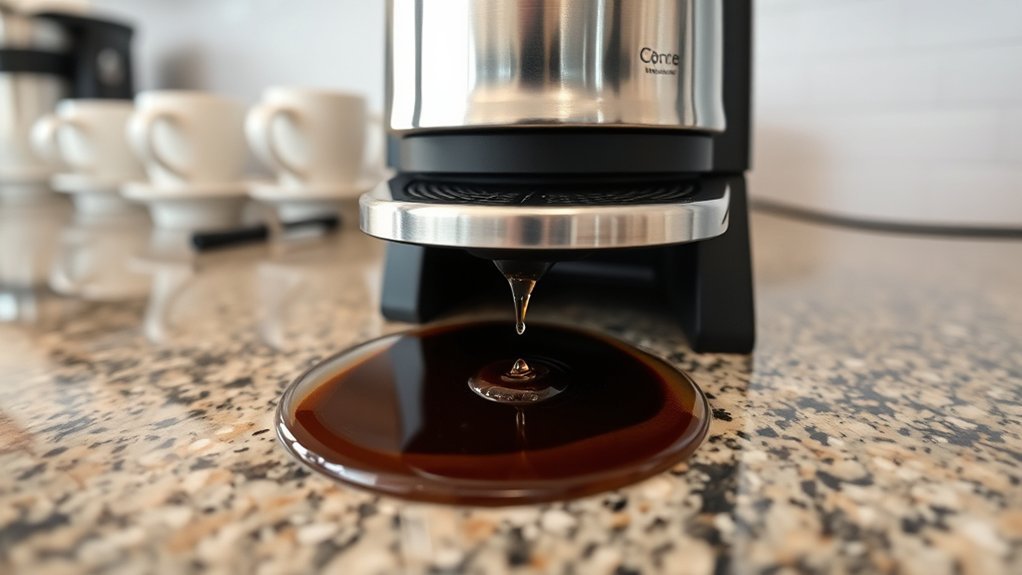
If your coffee maker’s leaking from the bottom, it could be due to cracked hoses, misaligned decanters, or worn seals. Check for water pooling under the unit or drips during brewing. Inspect hoses and connections for damage, and guarantee the drip tray is properly aligned. Clogged components can also lead to leaks. Regular maintenance is essential to avoid these issues. Discover more tips on preventing leaks and effective fixes for your coffee maker.
Key Takeaways
- Check for cracked hoses or tubing, as these are common causes of leaks from the bottom of the coffee maker.
- Ensure the decanter is properly aligned to prevent coffee overflow and leaks during brewing.
- Inspect removable reservoirs and seals for damage, which can contribute to water leaks.
- Regularly maintain and clean your coffee maker to prevent clogs and pressure buildup that lead to leaks.
- If repair costs exceed 50% of a new machine, consider replacing the coffee maker for better reliability.
Common Causes of Coffee Maker Leaks: Understanding the Issues
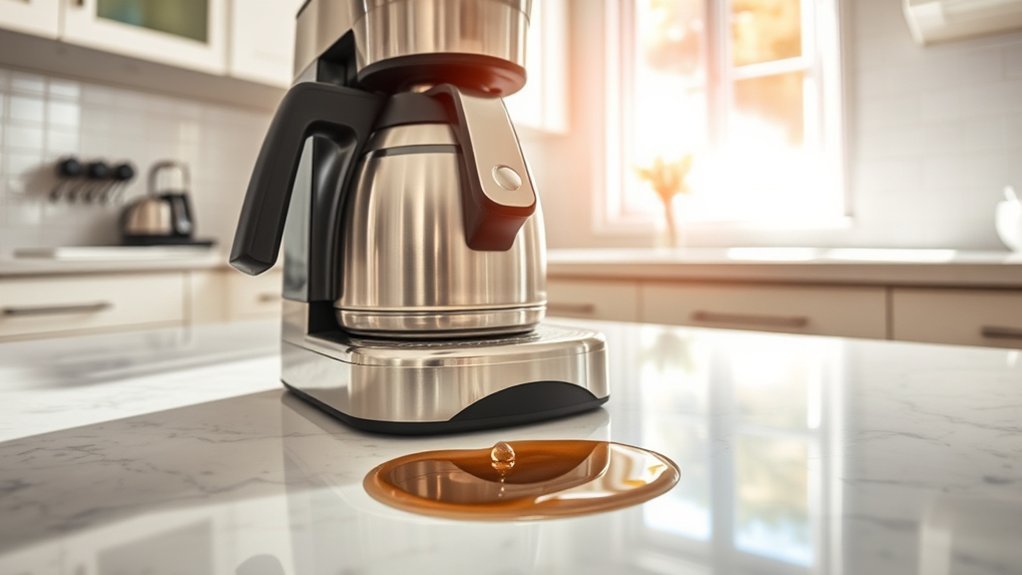
When you notice water leaking from the bottom of your coffee maker, it’s crucial to identify the underlying issues to prevent further damage.
Common causes include a split hose, cracked water tubing, or misalignment of the decanter, all of which compromise coffee maker functionality. Additionally, steam condensation can accumulate, leading to pooling water and potential leaks.
Seal failures in removable reservoirs often contribute to water escaping, while corrosion around hose connections indicates a leak. Even new appliances can experience these problems, prompting users to switch brands due to persistent issues.
Regular maintenance, such as inspecting hoses and ensuring the drip tray is properly seated, is essential for maintaining ideal brewing temperature and preventing leaks in your coffee maker.
Identifying Coffee Maker Leak Sources
When your coffee maker leaks, recognizing common symptoms like water pooling under the unit can help you identify the issue.
Inspect the machine carefully for misaligned decanters, damaged hoses, or cracked tubing.
Common Leak Symptoms
Identifying the symptoms of a coffee maker leak is vital for timely repairs and ideal performance. Here are three common leak symptoms to watch for:
- Water pooling under the unit.
- Drips from the bottom during or after brewing.
- Excessive water accumulation in the drip tray.
These indicators often stem from issues like a misaligned decanter or a malfunctioning water pump. You might also notice water droplets hanging from the bottom.
Regular maintenance, including cleaning and inspecting seals and hoses, plays an important role in leak prevention. By staying proactive with these maintenance tips, you can greatly reduce the risk of leaks and improve your coffee maker’s longevity, ensuring it continues to deliver that perfect brew.
Inspection Techniques
A thorough inspection is essential for pinpointing the source of leaks in your coffee maker. Start by checking the drip tray alignment, as misalignment can cause water to pool and leak from the bottom.
Next, perform a hose inspection, looking for any cracks or splits that could lead to leakage during operation. Remove the bottom panel to access internal components, allowing you to thoroughly examine the water pump and hose connections for potential leaks.
Conduct a water test by filling the coffee maker and observing for any drops or pooling under the unit. Document your findings, especially if you identify a crack in the tank or other significant issues, as this will assist with warranty claims or repairs.
Potential Causes
Understanding the potential causes of leaks in your coffee maker can save you time and frustration. Here are three common sources of leaks to contemplate:
- Improper Alignment: Misaligned decanters can lead to spills, while malfunctioning seals in removable reservoirs may cause water to escape.
- Cracked Components: Wear and tear can result in cracked water tubing or split hoses, creating leaks that require immediate attention.
- Steam Condensation: This can accumulate under the machine, leading to water pooling.
Checking and Maintaining Hoses and Connections
To prevent leaks from your coffee maker, regularly inspect the hoses for cracks or corrosion.
Make sure all connections are tightened properly, as loose fittings can lead to water escaping.
Keeping these components in good condition is essential for maintaining your coffee maker’s performance.
Inspect Hose Integrity Regularly
Regularly inspecting the integrity of hoses and connections in your coffee maker is essential for preventing leaks.
Confirming hose durability can save you from unnecessary messes and costly repairs. Here are key points to focus on:
- Examine for Damage: Look for cracks, splits, or corrosion in hoses and connections that can lead to leaks.
- Check Clamps: Verify all hose clamps are tightened properly to prevent water from escaping due to loose connections.
- Clear Blockages: Inspect the water pump and inlet tubes for blockages that can cause pressure buildup and potential hose failure.
Tighten Connections As Needed
Inspecting hose integrity is just the beginning; ensuring that all connections are tight is equally important in preventing leaks from your coffee maker. Use effective tightening techniques to secure all hose clamps, as loose connections are common culprits of water leakage. Regularly check removable reservoirs and their seals for wear or damage, since faulty connection materials can lead to significant leaks. Don’t forget to clean the coffee maker regularly to avoid buildup that obstructs hoses. If you suspect a leak, disassemble the unit carefully, inspecting the water pump and inlet tubes for blockages or damage.
| Connection Type | Maintenance Tips |
|---|---|
| Hose Clamps | Tighten securely |
| Reservoir Seals | Inspect for wear |
| Inlet Tubes | Check for blockages |
The Importance of Regular Drip Tray Management
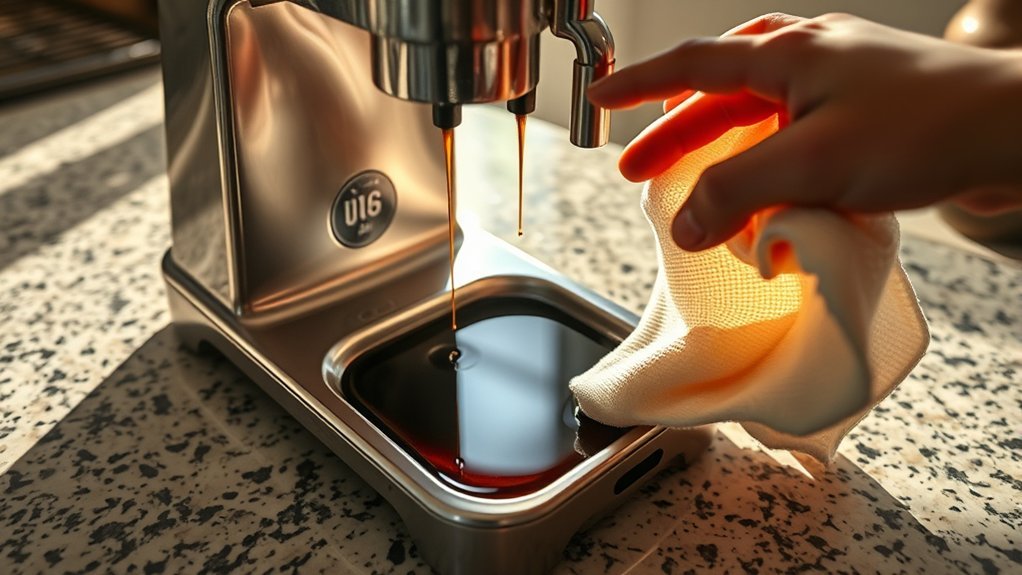
A well-managed drip tray is essential for the best performance of your coffee maker. Regular maintenance not only guarantees drip tray hygiene but also prevents overflow.
A properly maintained drip tray is crucial for optimal coffee maker performance and hygiene, preventing unnecessary overflow.
Here are three key practices to follow:
- Empty the drip tray regularly: Check it after each use, especially during high-volume brewing, to avoid excess water accumulation.
- Clean the tray frequently: This helps maintain peak machine performance and prevents buildup that may contribute to leaks.
- Confirm proper placement: Make sure the drip tray is properly seated to enhance functionality and reduce the chances of leaks.
How to Fix Brew Basket Overflow
Managing the drip tray is just one aspect of maintaining a functional coffee maker; addressing brew basket overflow is equally important.
To prevent overflow, make certain the brew basket is fully closed and that it clicks firmly into place. Avoid overfilling the brew basket with coffee grounds, as excess coffee can lead to spillage; use a measured amount to maintain ideal brewing levels.
Regularly check for blockages in the brew basket or filter, as these can impede water flow and cause overflow issues. Additionally, monitor the water level in the carafe, making sure you don’t exceed the Max Fill line.
If overflow persists, inspect seals for damage or wear, as these may need replacement for effective overflow prevention.
When to Repair vs. Replace Your Coffee Maker: Key Considerations
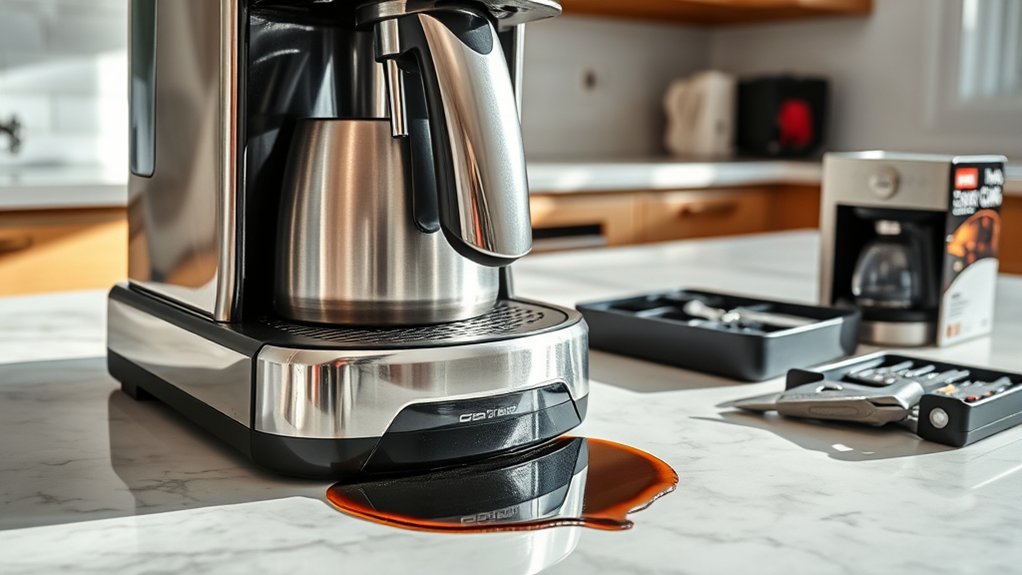
Sometimes, deciding whether to repair or replace your coffee maker can be tricky. Here are three key considerations to help you make the right choice:
- Extent of the Leak: If it’s a minor issue like a cracked hose, repairs may be feasible. However, extensive damage usually warrants replacement due to repair costs.
- Age of the Coffee Maker: If your coffee maker is over five years old and leaking frequently, it might be time to evaluate replacement benefits.
- Cost of Parts vs. New Machine: If the repair costs exceed 50% of a new unit’s price, replacing is typically the smarter option.
Additionally, check warranty options and user reviews; these factors can further inform your decision on whether to repair or replace your coffee maker.
What Users Are Saying: Insights From the Community
Users frequently share their experiences regarding leaks from the bottom of coffee makers, particularly with models like the Ninja Luxe Café. Many attribute these issues to improper setup or mechanical malfunction.
Discussions in community forums reveal that regular maintenance—such as checking hoses and drip trays—can greatly reduce the risk of leaks and enhance the coffee maker’s performance. Users express frustration over repeated leaking, leading some to switch brands after multiple failures.
Key troubleshooting tips include inspecting the brew basket to verify it’s securely closed, which can prevent coffee overflow and leaks. Engaging with fellow users provides valuable insights, as shared experiences often lead to practical solutions for common leaking problems.
Preventative Measures to Avoid Future Coffee Maker Leaks
To guarantee your coffee maker remains leak-free, it’s essential to adopt a proactive approach to maintenance.
Adopting a proactive maintenance approach is key to keeping your coffee maker leak-free.
Here are three key strategies for effective leak prevention:
- Inspect Hoses Regularly: Check for cracks or splits in hoses and connections, as these are common leak sources.
- Maintain the Drip Tray: Confirm the drip tray is properly seated and emptied frequently to prevent overflow.
- Clean the Coffee Maker: Regular cleaning prevents buildup that can block the water pump and tubing, which may lead to leaks.
What Happens If You Ignore Coffee Maker Maintenance?
When you neglect coffee maker maintenance, you risk accelerating wear and tear on its components, which can lead to more frequent leaks and operational malfunctions.
Ignoring regular cleaning allows coffee residue to build up, clogging hoses and causing water to pool or overflow.
Failure to inspect and replace worn seals and hoses can result in persistent leaks, potentially damaging your countertops.
Regularly emptying and cleaning the drip tray is essential to prevent overflowing and mold growth.
Ultimately, without proper maintenance, your coffee maker’s longevity decreases considerably, leading to premature replacement and increased costs.
Frequently Asked Questions
Can I Still Use a Leaking Coffee Maker Temporarily?
You can use a leaking coffee maker temporarily, but you risk damaging the appliance and creating a mess. Monitor the situation closely, and consider addressing the leak to avoid further complications and safety hazards.
What Type of Sealant Is Safe for Coffee Makers?
For coffee makers, use food-safe sealants like silicone or epoxy specifically designed for appliance repair. Make certain the sealant is non-toxic and suitable for high temperatures to prevent any contamination during brewing.
How Often Should I Clean My Coffee Maker?
Your coffee maker’s like a car; regular maintenance keeps it running smoothly. Clean it every month to prevent buildup, ensuring ideal flavor and longevity. Consistent cleaning frequency enhances your brewing experience, making each cup a delight.
Are There Specific Brands Known for Leak Issues?
Some common brands reported for leak issues include Mr. Coffee and Cuisinart. User reviews often highlight these problems, so researching specific models and their reliability can help you avoid potential leaks in your coffee maker.
Can Hard Water Cause Coffee Maker Leaks?
Yes, hard water can cause coffee maker leaks. Mineral buildup from hard water can clog components, leading to pressure imbalances and leaks. Regular descaling helps prevent these issues and maintains your coffee maker’s efficiency.
Conclusion
In conclusion, addressing leaks in your coffee maker is essential for both performance and longevity. Did you know that nearly 20% of coffee makers experience leaks due to improper maintenance? By regularly checking hoses, managing the drip tray, and promptly fixing brew basket overflow, you can greatly reduce the risk of leaks. Staying proactive not only enhances your brewing experience but also saves you money in the long run. Don’t ignore maintenance—your coffee maker will thank you!