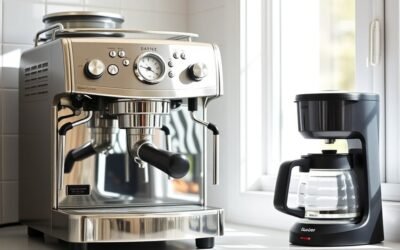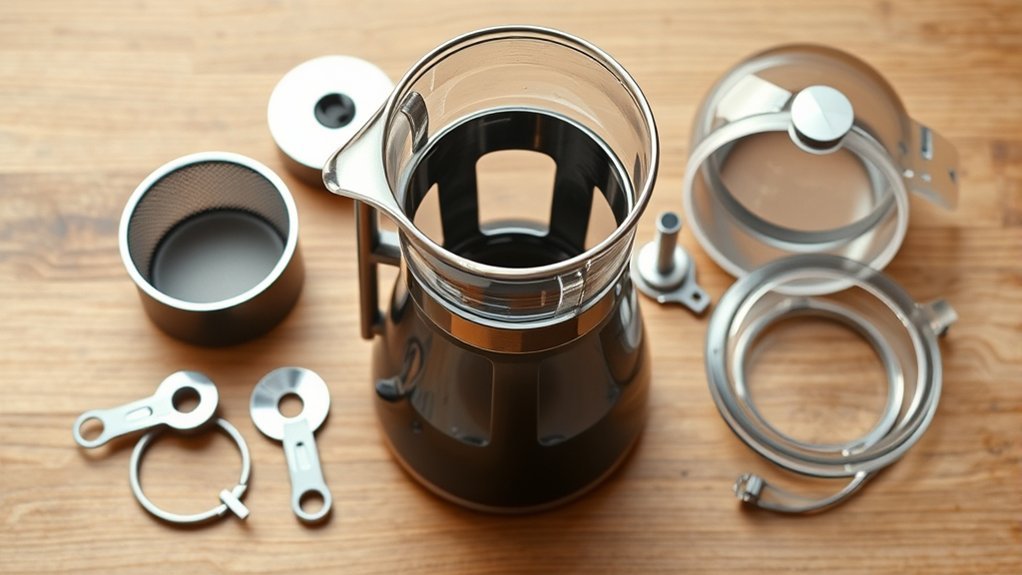
A coffee maker includes key parts like the water tank, heating element, brew basket, carafe, and control panel, each serving specific functions. The water tank holds the water, while the heating element heats it. The brew basket contains coffee grounds for brewing, and the carafe collects the finished coffee. The control panel allows you to customize settings. Understanding these components can enhance your coffee experience and lead to better brewing solutions as you explore further.
Key Takeaways
- The water tank holds water for brewing and is usually located at the back or top of the coffee maker.
- The heating element is situated near the water tank, heating water to the ideal brewing temperature.
- The brew basket is where ground coffee is placed and is typically located above the carafe.
- The carafe collects brewed coffee and is positioned below the brew basket for easy pouring.
- The control panel allows customization of brewing times and coffee strength, usually found on the front of the machine.
Overview of Coffee Maker Components
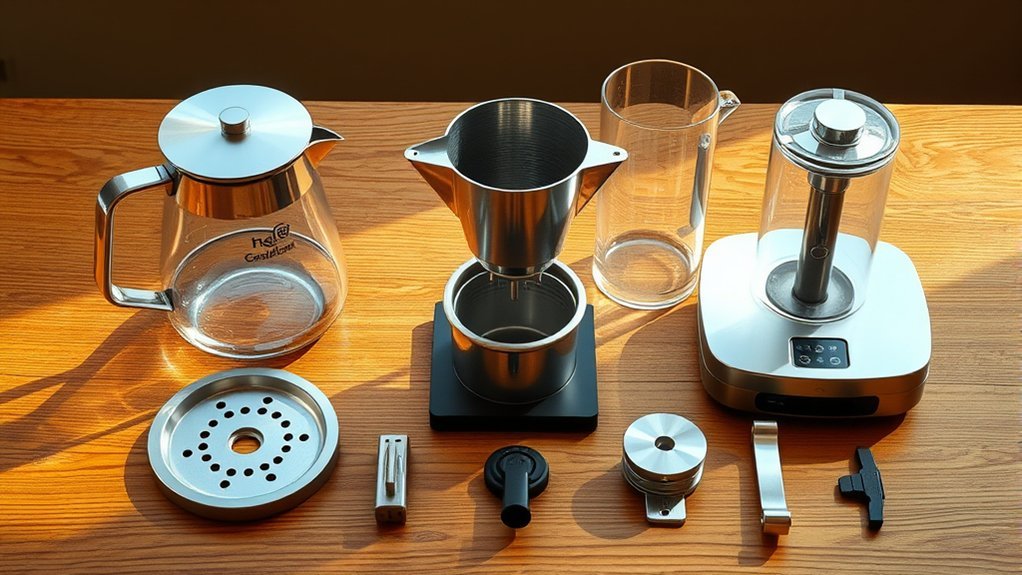
When you think about brewing a perfect cup of coffee, it’s essential to understand the key components of a coffee maker.
The water tank holds the water needed for brewing, while the heating element heats it to the ideal temperature for coffee brewing.
The brew basket is where you place ground coffee, allowing hot water to pass through and extract flavors effectively. This process enhances flavor extraction, guaranteeing your coffee is rich and aromatic.
Finally, the carafe collects the brewed coffee below. Many coffee makers also feature a control panel, enabling you to customize brewing times and coffee strength.
Regular maintenance, such as cleaning the brew basket and descaling the water tank, guarantees peak performance and preserves flavor quality.
Understanding the Importance of the Portafilter
The portafilter is key to crafting great espresso, as its design directly impacts extraction consistency.
By choosing the right basket size and maintaining your portafilter, you can guarantee ideal flavor and performance.
Regular cleaning will also extend its lifespan, keeping your espresso machine in top shape.
Portafilter Design Features
Understanding the significance of the portafilter is essential for brewing high-quality espresso. The portafilter, often made from materials like stainless steel or brass, plays an important role in heat retention and durability, directly impacting shot quality.
Its design features include various portafilter shapes, such as single, double, and triple baskets, which determine the coffee amount and shot strength. Additionally, the spout design affects pressure control, influencing the extraction process and ultimately the flavor of your espresso.
Ensuring a tight seal between the portafilter and the group head is critical to prevent leaks and guarantee ideal water flow during brewing. By paying attention to these design features, you can enhance your espresso-making experience.
Extraction Consistency Importance
Achieving consistent extraction is essential for crafting the perfect espresso, and the portafilter plays a key role in this process. It holds the ground coffee during extraction, ensuring ideal water flow through the coffee puck.
The size of the portafilter basket—whether single, double, or triple—affects extraction variables like volume and strength, directly influencing flavor. Additionally, the design and material impact heat retention, critical for stabilizing brewing parameters.
A well-fitted portafilter creates a tight seal with the group head, preventing leaks and ensuring even water distribution over the grounds. Regular maintenance is important to prevent coffee residue buildup, which can compromise extraction quality and flavor consistency.
With the right portafilter, you’ll achieve a balanced and rich espresso every time.
Maintenance for Longevity
While you might focus on the coffee beans and water temperature, neglecting your portafilter can sabotage your espresso quality. Regular portafilter cleaning is essential to prevent oil buildup that affects extraction. Additionally, inspect the gasket frequently, as a worn gasket can lead to leaks and weak shots.
Here’s a quick maintenance guide:
| Task | Frequency | Importance |
|---|---|---|
| Portafilter Cleaning | After each use | Guarantees optimal extraction |
| Gasket Inspection | Monthly | Prevents leaks |
| Component Check (Basket & Spring) | Bi-weekly | Maintains water flow |
Lock your portafilter tightly to the group head for consistent shots. Regular maintenance enhances flavor and crema, guaranteeing your espresso experience is first-rate.
The Function of the Group Head
The group head plays an essential role in an espresso machine, serving as the point where the portafilter locks in to brew your coffee. Its design guarantees a tight seal, critical for maintaining optimal extraction pressure and preventing leaks during the brewing process.
When hot water is distributed over the coffee grounds, the shower screen aids in even water distribution, promoting uniform saturation and preventing channeling. Operating at temperatures between 90–96°C, the group head is fundamental for achieving the ideal extraction necessary for rich flavors and aromas in your espresso.
Regular maintenance is key, as a well-functioning group head directly influences the quality of your brew, guaranteeing you enjoy every cup to the fullest.
The Pump’s Role in Brewing Quality

Without the pump, brewing a quality espresso would be nearly impossible. The pump’s performance directly impacts espresso extraction, pushing water through coffee grounds at around 9 bars of pressure. This ideal pressure is crucial for extracting rich flavors. There are two main pump types: rotary pumps, known for consistent pressure in commercial machines, and vibration pumps, which are compact for home use.
| Pump Type | Key Features |
|---|---|
| Rotary Pump | Consistent pressure, commercial use |
| Vibration Pump | Compact, affordable for home use |
| Maintenance | Important for longevity |
| Flow Stability | Prevents uneven brewing |
| Temperature Control | Influences quality |
A well-maintained pump guarantees stable water flow, preventing channeling and enhancing your espresso experience.
How Boilers Control Temperature in Your Coffee Maker
Understanding how boilers control temperature in your coffee maker is vital for brewing the perfect cup of espresso. The boiler type you choose can greatly impact your coffee experience.
Here are three key points to evaluate:
- Boiler Types: Single, dual, and heat exchanger boilers each serve different brewing needs, affecting efficiency and temperature control.
- Temperature Stability: A well-functioning boiler maintains temperature stability between 90–96°C, which is important for ideal espresso extraction.
- Simultaneous Brewing: Dual boilers allow you to brew and steam simultaneously, ensuring consistent temperature control for lattes and cappuccinos.
Regular maintenance, like descaling and checking for leaks, keeps your boiler in top shape, enhancing your coffee maker’s performance and longevity.
Benefits of Using a Burr Grinder for Consistent Grounds
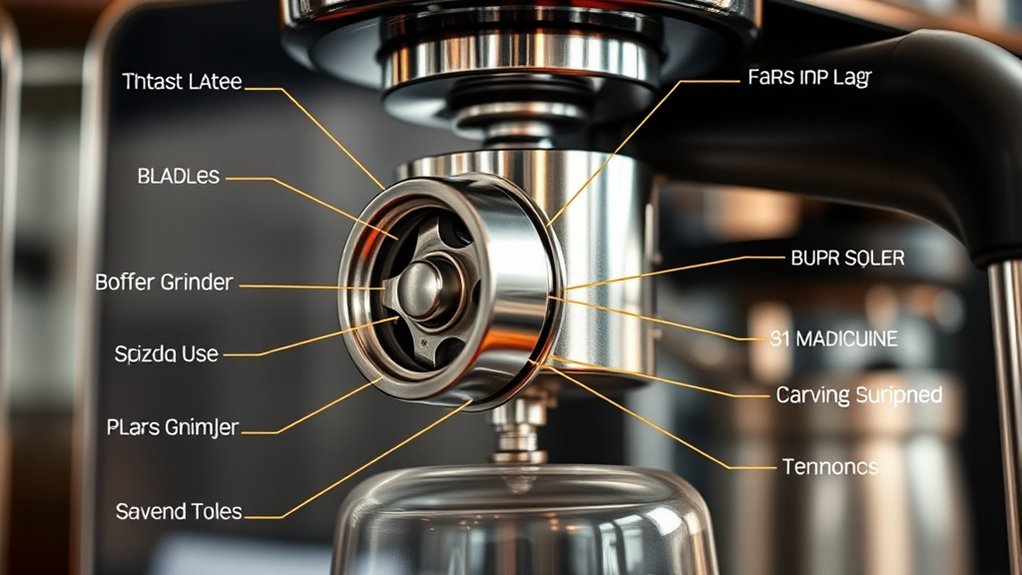
A coffee maker’s performance relies not only on its boiler system but also on the quality of the grind. Using a burr grinder guarantees you achieve uniform coffee grounds by crushing beans between two abrasive surfaces.
This consistency minimizes fines and boulders, leading to a balanced flavor profile in your brewed coffee. With options like flat and conical burrs, you can select the best type for your needs; conical burrs often provide superior consistency and less heat during grinding.
Plus, burr grinders allow precise adjustments to grind size, accommodating various brewing methods like espresso, pour-over, and French press.
Ultimately, using a burr grinder enhances your coffee’s quality, preserving essential oils and flavors for a richer experience.
The Steam Wand: Key to Frothing Milk Perfectly
The steam wand is an indispensable tool for any coffee enthusiast aiming to create café-quality beverages at home.
Mastering frothing techniques with your steam wand will elevate your drinks, guaranteeing a luscious microfoam for cappuccinos and lattes.
Here are three key aspects to keep in mind:
- Positioning: Properly angle the steam wand in the milk to control air incorporation, crucial for achieving that creamy texture.
- Steam Tip Design: Utilize the splayed steam tip for efficient steam dispersion, enhancing your frothing experience.
- Maintenance: Regularly clean your steam wand to avoid milk residue buildup, which guarantees peak performance and hygiene.
Key Maintenance Tips for Coffee Maker Components
Proper maintenance of your coffee maker components is crucial for consistently great coffee.
Start with regular cleaning techniques for the group head and shower screen to avoid coffee oils and residue buildup, which can affect flavor.
Keep the portafilter clean and make certain the filter basket is free from clogs for effective extraction.
Check gaskets and seals often, replacing them as needed to prevent leaks and maintain brewing pressure.
Don’t forget to periodically clean the steam wand to avoid milk residue buildup, guaranteeing ideal frothing performance.
Finally, establish a maintenance schedule to descale the water tank and boiler regularly, removing mineral buildup that can impair heating efficiency and overall machine performance.
Troubleshooting Common Coffee Machine Issues
When your coffee machine isn’t operating as expected, it can be frustrating, but identifying the issue is often straightforward.
Here are some common problems and solutions for effective coffee machine troubleshooting:
- Brewing Issues: Check the water reservoir. Verify it’s filled and seated correctly in your espresso machine.
- Poor Extraction: Clean the portafilter and group head regularly to avoid blockages that affect performance.
- Inconsistent Temperature: A malfunctioning heating element can lead to brewing inconsistencies. Confirm it’s functioning properly.
Common Brewing Techniques for Coffee Makers
Understanding various brewing techniques can enhance your coffee experience considerably. Different brewing methods affect flavor extraction, allowing you to customize your cup to your liking. Here’s a quick overview of common techniques:
| Brewing Method | Description | Flavor Profile |
|---|---|---|
| Drip Brewing | Water flows over coffee grounds in a filter. | Balanced and smooth |
| French Press | Coarse grounds steeped in hot water, then pressed. | Rich and full-bodied |
| Espresso | High pressure extracts coffee quickly, creating crema. | Intense and concentrated |
| Pour-Over | Manual pouring allows precise control. | Clean and nuanced |
| Cold Brew | Steeping in cold water for hours yields a smooth taste. | Low acidity, mellow |
Experimenting with these methods can help you discover your ideal coffee!
Frequently Asked Questions
How Often Should I Clean My Coffee Maker’s Components?
You should clean your coffee maker’s components every month for peak performance. Establish a cleaning schedule and follow maintenance tips, like descaling and washing removable parts, to guarantee great-tasting coffee and extend your machine’s lifespan.
What Type of Coffee Beans Is Best for My Machine?
For your machine, espresso blends are unbeatable! They deliver rich, robust flavors. Just remember, the grind size matters—too coarse and you’ll miss out; too fine and you might clog. Find the perfect balance for the best brew!
Can I Use Pre-Ground Coffee in My Coffee Maker?
Yes, you can use pre-ground coffee in your coffee maker. Just make certain the coffee grind size matches your brewing techniques for best flavor. Coarse grounds work best for longer brews, while fine grounds suit quicker methods.
What Is the Lifespan of a Typical Coffee Maker?
A typical coffee maker lasts about 5 to 10 years, but neglecting coffee maker maintenance can shorten its lifespan. Regular cleaning and timely coffee maker repairs can keep yours brewing delicious coffee for years to come.
Are There Specific Water Requirements for Brewing Coffee?
Yes, there are specific water requirements for brewing coffee. Use water between 195°F and 205°F for ideal flavor extraction, and guarantee the brewing time ranges from 4 to 6 minutes for the best results.
Conclusion
Now that you understand the essential components of your coffee maker, you can confidently tackle any brewing challenge. While diagrams might seem complex, they actually simplify your understanding of each part’s function and location. Visualizing these components can enhance your maintenance and troubleshooting skills. Remember, keeping your coffee maker in top shape means better coffee every time. So, grab that diagram and start brewing your perfect cup!