


When deciding between a coffee maker and an espresso machine, it’s important to note their brewing methods and flavor profiles. Espresso machines use high pressure to extract intense flavors with quick preparation times, while coffee makers rely on gravity for milder, larger batches. Maintenance and costs vary considerably; coffee makers are simpler and more affordable, while espresso machines require more care and investment. To help you choose the best option, let’s explore these factors further.
Key Takeaways
- Espresso machines brew concentrated shots under high pressure, while coffee makers use gravity to produce milder drip coffee.
- Espresso features intense flavors and aromas with a rich crema, whereas coffee maker coffee has a smoother, diluted taste.
- Espresso machines require intricate maintenance and higher costs, while coffee makers are simpler and more affordable to maintain.
- Espresso servings are small (1-2 ounces), providing high caffeine intensity, while drip coffee servings are larger (8-12 ounces) with lower intensity.
- Choose an espresso machine for concentrated flavors and customization, or a coffee maker for convenience and larger batch brewing.
Understanding Espresso: Key Features and Preparation
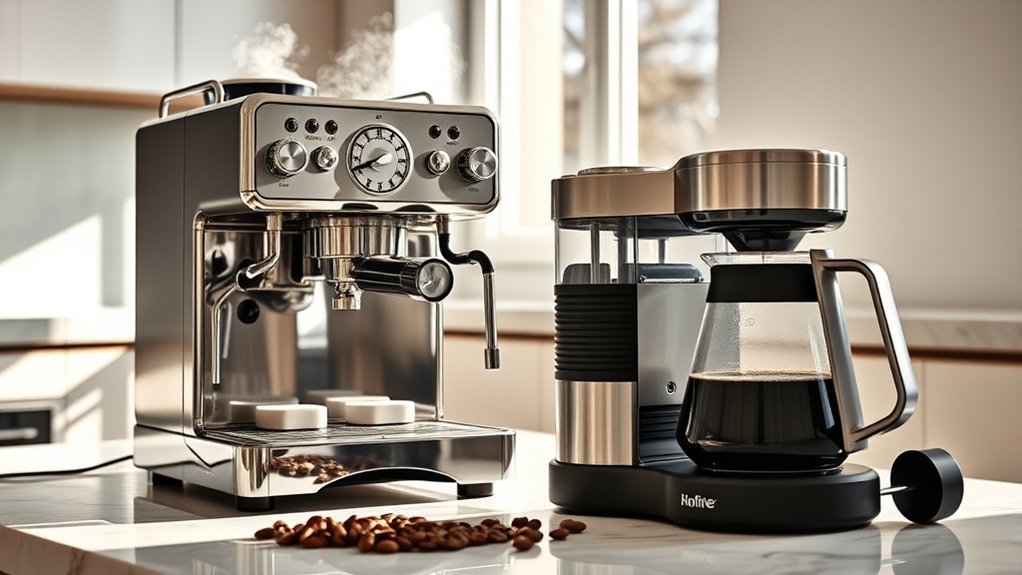
When you plunge into the world of espresso, you’ll discover that its brewing process is both art and science.
Espresso extraction techniques involve forcing nearly boiling water through finely ground coffee under high pressure. This method extracts intense flavors and aromas in just 20 to 30 seconds, resulting in a concentrated shot.
Espresso extraction expertly forces hot water through finely ground coffee, unlocking bold flavors in a mere 20 to 30 seconds.
The espresso showcases three distinct layers: the heart, body, and crema. The crema, a golden, foamy layer, forms during the brewing process and is essential for a rich texture. Understanding these crema formation methods enhances your espresso-making skills.
With a typical espresso-to-water ratio of 50%, it delivers a thicker consistency and higher caffeine concentration, making it the go-to choice for a robust coffee experience.
Understanding Coffee Maker Style Coffee
When you use a coffee maker, you’re engaging in a straightforward brewing method where hot water filters through ground coffee to produce a mild flavor.
This process differs markedly from espresso preparation, not just in time but also in resulting taste and equipment maintenance.
Understanding these distinctions can enhance your coffee experience, whether you’re aiming for a quick brew or exploring flavor profiles.
Brewing Method Comparison
Although many coffee enthusiasts appreciate the rich and robust flavors of espresso, understanding the brewing method of coffee maker style coffee, or drip coffee, is essential for anyone looking to enjoy a smoother, milder cup.
In this method, hot water flows over coarsely ground coffee, relying on gravity to extract flavors. This results in brewing consistency, as the process can be replicated easily.
Unlike espresso machines, which utilize high-pressure extraction techniques for intense flavors in a brief 30 seconds, coffee makers brew for up to ten minutes.
Additionally, coffee makers typically prepare larger quantities, making them suitable for serving multiple cups at once. This makes drip coffee an accessible choice for both casual drinkers and gatherings.
Flavor Profile Insights
The flavor profile of coffee maker style coffee is distinctly characterized by its milder taste and smoother texture. This brewing method utilizes a drip technique that results in a beverage containing approximately 98% water and 2% caffeine and oil. While you can adjust the grind size and coffee-to-water ratio for a stronger cup, coffee maker style coffee still lacks the rich intensity and crema found in espresso. Here’s a closer look at the coffee nuances and brewing characteristics:
| Flavor Element | Coffee Maker Coffee | Espresso |
|---|---|---|
| Intensity | Mild | Strong |
| Texture | Smooth | Creamy |
| Brewing Time | Up to 10 minutes | 20-30 seconds |
| Oil Content | Low | High |
| Complexity | Simple | Complex |
Equipment Maintenance Needs
Maintaining your coffee maker is generally a straightforward process, especially when compared to the more intricate care required for espresso machines.
With fewer components, you can focus on simple tasks that guarantee peak performance. Here’s what you need to know about maintenance frequency and cleaning techniques:
- Clean the carafe and filter basket after each use.
- Use dishwasher-safe parts for quick cleanup when available.
- Descale the coffee maker periodically to prevent mineral buildup.
- Regularly check and replace the water filter if applicable.
Brewing Methods: How Espresso Machines and Coffee Makers Differ
Two primary brewing methods distinguish espresso machines from traditional coffee makers, each producing a unique coffee experience.
Espresso machines operate by forcing nearly boiling water through finely ground coffee under high pressure, achieving extraction in about 20 to 30 seconds. This method requires a fine grind size to optimize flavor extraction and results in a concentrated shot with rich crema.
In contrast, coffee makers utilize a gravity-based approach, pouring hot water over coarsely ground coffee, with brewing time extending over several minutes. This process yields a milder, smoother beverage, relying on a medium-coarse grind.
The high pressure used in espresso machines, around 9 bars, is essential for creating the distinct characteristics of espresso, which coffee makers can’t replicate.
Flavor Profiles: What Makes Espresso and Coffee Maker Brews Different?
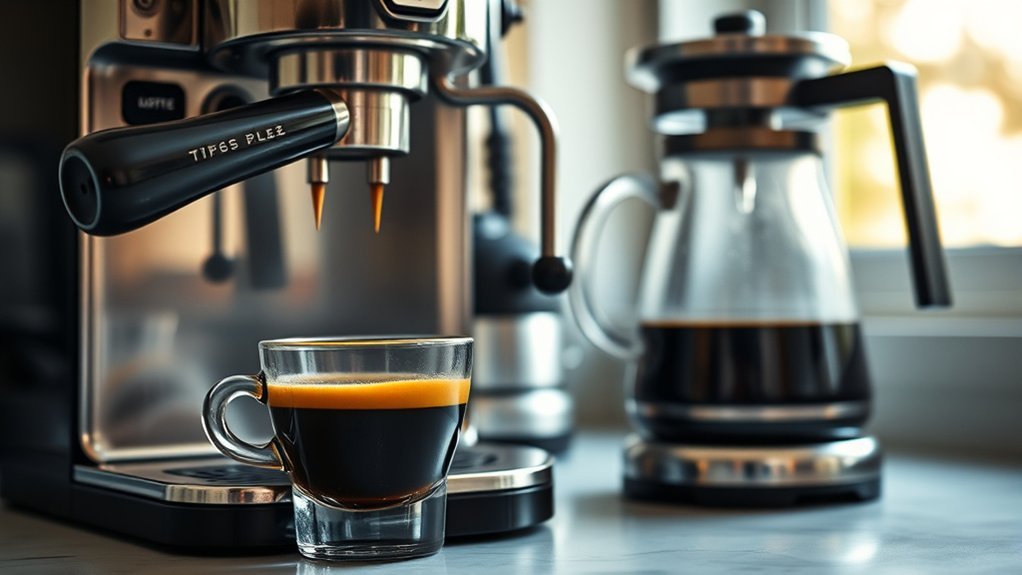
How do flavor profiles differ between espresso and coffee brewed in a coffee maker? The brewing methods greatly impact the taste and texture.
Espresso’s high-pressure extraction creates a rich, concentrated flavor in just 20 to 30 seconds, while coffee maker brews rely on gravity, resulting in a milder taste.
Key differences include:
- Crema qualities: Espresso has a distinct golden crema, enhancing aroma and flavor complexity.
- Grind size: Espresso requires a fine grind for ideal extraction, whereas coffee makers use a coarser grind.
- Flavor layers: Espresso features a combination of bitter, smooth, and foamy layers, while coffee is generally smoother.
- Caffeine concentration: Espresso packs more caffeine into smaller servings, delivering a stronger kick.
Cost and Maintenance of Coffee Machines
When considering the cost and maintenance of coffee machines, you’ll find that there’s a significant disparity between coffee makers and espresso machines.
In a price comparison, coffee makers range from $20 to $150, while quality espresso machines start at $200 and can reach up to $2,000.
Maintenance for coffee makers is straightforward, requiring simple cleaning of the brew basket and water reservoir.
In contrast, espresso machines demand more attention, including descaling and regular cleaning of the brew group and steam wand.
Specialized maintenance may require professional services due to their complex components.
Additionally, replacement parts for coffee makers are generally inexpensive and easily accessible, while those for espresso machines can be costly and harder to find.
Follow these maintenance tips to extend your machine’s lifespan.
Drink Versatility: Choosing Between Espresso and Coffee Maker Beverages

While both coffee makers and espresso machines serve the purpose of brewing coffee, they offer vastly different beverage options suited to various preferences.
Espresso machines provide a wide range of options, allowing you to enjoy:
- Espresso shots
- Cappuccinos
- Lattes
- Specialty drinks like affogato
In contrast, coffee makers primarily brew drip coffee, resulting in milder taste profiles and larger quantities.
If you seek intensity and richness, espresso drinks are your go-to. The brewing process of espresso also allows for quick customization, letting you adjust grind size and pressure for unique coffee varieties.
With a higher caffeine concentration per ounce, espresso is ideal for those wanting a stronger kick.
Ultimately, your choice depends on your desired coffee experience.
Serving Sizes: Espresso Shots vs. Regular Coffee
When you compare serving sizes, espresso shots and regular coffee differ considerably.
A single espresso shot measures about 1 to 2 ounces, packing concentrated flavor and caffeine, while a standard cup of brewed coffee typically holds 8 ounces or more.
This distinction not only affects the drinking experience but also influences how you choose to brew your coffee.
Espresso Shot Sizes
How does the size of an espresso shot compare to a standard cup of coffee? An espresso shot typically measures around 1 ounce (30 ml), while a standard drip coffee serving ranges from 8 to 12 ounces (240 to 360 ml).
This difference highlights the concentrated nature of espresso, delivering a rich flavor profile and a higher caffeine punch per ounce.
- A double shot, or “doppio,” is about 2 ounces (60 ml).
- Espresso varieties use unique brewing techniques for a thicker consistency.
- An espresso shot contains about 63 mg of caffeine.
- An 8-ounce drip coffee has roughly 95 mg of caffeine but is less intense.
Understanding these sizes helps you choose the right coffee experience.
Coffee Serving Quantities
Understanding coffee serving quantities is essential for anyone looking to appreciate the differences between espresso shots and regular coffee.
Espresso is typically served in single (1 ounce) or double shots (2 ounces), delivering a high espresso intensity in small quantities. In contrast, regular coffee servings usually range from 8 to 12 ounces, providing a milder flavor and larger coffee volume per serving.
While an espresso shot contains about 63 mg of caffeine, an 8-ounce cup of drip coffee has around 95 mg, illustrating the higher caffeine concentration in espresso.
Espresso is meant to be consumed quickly, while regular coffee allows for longer sipping and enjoyment, making it ideal for those who prefer multiple cups throughout the day.
When to Choose an Espresso Machine vs. Coffee Maker?
Which brewing method best suits your coffee preferences: an espresso machine or a coffee maker?
If you enjoy a rich, concentrated coffee experience and love crafting drinks like lattes and cappuccinos, an espresso machine is the way to go.
Here are some considerations:
- Espresso machine benefits include faster brewing at 30 seconds under high pressure.
- If you need coffee maker convenience, opt for batch brewing of milder coffee.
- Espresso contains more caffeine per ounce, perfect for a quick pick-me-up.
- For customizability and control over the brewing process, an espresso machine outshines traditional coffee makers.
Ultimately, your choice hinges on your taste preferences and how you like to enjoy your coffee.
How to Choose the Right Coffee Machine for Your Needs?
Choosing the right coffee machine depends on your specific needs and preferences. First, consider the coffee types you enjoy; if you favor rich, concentrated flavors, an espresso machine is likely your best bet.
On the other hand, if you prefer milder, traditional coffee, a coffee maker will suit you better. Evaluate your brewing preferences—espresso machines serve single or double shots, ideal for individuals or small households, while coffee makers can brew multiple cups, perfect for larger gatherings.
Also, factor in maintenance; espresso machines require more upkeep, whereas coffee makers are simpler to maintain. Finally, assess your budget, as quality espresso machines can be a significant investment, making coffee makers more accessible for casual drinkers.
Making the Right Choice: Espresso Machine or Coffee Maker?
When choosing between an espresso machine and a coffee maker, consider the brewing methods and resulting flavor profiles.
Espresso machines brew coffee under high pressure, creating a concentrated and rich taste, while coffee makers rely on gravity for a milder flavor over a longer brewing time.
Your preference for bold versus subtle flavors will guide your decision.
Brewing Method Differences
While both espresso machines and coffee makers excel at brewing coffee, their methods greatly impact the final product. Understanding these brewing techniques helps you choose the right machine for your needs.
- Espresso machines use high pressure (9-15 bars) to force nearly boiling water through finely ground coffee, achieving espresso extraction in about 20 to 30 seconds.
- Coffee makers utilize a drip method, allowing gravity to extract flavors from medium-coarse grounds over a longer period, usually up to ten minutes.
- The espresso process yields a thicker consistency and richer flavor, while coffee makers produce a milder taste.
- Coarse grounds are ideal for coffee makers, while fine grounds are essential for espresso machines to prevent clogging and guarantee peak extraction.
Taste and Flavor Profile
Understanding the taste and flavor profile of coffee is essential in deciding between an espresso machine and a coffee maker.
Espresso machines deliver a rich, concentrated flavor profile with layers of heart, body, and crema, offering high taste intensity and flavor complexity. The brewing process forces hot water through finely ground coffee under high pressure, enhancing flavor extraction in seconds.
In contrast, coffee makers brew milder, smoother coffee, typically consisting of 98% water and only 2% coffee oils and caffeine. While espresso provides a thicker consistency and higher caffeine concentration, drip coffee appeals to those who prefer a lighter, simpler taste.
Ultimately, your choice depends on whether you desire the depth of espresso or the straightforwardness of traditional coffee.
Frequently Asked Questions
Can I Use Espresso Beans in a Coffee Maker?
You can use espresso beans in a coffee maker, but the brewing methods differ. While you’ll achieve a rich espresso flavor, the result may not match traditional espresso due to varying extraction techniques and pressures.
How Long Does Each Machine Typically Last?
Durability determines lifespan; coffee makers often last 5-10 years, while espresso machines can endure 7-15 years. Regular maintenance tips like cleaning and descaling enhance longevity, ensuring peak performance and enjoyment of your brew.
Are There Portable Options for Espresso Machines?
Yes, there are portable espresso options available. Travel machines, like manual espresso makers, offer convenience and flexibility, allowing you to brew quality espresso on the go without needing a power source or bulky equipment.
Can I Froth Milk With a Coffee Maker?
You can’t froth milk with a coffee maker like you would with an espresso machine. However, using frothing techniques and different milk types, you can achieve a decent foam by warming milk separately.
What Are the Power Requirements for Each Machine?
Coffee makers typically consume around 600-1200 watts, while espresso machines range from 800-1500 watts. For energy efficiency, choose models with automatic shut-off features and lower power consumption ratings to reduce electricity usage without sacrificing performance.
Conclusion
In choosing between an espresso machine and a coffee maker, consider your taste preferences and brewing style. Do you crave the rich, concentrated flavor of espresso, or do you prefer the smooth, mellow notes of brewed coffee? Each machine has its strengths, from the intricate brewing process of espresso to the simplicity of a coffee maker. Ultimately, the right choice depends on your lifestyle and coffee habits, ensuring you enjoy every cup to the fullest.


