


When comparing infant cereal and oatmeal for babies, oatmeal stands out with its higher levels of essential vitamins, minerals, and fiber. Unlike rice cereal, which may contain inorganic arsenic and digests quickly, oatmeal offers complex carbohydrates that keep your baby feeling full longer. Oatmeal also supports healthy digestion, making it a safer and more nutritious option. If you’re curious about how to prepare oatmeal or explore alternatives, there are plenty of options to take into account.
Key Takeaways
- Oatmeal contains more essential vitamins and minerals compared to most infant cereals, supporting better growth and development.
- Rice cereal may contain high levels of inorganic arsenic, making oatmeal a safer choice for infants.
- Oatmeal provides complex carbohydrates, promoting prolonged fullness, whereas rice cereal digests quickly, leading to increased hunger.
- Higher fiber content in oatmeal aids in digestion and reduces the risk of constipation in infants.
- Oatmeal is gluten-free, making it suitable for babies with celiac disease or gluten sensitivities, unlike some rice cereals.
Comparing Baby Oatmeal and Rice Cereal: Key Nutritional Differences
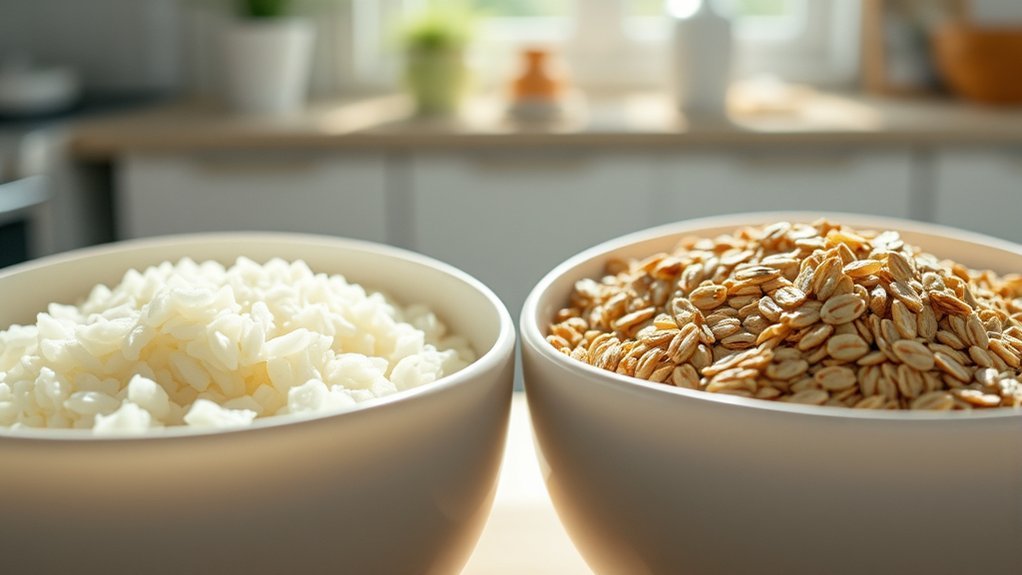
When comparing baby oatmeal and rice cereal, you’ll find some notable nutritional differences that can impact your baby’s health and growth.
Oatmeal typically boasts higher levels of essential vitamins and minerals, including B vitamins, zinc, magnesium, and manganese, vital for development. In contrast, rice cereal may contain high levels of inorganic arsenic, presenting significant health risks.
Additionally, oatmeal’s complex carbohydrates keep your baby fuller for longer, while rice cereal is digested quickly, often leading to increased hunger. Oatmeal also offers more fiber, promoting better digestion and helping to prevent constipation—a common issue with rice cereal.
Although both are often fortified with iron, oatmeal’s overall nutrient density makes it the more beneficial choice for your little one.
Why Is Oatmeal Better for Your Baby?
Choosing oatmeal for your baby can be a smart decision, especially considering its nutritional advantages.
Oatmeal benefits infant nutrition considerably by offering a higher concentration of essential vitamins and minerals like B vitamins, zinc, and magnesium, which promote growth and development. Unlike rice-based cereals, oatmeal typically has lower levels of inorganic arsenic, making it a safer choice.
Its complex carbohydrates help keep your baby fuller for longer, supporting healthy eating habits. Additionally, oatmeal’s high fiber content aids digestion, promotes healthy gut bacteria, and reduces constipation risk.
Being gluten-free, it’s suitable even for infants with celiac disease or gluten sensitivities. Overall, incorporating oatmeal into your baby’s diet can provide a nutritious foundation for their early development.
Preparing Baby Oatmeal
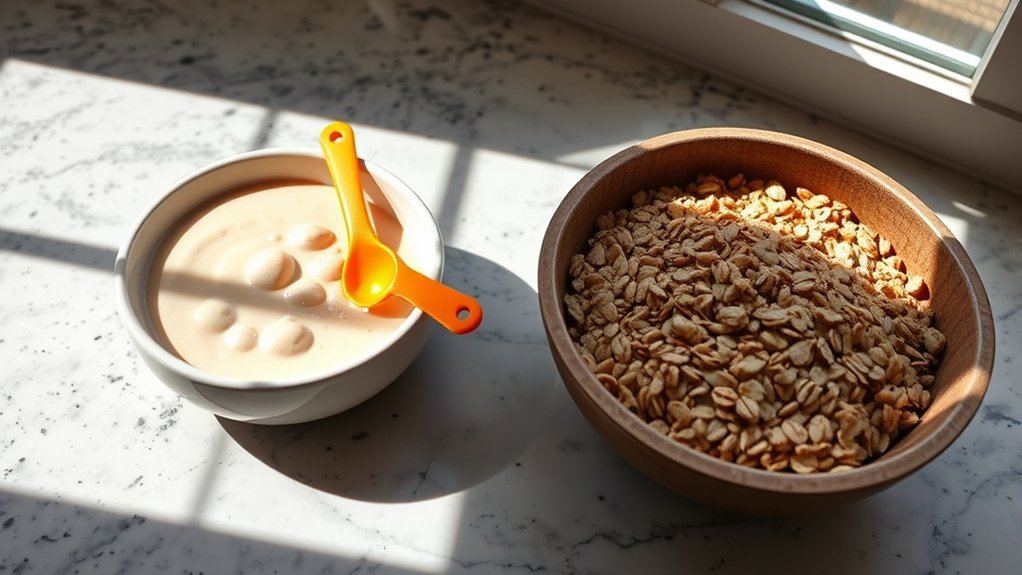
Preparing baby oatmeal is a straightforward process that can cater to your infant’s nutritional needs while introducing them to new textures.
Preparing baby oatmeal is simple and meets your infant’s nutritional needs while introducing them to new textures.
Start by blending rolled or steel-cut oats to achieve a smooth oatmeal texture, perfect for your little one. When it’s time to serve, mix oatmeal with breast milk, formula, or water right before feeding. This guarantees a familiar taste and ideal consistency.
As your baby grows and develops eating skills, you can gradually introduce thicker oatmeal. Feel free to enhance the nutritional value by adding healthy mix-ins like chopped fruits or chia seeds.
Always adjust the consistency based on your child’s needs, making sure it’s neither too thick nor too runny for safe consumption.
Tips for Introducing Oatmeal to Your Baby
Introducing oatmeal to your baby can be a rewarding experience as it combines nutrition with new textures. Start around 6 months, mixing oatmeal with breastmilk or formula to provide a familiar taste.
Choose unsweetened, prepared baby oatmeal or blend rolled or steel-cut oats for a smoother consistency. As your baby grows, adjust the texture accordingly.
Enhance the flavor and nutritional value by adding mashed bananas, cooked apples, or chia seeds. When bottle-feeding oatmeal, use larger or faster-flow nipples to guarantee a smoother flow since oatmeal is thicker than liquids.
Always consult your pediatrician before introducing new foods to tailor your baby feeding practices and monitor for allergies or digestive issues.
Embrace the oatmeal benefits as part of your baby’s journey!
Alternatives to Baby Cereal: Other Nutritious Options
When it comes to exploring alternatives to baby cereal, a variety of nutritious options can enrich your baby’s diet. You can easily create homemade baby food that’s both nutrient-dense and flavorful.
Here are some great alternatives:
- Mashed avocado: Packed with healthy fats essential for brain development.
- Cooked butternut squash: Rich in vitamins and minerals, it’s a sweet treat for your little one.
- Quinoa: A protein-rich, gluten-free grain that offers a complete amino acid profile.
These options not only provide essential nutrients but also introduce exciting flavors and textures to your baby’s meals.
Frequently Asked Questions
Can I Mix Infant Cereal With Oatmeal for My Baby?
Yes, you can mix infant cereal with oatmeal for your baby. This combination offers mixing benefits by enhancing texture and flavor, while providing a balanced nutritional comparison, ensuring your little one gets essential nutrients for growth.
How Do I Store Leftover Baby Oatmeal?
Like a treasure trove, store leftover baby oatmeal in an airtight container. Keep it in the fridge for up to three days. Use it creatively in baking or mixing with fruits for nutritious meals!
At What Age Can Babies Start Eating Oatmeal?
You can start introducing oatmeal to your baby around six months, once you notice signs of baby readiness. Oatmeal nutrition offers essential nutrients, making it a healthy choice to support your baby’s growth and development.
What Are the Signs My Baby Is Ready for Solids?
You’ll know your baby’s ready for solids when they show signs of hunger, like reaching for food, sitting up with support, and losing the tongue-thrust reflex. These indicate solid food readiness and interest in exploring new textures.
Are There Any Allergy Concerns With Oatmeal for Babies?
While oatmeal’s often a gentle choice, some babies may have oatmeal allergies, leading to infant reactions like rashes or digestive issues. Always introduce new foods cautiously and consult your pediatrician for personalized guidance.
Conclusion
To sum up, choosing between infant cereal and oatmeal doesn’t have to be complicated. Oatmeal’s higher fiber content and nutritional benefits make it a fantastic option for your baby. Plus, as you introduce oatmeal, you might discover that your little one loves the taste and texture, which can lead to exciting mealtime adventures. Remember, exploring alternatives like pureed fruits or vegetables can also enhance their diet. So, keep experimenting and watch your baby thrive with each new bite!