
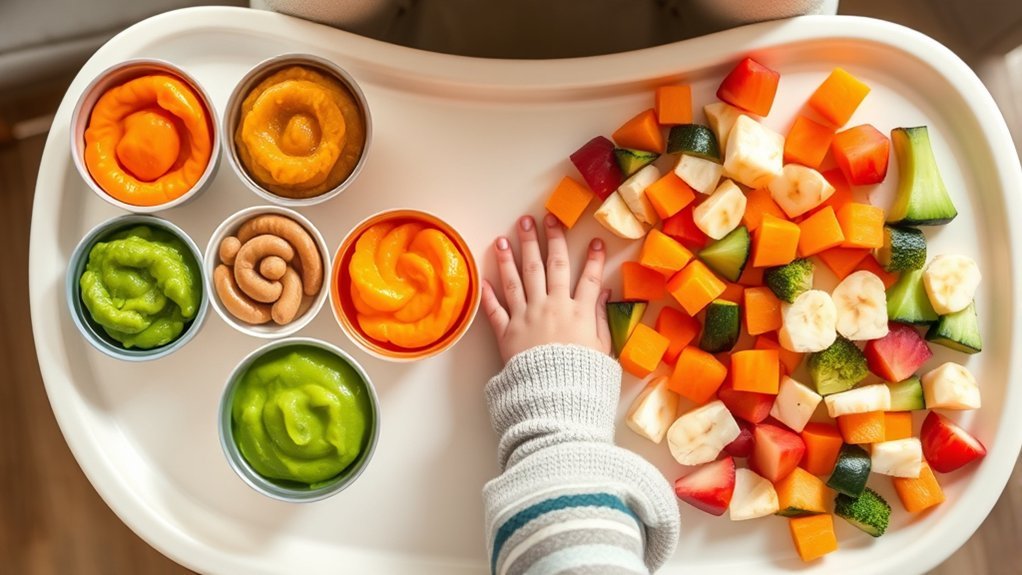
When comparing baby-led weaning and traditional purees, you’ll find key differences in approach. Baby-led weaning promotes self-feeding with soft, graspable foods, enhancing independence and motor skills. In contrast, purees involve spoon-feeding smooth foods, allowing for better portion control and reduced choking risks. While both methods ultimately aim for soft table foods, milk-to-food shift speed and sensory exposure differ. Explore their benefits, drawbacks, and effective strategies for combining both to find the best approach for your little one.
Key Takeaways
- Baby-led weaning (BLW) encourages self-feeding with soft, graspable foods, while purees involve spoon-feeding smooth foods for controlled introduction to solids.
- BLW promotes independence and fine motor skills through food exploration, whereas purees restrict motor skill development due to reliance on caregivers.
- Traditional purees allow for easier monitoring of food intake and controlled nutrient introduction, while BLW fosters exposure to a variety of flavors and textures.
- Purees result in a cleaner feeding process with less mess and food waste, while BLW can be messier but enhances family meal participation.
- Safety considerations differ; purees reduce choking risks for early eaters, while BLW requires careful supervision to distinguish between gagging and choking.
Understanding Baby-Led Weaning and Purees
When deciding between baby-led weaning (BLW) and traditional purees, it’s crucial to understand how each approach works and what they offer your baby.
BLW encourages your little one to self-feed with soft, graspable foods around six months, promoting independence and fine motor skills. This method exposes babies to diverse textures and flavors, potentially reducing picky eating later.
BLW promotes self-feeding with soft foods, enhancing independence and fine motor skills while introducing diverse textures and flavors.
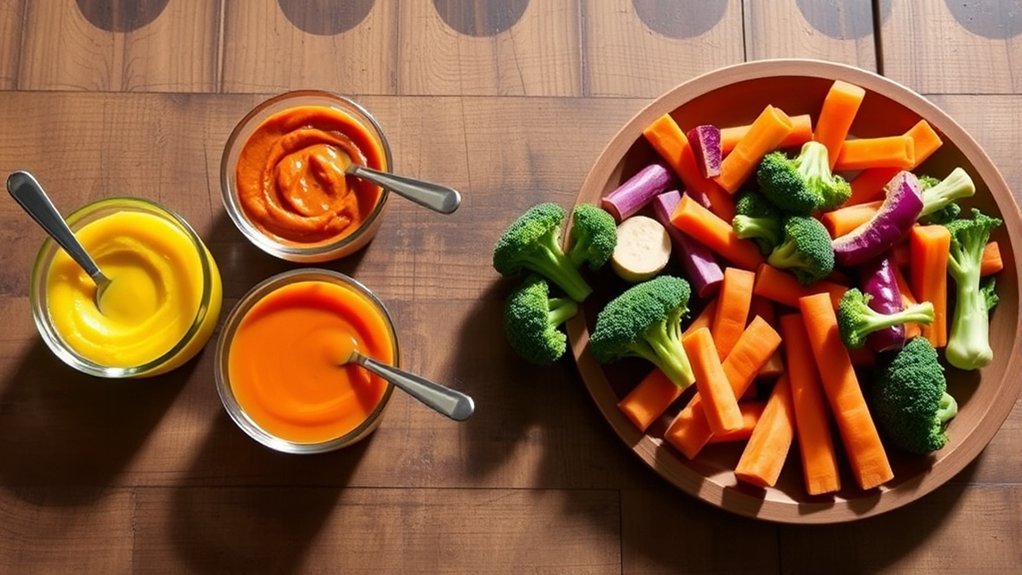
In contrast, purees provide a controlled introduction to smooth foods, allowing you to monitor their nutritional needs closely. While both methods aim for soft table foods by nine months, BLW fosters autonomy in food choices.
Ultimately, your feeding preferences and your baby’s developmental readiness will guide the best approach for a satisfying mealtime experience.
Key Differences Between Baby-Led Weaning and Purees
While both baby-led weaning (BLW) and purees are popular methods for introducing solids, they differ significantly in approach and outcomes.
BLW encourages your baby to self-feed with soft, graspable foods from around six months, promoting independence and texture exploration. In contrast, purees involve spoon-feeding smooth foods, usually starting with purees before introducing textured options.
With BLW, your little one can explore a variety of flavors early on, potentially reducing picky eating habits. However, purees allow for easier monitoring of food intake.
Expect more mess with BLW, as babies engage hands-on with their meals, while spoon-feeding tends to be cleaner.
Ultimately, your choice of feeding methods should reflect your family’s values and your baby’s preferences.
What Are the Benefits of Baby-Led Weaning?
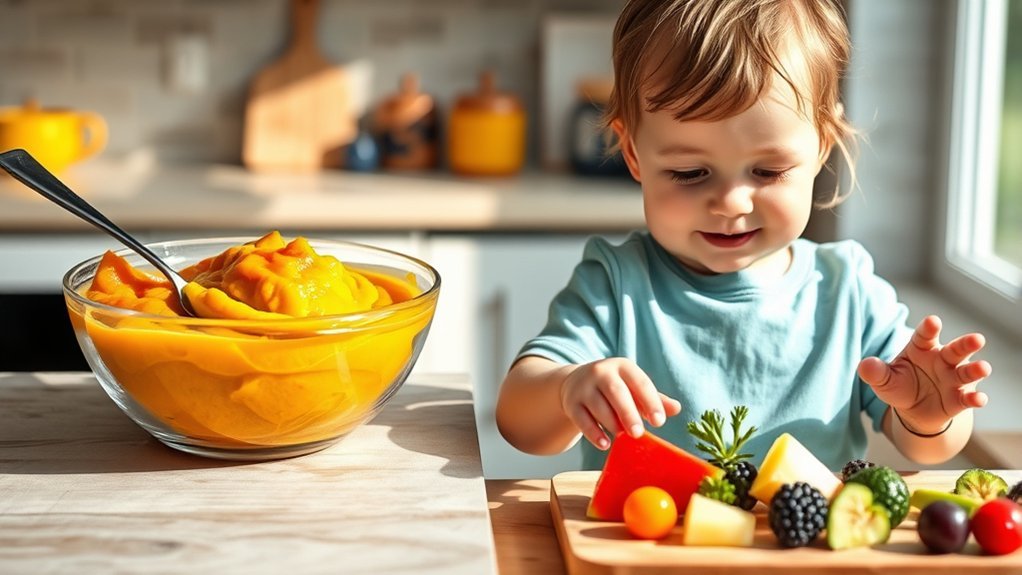
Baby-led weaning (BLW) offers a range of benefits that support both your baby’s development and your family’s mealtime experience.
With BLW, your baby gains nutritional benefits by exploring a variety of whole foods, leading to better dietary outcomes compared to traditional purees.
This method fosters developmental advantages, as your little one practices grasping and manipulating food, enhancing fine motor skills and coordination.
By allowing your baby to choose what and how much to eat, you promote independence and self-regulation, helping them develop a positive relationship with food.
Plus, BLW can save you time and money by using regular table foods, encouraging shared family meals that strengthen bonds while introducing your baby to diverse flavors and textures.
What to Keep in Mind About Baby-Led Weaning?
When you’re considering baby-led weaning, it’s essential to focus on the benefits of self-feeding, safety guidelines, and encouraging your baby’s food exploration skills.
Offering soft, graspable foods can enhance their independence and fine motor skills while reducing the risk of picky eating.
Just remember to supervise closely and guarantee the foods you provide are safe to prevent choking hazards.
Benefits Of Self-Feeding
Self-feeding offers numerous benefits that can greatly enhance your baby’s development.
By encouraging self-feeding skills through baby-led weaning, you allow your little one to explore food at their own pace, fostering independence development and self-regulation in eating habits. Research indicates that this approach can reduce the likelihood of picky eating, as babies are exposed to a variety of flavors and textures early on.
Additionally, self-feeding helps improve fine motor skills, as your baby learns to grasp and manipulate different foods. Family mealtimes become more interactive, allowing everyone to share the same meals and experiences.
Engaging in self-feeding also supports the development of oral motor skills, essential for shifting to more complex foods.
Safety Considerations And Guidelines
As you embrace the benefits of self-feeding, it’s crucial to keep safety considerations at the forefront of your approach to baby-led weaning.
Always supervise your baby during mealtime to differentiate between gagging and choking; remember, gagging is a natural part of learning.
Choose soft foods like ripe fruits and well-cooked vegetables to minimize choking hazards. Avoid whole grapes, nuts, and hard foods, cutting everything into appropriate sizes—typically no larger than a pea or a finger-length strip.
Focus on safe food preparation by avoiding added salt and sugar, as these can harm your baby’s developing kidneys.
Look for signs of readiness, like good head control and the ability to sit upright, to facilitate a safe start to self-feeding.
Encouraging Food Exploration Skills
Encouraging your baby to explore food independently is essential for developing their food exploration skills during baby-led weaning. By introducing soft, graspable foods around six months, you promote sensory development and fine motor skills.
Offering a variety of flavors and textures early on helps reduce picky eating, as your baby learns to enjoy diverse foods. Trusting your child’s hunger and fullness cues fosters self-regulation, empowering them to control their intake.
Embrace the messiness of this journey, as touching and tasting facilitate comfort and confidence around food. Always prioritize safety by ensuring foods are soft enough to squish between their fingers.
This hands-on approach makes meals enjoyable and liberating for both you and your little one.
What Are the Advantages of Traditional Purees?
When considering traditional purees, you’ll find several advantages that can support your baby’s feeding journey.
They make it easier to monitor how much your baby eats, resulting in less mess and waste during mealtime.
Plus, purees help introduce new flavors and textures gradually, setting a solid foundation for your little one’s progression to solid foods.
Easier Food Monitoring
Traditional purees offer a straightforward way to monitor your baby’s food intake, making mealtime less stressful for caregivers.
With purees, you gain several advantages in nutritional tracking:
- Visible Portions: Each spoonful is measurable, allowing you to know exactly how much your baby consumes.
- Controlled Nutrients: You can guarantee your baby receives adequate nutrients by adjusting portion sizes.
- Less Waste: The spoon-feeding method typically results in less mess and food waste, keeping your feeding area tidy.
- Gradual Texture Introduction: You can systematically thicken purees, aiding your baby’s acceptance of various textures over time.
These elements create a more relaxed feeding experience, empowering you to nurture your baby’s development with confidence.
Cleaner Feeding Process
Using purees for feeding your baby offers a particularly cleaner process, simplifying mealtime for both you and your little one.
With spoon-feeding, you gain better control over portion sizes, making it easier to track your baby’s intake while managing mess. Purees generally result in less food waste, as you can measure servings precisely, unlike solids that might end up uneaten.
The smooth texture of purees also minimizes choking risks, reducing stress during meals. This approach caters to those feeding preferences that value cleanliness and predictability, making it ideal for caregivers who may feel overwhelmed by the messiness of baby-led weaning.
Gradual Texture Introduction
As you introduce solid foods to your baby, opting for traditional purees offers a structured way to gradually shift between textures.
This texture progression provides numerous benefits:
- Controlled Portions: You can easily monitor how much your baby consumes, ensuring they get adequate nutrition.
- Choking Risk Reduction: Purees are safer for early eaters, minimizing choking hazards as they learn to swallow.
- Oral Motor Skill Development: Gradual texture introduction helps babies build the skills needed for chewing and swallowing.
- Flavor Acceptance: This method fosters a willingness to explore various flavors, potentially reducing picky eating down the line.
Drawbacks of Using Purees for Baby Feeding
While purees can seem like a convenient choice for baby feeding, they come with several drawbacks that can impact your child’s development.
One major concern is that purees limit your baby’s opportunities for motor skill development, as they rely on you for feeding instead of practicing self-feeding. This reliance can also contribute to a higher likelihood of picky eating later on, since babies miss out on diverse textures and flavors.
Purees can hinder your baby’s motor skills and lead to picky eating by limiting exposure to varied textures and flavors.
Plus, preparing and feeding purees can be time-consuming and costly, whether you’re making them at home or buying them.
Shifting to table foods may be challenging for babies used to smooth textures, creating reluctance to accept more complex foods and hindering their understanding of hunger and fullness cues.
Effective Strategies for Combining Baby-Led Weaning and Purees
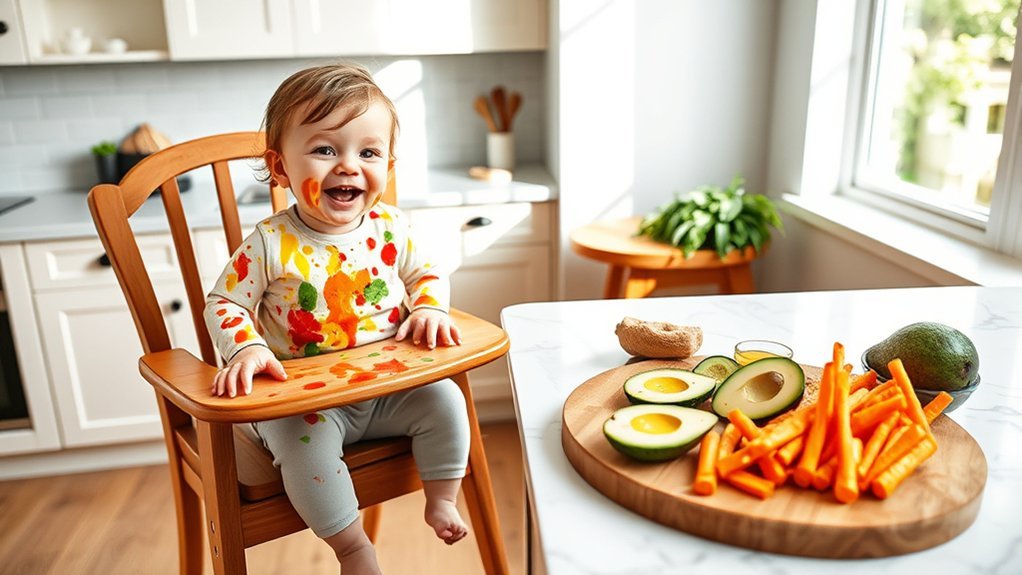
Combining baby-led weaning (BLW) and purees offers a balanced approach to feeding that caters to your baby’s developmental needs.
Here are some effective strategies to contemplate:
- Introduce purees alongside soft, graspable finger foods to promote texture shifts.
- Preload spoons with purees to encourage self-feeding while exploring flavor and nutrition.
- Monitor your baby’s reactions to adjust the balance of purees and finger foods based on their puree preferences and comfort level.
- Ensure all foods are safe and appropriately sized to minimize choking risks, enhancing a positive feeding experience.
Frequently Asked Questions
Can I Transition From Purees to Baby-Led Weaning Later On?
Absolutely, you can shift from purees to baby-led weaning later on. Use these shift tips: gradually introduce finger foods, encourage self-feeding, and be patient as your baby adapts to different feeding methods for best development.
How Do I Know if My Baby Is Ready for BLW?
When it comes to baby-led weaning, keep your eyes peeled for signs of readiness. If your baby shows interest in food, can sit up, and brings items to their mouth, they’re likely ready.
Are There Any Foods to Avoid With Baby-Led Weaning?
With baby-led weaning, avoid unsafe foods like whole nuts, popcorn, and raw veggies. These pose choking hazards. Stick to soft, manageable pieces to guarantee your baby explores safely and confidently during mealtime.
What Are Common Safety Concerns With Baby-Led Weaning?
Steering through the culinary jungle, you’ll face safety concerns like choking hazards and food allergies. Keep an eye on small, hard foods, and introduce allergens carefully to guarantee your baby’s adventurous eating journey remains safe and joyful.
How Can I Help My Baby Develop Chewing Skills?
To help your baby develop chewing skills, introduce finger foods that encourage chewing techniques. Offer soft, textured options like steamed vegetables or ripe fruits, allowing them to explore at their own pace while developing confidence and coordination.
Conclusion
In the great culinary showdown of baby feeding, you’ve got the refined art of purees versus the avant-garde flair of baby-led weaning. Whether you’re spooning mush or letting your little one wield a broccoli spear like a tiny food Picasso, remember: it’s all about balance. So, go ahead, embrace the mess, and let your baby explore their inner gourmet chef—or simply enjoy the chaos. After all, who wouldn’t want to spend mealtime in a vegetable war zone?