A coffee maker works by heating water in the reservoir to the ideal brewing temperature of 90-96°C. This hot water flows through the brew basket filled with coffee grounds, extracting flavors during the process. The brewed coffee drips into the carafe below, ready for serving. To guarantee consistent quality, pay attention to grind size and brewing time. If you’re curious about enhancing your brewing experience, you’ll find valuable insights ahead.
Key Takeaways
- The water reservoir stores water, which is heated by the heating element to the optimal brewing temperature of 90-96°C.
- Heated water is then pumped through the brew basket containing coffee grounds, allowing for extraction of flavors.
- Brewed coffee drips into a carafe or pot, where it is kept warm until served.
- The brewing process typically takes about 5 minutes for drip coffee to achieve the best flavor profile.
- Regular maintenance, such as descaling, ensures efficient operation and prolongs the coffee maker’s lifespan.
The Anatomy of a Coffee Maker: Key Components Explained
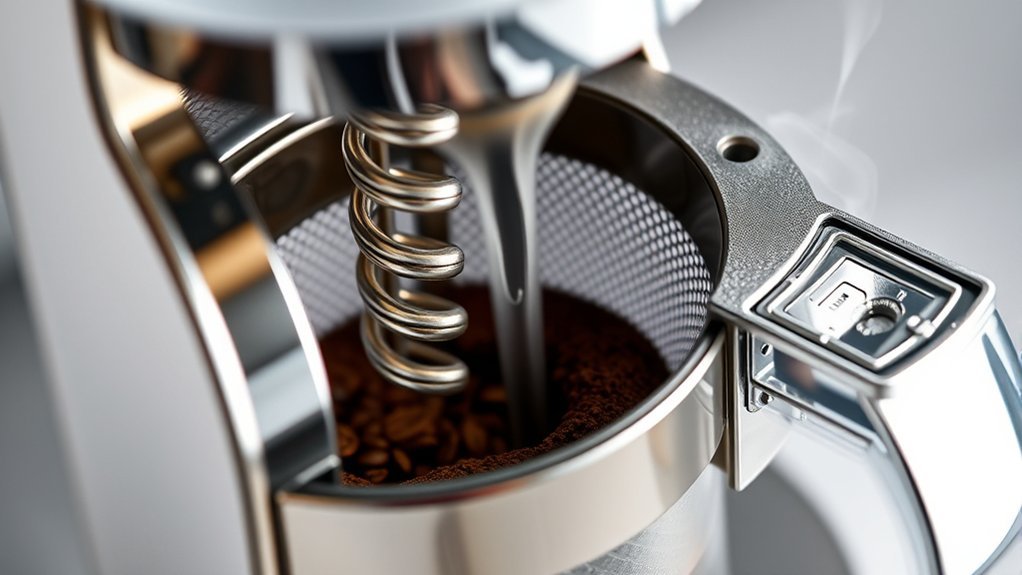
A coffee maker’s design is a carefully engineered system that combines various components to produce your morning brew efficiently.
At the heart of this system is the heating element, which heats water stored in the reservoir to the ideal brewing temperature, typically between 90 and 96 degrees Celsius.
Once heated, the water is directed to the brew basket, commonly referred to as the filter holder, where you place your coffee grounds. As hot water flows through the grounds, it extracts essential flavors and oils, creating your desired coffee.
The brewed coffee then drips into a carafe or pot, often kept warm on a hot plate or insulated to maintain temperature.
Many models also feature a programmable timer for added convenience.
Understanding Coffee Grind Size and Its Impact on Flavor
Understanding grind size is essential for achieving the flavor profile you desire in your coffee.
Finer grinds create a stronger, more concentrated taste due to increased surface area, while coarser grinds suit longer brewing methods like French press to prevent over-extraction.
Adjusting your grind size based on your brewing method guarantees ideal flavor extraction and balance.
Grind Size Variations
When you consider the intricacies of coffee brewing, the grind size emerges as a critical factor that shapes your drink’s flavor profile.
Finer grinds, around 200 microns, increase surface area and shorten extraction time, making them ideal for espresso. Conversely, coarser grinds, suitable for methods like French press and cold brew, allow for a slower extraction, preventing bitterness from over-extraction.
Typically, grind sizes range from 200 to 600 microns, with drip coffee requiring a medium grind of about 400 microns.
Inconsistent grind sizes lead to uneven extraction, resulting in some particles being over-extracted while others remain under-extracted.
Adjusting grind size is essential for balancing flavors, enhancing acidity and sweetness or emphasizing body and richness in your cup.
Flavor Profile Influence
Because grind size directly affects extraction, it plays an essential role in shaping the flavor profile of your coffee. Finer grinds enhance extraction efficiency, resulting in bolder flavors, while coarser grinds create a milder taste.
Depending on your brewing method, the ideal grind size varies; espresso demands a very fine grind, whereas French press coffee thrives on a coarse grind. Be cautious, though—overly fine grinds can lead to over-extraction, producing bitterness, while too coarse grinds may cause under-extraction, yielding sour or weak coffee.
Combining the best grind size with the right brewing temperature of 90-96 degrees Celsius enhances flavor complexity and balance. Consistent grind size is vital for uniform extraction, ensuring a well-balanced flavor profile in your final brew.
Coffee Brewing: A Step-by-Step Guide
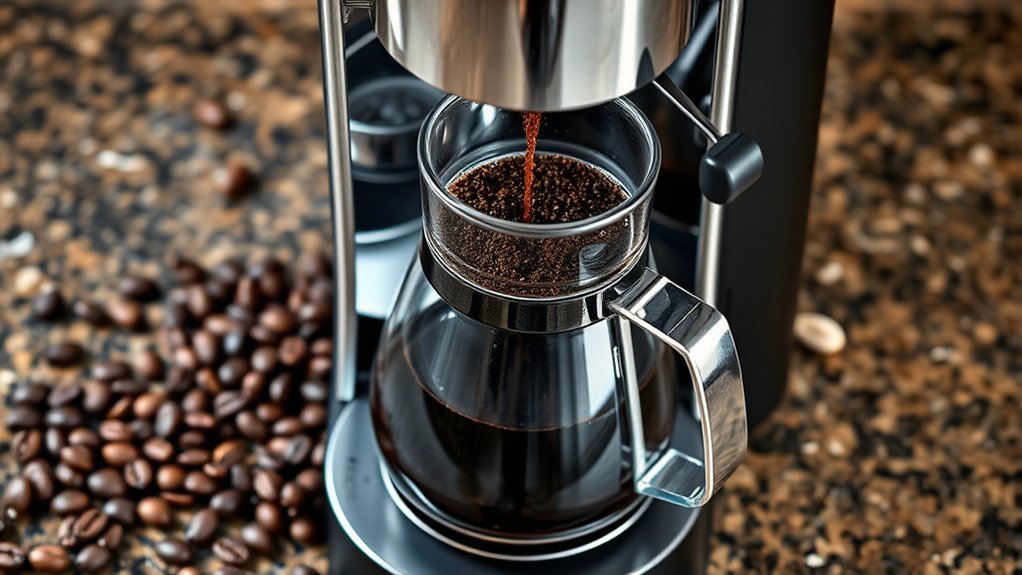
To brew coffee effectively, you’ll first need to prepare the ground coffee in a filter or portafilter.
Once you’ve set that up, heat water to the ideal temperature of 90-96 degrees Celsius to guarantee proper extraction.
The brewing process will then vary depending on your coffee maker, whether you’re using a drip machine, pour-over, or espresso machine.
Coffee Preparation Steps
Coffee preparation starts with the careful placement of ground coffee into a filter basket, which you then secure in the machine’s brew head.
Next, water’s heated to the ideal brewing temperature of 90-96 degrees Celsius. This precise temperature is vital for peak coffee extraction. The water’s forced through the coffee grounds at around 9 bars of pressure, producing a rich flavor profile.
- Confirm the coffee grounds are evenly distributed for consistent extraction.
- Check that the water temperature is within the recommended range.
- Maintain the appropriate pressure for the brewing method used.
Once brewed, your coffee flows into a carafe or pot, ready to be enjoyed.
Precision in both temperature and pressure is necessary for achieving the best flavor from your coffee.
Brewing Process Overview
While brewing coffee may seem straightforward, understanding the process reveals the intricacies that contribute to a perfect cup.
You start by adding ground coffee to a filter in the brew basket. The coffee maker then heats water in its reservoir to a prime brewing temperature of 90-96 degrees Celsius. This precise temperature is vital for effective coffee extraction, ensuring the right flavors and oils are released.
Once heated, the water is forced through the coffee grounds at about 9 bars of pressure, maximizing flavor extraction. The brewed coffee drips into a carafe below, delivering a rich, aromatic beverage.
Many coffee makers also have programmable settings and automatic shut-off features, enhancing convenience and safety during your brewing experience.
How Long Should You Brew Your Coffee for Best Taste?
How long should you brew your coffee for the best taste? The ideal brewing time varies based on the method and type of coffee, impacting flavor extraction considerably.
Here’s a quick guide:
Here’s a quick reference for brewing times to enhance your coffee flavor experience.
- Drip coffee: Brew for about 5 minutes for optimal flavor extraction without bitterness.
- Espresso: Aim for 25 to 30 seconds to achieve a rich taste and proper crema.
- French press: Steep for 4 minutes; longer steeping can lead to unwanted bitterness.
- Cold brew: Allow 12 to 24 hours for a smooth, less acidic profile.
Adjusting your brewing time can enhance your coffee experience, ensuring you enjoy the full spectrum of flavors each method offers.
Common Coffee Maker Problems and Solutions
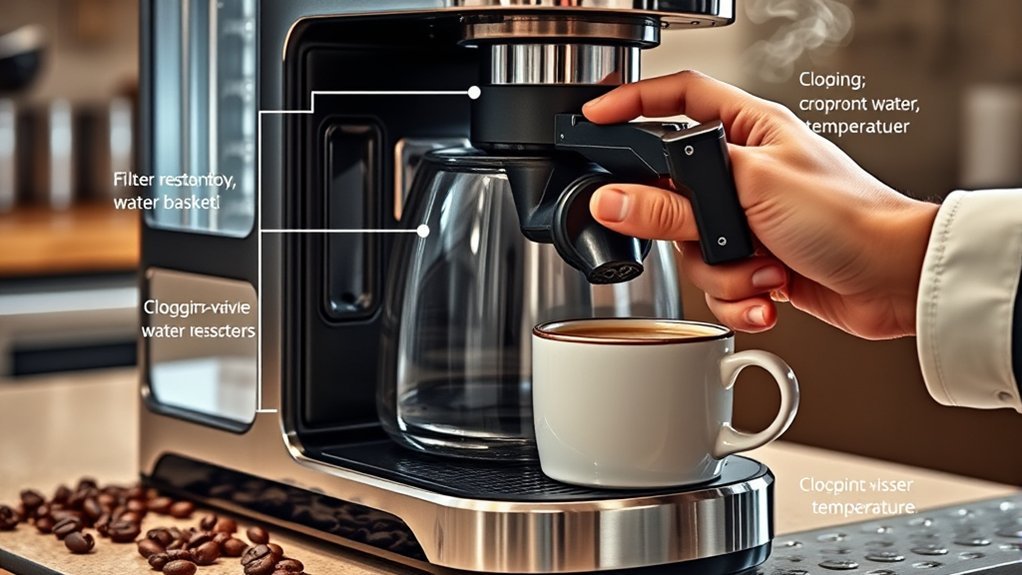
Brewing your coffee to perfection can sometimes be hampered by common issues with coffee makers. Here’s a quick reference table to troubleshoot:
| Problem | Cause | Solution |
|---|---|---|
| Coffee filter issues | Clogged filters | Replace or clean filters regularly |
| No brewing | Power or water issues | Check power source and fill water reservoir |
| Burnt coffee taste | High brewing temperature | Adjust temperature settings if available |
| Leaking water | Worn seal or cracked reservoir | Replace faulty components |
| Slow brewing | Mineral buildup | Descale with vinegar-water or commercial descaler |
Addressing these problems promptly guarantees a better brewing experience and enhances your coffee’s flavor profile.
Tips for Maintaining Your Coffee Maker for Longevity
To guarantee your coffee maker operates efficiently over time, it’s essential to establish a routine maintenance schedule. Here are some tips to secure longevity:
- Run a vinegar solution: Regularly clean your coffee maker with a mixture of equal parts water and vinegar to eliminate mineral buildup.
- Filter replacement: Change the water filter every two months or as directed by the manufacturer to maintain ideal water quality and flavor.
- Immediate cleanup: After each use, empty and clean the carafe and filter basket to prevent coffee oils from accumulating.
Additionally, periodically check and clean the brew basket and removable parts with warm, soapy water.
Store your coffee maker in a cool, dry place to avoid moisture-related issues.
Troubleshooting: Fixing Your Coffee Maker Issues
When your coffee maker encounters issues, it can be frustrating, but many problems have straightforward solutions.
First, if it won’t brew, verify the water reservoir is filled correctly and seated properly. A clogged coffee filter can hinder performance, so practice regular coffee filter maintenance by cleaning or replacing it.
Ensure your coffee maker’s water reservoir is filled and seated correctly, and maintain your coffee filter for optimal performance.
If your brew tastes burnt or bitter, adjust the brew temperature and avoid leaving the machine on too long post-brewing.
For machines with a steam arm, check for blockages in the steam nozzle if milk isn’t frothing properly, and make necessary steam pressure adjustments.
Finally, regular descaling is vital to prevent mineral buildup—especially important if you live in a hard water area—to keep your coffee maker running smoothly.
Frequently Asked Questions
Can I Use Tap Water in My Coffee Maker?
Yes, you can use tap water in your coffee maker, but make certain its water quality is good. Poor tap water might affect brewing temperature and flavor, so consider filtering it for best results.
How Often Should I Clean My Coffee Maker?
Cleaning your coffee maker’s like brushing your teeth—do it regularly! Aim for every month as a cleaning frequency for ideal taste. Follow maintenance tips, such as descaling, to keep your brew fresh and flavorful.
Does Coffee Maker Brand Affect Brewing Quality?
Yes, coffee maker brand does affect brewing quality. Brand comparison reveals varying brewing consistency, with some brands providing better temperature control and extraction, leading to a richer flavor profile and overall superior coffee experience.
Can I Brew Tea in My Coffee Maker?
Sure, you can brew tea in your coffee maker, though it seems a bit ironic, doesn’t it? Just use tea bags instead of coffee grounds, and enjoy a surprisingly efficient tea brewing process.
What Is the Best Coffee-To-Water Ratio?
For ideal flavor profiles, aim for a coffee-to-water ratio of 1:15. Experimenting with different brewing techniques can enhance your cup, but this ratio generally balances strength and taste for most brewing methods.
Conclusion
In conclusion, understanding how a coffee maker works enhances your brewing experience. Did you know that the average American consumes about 3.1 cups of coffee daily? With the right grind size and brewing time, you can elevate each cup’s flavor. Regular maintenance can prolong your coffee maker’s lifespan and guarantee peak performance. By troubleshooting common issues, you’ll keep your machine running smoothly, allowing you to savor that perfect brew every morning. Enjoy your coffee journey!