


You should start introducing baby food around 6 months, beginning with one meal a day. As your baby grows, gradually increase to two meals, offering 1-4 tablespoons at first, then up to 1/4 to 1/2 cup by 10-12 months. It’s essential to keep breast milk or formula as the main nutrition source. Pay attention to your baby’s hunger and fullness cues, and adjust portions as needed. There’s more to explore about feeding schedules and food choices that can aid in this change.
Key Takeaways
- Begin introducing solid foods around 6 months with one meal per day, gradually increasing to two meals as your baby adjusts.
- For 4-6 months, offer 1-4 tablespoons of solids per meal, maintaining 24-36 ounces of breast milk or formula.
- At 6-8 months, increase solid food portions to 4-9 tablespoons per meal while continuing to provide milk as the main nutrition source.
- By 9-12 months, serve two meals of 1/4 to 1/2 cup of solids daily, alongside 16-30 ounces of milk.
- Monitor your baby’s hunger and fullness cues to adjust feeding frequency and portion sizes accordingly.
When Should I Start Feeding My Baby Solids?

When should you start feeding your baby solids? Generally, you’ll want to introduce solid foods around 6 months of age, when your baby shows signs of developmental readiness and interest in food.
Look for cues like good head and neck control and the ability to sit up with support. Start with one meal a day, gradually increasing to two meals as they grow.
Remember, it’s essential to continue offering breast milk or formula as the primary source of nutrition during the first year, with solids as a supplement.
Always consult your pediatrician for personalized guidance on your baby’s readiness and needs. This journey into solid food introduction can be exciting, so embrace it with love and patience!
What Are the Recommended Portion Sizes for Baby Food?
How do you know the right portion sizes for your baby’s meals? Understanding recommended portion sizes can help you navigate the exciting journey of introducing baby food types. Here’s a quick guide:
- 4 to 6 months: Start with 1-4 tablespoons of solids per meal, alongside 24 to 36 ounces of breast milk or formula.
- 6 to 8 months: Increase to 4-9 tablespoons per meal, maintaining the same milk intake.
- 9 to 12 months: Offer 1/4 to 1/2 cup of solids, served twice a day, with 16 to 30 ounces of milk.
- Adjust as needed: Monitor your baby’s appetite and make portion adjustments accordingly.
How to Balance Baby Food With Breastfeeding or Bottle-Feeding?

Balancing baby food with breastfeeding or bottle-feeding is essential for your baby’s nutrition.
As you introduce solids around 6 months, aim for the right portion sizes while paying attention to your baby’s hunger cues.
Experiment with feeding order to find what works best, ensuring that breast milk or formula remains the primary source of nourishment during this change.
Timing of Feeding Solids
Introducing solid foods to your baby is an exciting milestone, but it’s important to remember that breast milk or formula should still be their primary source of nutrition until about one year old.
To balance meal timing and feeding frequency effectively, consider these tips:
- Start with one solid meal per day around 6 months, gradually increasing as your baby shows readiness.
- Offer solids when your baby’s milk supply is lowest, aligning with their hunger cues.
- Confirm solids complement, rather than replace, breast milk or formula during meals.
- By toddlerhood, aim for three solid meals and snacks, while keeping milk a significant part of their diet.
This approach promotes a healthy change to solids while keeping your baby’s nutritional needs in focus.
Portion Sizes for Balance
Finding the right portion sizes for your baby’s meals is essential to ensuring a balanced diet while still prioritizing breast milk or formula.
For infants 4 to 6 months old, start with 1-4 tablespoons of solids, maintaining 24 to 36 ounces of breast milk or formula daily.
As your baby grows to 6-8 months, increase to 4-9 tablespoons of solids, while keeping their liquid intake consistent.
By 9-12 months, aim for two solid meals of 1/4 to 1/2 cup each, decreasing milk or formula to 16 to 30 ounces.
Always offer solids after breastfeeding or bottle-feeding, reinforcing portion control and feeding frequency.
Observing Baby’s Cues
As you navigate the shift to solid foods, it’s essential to pay attention to your baby’s cues to guarantee a smooth balance with breastfeeding or bottle-feeding. This helps make certain your little one gets the nutrition they need.
Here are some key hunger signals and feeding observations to guide you:
- Reaching for food: If your baby reaches for what you’re eating, they may be ready for solids.
- Opening their mouth: Watch for your baby opening their mouth when food is offered.
- Turning away: If they turn their head or refuse food, it’s a sign they’re full.
- Gradual introduction: Start with one or two solid meals daily, while continuing regular breast milk or formula feedings.
Always consult your pediatrician if you have concerns.
What Is a Sample Feeding Schedule for New Parents?
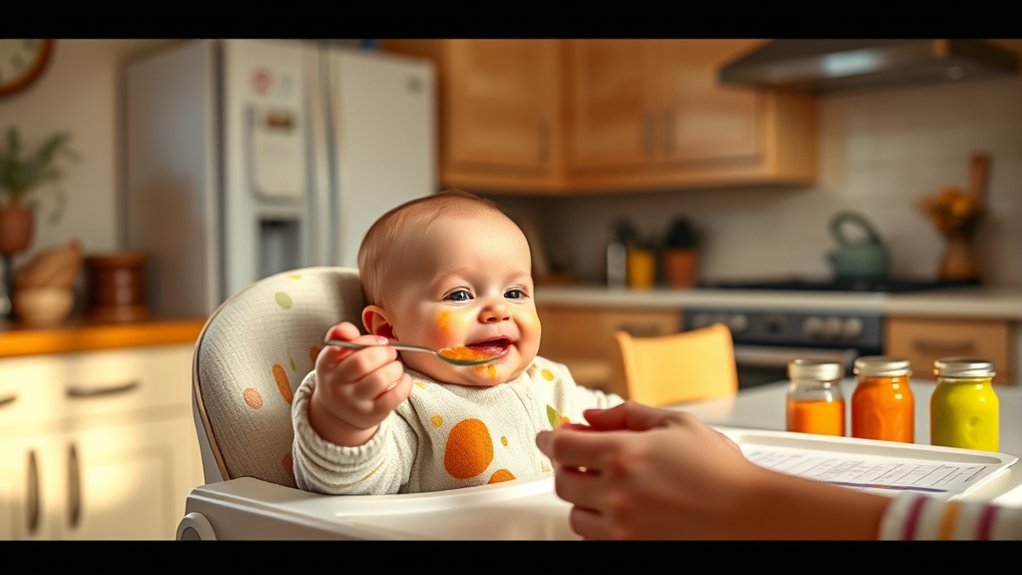
A sample feeding schedule can help new parents navigate the early stages of introducing solid foods to their baby.
For 4- to 6-month-olds, aim for 6-8 ounces of breast milk or formula, plus one solid meal of 1-4 tablespoons of infant cereal and fruit or vegetable puree.
As your baby reaches 7- to 9-months, increase to two solid meals, incorporating yogurt and mashed avocado, totaling 4-9 tablespoons.
By 10- to 12-months, offer two meals of 1/4 to 1/2 cup of varied foods like cooked oats and flaked fish.
Remember to stay attuned to your baby’s feeding preferences and adjust meal variations accordingly, ensuring a flexible approach that respects their hunger cues.
How to Recognize My Baby’s Hunger and Fullness Cues?
Recognizing your baby’s hunger and fullness cues is essential for responsive feeding.
Look for signs like rooting or sucking on their hands when they’re hungry, and notice when they turn their head away or push food away to signal they’re full.
Trusting these cues not only helps you meet your baby’s needs but also fosters a positive relationship with food.
Signs Of Hunger
Understanding your baby’s hunger and fullness cues is essential for fostering a healthy feeding routine. Recognizing these hunger cues helps you respond promptly, ensuring your baby gets the nutrition they need.
Here are four key signs that indicate your baby is ready to eat:
- Rooting: Your baby turns their head towards the breast or bottle.
- Hand Sucking: They may suck on their hands or fingers, signaling readiness.
- Smacking Sounds: Listen for sounds that indicate they’re keen to eat.
- Increased Alertness: Your baby becomes more active and alert, showing interest in food.
Signs Of Fullness
While feeding your baby, it’s essential to notice when they’re full just as much as when they’re hungry. Fullness indicators can include turning their head away from food, closing their mouth, or even pushing food away. These signs suggest they’re no longer interested in eating.
After a meal, observe their body language; a relaxed posture or calm demeanor usually means they’ve had enough. Remember, a baby’s appetite can vary daily, and some days they might show less interest in food as their growth rate slows.
Responsive feeding techniques help you tune into these cues, allowing your baby to self-regulate their intake and develop healthy eating habits. If fullness signs persist, consult a pediatrician to guarantee your baby’s nutritional needs are met.
Responsive Feeding Techniques
Observing your baby’s hunger and fullness cues can greatly enhance their feeding experience. Responsive feeding is about tuning into these baby cues to create a nurturing environment. Here are some signs to watch for:
- Hunger Cues: Look for rooting, sucking on hands, or fussing—these indicate your baby is ready to eat.
- Fullness Cues: Notice if they turn their head away, close their mouth, or push food away—these signals mean they’ve had enough.
- Daily Variability: Remember, your baby’s appetite can change daily; trust their ability to self-regulate.
- Positive Interaction: Engage in mealtime conversations and enjoy the food together to help them recognize these cues more clearly.
With responsive feeding, you empower your baby’s relationship with food!
What Foods Should I Introduce First to My Baby?
At around 6 months old, your baby is ready to explore solid foods, marking an exciting milestone in their development.
Start with single-grain infant cereals, like rice or oatmeal, mixed with breast milk or formula for a familiar taste. Next, introduce pureed fruits and vegetables such as mashed bananas, avocados, or sweet potatoes. Offer each new food multiple times to help your baby accept the flavors.
After establishing these first foods, around 7-8 months, you can add pureed meats or beans for balanced nutrition.
Always introduce new foods one at a time, waiting a few days before adding another to monitor for food allergies or sensitivities. This careful approach guarantees a positive, safe introduction to solids for your little one.
How to Encourage My Baby to Develop Healthy Eating Habits?
To nurture healthy eating habits in your baby, create a positive mealtime environment that invites exploration and enjoyment. Here are some effective strategies:
- Sit Together: Make family meals a time for bonding. Your baby will learn to appreciate meal time interactions.
- Offer Variety: Introduce a range of healthy foods and textures around 6 months. Repeated exposure helps them accept new tastes.
- Responsive Feeding: Pay attention to your baby’s hunger and fullness cues. This encourages self-regulating their intake.
- Promote Self-Feeding: Provide appropriate utensils and finger foods. This empowers your baby to control their eating and recognize satiety.
What Should I Do If My Baby Refuses Solid Foods?
It’s common for babies to resist solid foods, even after you’ve worked hard to establish healthy eating habits. If your baby rejects solids, don’t pressure them; instead, keep offering the food. It may take 8-10 tries for them to accept new flavors and textures.
Timing is key—make sure to present baby food when they’re hungry, as this can boost their willingness to try. Observe your baby’s cues for hunger and fullness, and avoid forcing them to eat, which can create negative feelings around mealtime.
If your baby’s solid food preferences remain limited after several months, consider consulting a pediatrician to rule out any underlying issues. Above all, stay patient and nurturing as you navigate this phase together.
Frequently Asked Questions
Can I Mix Baby Food With Breast Milk or Formula?
Yes, you can mix baby food with breast milk or formula. Adjust the baby food consistency using mixing techniques, ensuring it’s smooth and easy for your baby to eat, promoting a positive feeding experience.
How Do I Store Leftover Baby Food Safely?
To store leftover baby food safely, freeze homemade food in small portions. Use ice cube trays or freezer-safe containers. Label them with dates, and remember to use them within three months for ideal freshness.
When Can I Introduce Allergenic Foods to My Baby?
You can introduce allergenic foods around six months, watching for any signs of food sensitivity. Start small, like a crumb-sized piece, and celebrate each new flavor. You’re empowering your baby’s taste buds and future health!
What Signs Indicate My Baby Is Ready for More Meals?
You’ll know your baby’s ready for more meals when they show hunger cues, like reaching for food or opening their mouth. Increased meal frequency can help them explore new flavors and textures, fostering their development.
Should I Use Organic Baby Food, or Is Regular Fine?
Imagine your baby’s garden—organic choices nurture growth, offering potential benefits like fewer pesticides. While regular food’s fine, weigh the cost against those organic benefits. Trust your instincts; choose what feels right for your family.
Conclusion
Charting the world of baby food can feel like a maze, but you’re not alone. By understanding when to start, how much to feed, and recognizing your baby’s cues, you can create a nurturing environment for healthy eating. Remember, patience is key—each little bite your baby takes is a step towards a lifetime of good habits. Keep experimenting with flavors, and soon you’ll see your little one blossom into an adventurous eater. Trust the journey!


