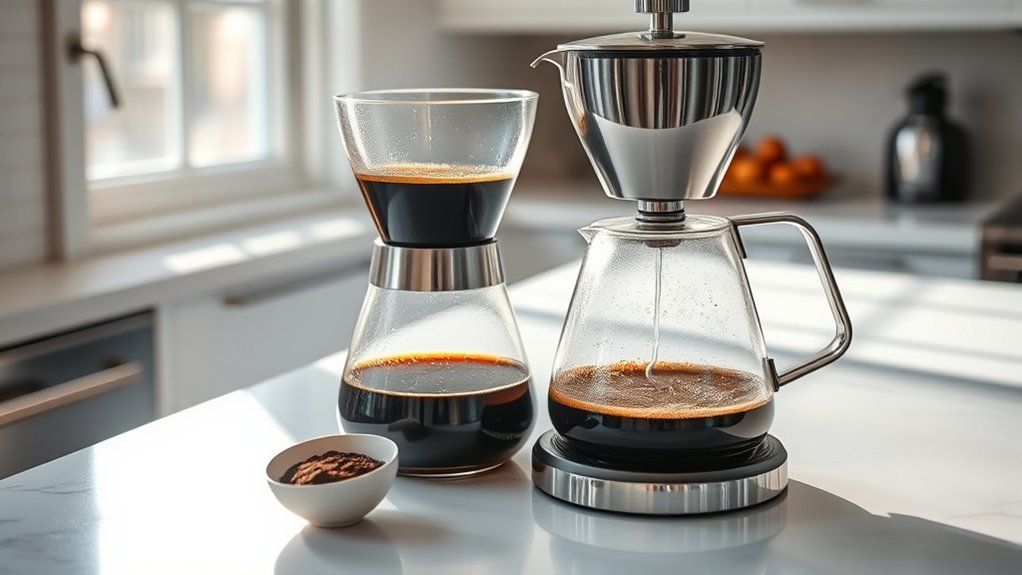
To brew a strong half pot of coffee, use at least 4.5 scoops of coffee grounds, adhering to a coffee-to-water ratio of 1:16 to 1:17. Confirm your water temperature stays between 195°F and 205°F for ideal extraction. Grind your beans to a size finer than standard pour-over but coarser than espresso for better flavor. Regular maintenance of your coffee maker is essential. For more tips on enhancing your brewing technique, continue exploring the various methods and best practices.
Key Takeaways
- Use at least 4.5 scoops of coffee grounds for a half pot (2.5 cups) to ensure a strong brew.
- Maintain a coffee-to-water ratio of 1:16 to 1:17 for optimal strength and flavor extraction.
- Keep water temperature between 195°F and 205°F for effective extraction of oils and essences.
- Experiment with grind size; use a finer grind than standard pour-over for enhanced extraction.
- Clean your coffee maker monthly to prevent mineral buildup and maintain consistent brewing temperatures.
Why You Should Brew a Strong Half Pot of Coffee

When you brew a half pot of coffee, it’s important to pay attention to the coffee-to-water ratio to avoid a weak flavor. Aiming for at least one tablespoon of coffee grounds per cup helps you meet your coffee preferences for strength.
When brewing a half pot, maintain a strong flavor by using at least one tablespoon of coffee grounds per cup.
When brewing a half pot, you might typically use 4.5 scoops for a full pot, but adjusting this amount guarantees ideal flavor extraction.
Employing precise brewing techniques, like using water heated between 195°F and 205°F, enhances oil and essence extraction, resulting in a richer brew.
Additionally, consider a finer grind size to improve extraction efficiency.
How to Get the Perfect Steeping Time for Strong Coffee
To get the perfect steeping time for strong coffee, start by considering the ideal times for your specific brewing method, usually around 4-5 minutes for drip machines.
Compare different methods, as each has unique steeping requirements that influence flavor.
Additionally, remember that grind size plays a vital role; finer grinds can enhance extraction and strength if your brew lacks intensity.
Optimal Steeping Times
Achieving the perfect steeping time is essential for brewing strong coffee, as it directly impacts flavor extraction. For ideal strength, aim to steep your coffee for at least 4-5 minutes.
Here are some tips to refine your steeping techniques for a robust coffee infusion:
- Use a coffee-to-water ratio of 1:16 to 1:17.
- Allow the brewing cycle in your drip coffee maker to complete fully.
- Experiment with grind sizes—finer grinds enhance extraction.
- Monitor your water temperature, keeping it between 195°F and 205°F.
Brewing Method Comparisons
While various brewing methods can yield different flavor profiles and strengths, understanding how each technique affects steeping time is essential for crafting a robust cup of coffee.
For ideal extraction, maintain water temperatures between 195°F and 205°F. Adjust your coffee-to-water ratio to at least one tablespoon of coffee grounds per cup, experimenting with different ratios based on your preferred coffee types.
Utilizing finer grind sizes enhances extraction, allowing hot water to permeate the grounds effectively. Each brewing technique has unique steeping times; be patient to maximize potency, particularly with half pots.
Finally, regularly clean your coffee maker to prevent mineral buildup, ensuring consistent brewing temperatures that considerably affect your coffee’s strength and flavor.
Grind Size Impact
Understanding the impact of grind size is essential for brewing a strong half pot of coffee. A finer grind allows for better flavor extraction, enhancing your brew’s strength and richness. Aim for a grind size that’s finer than standard pour-over but coarser than espresso to achieve ideal steeping time.
- Use a burr grinder for consistency in grind size.
- Experiment with a coffee-to-water ratio of 6g per 100ml for robust flavor.
- Adjust grind size based on personal taste preferences.
- Observe strength variations with different grind sizes for perfecting your brew.
Understanding Coffee-to-Water Ratio for Bold Brews
To brew a bold cup of coffee, it’s essential to pay close attention to the coffee-to-water ratio, as this balance directly influences the flavor intensity. For a half pot (about 2.5 cups), use at least 4.5 scoops of coffee grounds to guarantee a strong flavor profile. Here’s a helpful guide:
| Coffee Amount | Water Volume |
|---|---|
| 4.5 scoops | 2.5 cups |
| 6g | 100ml |
| 1 tbsp | 1 cup |
Experiment with these ratios based on your coffee origin and personal taste preferences. Remember, maintaining a water temperature between 195°F and 205°F enhances extraction, resulting in a richer flavor, especially for smaller batches.
Choosing the Right Grind Size for Stronger Coffee
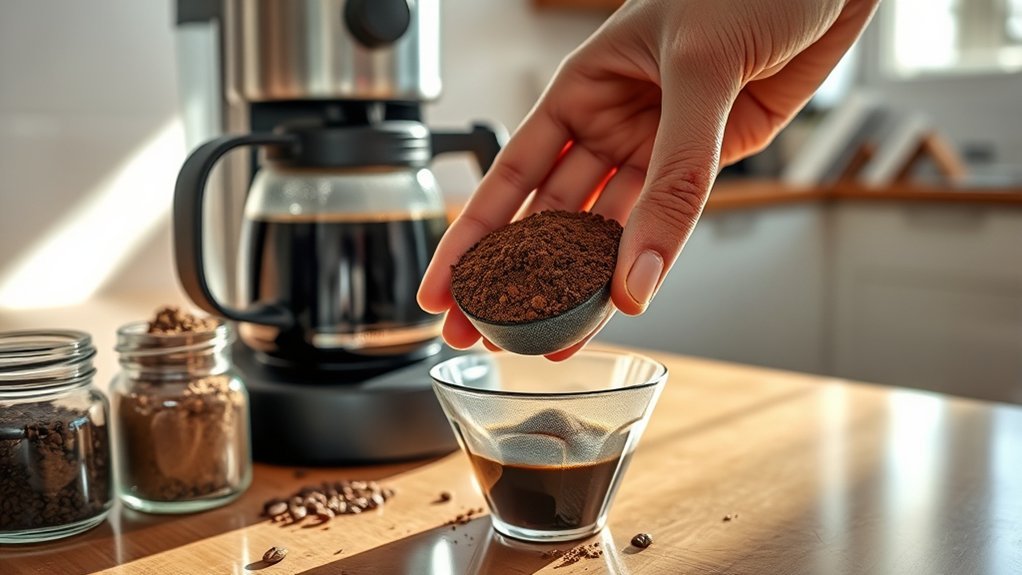
Choosing the right grind size is critical for optimizing coffee extraction, especially when brewing a half pot.
You’ll want a finer grind than usual for drip coffee to enhance strength without over-extracting flavors.
Testing various grind types can lead to the perfect balance, ensuring a robust cup every time.
Grind Size Impact on Extraction
The grind size of your coffee beans greatly impacts the extraction process, directly influencing the strength and flavor of your brew.
To achieve ideal extraction balance, consider the following:
- Finer grinds extract oils and flavors quicker, enhancing strength.
- For Moka pots, aim for a grind finer than pour-over but coarser than espresso.
- Consistency in grind size is essential; uneven grinds can lead to over-extraction and under-extraction, creating an imbalanced flavor.
- A medium grind generally works well for drip coffee, promoting balanced extraction.
Adjusting Grind for Strength
Adjusting your grind size can greatly enhance the strength of your coffee when brewing a half pot. For ideal extraction, use a finer grind than you typically would for regular drip coffee, but not as fine as espresso. This balance allows hot water to extract flavors effectively, leading to a more potent cup.
Start with a medium-fine grind and adjust based on your taste preferences and the specific coffee maker you’re using. Consistency in grind size is essential; uneven grinds can result in both weak and bitter flavors.
Experimenting with different grind sizes will help you maximize flavor enhancement, ensuring you brew a robust cup without compromising on quality. Remember, a finer grind generally leads to stronger coffee.
Testing Various Grind Types
Experimenting with different grind types can considerably impact the strength and flavor of your half pot coffee.
To maximize your brewing experience, focus on grind consistency and try these options:
- Medium-fine grind: Balances extraction and flavor, ideal for half pots.
- Coarse grind: Requires longer brewing times, often yielding weaker coffee.
- Fine grind: Enhances extraction but risks over-extraction; use cautiously.
- Pre-ground Italian coffee: Serves as a reference point for adjusting grind size.
Aim for uniformity in your grind to improve flavor extraction.
Remember, uneven grinds lead to inconsistent brewing results, so fine-tuning your choice of grind size is essential.
Heating Water to the Ideal Temperature for Brewing

To brew a great cup of coffee, you need to make certain your water reaches the ideal temperature, typically between 195°F and 205°F.
This temperature range is essential for optimizing the extraction of flavors and caffeine from the coffee grounds. Using hotter water effectively extracts oils and essences, resulting in a stronger brew.
If your coffee maker isn’t capable of reaching these temperatures, you risk brewing weak coffee. Consider the age of your machine; an aging coffee pot may struggle to maintain the necessary water temperature.
Regular maintenance of your coffee maker is important, as it helps prevent issues with heating and guarantees consistent brewing temperatures, allowing you to enjoy robust coffee with every brew using proper brewing techniques.
Maintaining Your Coffee Maker for Great Flavor
While you may enjoy brewing coffee, maintaining your coffee maker is essential for guaranteeing great flavor and consistency.
Regular coffee maker maintenance helps prevent issues that can weaken your coffee. Here are some key tips to follow:
- Clean your coffee maker every month with a mixture of water and white vinegar to prevent mineral buildup.
- Check the water heater’s functionality to verify it heats between 195°F and 205°F for ideal brewing.
- Replace any worn or clogged filters to maintain water flow and extraction quality.
- Monitor for leaks or steam, as this indicates pressure loss, which can lead to weak coffee.
Best Alternative Brewing Methods for a Robust Flavor
If you’re looking to elevate your coffee experience, exploring alternative brewing methods can greatly enhance flavor.
Consider using a stovetop Moka pot; it brews coffee under pressure, producing a richer flavor than traditional drip methods. For methods like the Moka pot, experiment with a finer grind, which allows for better extraction and a robust flavor profile.
Adjust your coffee-to-water ratio to at least one tablespoon of coffee grounds per cup to guarantee a stronger brew. Utilize hot water between 195°F and 205°F for ideal extraction, enhancing richness.
Finally, give your coffee adequate extraction time with techniques like pour-over or French press; patience truly improves flavor strength and overall quality in these alternative methods.
Troubleshooting Common Issues With Half Pot Brewing
Brewing a half pot of coffee can sometimes lead to frustrating issues, but addressing common problems can greatly enhance your experience.
To maintain coffee quality and brewing consistency, consider the following troubleshooting tips:
For optimal coffee quality and brewing consistency, follow these essential troubleshooting tips.
- Use the same coffee-to-water ratio as a full pot—aim for at least one tablespoon of coffee grounds per cup of water.
- Experiment with grind size; a finer grind can improve extraction and strength.
- Regularly clean your coffee maker to prevent mineral buildup that affects brewing pressure.
- Verify your water temperature is between 195°F and 205°F for peak extraction.
Frequently Asked Questions
Can I Use Pre-Ground Coffee for a Stronger Brew?
Yes, you can use pre-ground coffee for a stronger brew. However, selecting a finer coffee grind increases extraction, enhancing brew strength. Experiment with different grind sizes to achieve your desired flavor profile and intensity.
How Do I Store Leftover Brewed Coffee?
To keep your leftover coffee fresh, store it in an airtight container at room temperature. Avoid the fridge; it’s not the ideal temperature. Remember, storing coffee properly helps maintain its flavor and aroma longer.
Is It Necessary to Clean the Coffee Maker Regularly?
Yes, it’s crucial to clean your coffee maker regularly. Aim for monthly cleaning to maintain peak performance and flavor. Follow maintenance tips like descaling and washing removable parts to prevent buildup and guarantee great-tasting coffee.
Can I Use Flavored Coffee Grounds for a Half Pot?
Absolutely, you can use flavored coffee grounds for a half pot. Just remember to adjust the amount based on your taste preferences. Follow these brewing tips to guarantee ideal flavor extraction without compromising strength.
What Type of Water Is Best for Brewing Coffee?
Using filtered water is like choosing fresh ingredients for a dish; it enhances flavor. High mineral content can improve coffee taste, so opt for filtered water to elevate your brewing experience and avoid unwanted impurities.
Conclusion
Brewing a half pot of coffee doesn’t have to mean sacrificing strength for convenience. By adjusting your coffee-to-water ratio, grind size, and steeping time, you can achieve a robust flavor that rivals a full pot. However, neglecting your coffee maker’s maintenance can lead to bitter brews. Embrace the balance between precision and care, and you’ll craft a satisfying cup that fuels your day, proving that even smaller quantities can deliver big taste.