

To label and date your homemade baby food, start by using waterproof labels or permanent markers. Write the food name and preparation date clearly on each airtight container. If there are allergens, include that information to keep your little one safe. Consider color-coding labels for different food types. Store refrigerated food for up to 2 days and freeze portions for up to 30 days. Want tips on storage and safety? There’s more to explore!
Key Takeaways
- Use waterproof labels or permanent markers to clearly write the food name and preparation date on each container.
- Include allergen information to ensure safety for babies with allergies.
- Store baby food in airtight, freezer-safe containers or resealable bags to maintain freshness.
- Implement the “first in, first out” principle to manage inventory and avoid spoilage.
- Regularly check containers for expiration dates and discard any food that shows signs of spoilage.
How to Effectively Label and Date Homemade Baby Food
When you prepare homemade baby food, it’s crucial to label and date it properly to confirm your little one’s meals are safe and fresh.
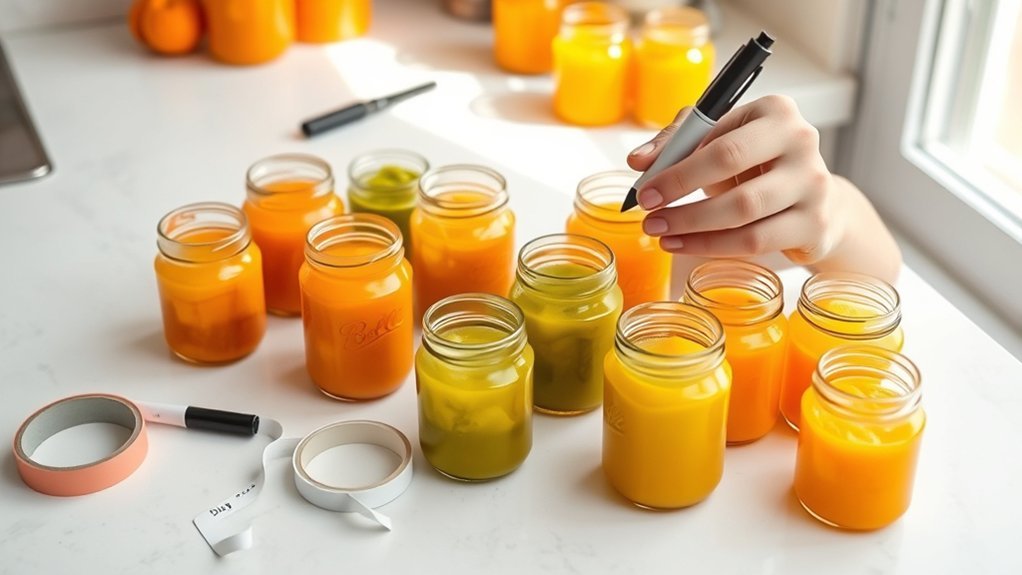
Start by using waterproof labels or permanent markers for clear, smudge-proof writing. Include the name of the food and the preparation date, keeping it simple for quick identification.
Use waterproof labels or permanent markers to clearly note the food name and preparation date for easy identification.
For effective baby food storage, indicate whether the food is refrigerated—good for 1-2 days—or frozen, which lasts up to 30 days. This helps you avoid confusion and guarantees your baby enjoys only the freshest meals.
Regularly check your stored baby food for signs of spoilage and discard any that’s past its recommended use period. Safe labeling techniques are important for your peace of mind in feeding your child.
Step-by-Step Guide to Labeling Your Baby Food
Labeling your homemade baby food is essential for ensuring safety and convenience, especially as your little one explores new tastes.
Start by using a permanent marker or label maker to clearly write the food name and preparation date on each container. Don’t forget to note any allergens, like egg or nuts, to promote allergen awareness during feeding.
Opt for airtight, freezer-safe containers or resealable bags to maintain quality and prevent freezer burn in your baby food storage. Additionally, label containers with portion sizes to easily serve the right amount without thawing more than needed.
Regularly check your labeled inventory, following the “first in, first out” principle, ensuring older items are used first for ideal freshness and safety.
Effective Methods for Dating Your Homemade Baby Food
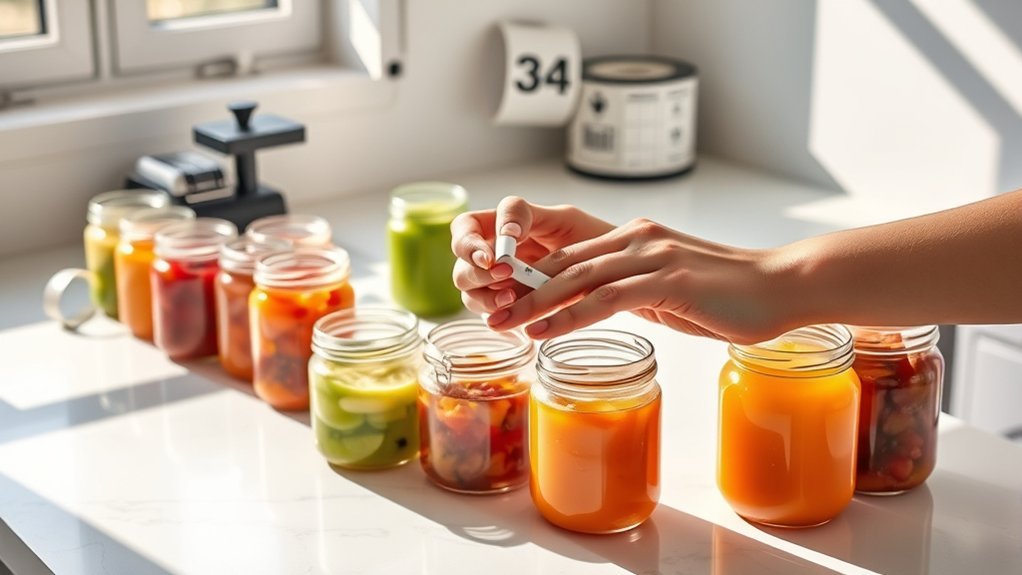
How can you guarantee your homemade baby food stays fresh and safe for your little one? Effective date tracking is essential.
Here are some methods to enhance your labeling systems:
- Use waterproof markers or adhesive labels to clearly write the food name and preparation date.
- Implement color-coded labels for different food types, simplifying ingredient identification.
- Portion servings in ice cube trays, then transfer to labeled freezer bags for easy organization.
- Regularly check your containers for expiration and discard any that are beyond the recommended time or show spoilage.
Selecting the Best Containers for Your Baby Food
Selecting the right containers for your homemade baby food is crucial for maintaining freshness and safety. Choose airtight glass containers or BPA-free plastic ones, as they effectively preserve the food and prevent contamination.
Opt for containers with clear sides, allowing you to quickly identify flavors and avoid confusion. If you plan to freeze your baby food, make sure the containers are freezer-safe to withstand low temperatures without cracking.
Utilizing small portion-sized containers or ice cube trays makes serving and thawing easier, so you can defrost only what you need at mealtime.
Finally, label each container with the food name and date made using waterproof markers or labels to keep track of freshness and guarantee your baby eats only the best.
How to Keep Your Baby Food Safe and Fresh
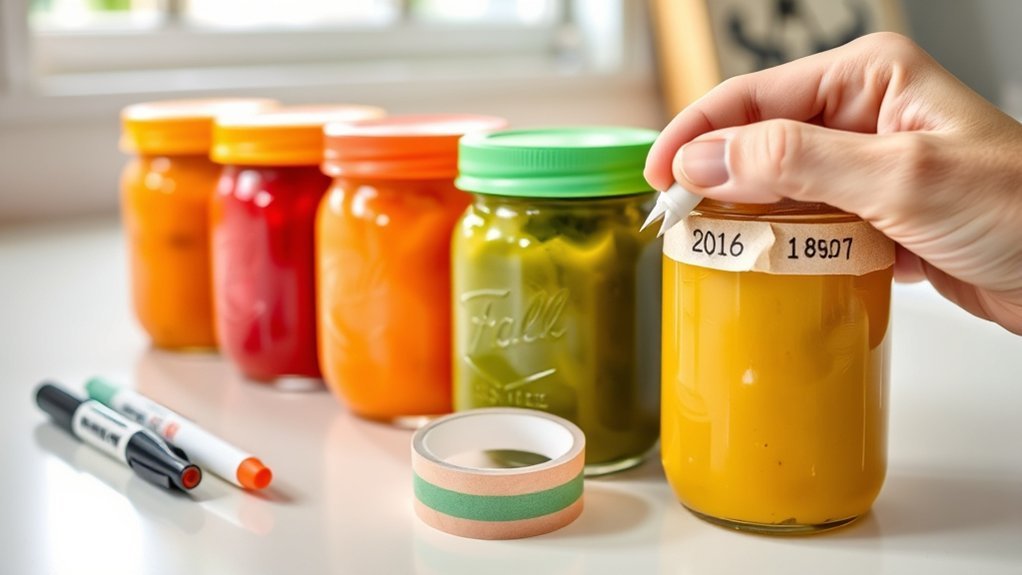
Keeping your homemade baby food safe and fresh starts with proper storage and handling practices. Follow these freshness tips to guarantee your baby’s meals are both safe and nutritious:
- Label containers with contents and preparation dates for easy tracking.
- Store refrigerated baby food in clean, airtight containers and use within 1-2 days.
- Freeze in ice cube trays or single-serve containers, labeling them with food type and date.
- Never refreeze thawed baby food; use it within 24 hours after thawing.
Always check for spoilage signs, like off smells or texture changes, before serving.
Frequently Asked Questions
Can I Reuse Baby Food Containers for New Batches?
Yes, you can reuse baby food containers. Just make sure you thoroughly clean the containers to remove any residue. This way, you maintain safety and quality for your new batches of homemade baby food.
How Long Can I Store Homemade Baby Food?
Like a ticking clock, homemade baby food lasts about 3 to 4 days in the fridge and up to 6 months in the freezer. For food safety, always check for signs of spoilage before serving.
What Are the Best Labels for Freezing?
For freezing, use waterproof, freezer-safe labels that resist smudging. Choose label types like adhesive stickers or freezer tape, ensuring they’re durable enough to withstand low temperatures while clearly showing contents and dates for easy access.
Should I Include Cooking Instructions on the Label?
Yes, including cooking methods and serving suggestions on the label helps guarantee safety and convenience. It guides you on how to prepare and serve the food, making mealtime easier and more enjoyable for everyone involved.
Is It Safe to Mix Different Baby Foods in One Container?
Mixing flavors in one container is generally safe if you’ve followed food safety guidelines. Research shows that 1 in 6 babies experience food allergies. Always introduce new foods separately to guarantee your child’s health and safety.
Conclusion
By properly labeling and dating your homemade baby food, you guarantee your little one gets the freshest and safest meals possible. Remember, “an ounce of prevention is worth a pound of cure.” Using the right containers and following simple storage guidelines can help maintain quality and nutrition. With these practices in place, you can confidently provide nourishing meals for your baby, making mealtime a stress-free experience for both of you. Happy cooking!