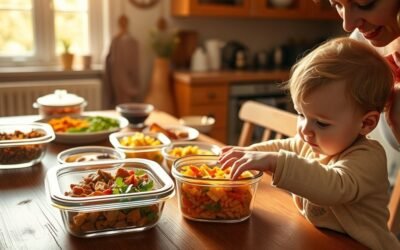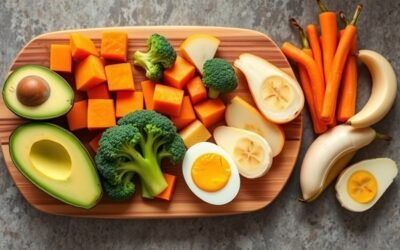

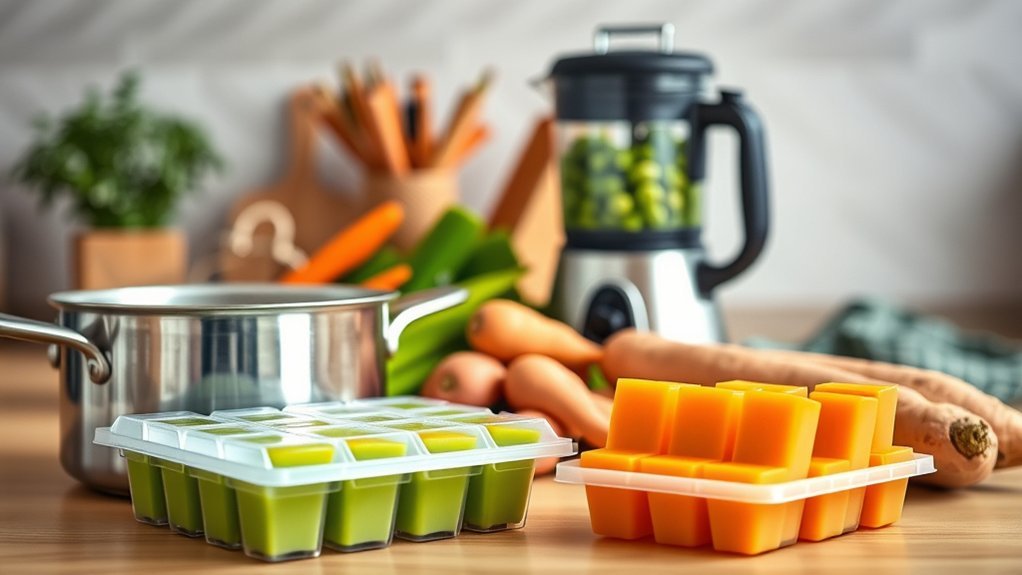
Making baby food in bulk is simple and efficient. Start by selecting fresh, organic fruits and vegetables. Wash, peel, and chop them, then steam or boil for 15-20 minutes. Puree till smooth, adjusting for your baby’s age. Pour the puree into ice cube trays and freeze. Once solid, transfer to labeled freezer bags, ensuring you use them within three months. Proper thawing and reheating maintains quality. Continue to explore tips on keeping your homemade baby food safe.
Key Takeaways
- Select fresh, organic fruits and vegetables, wash, peel, and chop them into small pieces for cooking.
- Cook the ingredients by steaming or boiling for 15-20 minutes until tender.
- Puree the cooked food until smooth, adjusting the texture based on your baby’s age.
- Pour the puree into ice cube trays, cool, and freeze, labeling each container with contents and date.
- Thaw frozen cubes in the refrigerator overnight and reheat to a safe temperature before serving.
Benefits of Making Baby Food in Bulk
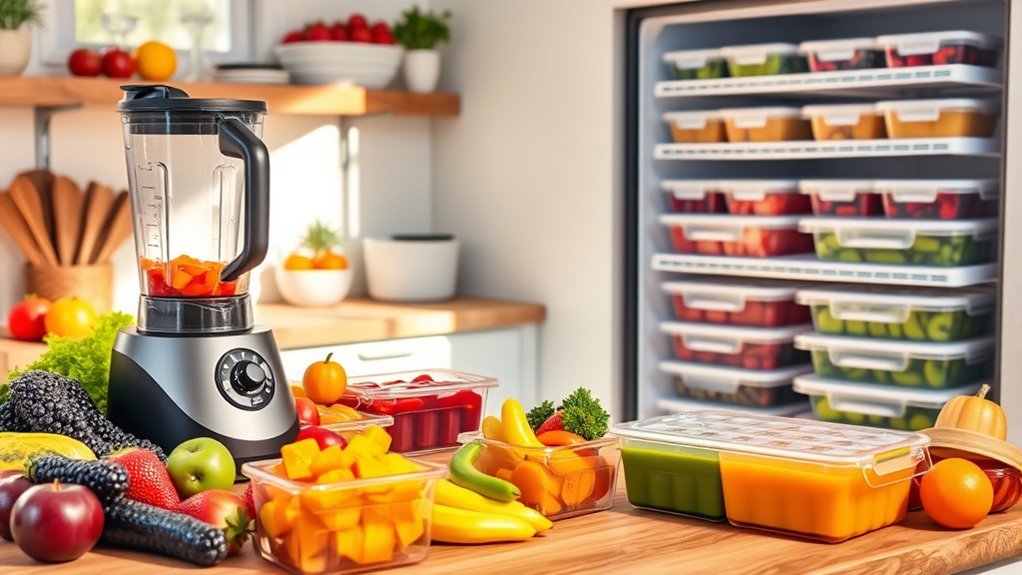
Making baby food in bulk not only saves you time but also offers significant cost savings. By preparing multiple servings at once, you cut down on cooking frequency, making meal prep more efficient.
Purchasing ingredients in larger quantities typically results in lower prices per serving compared to pre-packaged options. Plus, freezing your homemade baby food extends its freshness for up to three months, providing quick meal solutions.
This method lets you control ingredient quality, ensuring your baby receives nutritious meals without preservatives. Additionally, bulk preparation encourages variety, allowing you to create different flavor combinations that help develop your baby’s taste preferences.
Embracing this approach promotes both cost savings and essential nutrition benefits for your growing child.
Essential Equipment for Making Homemade Baby Food
Creating homemade baby food requires some essential equipment that simplifies the process and guarantees safety.
Homemade baby food is easy and safe with the right essential equipment for preparation and storage.
Start with a blender or hand mixer for effective pureeing. An ice cube tray with a lid is essential for freezing individual portions, making serving easy. Use freezer bags with zipper locks to maintain freshness and keep your freezer organized.
Don’t forget a marker to label your food items with contents and preparation dates, which helps track freshness and prevent spoilage. Clean utensils are critical for baby food preparation, ensuring kitchen hygiene is maintained throughout.
Additional tools like a steamer or food processor can boost efficiency when cooking and pureeing various fruits and vegetables for your little one.
Step-by-Step Guide: Preparing Baby Food
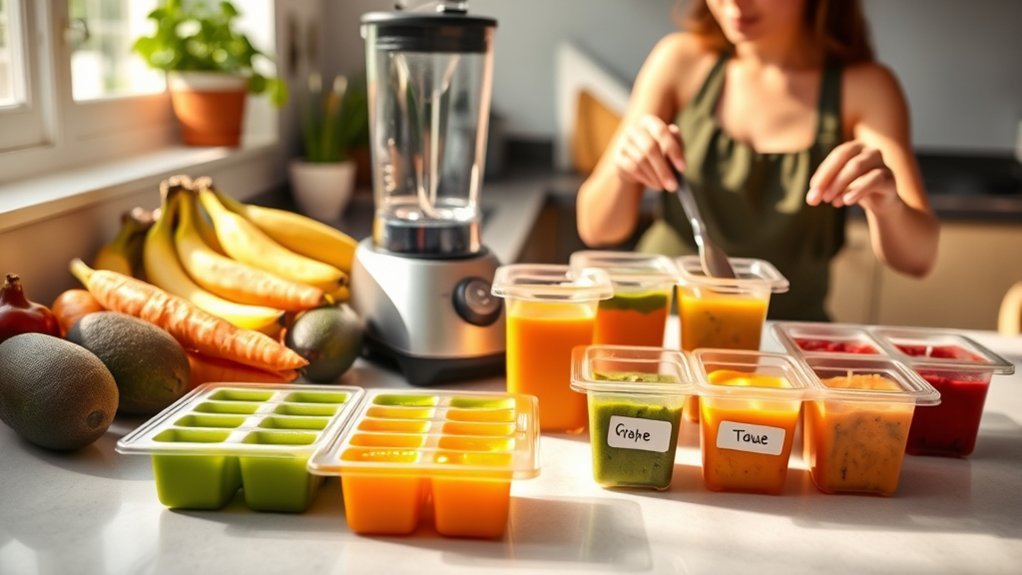
To prepare baby food effectively, you’ll need essential equipment like a blender, ice cube trays, and cooking pots.
Start by selecting a variety of fruits and vegetables, then follow a simple cooking process to guarantee your baby gets a nutritious meal.
Essential Equipment Needed
When preparing baby food in bulk, you’ll need some essential equipment to streamline the process and confirm safety.
Start with a blender or hand mixer for pureeing, and consider ice cube trays with lids for efficient baby food storage of individual portions.
Freezer bags with zipper locks help maintain freshness, while a bowl and fork are perfect for mashing soft foods like avocado.
For harder vegetables, a steamer or pot is essential.
Always use clean utensils and surfaces to verify food safety during food preparation.
Don’t forget a marker to label your freezer bags with the food type and preparation date, making it easy to track freshness.
A baby food maker can be convenient, but traditional methods work just as well.
Step-by-Step Cooking Process
Before diving into the cooking process, it’s important to choose a variety of fresh, organic fruits and vegetables like sweet potatoes, peas, and apples to guarantee your baby gets the best nutrition.
Start by washing, peeling, and chopping these ingredients into small pieces. Cook them using steaming or boiling methods for about 15-20 minutes to maximize nutrient retention.
Once cooked, transfer the food to a blender or food processor, pureeing until smooth, depending on your baby’s age. Pour the pureed baby food into ice cube trays for easy portioning and allow it to cool before freezing.
Finally, label each container with the food type and preparation date, storing them in the freezer for up to three months for convenient future meals.
Freezing and Storing Baby Food
When you’re ready to freeze your homemade baby food, use ice cube trays for easy portioning and transfer the cubes to airtight, labeled containers.
Remember, frozen baby food is best used within three months to maintain quality.
Always thaw in the refrigerator and reheat to a safe temperature before serving to guarantee your baby’s safety.
Proper Freezing Techniques
To guarantee your homemade baby food maintains its quality, it’s essential to cool it down before freezing. This helps prevent ice crystal formation, preserving texture and flavor. Use ice cube trays with lids or freezer bags with zipper locks for portioning. Label each container with the food type and preparation date, making identification easier.
| Storage Method | Tips |
|---|---|
| Ice Cube Trays | Seal tightly to avoid freezer burn |
| Freezer Bags | Lay flat for efficient storage |
| Inventory Check | Regularly dispose of food older than 3 months |
Always thaw frozen baby food in the refrigerator overnight and never refreeze it after defrosting. This guarantees safety and quality for your little one.
Storage Duration Guidelines
Properly storing homemade baby food is key to maintaining its safety and nutritional value. You can keep baby food in the refrigerator for 1-2 days, but freezing it extends its lifespan to 1-3 months.
Always use clean, airtight storage containers or freezer bags, and label them with the food type and preparation date for easy tracking. When freezing purees, ice cube trays are ideal for creating individual portions, which you can then transfer to freezer-safe containers.
Before serving thawed food, check for signs of spoilage, and remember: never refreeze pureed food once it’s been defrosted.
Regularly review your frozen inventory to guarantee freshness, discarding any food stored longer than three months to maintain quality.
Best Practices for Thawing and Serving Frozen Baby Food
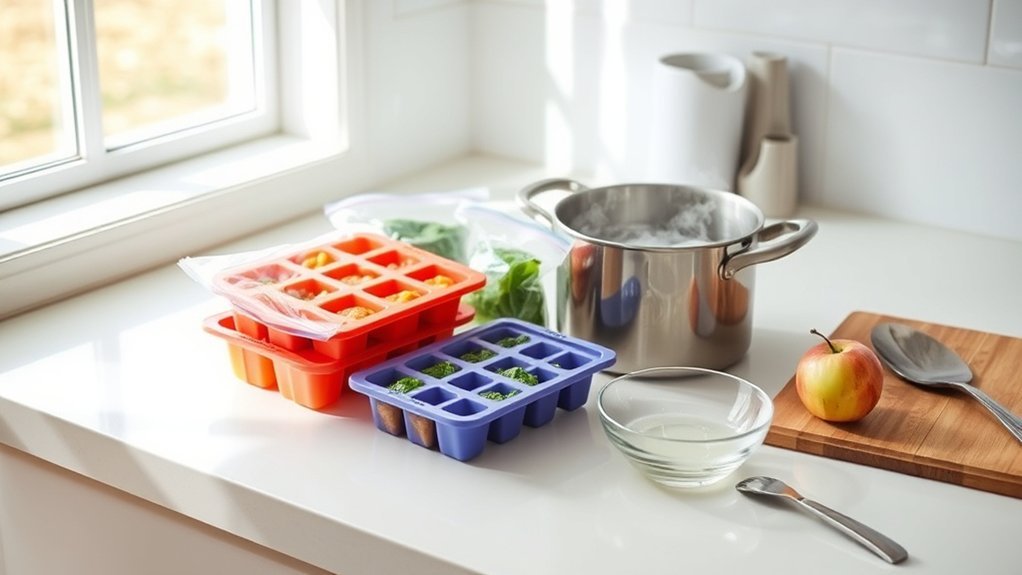
Thawing and serving frozen baby food requires careful attention to maintain its safety and nutritional value. Follow these best practices to guarantee your baby’s meals are both safe and delicious:
- Thawing Techniques: Always thaw frozen baby food cubes in the refrigerator overnight to keep them at a safe temperature.
- Labeling: Clearly label all containers with contents and date of preparation for easy tracking and proper stock rotation.
- Reheating: Before serving, reheat thawed baby food to a safe temperature, ensuring it’s warm but not too hot for your little one.
- Inventory Check: Regularly check your frozen inventory and dispose of any food stored for longer than three months to maintain quality and safety.
Keeping Your Homemade Baby Food Safe
When preparing homemade baby food, ensuring its safety is essential to protect your little one’s health. Start by sanitizing all food preparation surfaces and utensils to prevent contamination.
Clearly label and date your frozen baby food containers, as it’s best to use them within three months. Always thaw frozen food in the refrigerator overnight and never refreeze pureed food that’s already been defrosted, as this can compromise food safety.
Regularly check your inventory for spoilage and discard any expired items. Additionally, practice allergy awareness by introducing new single-ingredient purees every 3-5 days. This allows you to monitor for any adverse reactions, ensuring your baby enjoys healthy and safe meals.
Frequently Asked Questions
Can I Mix Different Fruits and Vegetables Together?
Yes, you can mix different fruits and vegetables together. Experiment with fruit combinations like banana and avocado or vegetable pairings such as sweet potato and carrot. Just make certain the flavors complement each other for your baby’s enjoyment.
How Long Can I Store Frozen Baby Food?
“Better safe than sorry.” You can store frozen baby food for up to three months. For ideal freezer storage and food safety, keep it in airtight containers, labeling them with dates for easy tracking.
Is Homemade Baby Food Healthier Than Store-Bought?
Homemade baby food often offers greater nutritional benefits and can be more cost-effective than store-bought options. You control ingredients, ensuring freshness and avoiding additives, empowering you to provide the best for your little one.
What Age Can My Baby Start Eating Pureed Foods?
Your baby can start enjoying pureed foods around six months old, according to baby food guidelines. This ideal age often sparks pure joy as they explore new flavors and textures, expanding their culinary horizons!
Can I Use Frozen Produce for Baby Food?
Yes, you can use frozen produce for baby food. It’s often picked at peak ripeness, preserving nutrients. Just make certain you steam or cook it properly to maintain ideal baby nutrition, enhancing your little one’s diet.
Conclusion
Making baby food in bulk not only saves you time but can also save you money—homemade baby food can cost up to 50% less than store-bought options. By following the proper steps for preparation, freezing, and storage, you guarantee your little one gets nutritious meals without the hassle. With a little effort upfront, you can provide healthy, homemade meals that cater to your baby’s tastes and dietary needs, making mealtime easier for both of you.