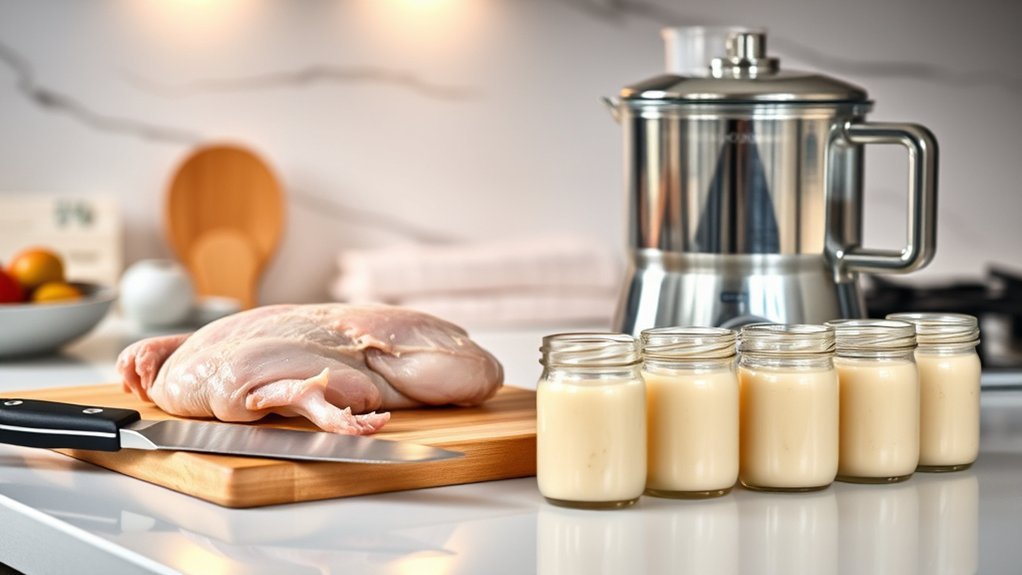
To make baby food meat, start by choosing fresh, high-quality lean meats like chicken or turkey. Rinse the meat and trim excess fat before cutting it into small, uniform pieces. Cook it thoroughly using methods like steaming or boiling until it reaches the appropriate temperature. Once cooked, let it cool, then blend with liquid for a smooth consistency. Store leftovers in airtight containers, and if you want to know more helpful tips, keep exploring this guide.
Key Takeaways
- Select fresh, high-quality, lean cuts of meat, such as chicken or turkey, ensuring they are free from bones and skin.
- Rinse the meat under cold water, trim excess fat, and cut into small, uniform pieces for even cooking.
- Cook the meat thoroughly using safe methods like boiling, steaming, or pan-frying, ensuring it reaches the appropriate internal temperature.
- Allow the cooked meat to cool, then blend in a high-power blender with liquid to achieve a smooth consistency suitable for your baby.
- Store any leftover baby food meat in airtight containers, refrigerating for 3-4 days or freezing in portions for longer preservation.
How to Prepare Baby Food Meat: A Step-by-Step Guide
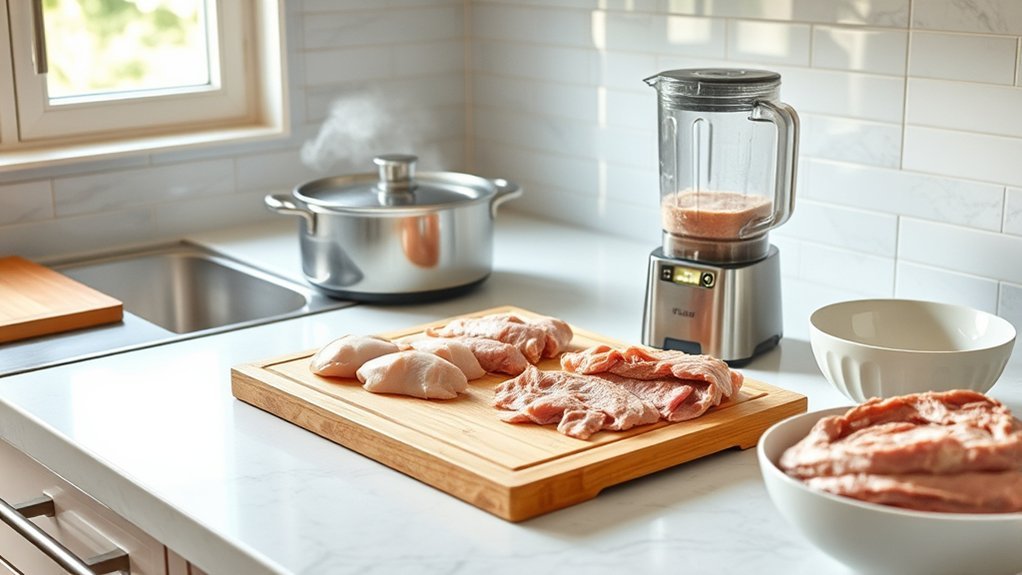
When you’re ready to make baby food meat, start by selecting tender cuts like beef chuck or sirloin, cutting them into small, uniform pieces to guarantee even cooking.
Cook the meat in low or no sodium broth, simmering for 15-20 minutes until it’s fully cooked and tender. This enhances both flavor and nutrition.
Once cooked, transfer the meat to a blender, adding some of the broth to achieve a smooth puree that suits your baby’s age and texture preference.
For added nutrition and variety, consider mixing the meat puree with cooked vegetables or grains, such as sweet potato or baby rice.
Store any leftovers in airtight containers in the refrigerator for up to 4 days or freeze for up to 4 months.
Use Safe Cooking Methods for Baby Food Meat
To confirm your baby’s meat is safe and nutritious, it’s essential to use safe cooking methods. Here are a few key steps to follow:
To ensure your baby’s meat is safe and nutritious, use proper cooking methods for optimal results.
- Cook Thoroughly: Boil, steam, or pan-fry meat until it’s fully cooked. For ground meat, verify it reaches an internal temperature of 160°F to eliminate any foodborne illnesses.
- Enhance Flavor: Use low or no-sodium broth while cooking to enhance the flavor without adding extra salt, making it suitable for your baby.
- Prepare for Pureeing: Remove all visible fat and connective tissues before cooking. This improves texture, making it easier to achieve a smooth consistency when pureeing.
Using these safe methods confirms your baby enjoys safe meat that’s both delicious and nutritious.
How to Choose Safe and Nutritious Meat for Your Baby?
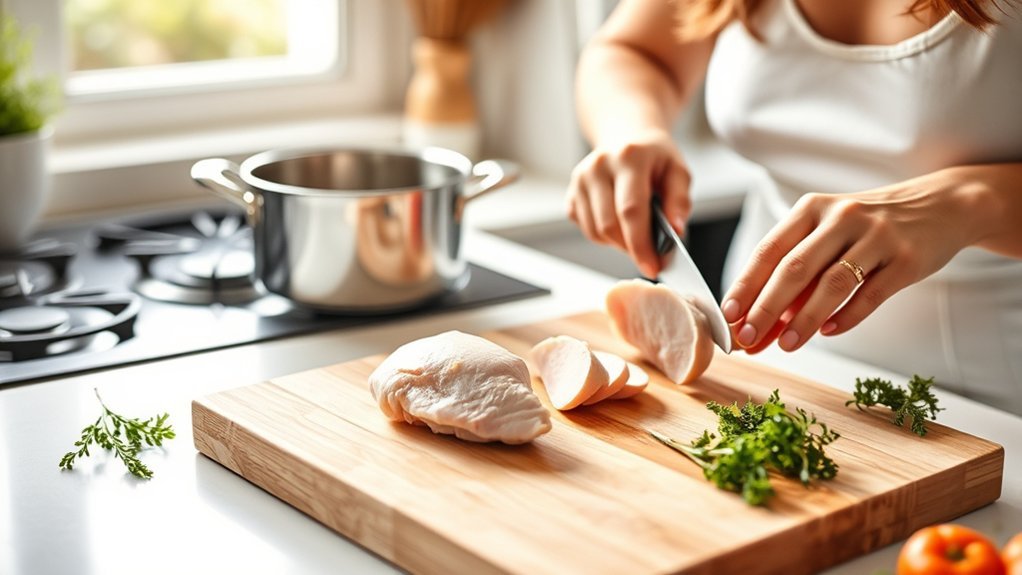
When choosing meat for your baby, opt for lean cuts like chicken breast or turkey to keep fat content low.
Always guarantee the meat is cooked thoroughly to the appropriate internal temperatures for safety.
Gradually introduce various meats to your baby’s diet to provide essential nutrients while monitoring for any allergic reactions.
Types of Meat Options
Choosing the right meat for your baby’s diet is vital for their growth and development. For nutritious options, consider these three types of meat:
- Chicken Options: Lean cuts like chicken breast are packed with protein and easy to puree for smooth textures.
- Turkey Varieties: Ground turkey is another excellent choice, rich in iron and perfect for introducing new flavors.
- Beef Cuts: Opt for lean cuts of beef to provide important nutrients; it’s an iron powerhouse that supports healthy growth.
Introduce meats gradually, starting with small portions, and watch for any allergic reactions.
Incorporating a variety of meats not only enhances your baby’s taste palate but guarantees they receive a broad spectrum of nutrients vital for their development.
Cooking Methods for Safety
Preparing meat for your baby’s diet requires careful attention to cooking methods to secure safety and nutrition.
Always choose lean cuts of chicken, turkey, or beef, as they provide essential protein and iron. Confirm meat is cooked thoroughly, reaching safe internal cooking temperatures—165°F for poultry and 160°F for ground beef—to prevent foodborne illnesses.
Opt for organic or grass-fed meats when possible, minimizing exposure to antibiotics and hormones. Remove any tough parts, fat, or bones before pureeing to reduce choking hazards and achieve a smooth texture.
Introduce meats gradually, starting with small portions, and always monitor your baby for any allergic reactions or digestive issues.
Prioritizing meat safety guarantees a healthy start to your baby’s diet.
Blending Techniques for a Smooth Consistency
To achieve a smooth consistency for baby food meat, it’s important to use a high-power blender after cooking the meat thoroughly.
Here are some blending techniques to guarantee your puree is just right:
- Adjust Blender Settings: Start on a low speed, gradually increasing to high. This helps break down the meat effectively.
- Incorporate Liquid Gradually: Add water, breast milk, or low-sodium broth slowly to make necessary puree adjustments and avoid thickness.
- Blend Duration: For younger babies, blend longer to eliminate lumps, ensuring a silky texture.
Monitor the consistency closely, adjusting with extra liquid as necessary.
This guarantees the puree meets your baby’s developmental stage and chewing ability, providing them with a nutritious and enjoyable meal.
Storing and Freezing Meat Puree Tips
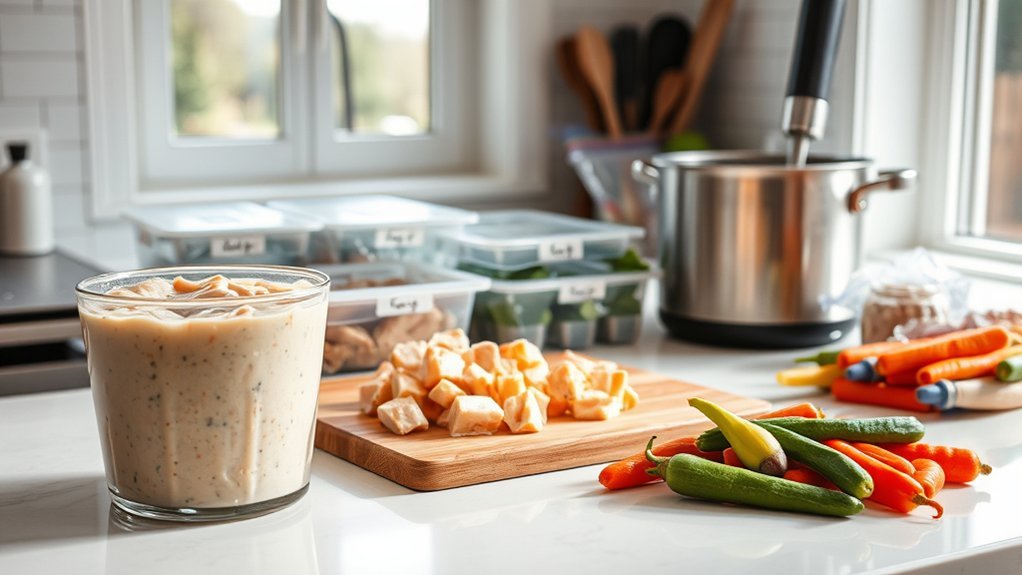
When storing meat puree, choose airtight containers to keep it fresh in the refrigerator for up to 3-4 days.
For longer storage, freeze the puree in ice cube trays, allowing for easy portioning and convenient thawing.
Remember to label your containers with the date and type of puree to guarantee you use them within the recommended time frame.
Proper Container Selection
Choosing the right containers for storing and freezing meat purees is essential to maintain their freshness and safety. Here are some effective storage solutions to evaluate:
- Airtight Containers: Opt for glass or BPA-free plastic to prevent spoilage and preserve quality.
- Labeling: Clearly mark each container with the date and recipe name, ensuring easy identification and tracking of storage time.
- Ice Cube Trays: Freeze purees in these trays for convenient portioning.
Once frozen, transfer cubes to zip-close freezer bags for long-term storage.
Thawing Techniques Explained
Thawing frozen meat puree requires careful attention to confirm safety and maintain quality.
The best thawing methods include placing the puree in the refrigerator for several hours or overnight, making sure it thaws gradually at safe temperatures.
If you need it quicker, submerge the sealed container in cold water, changing the water every 30 minutes until it’s thawed.
Avoid using a microwave, as it can create hot spots that damage nutrients and lead to uneven temperatures.
Once thawed, you can safely store the meat puree in the refrigerator for up to 24 hours.
When reheating, do so gently and check the temperature to confirm it’s warm but not hot before serving to your baby.
Nutritional Benefits of Baby Food Meat
Meat offers a wealth of nutritional benefits for your baby, making it an important addition to their diet. Here are some key nutritional advantages of including meat in their meals:
- High-Quality Protein: Meat provides essential protein necessary for growth and tissue development.
- Iron Sources: Rich in iron, meats like beef and turkey help prevent anemia and support healthy brain development.
- Zinc Content: Zinc found in meat is crucial for immune function and cell growth, enhancing overall health.
Introducing meat early not only diversifies flavors but also helps establish healthy eating habits, reducing picky eating later on.
Common Questions About Making Baby Food Meat?
Introducing meat into your baby’s diet raises many questions for parents, especially when it comes to preparation and safety.
First, verify the meat is well-cooked—ground beef at 160°F, fish at 145°F, and poultry at 165°F—to prevent foodborne illness.
Use a high-power blender to puree cooked meat, adding broth, water, or breast milk for a smooth texture. Start with small portions and monitor for potential meat allergies, though these are uncommon.
For storage, keep homemade purees in airtight containers in the fridge for up to four days, or freeze in ice cube trays for easy servings lasting up to four months.
Proper preparation is key to supporting your baby’s nutrition while verifying their safety.
Frequently Asked Questions
Can I Use Leftover Meat for Baby Food?
Yes, you can use leftover meat for baby food, but guarantee it’s stored safely. Refrigerate leftovers promptly and consume within three days. Always check for freshness and texture before preparing it for your baby.
How Often Can I Feed My Baby Meat?
Think of baby nutrition as a colorful garden; introducing meat varieties can enrich their diet. You can safely feed your baby meat two to three times a week, ensuring they get essential nutrients for growth.
What Age Can Babies Start Eating Meat?
Babies can start eating meat around six months old, aligning with their protein requirements. Introducing baby meat at this age supports their growth and development, providing essential nutrients for a balanced diet.
Is Homemade Baby Food Meat Safer Than Store-Bought?
Homemade baby food meat’s often safer than store-bought, bursting with homemade nutrition. You control meat safety, ensuring freshness and quality. Plus, you can customize flavors, giving your baby a delightful culinary experience right at home!
Can I Mix Different Meats in One Puree?
Yes, you can mix different meats in one puree! This approach enhances nutritional benefits and creates exciting flavor combinations. Experimenting with meats guarantees your baby gets a variety of nutrients and tastes early on.
Conclusion
Incorporating homemade meat purees into your baby’s diet opens a world of flavor and nutrition, like planting seeds in a garden of growth. By choosing safe meats, using proper cooking methods, and blending to a silky smooth consistency, you’re providing essential nutrients for your little one’s development. With careful storage, these purees can be ready at a moment’s notice, ensuring your baby enjoys the richness of homemade meals, nurturing both body and palate as they explore new tastes.