

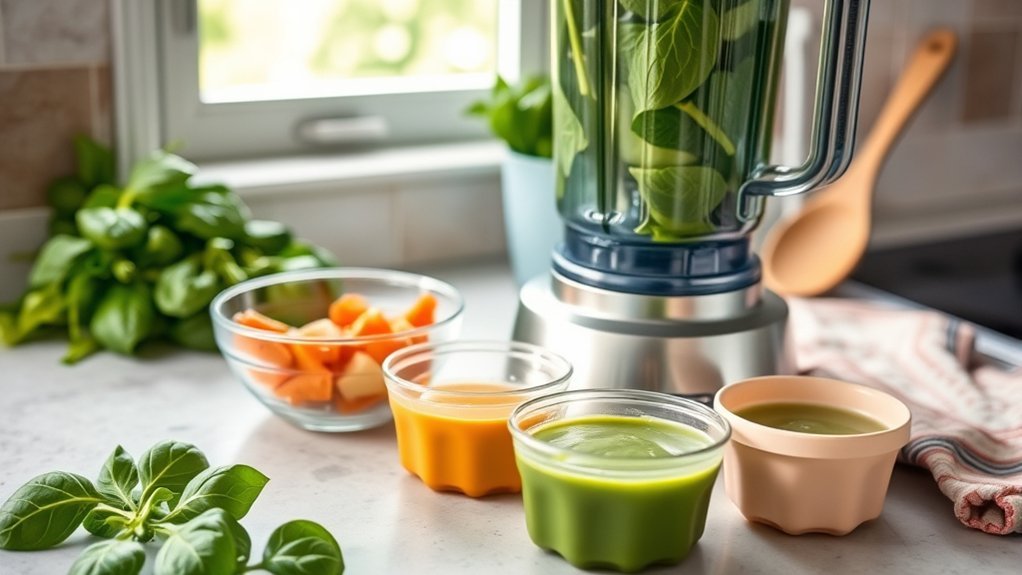
To make baby food with spinach, start by washing 4 cups of fresh spinach and removing tough stems. Steam the spinach for about 5 minutes until tender. Drain well, then blend it with a cup of water or your chosen liquid until smooth. Adjust the consistency as needed, and mix with complementary purees like peas for added flavor. Store the puree in the fridge for a few days or freeze it in cubes for later use—there’s plenty more to explore!
Key Takeaways
- Select fresh, vibrant spinach leaves, wash them thoroughly, and remove tough stems for a smoother puree.
- Cook spinach by steaming for 5 minutes to retain nutrients, or boil for a similar duration.
- Blend the cooked spinach with a little water, breast milk, or stock until you achieve a smooth consistency.
- Enhance the flavor by mixing in avocado, lemon juice, or frozen peas for added nutrition.
- Store the spinach puree in an airtight container in the fridge for 3-5 days or freeze in ice cube trays for easy portioning.
How to Make Spinach Baby Food: Ingredients and Instructions
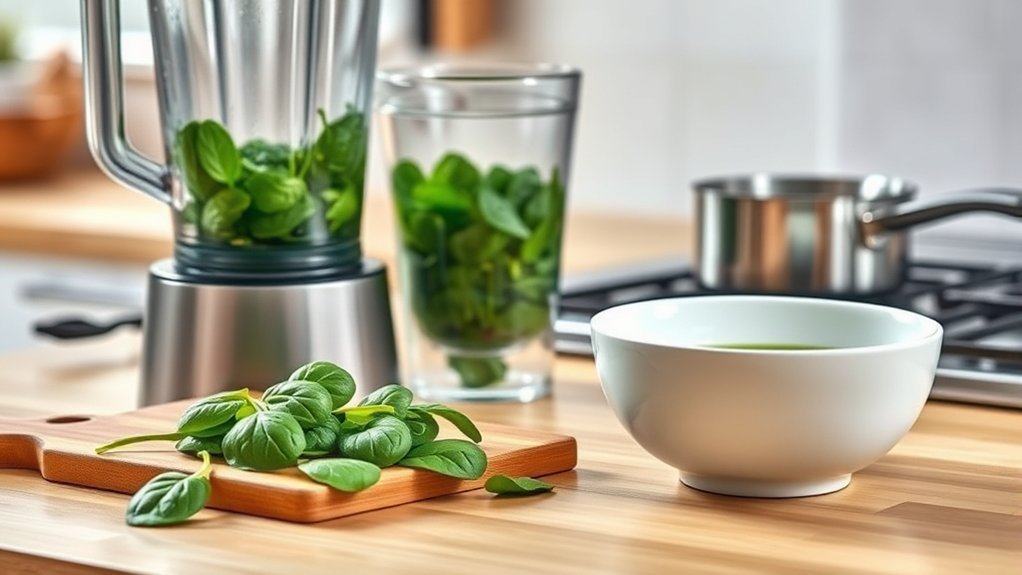
Making spinach baby food is a simple process that requires just a few key ingredients and steps.
Start with 4 cups of fresh baby spinach and 2 cups of frozen peas, which not only enhance flavor but also boost the nutritional benefits with added protein.
Begin with 4 cups of fresh baby spinach and 2 cups of frozen peas for a nutritious flavor boost.
Cook these ingredients together in a medium pot with 1 cup of water for about 4-5 minutes until the spinach wilts and the peas warm.
After cooking, puree the mixture until smooth. You can enrich the flavor by adding avocado, lemon juice, or olive oil.
For serving suggestions, mix the spinach puree with other purees at a ratio of 1 ice cube of spinach to 3 ice cubes of a different puree, creating a delightful variety.
How to Prepare Spinach for Baby Food
To prepare spinach for baby food, start by selecting fresh, vibrant leaves free from blemishes.
Proper washing techniques are essential to eliminate any dirt, while cooking methods like blanching help preserve nutrients and color.
Selecting Fresh Spinach
When selecting fresh spinach for baby food, aim for vibrant green leaves that indicate freshness and ideal nutrition. Look for baby spinach varieties, as they tend to be tender and flavorful, perfect for pureeing. Avoid any leaves that are limp or yellowing, as they won’t provide the same nutritional benefits.
| Quality | Description |
|---|---|
| Color | Vibrant green |
| Texture | Crisp, not limp |
| Size | Smaller leaves for tenderness |
| Stem | Remove tough stems for smooth puree |
Storing unwashed spinach in a loose plastic bag in the refrigerator can keep it fresh for three to four days. For the best nutrient retention, consider steaming your spinach before blending.
Proper Washing Techniques
Before preparing spinach for baby food, it’s crucial to wash it thoroughly to eliminate any lingering dirt or grit. Here are effective washing methods for ideal dirt removal:
- Running Water: Rinse spinach under cold running water, gently rubbing the leaves to dislodge dirt.
- Soaking: For unwashed spinach, soak it in a bowl of cold water for a few minutes, then rinse under running water to remove any remaining grit.
- Rinsing Prewashed Spinach: Even if your spinach is prewashed, give it a quick rinse to verify it’s clean.
Don’t forget to remove tough stems, as they can be hard for babies to digest.
Verify the spinach is completely dry before cooking to maintain the right consistency in your puree.
Cooking Methods Explained
After ensuring your spinach is clean and properly prepared, the next step is to choose a cooking method that best retains its nutrients while making it suitable for your baby. Steaming is preferred for nutrient retention, while boiling may cause some losses.
| Cooking Method | Process | Nutrient Retention |
|---|---|---|
| Steaming | Steam for 5 minutes, then cool. | High |
| Boiling | Boil for 5 minutes, then cool. | Moderate |
| Blending | Blend with added liquid for texture | Variable |
Regardless of your choice, drain the spinach well before blending to achieve a smooth puree consistency. Adjust thickness by adding water, breast milk, or stock, ensuring your baby enjoys every bite!
Step-by-Step: Cooking Spinach for Puree
Cooking spinach for puree is a straightforward process that guarantees your baby gets essential nutrients. By using simple cooking techniques, you can preserve spinach nutrition effectively. Here’s how you can cook spinach for puree:
Cooking spinach for puree is easy and ensures your baby receives vital nutrients while preserving its nutritional value.
- Wash: Rinse the spinach thoroughly to remove any dirt and grit.
- Cook: Steam the spinach for about 5 minutes until it wilts, or blanch it in boiling water for 1 minute. Drain and cool immediately to retain its vibrant green color.
- Cool: Run cold water over the cooked spinach to halt the cooking process.
Once cooked, you’ll blend the spinach into a smooth consistency suitable for your baby.
Store the puree in an airtight container in the fridge for up to 3 days or freeze for later use.
How to Blend Spinach Into a Smooth Puree
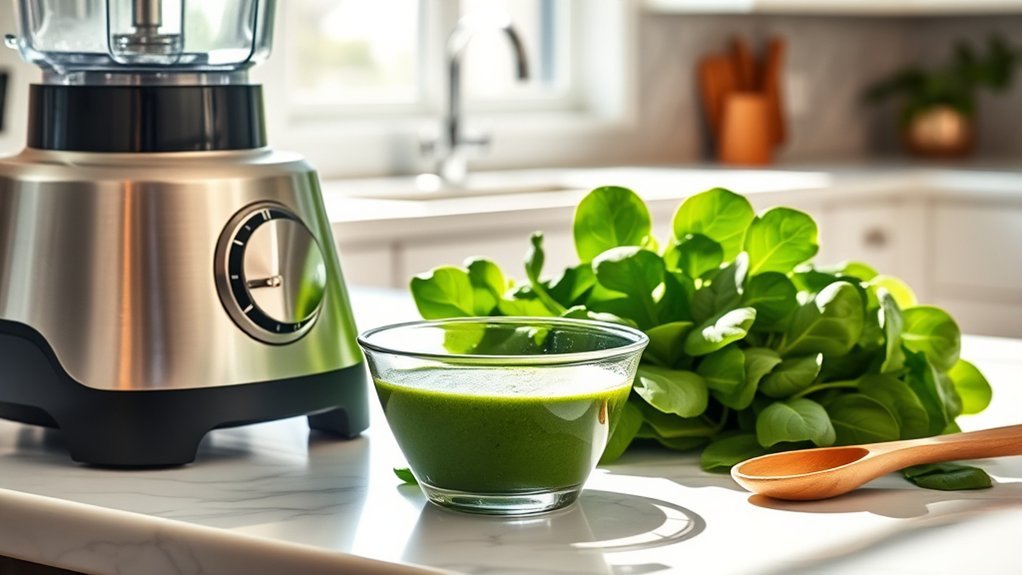
To blend spinach into a smooth puree, you’ll want to choose the right blender to guarantee efficiency and consistency.
Once blended, you can achieve the desired texture by adjusting the liquid content, and consider adding flavor enhancements for a more nutritious mix.
Understanding these aspects will help you create a delicious and healthy baby food.
Choosing The Right Blender
Choosing the right blender is essential for turning fibrous spinach into a smooth puree. Here are three key factors to take into account when selecting your blender:
- Blender Types: Opt for a high-speed blender or food processor, as these can efficiently break down the fibrous texture of spinach.
- Blending Techniques: If you’re using a standard blender, adding a small amount of water, breast milk, or formula can help achieve a smooth consistency.
- Batch Size: Blend spinach in small batches to prevent overloading, which guarantees even pureeing.
Always check the texture after blending; if it’s too thick, gradually mix in more liquid.
Remember to clean your blender immediately after use to keep it in top condition for future preparations.
Achieving Desired Consistency
Achieving the right consistency for spinach puree is key to guaranteeing your baby enjoys a smooth and palatable meal. Start by blending cooked spinach with water, breastmilk, or formula. Adjust the liquid gradually to reach your desired puree texture.
| Consistency Type | Ingredients |
|---|---|
| Thinner | Add more liquid |
| Thicker | Blend with rice cereal |
| Hearty | Mix in oats or peas |
| Ideal Color | Avoid overcooking spinach |
| Nutrient Retention | Blend quickly and efficiently |
Maintaining vibrant green color is crucial for spinach nutrition. Always taste and adjust the consistency as needed, especially when introducing new flavors to guarantee a liberating experience for your baby.
Adding Flavor Enhancements
While spinach puree can be nutritious on its own, adding flavor enhancements can make it more appealing to your baby. Here are three effective flavor combinations that not only enhance taste but also provide nutritional benefits:
- Avocado: Mix in 1-2 tablespoons for creaminess, enriching the puree with healthy fats.
- Lemon Juice: A teaspoon brightens the taste without overpowering it, adding a invigorating zing.
- Frozen Peas: Incorporate them for sweetness and a protein boost, making the puree even more nutritious.
For older babies, consider adding grated Parmesan cheese to introduce savory flavors while increasing calcium content.
Tips for Adjusting Spinach Puree Consistency for Babies
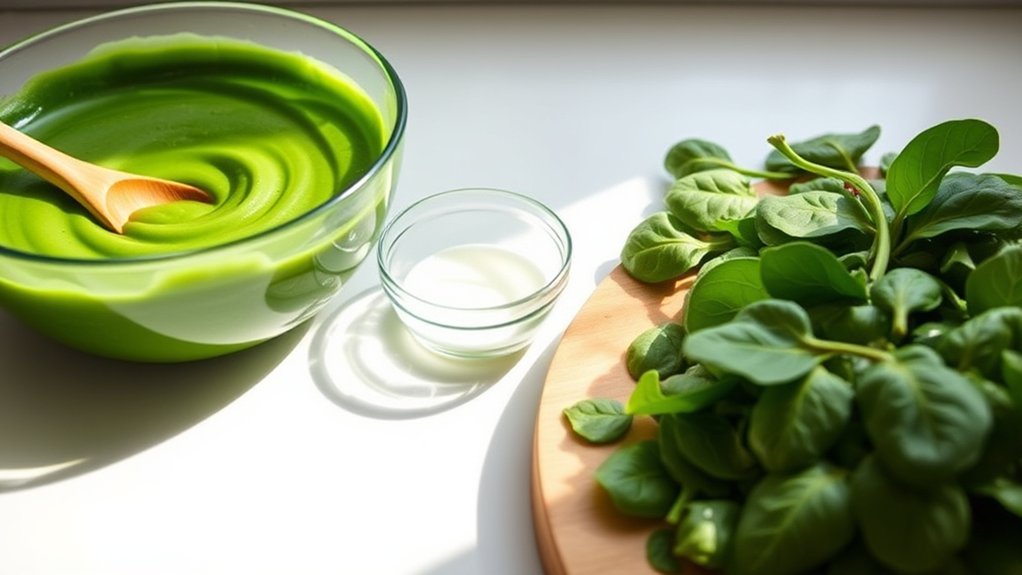
To create the ideal spinach puree for your baby, experimenting with its consistency is key. If you want a thinner puree, gradually add water, breast milk, or formula until you reach the desired thickness.
For a thicker consistency, blend spinach with cooked rice cereal, oats, or sweet peas to enhance texture variations. When using frozen spinach, remember to thaw it and squeeze out excess moisture for a smooth blend.
Adjust your cooking water during steaming or boiling to control puree thickness—less water yields a denser mixture, while more creates a thinner one.
Finally, play with blending times: longer blending results in a smoother puree, while shorter blending offers a chunkier texture for older babies.
How to Store and Freeze Spinach Puree
Storing and freezing spinach puree properly guarantees your baby food retains its freshness and nutritional value. Here are some essential storage tips and freezing techniques to follow:
Properly storing and freezing spinach puree ensures your baby food stays fresh and nutritious for longer.
- Refrigeration: Store spinach puree in an airtight container in the fridge for up to 3-5 days. This keeps it fresh and high in quality.
- Freezing: Pour the puree into silicone ice cube trays and freeze overnight. Once solid, transfer the cubes to freezer bags, removing excess air to preserve flavor and nutrition.
- Labeling: Clearly label your containers with dates to track freshness, ensuring you use the puree at its best quality.
How to Use Leftover Spinach Puree Creatively
Using leftover spinach puree creatively can enhance your baby’s meals while minimizing food waste. You can mix the puree into spaghetti or rice dishes to create a nutritious spinach pasta sauce, boosting flavor and iron content.
For a fun twist, spread spinach puree on toast before grilling cheese sandwiches—this adds a healthy layer to a classic favorite. If your baby enjoys sweeter flavors, combine the spinach puree with apple or pear puree for a delightful mix.
For older babies, sprinkle grated Parmesan cheese over the spinach puree to enrich the taste. Finally, pack spinach puree in reusable pouches for on-the-go snacks, ensuring your little one gets essential nutrients wherever you are.
Why Spinach Is Great for Your Baby’s Health
While exploring nutritious options for your baby’s diet, incorporating spinach can be a fantastic choice due to its impressive health benefits.
Here are three key reasons why spinach is great for your little one:
- Nutrient Benefits: Spinach is rich in iron, essential for babies starting solids, and it provides calcium and fiber, promoting growth and development.
- Immune Support: Loaded with vitamin C, spinach helps boost your baby’s immune system and enhances iron absorption when paired with other foods.
- Digestive Health: The fiber content in spinach promotes healthy digestion, preventing constipation as your baby shifts to solid foods.
Can Babies Eat Spinach?
Can babies eat spinach? Yes, they can, typically starting around 6 months of age. Spinach is an iron-rich food that helps replenish dwindling iron stores in your baby. When introducing spinach into their diet, pureeing it makes it easy for them to consume and digest. To enhance the spinach benefits, mix it with vitamin C-rich purees like apple or pear, as this boosts iron absorption. However, moderation is key due to spinach’s high oxalate content, which can interfere with calcium absorption if eaten excessively. You can prepare spinach puree by steaming or boiling, ensuring not to overcook it to retain its vibrant color and nutrients. Enjoy making nutritious baby food that supports your baby’s health!
Frequently Asked Questions
When Can I Start Introducing Spinach to My Baby?
You can start introducing spinach to your baby around six months. Spinach benefits include essential vitamins and minerals, which support growth and development. Just make certain it’s properly prepared before adding it to your baby food.
Is Frozen Spinach Suitable for Making Baby Food?
Yes, frozen spinach is suitable for making baby food. Its benefits include retaining nutrients. You can steam or puree it easily, ensuring a smooth texture, which makes it perfect for your baby’s first foods.
Can I Mix Spinach With Other Vegetables for Baby Food?
Mixing spinach with other vegetables creates delightful combinations that broaden your baby’s palate. Think of vibrant vegetable flavors dancing together, enriching nutrition while introducing diverse tastes, making mealtime an exciting adventure for your little one.
How Much Spinach Puree Should I Serve My Baby?
You should start with a serving size of one to two tablespoons of spinach puree, adjusting based on your baby’s preferences. Observe their reactions, and gradually increase the amount as they become accustomed to the flavor.
Are There Any Allergies Related to Spinach in Babies?
Sure, your baby might be the next Popeye, but spinach allergies are rare. Keep an eye out for unusual reactions, though! Prioritize baby nutrition by introducing new foods slowly, ensuring a healthy, adventurous palate.
Conclusion
To sum up, making spinach baby food is a simple and nutritious way to introduce your little one to greens. By following the steps to prepare, cook, and blend spinach, you can create a smooth puree that’s easy for babies to consume. Remember, adjusting the consistency and storing leftovers can enhance your baby’s feeding experience. With its rich nutrient profile, spinach is a fantastic addition to your baby’s diet, supporting their growth and health.