


To make iced coffee with a coffee maker without bitterness, start with a 1:15 coffee-to-water ratio using filtered water. Brew strong coffee with a medium-coarse grind and let it cool for a few minutes before pouring over large ice cubes. Avoid brewing directly over ice to prevent over-extraction. Add milk or your favorite sweeteners afterward for richness. Experiment with brewing times and coffee concentration; there’s more to uncover for the perfect iced coffee experience!
Key Takeaways
- Use a coffee-to-water ratio of 1:15 with filtered water to enhance flavor and minimize bitterness.
- Brew strong coffee with medium-coarse grind and adjust steeping times to prevent over-extraction.
- Allow brewed coffee to cool for a few minutes before pouring over ice to maintain balance.
- Avoid brewing coffee directly over ice to prevent bitterness from rapid cooling.
- Experiment with additives like milk, spices, or sugar-free syrups for flavor without bitterness.
Understanding Iced Coffee: Why Brewing Matters

When you brew iced coffee, the method you choose plays a crucial role in the final flavor. Your brewing techniques directly impact coffee extraction, affecting how the unique flavor compounds develop.
Using hot water is essential, but be cautious—over-extraction can lead to bitterness. Monitor your brewing time and adjust the coffee-to-water ratio to achieve your desired strength.
If you’re brewing directly over ice, you might end up with a bitter taste; let your espresso cool slightly before adding ice to maintain balance.
Opting for high-quality, filtered water helps minimize impurities that can alter the taste.
Techniques like flash brewing, where hot coffee is poured over ice, can enhance flavor while preventing dilution, making for a more enjoyable iced coffee experience.
How to Brew Iced Coffee With a Coffee Maker: a Step-By-Step Guide
Brew your perfect iced coffee using a coffee maker by following these straightforward steps:
- Start with a coffee-to-water ratio of 1:15, using filtered water to enhance flavor and reduce bitterness during coffee extraction.
- Brew a strong coffee, experimenting with a medium-coarse grind and adjusting steeping times to achieve the desired flavor balance.
- Allow the brewed coffee to cool for a few minutes before pouring it over ice; this prevents rapid dilution and guarantees a smoother taste.
- For added richness, consider adding a splash of milk or cream and sweetening with sugar-free syrup after brewing.
Selecting the Right Coffee Beans for Iced Coffee

When selecting coffee beans for iced coffee, the roast level plays an essential role in determining flavor.
Light or medium roasts preserve the bean’s natural acidity and invigorating qualities, while high-quality Arabica beans offer a smoother taste.
Additionally, consider flavor profiles that complement iced coffee, such as chocolate or fruit notes, to elevate your drink without added sweetness.
Bean Roast Level Matters
Selecting the right coffee beans is essential for crafting an exceptional iced coffee, as the roast level dramatically impacts its flavor.
Here are key considerations when choosing your beans:
- Roast Duration: Opt for medium to dark roasts, which provide a rich, robust taste that holds up well against melting ice.
- Bean Origin: High-quality Arabica beans, known for their complex flavors, are preferable over Robusta for a smoother experience.
- Freshness: Always use freshly roasted beans to maximize aromatic compounds and flavor retention.
- Experimentation: Don’t hesitate to try different roast levels; a medium roast offers balance, while a dark roast delivers boldness, allowing you to discover your ideal iced coffee.
Flavor Profile Considerations
Choosing the right coffee beans greatly influences the flavor profile of your iced coffee. For a smoother, less bitter taste, opt for high-quality, 100% Arabica beans. They offer more coffee acidity and nuanced flavors compared to Robusta.
Medium to light roast beans are ideal, as they maintain the coffee’s natural sweetness and aromatic compounds, enhancing flavor balancing in your drink. When brewing cold coffee, use a coarser grind to prevent over-extraction and bitterness. Freshly ground beans are key; grind them just before brewing to capture their full range of aromas.
Finally, don’t hesitate to experiment with syrups or milk alternatives that complement your chosen beans without overshadowing their inherent characteristics. Enjoy the delightful complexity!
Why Grind Size Matters for Your Iced Coffee
The grind size of your coffee is essential because it directly impacts the flavor profile of your iced coffee.
By adjusting your grind according to the brewing method and ensuring consistency, you can achieve that perfect balance between sweetness and smoothness.
Experimenting with different sizes helps you discover what best suits your taste, making each iced coffee a personal delight.
Impact on Flavor Profile
While many factors contribute to the taste of your iced coffee, grind size plays an essential role in shaping its flavor profile. The extraction process can vary dramatically based on how finely your coffee is ground. Here’s how to achieve a balanced flavor:
- Finer Grinds: Increase extraction speed, leading to intense flavors but potential bitterness.
- Coarser Grinds: Allow for smoother extraction, reducing bitterness and creating a milder taste.
- Consistency: Use a quality grinder for uniformity to guarantee ideal flavor without bitterness.
- Measurements: Stick to 17 grams of coffee for every 6 ounces of water to maintain flavor balance and control extraction time.
Adjusting for Brewing Method
Understanding how grind size affects your brewing method can transform your iced coffee experience. Finer grinds extract flavors quickly, often leading to bitterness, while coarser grinds create a smoother, balanced taste.
For iced coffee, particularly with brewing methods like cold brew or French press, a coarser grind is generally recommended to avoid over-extraction. A medium-coarse grind works well with drip coffee makers, allowing a steady flow of water through the grounds, enhancing your coffee-to-water ratio.
Experimenting with grind adjustments between medium and medium-coarse lets you discover the perfect flavor profile for your iced coffee. By mastering grind size, you can enjoy a revitalizing cup without harsh notes, ensuring a delightful iced coffee experience every time.
Importance of Consistency
Consistency is key to achieving that perfect cup of iced coffee. The grind size you choose directly impacts flavor balance and bitterness levels.
Here’s why grind consistency matters:
- Extraction Control: A medium to coarser grind prevents over-extraction, ensuring a smoother taste.
- Bitterness Reduction: Finer grinds can release excessive oils, leading to unwanted bitterness.
- Flavor Uniformity: Using a consistent grind size across batches allows for a replicable flavor profile, making your iced coffee reliable.
- Strength Management: Adjusting grind size lets you control the coffee’s strength, with coarser grinds yielding milder flavors.
Brewing Techniques: Avoiding Bitterness
To brew a delicious iced coffee without the unwanted bitterness, focus on the techniques that enhance flavor while minimizing harsh notes.
Start by using a coffee-to-water ratio of about 1 ounce of coffee for every 12 ounces of water. This keeps your brew balanced without overwhelming strength.
Next, brew at slightly lower temperatures to extract fewer bitter compounds. After brewing, let the espresso cool for a minute before adding ice; this prevents immediate coffee dilution and harsh flavors.
Brew at lower temperatures and allow cooling before adding ice to avoid bitterness and maintain flavor integrity.
Additionally, experiment with your grind size; a coarser grind can reduce over-extraction, further lowering bitterness.
Finally, consider a splash of milk or sugar-free syrup post-brew to enhance sweetness and creaminess, effectively counteracting any lingering bitterness.
Cool Your Brew: Top Tips for Flavor
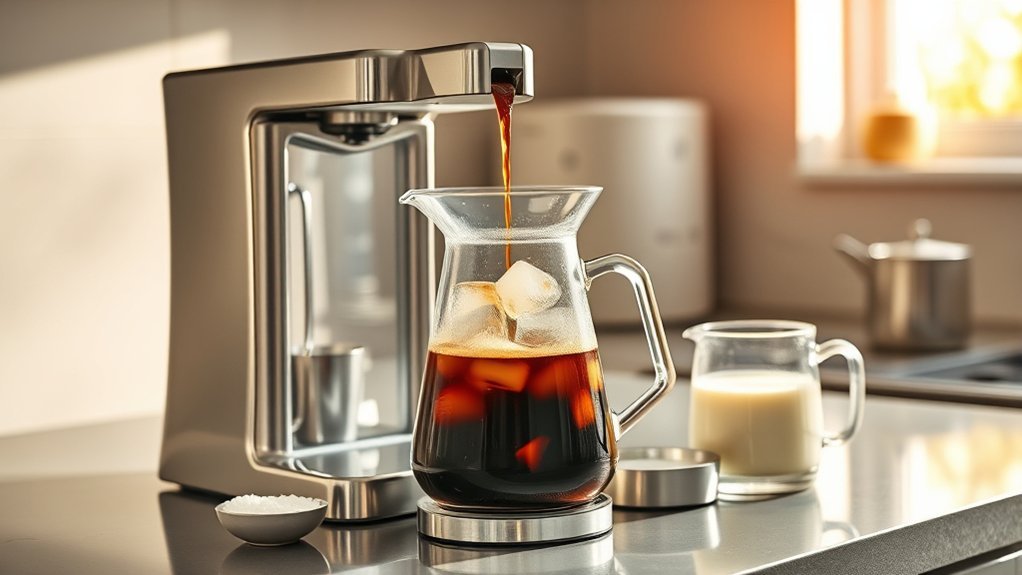
To enhance the flavor of your iced coffee, consider brewing directly over ice for a revitalizing result that minimizes bitterness.
Adjusting the coffee concentration is key; using the right coffee-to-water ratio guarantees a balanced taste that won’t overwhelm your palate.
These simple techniques can elevate your iced coffee experience to a whole new level.
Brew Over Ice
Brewing your coffee directly over ice is one of the best ways to achieve a chilled, concentrated drink without watering it down.
To perfect this brew method, follow these tips:
- Choose the Right Ice Types: Use large ice cubes to minimize dilution while brewing.
- Cool Your Brew: Allow the coffee to cool for a minute before pouring over ice to avoid bitterness.
- Enhance Flavor: Experiment with sugar-free syrups and different milk options after brewing for added depth.
- Monitor Brewing Time: Adjust the coffee-to-water ratio to prevent over-extraction, which can lead to a bitter taste.
Using filtered water can further elevate the flavor of your iced coffee, ensuring a revitalizing experience every time.
Adjust Coffee Concentration
Adjusting the concentration of your iced coffee can make all the difference in achieving a balanced flavor without bitterness.
Start with a coffee-to-water ratio of 1 ounce of coffee for every 12 ounces of water. This guarantees a rich yet smooth taste. Brew using hot water to extract the beans’ unique flavors; cold brew can sometimes result in undesirable tastes if not executed properly.
Let your brewed coffee cool for a few minutes before adding ice to preserve flavor integrity and minimize rapid dilution. For further coffee adjustments, experiment with the water amount—adding more can soften the flavor without losing richness.
Finally, opt for filtered water to enhance your iced coffee’s overall flavor balance.
Flavor Boosters: Milk, Syrups, and Spices to Elevate Your Iced Coffee
While the base of your iced coffee can be satisfying on its own, adding flavor boosters like milk, syrups, and spices can take it to the next level.
Here are some suggestions to enhance your drink:
- Cream Options: Explore oat milk or almond milk for unique flavors and a creamy texture that balances bitterness.
- Syrup Varieties: Use sugar-free options like vanilla or caramel to sweeten without calories, or try hazelnut and mocha for a delightful twist.
- Spice Additions: Sprinkle cinnamon or nutmeg on top to add warmth and depth to each sip.
- Garnish Ideas: Elevate visual appeal with whipped cream or chocolate shavings, making each cup a treat for the senses.
Common Mistakes to Avoid When Brewing Iced Coffee
When crafting the perfect iced coffee, it’s crucial to steer clear of common pitfalls that can ruin your experience. Avoid brewing coffee directly over ice; that leads to bitterness. Instead, let the coffee cool slightly before adding ice.
Pay attention to your coffee-to-water ratio—aim for 1 ounce of coffee for every 12 ounces of water to prevent overpowering flavors and bitterness. Always use filtered water, as it enhances flavor and reduces unwanted bitterness from tap water.
Don’t overlook brewing time; over-extraction can create a bitter taste, so keep an eye on it. Finally, after brewing, experiment with different milk options and sweeteners to balance and enhance the flavor of your iced coffee.
Serving and Storing Iced Coffee
After mastering the brewing process and avoiding common mistakes, it’s time to focus on serving and storing your iced coffee for the best experience.
Follow these tips for ideal iced coffee enjoyment:
- Serve immediately over ice, allowing it to melt slightly for a balanced flavor.
- Personalize your servings by adding milk, cream, or flavored syrups tailored to your taste.
- To enhance iced coffee storage, keep brewed coffee in a sealed container in the refrigerator for up to a week.
- Prevent dilution by using coffee ice cubes made from leftover brewed coffee instead of regular ice.
How to Fix Bitter Iced Coffee: Solutions and Tips
If your iced coffee has developed an unwelcome bitterness, don’t worry—there are several effective ways to adjust the flavor.
Start by allowing your espresso to cool for a minute or two before adding ice, preventing immediate dilution and over-extraction. Use a coffee-to-water ratio of 1 ounce of coffee for every 12 ounces of water; this balance minimizes bitterness.
Allow your espresso to cool briefly before adding ice to avoid bitterness and achieve better flavor balance.
Experiment with iced coffee techniques like adding sugar-free syrups or milk after brewing to enhance sweetness and creaminess. Additionally, consider using a Moka pot or Japanese pour-over method, which can produce cleaner flavors.
If your iced coffee is too strong, simply dilute it with water or milk to mellow the flavor and reduce bitterness effectively.
Frequently Asked Questions
Can I Use Flavored Coffee Beans for Iced Coffee?
Yes, you can use flavored varieties for iced coffee! Experiment with different brewing methods to enhance those flavors. Just remember to adjust your brewing time and water temperature to avoid bitterness and achieve a balanced taste.
How Long Can I Store Brewed Iced Coffee?
You can store brewed iced coffee in the fridge for up to a week, but its freshness diminishes after a few days. To enjoy the best flavor, consume it within three days for ideal taste.
What Type of Coffee Maker Is Best for Iced Coffee?
For iced coffee, a cold brew maker or a pour over method works best. Cold brew offers smoothness and low acidity, while pour over lets you control extraction, ensuring a revitalizing, flavorful brew without bitterness.
Can I Sweeten My Iced Coffee Before Brewing?
Absolutely, you can sweeten your iced coffee before brewing! Consider sweetener options like sugar or syrup, and explore brewing techniques that allow flavors to meld, enhancing your drink’s taste and ensuring it’s perfectly balanced.
Is It Okay to Reuse Coffee Grounds for Iced Coffee?
You can reuse coffee grounds for iced coffee, but expect a weaker flavor profile. The initial extraction yields rich flavors, while subsequent brews may lack depth. Experiment to find your preferred balance between convenience and taste.
Conclusion
Now that you’ve mastered the art of brewing iced coffee without bitterness, you’re one step closer to sipping on a cold cup of perfection every day. Remember, the right beans, grind size, and brewing techniques can transform your morning routine into a deliciously invigorating ritual. So, grab your coffee maker and let your creativity flow—your iced coffee could become the talk of the town, rivaling the best cafés in the world! Enjoy your brewing adventure!