

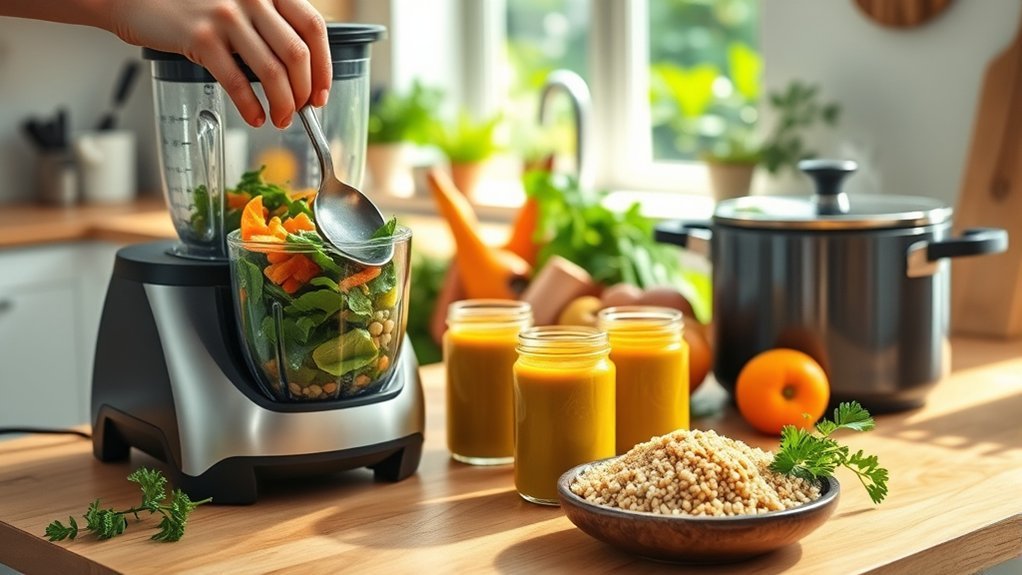
To make iron-rich baby food purees, start by choosing ingredients like cooked ground beef, lentils, or spinach. Cook them thoroughly—meats should reach 165°F. Blend the cooked foods until smooth, adding water, breast milk, or formula for desired consistency. For better iron absorption, mix in vitamin C-rich foods like sweet potatoes or strawberries. Store the purees in the fridge for up to three days or freeze for three months. Discover simple recipes that can enhance your baby’s nutrition further.
Key Takeaways
- Select iron-rich ingredients like ground beef, lentils, and spinach for baby purees.
- Cook meats thoroughly to at least 165°F before blending into purees.
- Blend cooked ingredients until smooth, adding water, breast milk, or formula as needed.
- Pair plant-based foods with vitamin C sources to enhance iron absorption.
- Store purees in the refrigerator for 2-3 days or freeze for up to 3 months.
Why Iron Matters for Baby Development

Iron plays an essential role in your baby’s development, as it directly influences their overall health and growth. Adequate iron intake supports hemoglobin formation, which transports oxygen throughout the body.
Without sufficient iron, your baby may experience iron deficiency, leading to cognitive delays and increased behavioral risks later on. Infants typically inherit iron stores from their mothers, lasting about four months, making it vital to introduce iron-rich foods around this age.
Exclusively breastfed infants are particularly vulnerable to iron deficiency anemia since breast milk alone doesn’t meet their growing needs. Pediatric guidelines recommend that babies aged 7-12 months consume 11 mg of iron daily to support their rapid cognitive development and overall well-being.
Prioritizing iron now lays the foundation for a bright future.
Choosing the Right Ingredients for Iron-Rich Baby Food Purees
When you’re preparing iron-rich baby food purees, it’s crucial to choose the right ingredients to maximize your baby’s iron intake. Start by prioritizing heme sources like beef, lamb, and chicken, as they’re more easily absorbed than non-heme sources.
Don’t forget to include plant-based non-heme sources such as lentils, beans, and dark leafy greens like spinach to diversify your baby’s iron intake. To boost iron absorption, combine these ingredients with vitamin C sources, such as sweet potatoes or strawberries.
Fortified baby cereals are another excellent option, providing added iron conveniently. Always introduce new foods one at a time to monitor for allergies, ensuring your baby’s diet remains balanced and safe.
How to Make Iron-Rich Baby Purees: A Simple Step-by-Step Guide

Creating iron-rich baby purees is a simple process that guarantees your little one gets the essential nutrients they need for healthy growth.
Start by selecting iron-rich ingredients like ground beef, lentils, and spinach. Cook these thoroughly—meats should reach at least 165°F, while vegetables need to be steamed or boiled until soft.
Select iron-rich ingredients such as ground beef, lentils, and spinach, ensuring they are thoroughly cooked for optimal nutrition.
Next, use a blender or food processor to puree the cooked ingredients until smooth, adding water, breast milk, or formula for the right consistency.
To boost iron absorption, combine plant-based foods with vitamin C-rich options, such as citrus juice or strawberries.
Finally, store your purees in airtight containers in the fridge for up to 3 days or freeze them in ice cube trays for easy serving.
Storing and Serving Tips Before You Try These Baby Puree Recipes
To guarantee your homemade baby purees stay fresh and nutritious, it is crucial to follow proper storage and serving practices. Store purees in the refrigerator for 2-3 days or freeze them for up to 3 months. Use silicone ice cube trays for portioning, making thawing easy and minimizing waste. Always label your freezer bags with the food name and date for effective tracking.
| Storage Method | Duration | Thawing Methods |
|---|---|---|
| Refrigeration | 2-3 days | Thaw in refrigerator |
| Freezing | Up to 3 months | Thaw in cold water |
| Serving | Warm gently | Stir to eliminate hot spots |
When serving, warm purees gently to maintain quality and safety.
Simple Iron-Rich Puree Recipes for Babies
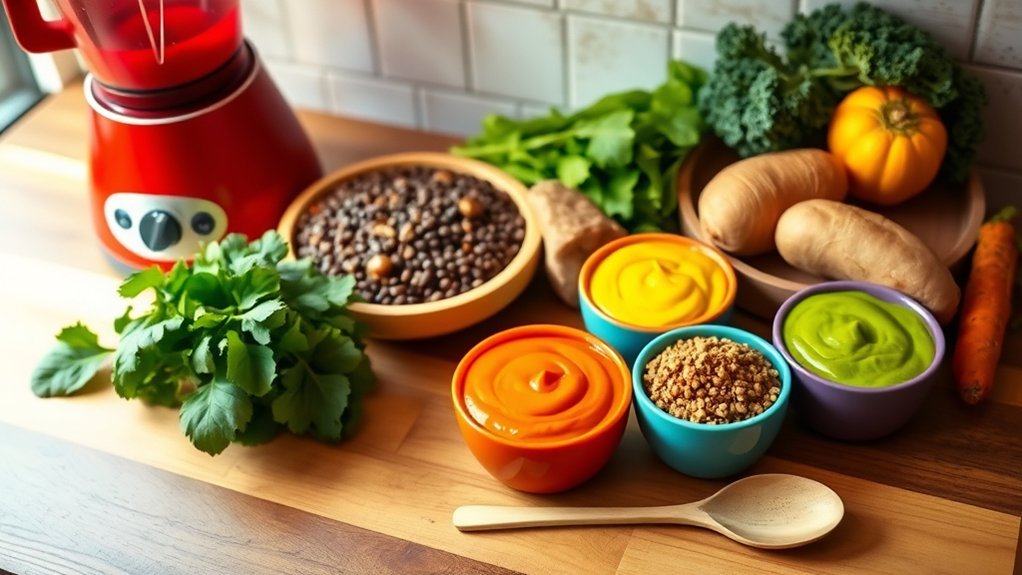
Now that you know how to store and serve your homemade baby purees, it’s time to explore some simple recipes that pack a punch of iron.
Start with iron-rich combinations like pureed chicken mixed with sweet potatoes, enhancing both flavor and nutrient absorption.
Begin with iron-packed pureed chicken and sweet potatoes for a delicious and nutritious meal that boosts absorption.
For a veggie option, blend cooked lentils with spinach and a splash of bone broth to create a smooth puree texture.
You could also try ground beef combined with pureed squash for a delightful twist.
Remember, incorporating vitamin C-rich foods like strawberries not only boosts flavor but helps your baby absorb iron more effectively.
Ascertain all ingredients are thoroughly cooked and blended to a smooth consistency, making it easier for your little one to enjoy.
Frequently Asked Questions
At What Age Can I Start Introducing Iron-Rich Purees to My Baby?
You can start introducing iron-rich purees to your baby around six months old. Following baby nutrition guidelines, this timing helps guarantee adequate iron intake, supporting your baby’s growth and development during this vital stage.
How Do I Know if My Baby Is Allergic to a New Food?
“Better safe than sorry.” When introducing foods, watch for allergy symptoms like hives, swelling, or digestive issues. Introduce one food at a time, waiting a few days to monitor your baby’s reactions.
Can I Mix Different Iron-Rich Ingredients in One Puree?
Yes, you can mix different iron-rich ingredients in one puree. Combining ingredients enhances nutrition and flavor balancing creates a delicious meal. Just verify your baby tolerates each component, and enjoy the variety in their diet!
What Should I Do if My Baby Refuses to Eat Purees?
If your baby refuses purees, think of it like a mini adventurer hesitant to explore. Offer baby food alternatives like mashed avocado or soft fruits, encouraging exploration and letting them discover flavors at their own pace.
How Can I Enhance the Flavor of Iron-Rich Baby Purees?
To enhance the flavor of iron-rich baby purees, try incorporating herb seasonings like basil or thyme. Experiment with flavor pairing, adding fruits or vegetables your baby enjoys, to create delicious, nutritious meals they’ll love.
Conclusion
In the journey of nurturing your little one, iron-rich purees are like golden tickets to strong, healthy development. By choosing the right ingredients and following simple steps, you’re not just feeding your baby; you’re laying the foundation for a lifetime of vibrancy. So, grab your blender and let creativity flow, transforming wholesome foods into delightful meals. With each spoonful, you’re fueling their growth and adventure—one delicious bite at a time. Happy pureeing!