

Iron-rich baby food purees can help add an important nutrient when your baby begins complementary foods. The safest approach is to start at about 6 months, wait until your baby shows signs of developmental readiness, choose a dependable iron source, cook it to the correct temperature, and blend it into a texture your baby can manage.
Quick Answer
Start with cooked beef, poultry, lentils, tofu, beans, or iron-fortified infant cereal. Pair plant-based iron with a vitamin C food such as strawberry, broccoli, tomato, bell pepper, or sweet potato. Blend to a safe texture, serve a small portion, and refrigerate homemade puree for no more than 1 to 2 days.
Key Takeaways
- Begin complementary foods at about 6 months when your baby can sit with support, control their head and neck, and swallow food instead of pushing it back out.
- Use beef, poultry, eggs, lentils, beans, tofu, or iron-fortified infant cereal as the main iron source.
- Cook ground beef, pork, lamb, and veal to 160°F; cook poultry to 165°F.
- Pair lentils, beans, tofu, cereal, and leafy greens with a vitamin C-rich fruit or vegetable.
- Start with 1 to 2 tablespoons and follow your baby’s hunger and fullness cues.
- Refrigerate homemade puree for 1 to 2 days, use meat or egg puree within one day, or freeze portions for up to 3 months.
At a Glance
| Time Required | About 15–35 minutes, depending on the ingredients |
| Difficulty | Easy |
| Tools Needed | Saucepan or steamer, food thermometer, blender or food processor, spoon, and clean storage containers |
| Cost | Usually low; cost varies with the protein and produce selected |
Medical note: This guide provides general feeding information, not a diagnosis or treatment plan. Ask your pediatrician about iron supplements if your baby was born early, had a low birth weight, mainly receives breast milk, has feeding or growth concerns, or has been diagnosed with low iron. Do not start iron drops unless your child’s clinician recommends them.
Why Iron Matters for Baby Development

Iron helps the body make hemoglobin, the protein in red blood cells that carries oxygen. It also supports physical growth, neurological development, normal cell function, and the production of some hormones. The National Institutes of Health Office of Dietary Supplements identifies iron as an essential nutrient for both oxygen transport and early development.
Babies are born with some stored iron, but those stores do not meet their needs indefinitely. At about 6 months, babies generally need an iron source outside breast milk. That source may include iron-rich complementary foods, iron-fortified infant cereal, iron-fortified formula, or supplements recommended by a pediatrician.
Infants ages 7–12 months have a recommended iron intake of 11 mg per day, although no single puree needs to supply the entire daily amount.
Low iron can progress to iron-deficiency anemia. Possible signs include unusual paleness, irritability, tiredness, weakness, or feeding and growth concerns. These signs can have many causes, so a clinician must determine whether testing or treatment is needed.

Power your essentials anywhere with a 999Wh pure sine wave power station delivering up to 1000W continuous with 2000W surge. It supports fast charging via USB-C PD 60W and USB-A QC 18W, plus simultaneous output for multiple devices through AC, USB, wireless, and car/DC ports. Recharge using AC, car, or solar with a built-in MPPT controller and dual cooling fans, while the upgraded battery management system protects against surges, short circuits, and overheating.

CONVENIENT BABY FOOD: Our Gerber Chicken and Gravy Jar is designed for ease and convenience. These jars of baby food are made in a portable and easy-to-store format for busy parents

When Babies Can Start Iron-Rich Purees
Most babies can begin complementary foods at about 6 months. Introducing food before 4 months is not recommended. According to the CDC’s solid-food guidance, readiness matters as much as age.
Your baby may be ready when they can:
- Sit alone or with support and maintain a stable position.
- Control their head and neck.
- Open their mouth when food is offered.
- Swallow food instead of pushing it back out with the tongue.
- Bring objects toward their mouth and show interest in food.
Breast milk or infant formula remains the main source of nutrition from 6 to 12 months. Purees and other complementary foods gradually add iron, zinc, protein, flavors, and textures rather than replacing milk feeds immediately.
Warning: Always feed your baby while they are sitting upright in a high chair or another safe seat. Stay within reach and watch continuously. Even smooth food can become unsafe if a baby is fed while lying down, moving around, riding in a car, or left unattended.
Choosing Ingredients for Iron-Rich Baby Food Purees
Iron in food comes in two forms. Heme iron is found in animal foods and is generally absorbed more easily. Non-heme iron is found in plants and fortified foods. Pairing non-heme iron with vitamin C helps the body absorb more of it.
| Ingredient | Iron Type | How to Use It |
|---|---|---|
| Beef or lamb | Heme and non-heme | Cook thoroughly, drain excess fat, and puree with sweet potato, tomato, or bell pepper. |
| Chicken or turkey | Heme and non-heme | Remove skin and bones, cook to 165°F, and blend with broccoli, pear, or sweet potato. |
| Lentils and beans | Non-heme | Cook until very soft and pair with tomato, broccoli, berries, bell pepper, or sweet potato. |
| Tofu | Non-heme | Use plain tofu and blend with cooked broccoli, tomato, or fruit after soy has been introduced safely. |
| Iron-fortified infant cereal | Non-heme, fortified | Prepare according to the label and mix with mashed strawberry, pear, or another tolerated fruit. |
| Spinach and other dark leafy greens | Non-heme | Cook until soft and combine with lentils, beans, tofu, meat, or fortified cereal rather than relying on greens alone. |
Iron-fortified oat, barley, and multigrain infant cereals can be useful choices. Rotate grains instead of serving only rice cereal. Check the package because the amount of iron varies by brand and serving size.
Pro Tip: Build a puree around one main iron source and one vitamin C food. Examples include beef with sweet potato, lentils with bell pepper, tofu with broccoli, or iron-fortified oatmeal with strawberry.
How to Make Iron-Rich Baby Purees Step by Step

- Wash your hands and equipment. Clean the blender, food processor, knife, cutting board, storage containers, and food thermometer with hot soapy water before use.
- Select a simple combination. During early food introduction, use ingredients your baby has already tolerated or introduce only one new ingredient at a time.
- Cook everything fully. Cook vegetables until they mash easily with a fork. Use a food thermometer for meat. Cook ground beef, pork, lamb, or veal to 160°F and poultry to 165°F, following the USDA safe temperature chart.
- Remove unsafe parts. Take out bones, skin, seeds, pits, tough stems, gristle, and excess fat before blending.
- Blend to the right texture. Add small amounts of water, breast milk, or correctly prepared infant formula until the food reaches a texture your baby can swallow safely.
- Check the temperature. Let hot ingredients cool before serving. Stir warmed puree well and test a small amount before feeding.
- Serve a separate portion. Spoon only the amount you expect your baby to eat into a clean bowl. Keep the unused batch separate so saliva does not contaminate it.
Begin with a smooth puree if your baby is new to solids. As eating skills improve, gradually offer thicker mashed textures and soft lumps instead of keeping every food completely smooth for months.
Note: If you plan to freeze a batch, blend it with water and add breast milk or prepared formula after thawing when practical. The FDA does not recommend freezing prepared infant formula because its components may separate and lose quality.
Simple Iron-Rich Puree Recipes for Babies
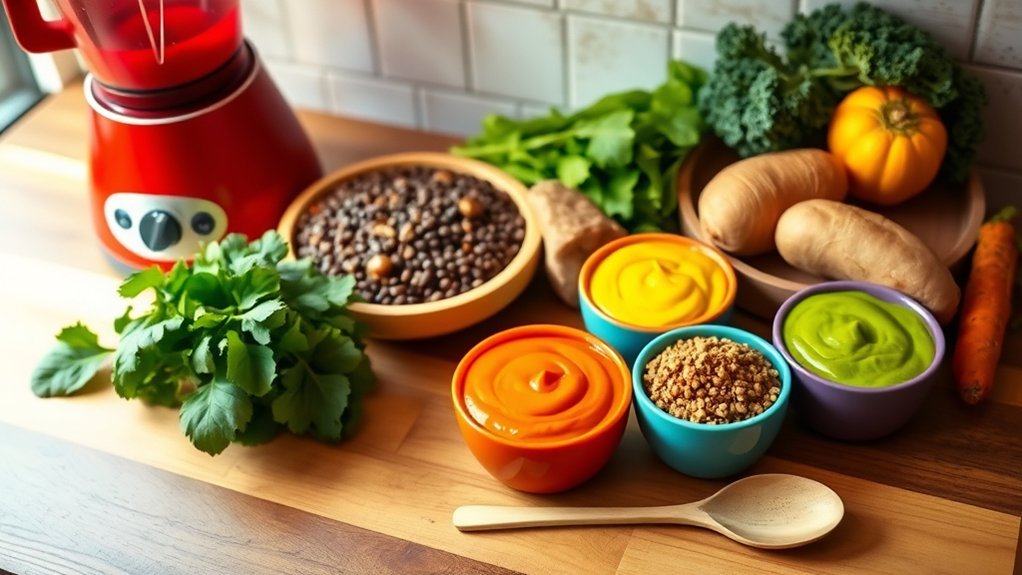
Each recipe can be thinned or thickened to match your baby’s current eating skills. Introduce the individual ingredients separately first when you are still identifying food reactions.
1. Beef, Sweet Potato, and Tomato Puree
Ingredients:
- 4 ounces lean ground beef
- 1 cup peeled sweet potato cut into small cubes
- 1/4 cup chopped tomato with tough skin removed
- 1/4 to 1/2 cup water, as needed
Directions:
- Steam or simmer the sweet potato until it is very soft, about 10–15 minutes.
- Cook the ground beef in a clean skillet, breaking it into small pieces. Verify that it reaches 160°F.
- Drain excess fat. Add the cooked beef, sweet potato, and tomato to a blender.
- Blend with enough water to reach the desired texture.
Yield: About 6–8 small, 2-tablespoon portions, depending on thickness.
2. Chicken, Broccoli, and Pear Puree
Ingredients:
- 4 ounces boneless, skinless chicken thigh or breast
- 1 cup broccoli florets
- 1 ripe pear, peeled, cored, and chopped
- 1/4 to 1/2 cup water, as needed
Directions:
- Cook the chicken until the thickest part reaches 165°F. Remove any visible fat or tough pieces.
- Steam the broccoli and pear until both are soft enough to mash easily.
- Blend all ingredients with water until smooth or lightly textured.
Yield: About 6–8 small portions.
3. Red Lentil, Sweet Potato, and Bell Pepper Puree
Ingredients:
- 1/4 cup dry red lentils, rinsed
- 3/4 cup water
- 1/2 cup peeled sweet potato cubes
- 1/4 cup chopped red bell pepper
Directions:
- Place the lentils, water, sweet potato, and bell pepper in a small saucepan.
- Bring to a gentle boil, reduce the heat, and simmer for about 15–20 minutes until everything is very soft.
- Add more water during cooking if the mixture becomes dry.
- Blend or mash to the texture your baby can safely manage.
Yield: About 6 small portions.
4. Iron-Fortified Oatmeal and Strawberry Puree
Ingredients:
- 2 tablespoons iron-fortified infant oat cereal
- 2–4 tablespoons water, breast milk, or correctly prepared infant formula
- 1 large strawberry, washed, hulled, and mashed or pureed
Directions:
- Prepare the infant cereal according to the package directions.
- Stir in the mashed strawberry.
- Add more liquid if needed to create a safe consistency.
- Serve immediately rather than saving the mixed cereal after the feeding.
Yield: One small serving.
Warning: Do not add honey to any baby puree before 12 months. Avoid unpasteurized milk or juice, raw eggs, undercooked meat, added sugar, and salty broth. Babies younger than 12 months should not be given fruit or vegetable juice; use mashed or pureed whole fruit instead.
How Much Puree to Serve
Start with 1 to 2 tablespoons of food. Your baby may eat less during the first few attempts, and that is normal. Offer food without pressure and stop when your baby shows fullness cues.
Possible hunger cues include leaning toward the spoon, opening the mouth, reaching for food, or becoming excited when food appears. Fullness cues may include turning away, closing the mouth, pushing the spoon away, slowing down, or becoming distracted.
Do not try to make one serving provide all 11 mg of daily iron. Offer a variety of iron-rich foods across meals while continuing breast milk or infant formula.
Storing, Thawing, and Serving Baby Purees Safely
Cool prepared puree promptly and move it into clean, airtight containers. Label each container with the food and preparation date. The FDA’s baby-food safety guidance recommends shorter refrigerator limits than the original article used.
| Food or Situation | Refrigerator | Freezer |
|---|---|---|
| Freshly made homemade puree | 1–2 days | Up to 3 months |
| Strained meat or egg puree | 1 day | 1–2 months |
| Meat-and-vegetable combination | 1–2 days | 1–2 months |
| Food left in the serving bowl after feeding | Discard | Do not freeze |
- Refrigerate or freeze prepared food within two hours.
- Freeze puree in covered trays or small containers, then transfer frozen portions to a dated airtight container.
- Thaw only the amount needed in the refrigerator or by placing a sealed container in cold water.
- Never thaw baby food on the counter.
- Do not return food from your baby’s bowl to the storage container.
- Discard food that has been in contact with a used spoon or your baby’s mouth.
Microwaves can create hot spots. If you use one, transfer the food to a microwave-safe dish, heat only a small portion, stir thoroughly, allow it to stand, and test the temperature before feeding. Do not microwave meat or egg baby food in its storage jar.
Allergy and Choking Safety
At first, offer one new single-ingredient food at a time and wait 3–5 days before introducing another new food. This makes it easier to identify a reaction. Potential allergens such as egg, peanut in a safely thinned form, dairy, wheat, soy, fish, shellfish, sesame, and tree nuts do not need to be delayed once a baby is ready for complementary foods.
If your baby has severe eczema, an existing egg allergy, or a previous food reaction, ask the pediatrician how and when to introduce peanut and other allergens.
Possible food-allergy symptoms include:
- Hives, flushing, or a spreading rash
- Swelling of the lips, face, tongue, or throat
- Repeated vomiting or diarrhea
- Coughing, wheezing, or difficulty breathing
- Sudden weakness, unusual sleepiness, dizziness, or loss of consciousness
Warning: Stop feeding the food and seek emergency help immediately if your baby has difficulty breathing, throat or tongue swelling, widespread hives with another symptom, becomes limp, or loses consciousness. Follow an existing allergy action plan and use prescribed epinephrine when directed.
To lower choking risk, prepare food in a texture that matches your baby’s eating skills. Avoid tough meat pieces, whole beans, whole berries, spoonfuls of thick nut butter, whole nuts, hard raw produce, bones, seeds, and other hard, sticky, round, or difficult-to-swallow foods. Review the CDC choking-prevention guidance as your baby progresses from puree to finger foods.
When to Contact Your Pediatrician
Discuss your baby’s iron intake with a clinician if your baby:
- Was born prematurely or at a low birth weight.
- Mainly receives breast milk and has not yet established reliable iron-rich complementary foods.
- Has been prescribed iron drops or previously had abnormal iron testing.
- Regularly refuses iron-rich foods or has difficulty swallowing.
- Shows poor weight gain, unusual tiredness, persistent irritability, weakness, or pale skin.
- Has a restricted diet, gastrointestinal condition, or other health issue that may affect nutrient absorption.
Do not diagnose iron deficiency from symptoms alone. A pediatrician may review diet, growth, risk factors, and blood-test results before recommending treatment.
Frequently Asked Questions
At what age can I introduce iron-rich purees?
Most babies can begin at about 6 months when they show developmental readiness. Do not introduce complementary foods before 4 months. Ask your pediatrician when to begin if your baby was premature or has feeding, growth, or medical concerns.
How do I know whether my baby is allergic to a new food?
Watch for hives, facial or lip swelling, repeated vomiting, coughing, wheezing, or breathing difficulty. Stop feeding the suspected food. Seek emergency help for breathing trouble, throat or tongue swelling, sudden limpness, or loss of consciousness.
Can I mix several iron-rich ingredients in one puree?
Yes, after your baby has tolerated the ingredients separately. Combining beef with sweet potato or lentils with bell pepper can provide both iron and vitamin C. During early introductions, keep recipes simple so a reaction is easier to trace.
What should I do if my baby refuses puree?
Stop without forcing the food and try again another day. Offer a tiny amount, eat together, and let your baby explore the smell and texture. Some babies prefer thicker mashed foods or soft finger foods once developmentally ready. Contact the pediatrician if refusal is persistent or affects growth.
How can I improve the flavor without adding salt or sugar?
Use naturally flavorful vegetables and fruits or a small amount of a mild herb such as basil, thyme, cinnamon, or cumin after its ingredients have been tolerated. Do not use honey before 12 months, and avoid salty broth, seasoning packets, and added sugar.
How much puree should I offer at first?
Begin with about 1 to 2 tablespoons. Your baby may eat only a taste during the first attempts. Follow hunger and fullness cues rather than trying to finish a set serving.
Can I freeze puree made with breast milk or formula?
For the simplest storage, freeze the cooked puree base with water and add breast milk or correctly prepared formula after thawing. Prepared infant formula should not be frozen because freezing may cause separation and reduce quality.
Do iron-rich foods replace prescribed iron drops?
Not automatically. Food supports iron intake, but a baby with low iron or specific risk factors may still need a clinician-directed supplement. Continue prescribed iron exactly as directed and ask the prescriber before changing or stopping it.
Conclusion
Iron-rich baby food purees are most useful when they combine a dependable iron source with safe preparation and an age-appropriate texture. Use meat, poultry, lentils, beans, tofu, or iron-fortified cereal; pair plant-based options with vitamin C foods; and follow the correct cooking and storage limits. Start with a small serving, follow your baby’s cues, and involve your pediatrician when supplementation, anemia, allergies, growth, or feeding skills are a concern.
Sources
- CDC: Iron and Infant Nutrition — infant iron needs, heme and non-heme sources, and vitamin C pairings.
- NIH Office of Dietary Supplements: Iron Fact Sheet — iron functions, recommended intake, deficiency, and absorption.
- CDC: When, What, and How to Introduce Solid Foods — readiness, allergen introduction, texture, and food preparation.
- CDC: Foods and Drinks to Avoid or Limit — honey, juice, cow’s milk, unpasteurized foods, and added sugar.
- USDA FSIS: Safe Minimum Internal Temperature Chart — safe temperatures for ground meat and poultry.
- FDA: Food Safety Once Baby Arrives — homemade baby-food storage, freezing, contamination, reheating, and honey precautions.