
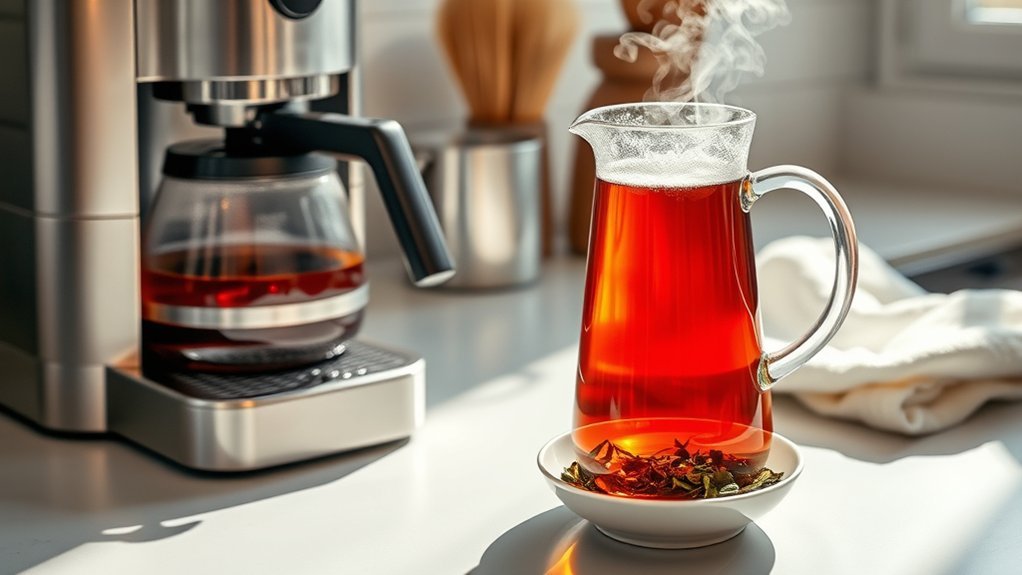
To make tea in a coffee maker, start by cleaning it with a vinegar and water mixture. Measure one tea bag for every 6-8 ounces of water, adjusting for taste. Fill the reservoir and use a coffee filter to catch loose leaves. Brew the tea, letting it steep for the recommended time based on the type. After brewing, run another vinegar cycle and plain water to clean any remnants. Stick around for tips on enhancing your tea’s flavor!
Key Takeaways
- Clean the coffee maker with a vinegar and water mixture before brewing to remove old residues and enhance tea flavor.
- Measure tea and water according to package instructions, typically using one tea bag per 6-8 ounces of water.
- Use a coffee filter to catch loose tea leaves or bags while brewing for a cleaner result.
- Adjust steeping times and temperatures for different teas to avoid bitterness and achieve optimal flavor.
- Clean the coffee maker after brewing tea with vinegar and water, followed by a hot water cycle to remove any residual taste.
Why Clean Your Coffee Maker Before Brewing Tea
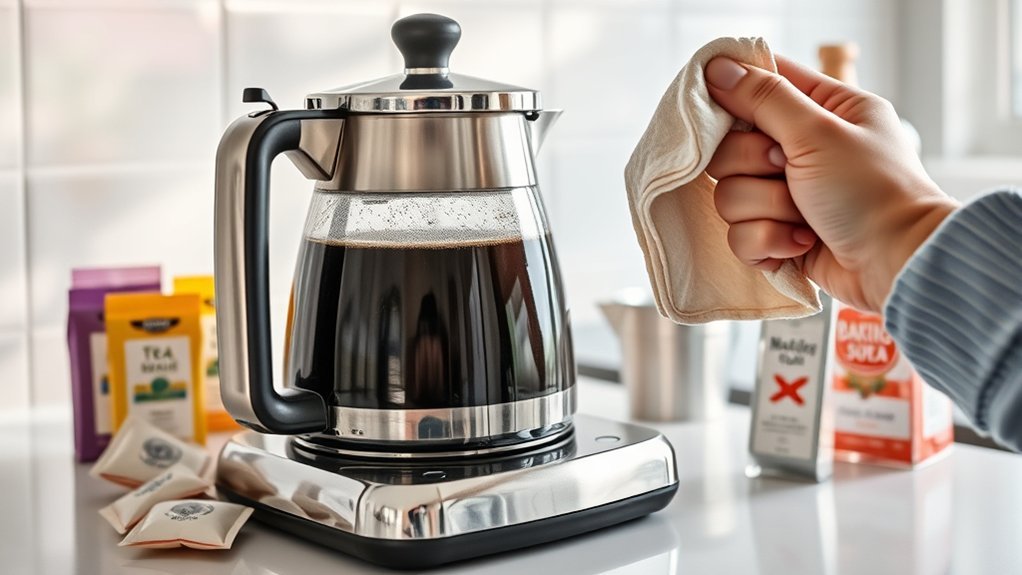
Before you brew a soothing cup of tea in your coffee maker, it’s essential to clean the machine first. Old coffee residue can linger in the brewing components, negatively impacting the tea’s flavor.
To guarantee flavor preservation, use a vinegar and water mixture to dissolve coffee oils and buildup. Brew this solution without any tea or coffee, allowing it to cleanse thoroughly.
For optimal tea flavor, cleanse your coffee maker with a vinegar and water mixture to remove coffee residues.
Afterward, rinse the machine with hot water to eliminate any residual vinegar taste that could affect your tea experience. Regularly cleaning your coffee maker not only enhances the flavor of your tea but also maintains the machine’s performance, preventing any cross-contamination of flavors.
You’ll enjoy a revitalizing cup of tea, free from unwanted coffee notes!
How to Measure Tea and Water for Optimal Flavor
To brew the perfect cup of tea in your coffee maker, it’s crucial to measure the right amounts of tea and water for ideal flavor.
Check your tea package for recommended water amounts, typically one tea bag for every 6 to 8 ounces of water to guarantee proper flavor extraction. For a richer taste, consider doubling the tea amount, compensating for the rapid water flow through the leaves.
A good rule of thumb is a tea ratio of about 1 gram per 100 milliliters of water, which you can adjust based on your personal preference. If you want a stronger brew, opt for CTC teas or bagged options that include finer tea particles, enhancing the overall flavor experience.
How to Get Your Coffee Maker Ready for Tea

Now that you’ve measured the perfect amounts of tea and water for a delightful brew, it’s time to prepare your coffee maker for this new task. Start by cleaning the coffee maker thoroughly to remove any coffee residue, which can negatively affect your tea’s flavor. Use a vinegar and water mixture for a deep clean, brewing this solution without any tea or coffee. Afterward, rinse the coffee maker with hot water to eliminate any lingering vinegar taste.
| Step | Action |
|---|---|
| Clean | Brew vinegar and water mixture |
| Rinse | Use hot water to clean |
| Prepare | Fill carafe and add coffee filter |
Finally, check your tea package for the right water amount and place one tea bag per 6-8 ounces for ideal flavor.
Understanding Steeping Time and Temperature for Different Teas
When brewing tea in a coffee maker, understanding steeping times and temperatures is essential for revealing the best flavors.
Different teas like green and white require specific conditions; for instance, green teas thrive around 175°F, while white teas need near-boiling water.
Optimal Steeping Times
Understanding ideal steeping times is essential for brewing a perfect cup of tea, as each variety demands its own unique attention.
Different teas require steeping durations ranging from 1 to 6 minutes for optimal flavor extraction. For instance, green teas typically steep for about 2-3 minutes, while black teas benefit from longer durations of 4-5 minutes.
It’s vital to note that using a coffee maker, which heats water to around 165°F, may not achieve the desired temperature for all teas, potentially affecting the flavor. Always check the tea packaging for specific instructions, and remember that longer steeping times can enhance flavor but be cautious; too long can lead to bitterness.
Enjoy your brewing adventure!
Ideal Brewing Temperatures
Getting the right brewing temperature is essential for releasing the full potential of your tea. Different tea varieties require specific temperatures to reveal their unique flavor profiles. Most coffee makers brew at around 165°F, which is often too low for delicate teas like green and white. Here’s a handy guide to help you:
| Tea Type | Ideal Temperature | Steeping Time |
|---|---|---|
| Green Tea | 175°F | 1-3 minutes |
| White Tea | 180°F | 4-5 minutes |
| Oolong Tea | 190°F | 3-5 minutes |
| Black Tea | 200°F | 4-6 minutes |
| Herbal Tea | 212°F | 5-7 minutes |
Proper steeping and temperature enhance aroma and taste, making attention to these factors essential for a quality brew.
Brewing Tea in a Coffee Maker: The Process Explained
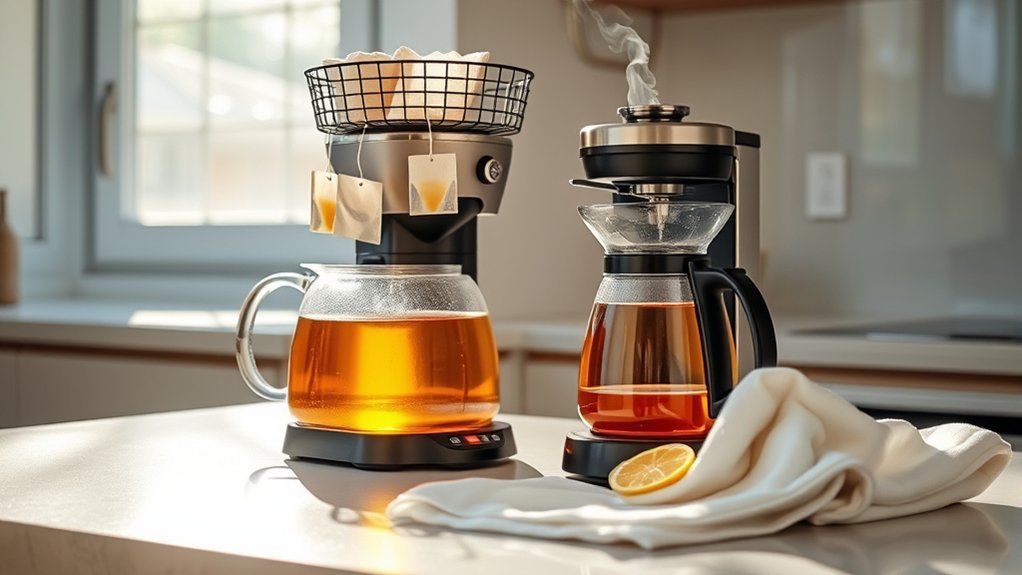
Before you start brewing tea in your coffee maker, it’s essential to clean the machine thoroughly to guarantee no coffee residue alters the flavor.
Once that’s done, you can compare brewing techniques to find the perfect method for your taste, whether you’re using tea bags or loose leaves.
Let’s explore these steps together for a delightful tea experience!
Cleaning The Coffee Maker
To brew the perfect cup of tea in your coffee maker, start by ensuring it’s squeaky clean. Regular cleaning not only enhances your tea’s flavor but also extends your coffee maker’s lifespan.
Use a simple vinegar and water mixture as your cleaning solution; this effectively removes any coffee residue that could spoil your tea.
- Brew the vinegar solution through the coffee maker without any coffee or tea.
- Rinse thoroughly with hot water to eliminate any lingering vinegar taste.
- Always use a coffee filter to catch loose tea leaves and maintain a clean process.
Brewing Techniques Comparison
How can you transform your coffee maker into a versatile tea brewing machine? By utilizing its brewing methods, you can create a delightful range of tea varieties with ease.
Start by placing a coffee filter in the brew basket, then add your loose tea leaves or tea bags—about 3 grams per 250 mL of water works best.
Make sure your coffee maker is clean to avoid any lingering coffee flavors that could compromise your tea’s taste.
Once brewed, let your tea steep for 3 to 5 minutes for ideal flavor extraction.
Remember, different teas require specific water temperatures, so preheat the water if needed.
With these techniques, you’ll enjoy a perfectly brewed cup of tea every time!
How to Improve the Flavor of Tea Brewed in a Coffee Maker
While brewing tea in a coffee maker can seem unconventional, you can considerably enhance its flavor with a few simple tweaks. Start by ensuring your coffee maker is squeaky clean to remove any lingering coffee residues that might taint your brew.
- Use high-quality loose leaf or CTC tea varieties for a more robust flavor profile.
- Maintain a water-to-tea ratio of about 1 gram of tea per 100 mL of water, adjusting as needed for your taste.
- Steep your tea for 3 to 5 minutes, ensuring ideal flavor extraction.
Don’t forget to use filtered water instead of tap water; it brings out the tea’s delicate notes and aromas, resulting in a truly delightful cup.
Common Problems and Solutions for Brewing Tea in a Coffee Maker
Brewing tea in a coffee maker can come with its own set of challenges, even after you’ve improved the flavor. One common issue is inadequate brewing temperature; coffee makers often heat water below boiling, which compromises delicate teas.
To tackle this, check that your machine reaches at least 165°F, or consider using a kettle for hotter brews.
Another challenge is achieving the right water-to-tea ratio; aim for 1g of tea per 100mL of water for ideal flavor enhancement.
Be mindful of steeping times, too, as brewing in a coffee maker limits infusion durations.
If residual coffee flavors linger, opt for CTC teas or bagged options to minimize taste interference.
Adjusting these factors will elevate your tea experience.
How to Properly Clean Your Coffee Maker After Brewing Tea
To keep your coffee maker in prime condition after brewing tea, it’s important to clean it thoroughly. Neglecting this step can leave old tea residues that affect the flavor of your future brews.
Here’s a quick guide for effective coffee maker maintenance:
- Mix equal parts vinegar and water to create a vinegar solution.
- Run the mixture through a brewing cycle to eliminate tea residue.
- Follow up with a cycle of plain hot water to remove any lingering vinegar taste.
Don’t forget to clean the coffee filter basket and carafe with warm, soapy water to guarantee all tea and vinegar residues are gone.
Regular cleaning not only enhances flavor but also prolongs your coffee maker’s lifespan and maintains peak performance.
Best Practices for Brewing Tea in a Coffee Maker
Making tea in a coffee maker can be a surprisingly simple and effective way to enjoy your favorite brews. For ideal flavor, use one tea bag per 6 to 8 ounces of water, and don’t hesitate to double that for a stronger infusion.
To guarantee a clean taste, thoroughly cleanse your coffee maker with a vinegar and water mixture, eliminating any coffee residue. Place a coffee filter in the basket and add your choice of loose tea leaves or tea bags, adjusting for different tea types.
After brewing, let the tea sit for a few minutes to enhance its flavor and aroma. Using unbleached bags or CTC teas can also help mask any residual coffee flavors for a delightful experience.
Frequently Asked Questions
Can I Use Loose Leaf Tea Instead of Tea Bags?
Yes, you can use loose leaf tea! It offers richer flavors and more health benefits. Just adjust your brewing ratios; generally, one teaspoon of loose leaf per cup works well. Enjoy experimenting with different varieties!
What Type of Tea Works Best in a Coffee Maker?
When you brew tea in a coffee maker, green tea and oolong tea shine with their delicate flavors. Black tea offers a robust experience, while white tea brings a subtle sweetness that’s hard to resist.
Is It Safe to Brew Herbal Teas in a Coffee Maker?
Yes, it’s safe to brew herbal teas in a coffee maker! By using proper brewing techniques, you can enjoy the herbal benefits without worrying. Just make sure you clean the machine thoroughly afterward to avoid flavor contamination.
How Often Should I Clean My Coffee Maker When Brewing Tea?
You should clean your coffee maker after every few uses, especially when brewing tea. Regular maintenance tips include running a vinegar solution through it monthly to prevent buildup and guarantee great-tasting beverages every time.
Can I Brew Multiple Types of Tea in One Session?
Yes, you can brew multiple types of tea in one session! Just keep in mind flavor combinations. Use brewing tips like cleaning between steepings to avoid cross-contamination, ensuring each tea retains its unique taste. Enjoy experimenting!
Conclusion
Brewing tea in a coffee maker can be a delightful twist on your morning routine. Did you know that nearly 80% of Americans drink tea regularly, yet many overlook this convenient method? By following the steps outlined, you can enjoy a flavorful cup without the fuss. Remember to clean your coffee maker thoroughly afterward to guarantee your next brew is just as delicious. So, why not give it a try and elevate your tea experience today?