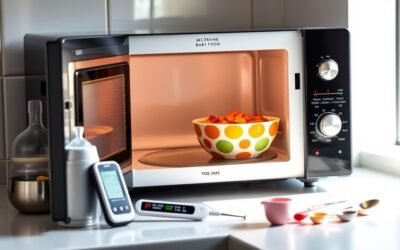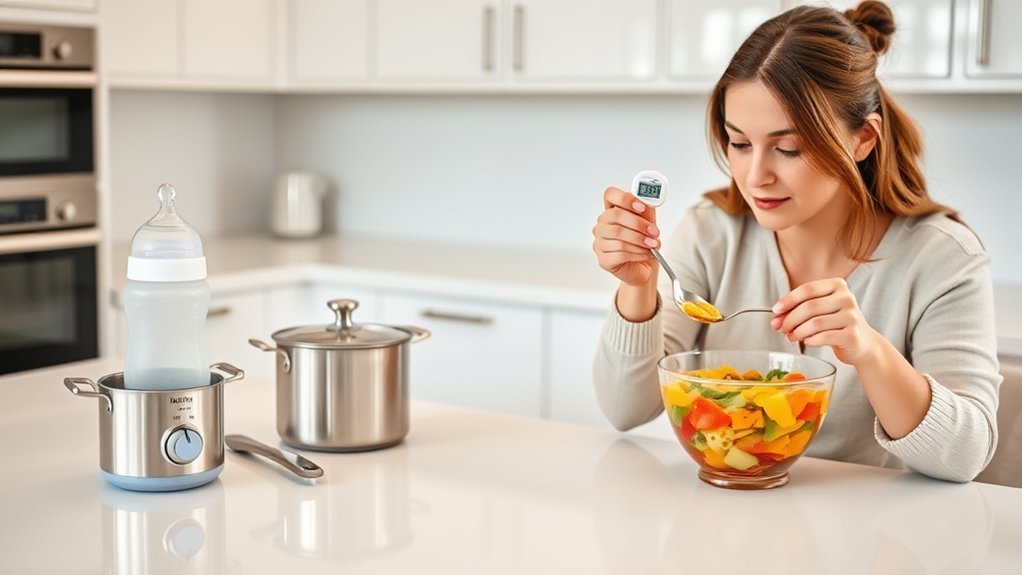
To reheat baby food safely, choose between stovetop or microwave methods. For stovetop, mix the food with a small amount of water in a saucepan and heat over low to medium heat, stirring constantly until it’s steaming hot. If microwaving, use a microwave-safe container, cover it, and heat in 15-second increments, stirring after each. Always test the temperature with a clean spoon before serving. There’s more to learn about safe storage and reheating practices!
Key Takeaways
- Always heat baby food until it is piping hot and steaming to eliminate harmful bacteria.
- Use stovetop or microwave methods, ensuring food is stirred well for even heating.
- Test the temperature with a clean spoon before serving to avoid burns.
- Discard any leftovers that have been heated and not consumed, and do not reheat food more than once.
- Store any remaining baby food in an airtight container in the refrigerator within two hours of serving.
How to Reheat Baby Food Safely
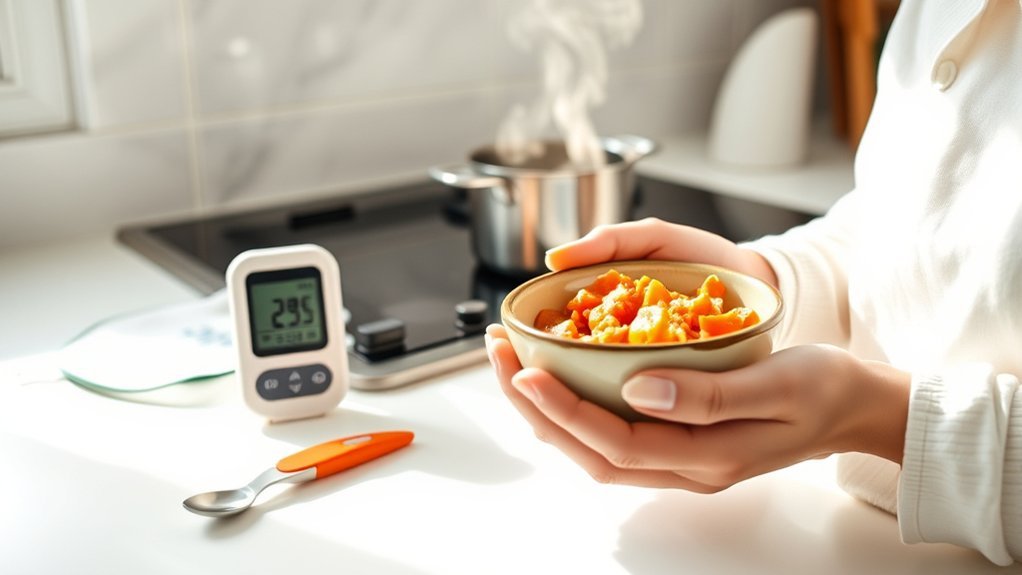
When it comes to reheating baby food, safety should always come first. To guarantee the best baby food nutrition, heat it until it’s piping hot and steaming, which kills harmful bacteria.
When thawing frozen baby food, use safe methods like defrosting in the refrigerator overnight or the microwave’s defrost setting. Reheat using a stovetop, double boiler, or microwave in 15-second increments, stirring well to eliminate hot spots.
Remember, never reheat baby food more than once; discard any leftovers that haven’t been consumed to avoid bacterial growth. Before serving, always test the temperature with a clean spoon to verify it’s not too hot.
Key Methods for Reheating Baby Food
There are several effective methods for reheating baby food that assure safety and nutrition.
For stovetop reheating, place the food in a pan or double boiler, stirring constantly until it reaches a steaming temperature to guarantee even heating.
If you prefer the microwave, use a microwave-safe container and heat in 15-second increments, stirring well after each to eliminate hot spots.
When reheating frozen food, fully thaw it in the fridge or use the microwave’s defrost setting before heating until piping hot.
Always test the temperature with a clean spoon before serving to prevent burns.
Step-by-Step Guide for Stovetop Reheating
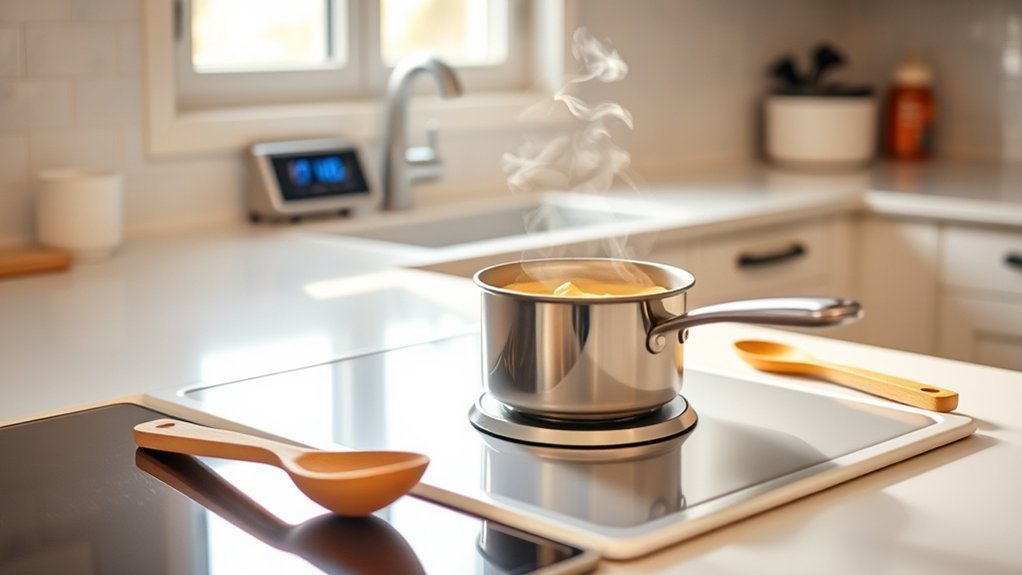
To reheat baby food on the stovetop, you’ll need a few essential items, like a clean saucepan and a stirring spoon.
Start with a simple step-by-step process to guarantee the food heats evenly and safely.
This method not only warms the food but also keeps it moist and free from harmful bacteria.
Essential Stovetop Equipment Needed
Having the right stovetop equipment is essential for safely reheating baby food. Start with clean saucepan options or a double boiler to prevent cross-contamination. A double boiler is particularly useful for gentle heating, as it minimizes the risk of scorching the food.
Make certain your pan is large enough to hold the food while allowing for even heating; a non-stick surface can help with this. As you heat, stir the baby food constantly to guarantee a uniform temperature and avoid hot spots that could burn your baby.
Keep a clean spoon handy to test the temperature before serving, assuring it’s steaming hot to eliminate any harmful bacteria. This way, you prioritize your baby’s safety without compromising on quality.
Step-by-Step Heating Process
When you’re ready to reheat baby food on the stovetop, start by gathering your clean saucepan and a small amount of water. Add the baby food to the saucepan, along with the water, to prevent sticking and guarantee even heating. Heat over low to medium heat, stirring constantly to avoid hot spots. It’s vital to heat the food until it’s steaming and piping hot to eliminate harmful bacteria. Always test the temperature with a clean spoon before serving.
| Step | Action |
|---|---|
| 1 | Gather saucepan and water |
| 2 | Add food and water to saucepan |
| 3 | Heat on low to medium, stir often |
| 4 | Test temperature before serving |
This method enhances flavor while preserving nutritional benefits.
How Can You Microwave Baby Food Safely?
How can you guarantee baby food is heated safely in the microwave? Start by using microwave-safe containers to heat the food, ensuring they’re covered to retain moisture and prevent splattering.
Follow microwave guidelines by heating in 15-second increments, stirring well after each interval. This eliminates hot spots and promotes even heating. Always test the temperature with a clean spoon before serving to avoid burns.
Avoid microwaving baby food directly in jars unless the manufacturer specifies it’s safe, as glass can break or overheat.
If you have leftovers that haven’t been consumed, discard them instead of reheating, as doing so multiple times can increase the risk of harmful bacteria growth.
Stay safe while providing for your little one!
Reheating Frozen Baby Food Tips
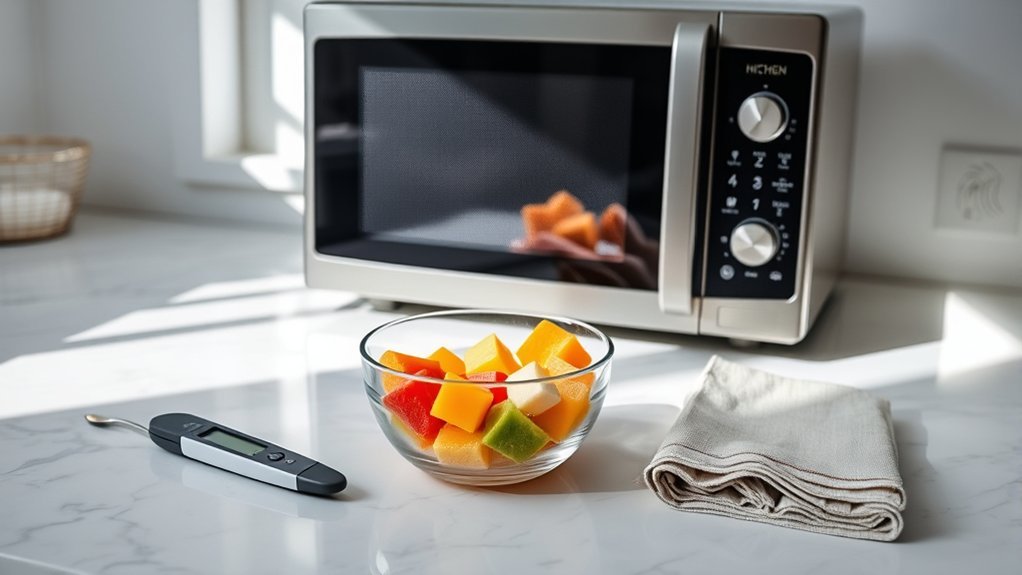
When reheating frozen baby food, it’s essential to use safe thawing methods to avoid harmful bacteria.
You can improve your reheating process by opting for single-serve portions, which make it easier to heat only what you need.
Safe Thawing Methods
To guarantee your baby food is safe to eat, it’s crucial to use proper thawing methods before reheating. The safest thawing technique is placing the frozen food in the refrigerator overnight, allowing it to gradually reach safe temperatures. This method minimizes the risk of harmful bacteria developing.
If you’re short on time, you can use your microwave’s defrost setting, but be sure to stir the food well afterward to eliminate any hot spots that could cause uneven heating. Avoid thawing baby food at room temperature, as that promotes bacterial growth.
Once fully thawed, heat the food until it’s piping hot and steaming before serving, and never refreeze any leftovers that have already been heated.
Proper Reheating Techniques
After safely thawing your baby food, it’s time to focus on reheating it properly. Always reheat until it’s piping hot and steaming to guarantee food safety by effectively destroying harmful bacteria.
You can use a microwave-safe container, heating in 15-second increments while stirring well after each interval to eliminate hot spots. Alternatively, consider the stovetop method: heat in a hot pan or double boiler, stirring constantly until it reaches the desired reheating temperatures.
Single-Serve Portion Benefits
Single-serve portions offer significant advantages for reheating frozen baby food, making mealtime more manageable for busy parents.
By freezing purees in ice cube trays, you achieve consistent portion control, allowing you to easily pull out the exact amount needed for each feeding. This method minimizes waste, as you only thaw what you need and can streamline your meal planning process.
Always verify that the food is fully thawed before reheating to avoid uneven temperatures and potential hot spots. Remember, any leftovers from reheated meals shouldn’t be refrozen and should be discarded if not consumed.
Properly labeling and dating your containers will help you use the oldest portions first, maximizing both quality and freshness in your baby’s meals.
Common Mistakes to Avoid When Reheating Baby Food
When reheating baby food, it’s crucial to avoid common mistakes that can compromise your child’s safety and health. Here are some common reheating errors to steer clear of:
- Uneven heating: Always stir well after reheating to eliminate hot spots that could burn your baby.
- Reheating leftovers multiple times: Discard any food after one heating to minimize harmful bacteria growth.
- Skipping temperature checks: Verify food is piping hot before serving to kill potential bacteria.
- Using unsafe containers: Only use microwave-safe containers to prevent uneven heating and chemical leaching.
- Improper thawing: Always thaw frozen baby food in the refrigerator or use a microwave’s defrost setting for safe thawing.
How to Ensure Your Baby Food Is Safe to Eat?
Ensuring your baby food is safe to eat involves several important steps. Always heat the food until it’s piping hot and steaming; this effectively kills harmful bacteria that may be present.
Always heat baby food until piping hot to eliminate harmful bacteria and ensure your little one’s safety.
After reheating, use a clean spoon to check the temperature, ensuring it’s safe for your baby and free from hot spots. Remember, never reheat baby food more than once; any leftovers should be discarded to prevent bacterial growth.
If you need to thaw frozen baby food, do so safely in the refrigerator overnight or with a microwave’s defrost setting.
Finally, store homemade baby food in airtight containers and label them with dates to track freshness, ensuring you use them within safe timeframes for ideal baby food safety.
Storing Leftover Baby Food After Heating
After you’ve safely reheated baby food, it’s important to store any leftovers properly to maintain their quality and safety.
Here are some essential storing techniques and safety tips:
- Discard any heated leftovers that came into contact with your baby’s mouth or cutlery.
- Refrigerate any remaining baby food in an airtight container within two hours.
- Use leftovers within two days; don’t refreeze them.
- Label and date your containers to track how long they’ve been stored.
- Regularly inspect for spoilage signs, like off smells or texture changes, before serving.
Signs Your Baby Food Has Spoiled or Is Unsafe
How can you tell if your baby food has gone bad? Keep an eye out for spoilage indicators like off-putting smells or sour odors.
Changes in color or texture, such as discoloration or separation, also suggest the food may no longer be safe. Always inspect for mold or unusual growth on the surface, as these are clear signs of spoilage.
If the food’s been stored longer than recommended, particularly if left out at room temperature for over two hours, it’s best to toss it.
Additionally, if the container is bulging or has damaged seals, harmful bacteria could be present.
Prioritize food safety by discarding any questionable baby food to guarantee your little one stays healthy.
Frequently Asked Questions
Can I Reheat Baby Food Multiple Times?
You shouldn’t reheat baby food multiple times. Following reheating guidelines is essential for food safety. Each reheating increases the risk of bacteria growth, so always heat only what you need to keep your baby safe.
What Is the Best Way to Store Leftover Baby Food?
Think of leftover baby food as treasure; store it wisely. Use airtight containers or ice cube trays for freezing methods. This way, you’ll preserve nutrients and flavors, ensuring your little one enjoys every bite.
How Long Can I Store Reheated Baby Food in the Fridge?
You can store reheated baby food in the fridge for up to 24 hours. For ideal food safety and shelf life, make sure to refrigerate it promptly and avoid reheating multiple times.
Is It Safe to Add Spices to Baby Food Before Reheating?
Sure, you can sprinkle a dash of flavor into baby food before reheating, but spice safety’s key. Introduce mild spices gradually to guarantee your little one enjoys the culinary adventure without any tummy troubles.
Can I Reheat Baby Food in a Slow Cooker?
You can reheat baby food in a slow cooker, but keep it on low heat. Slow cooker benefits include even heating. Use reheating tips like stirring occasionally to guarantee it warms evenly and remains safe.
Conclusion
Reheating baby food safely is vital for your little one’s health. While you might worry about losing nutrients, using proper methods like stovetop or microwave can help retain those essential vitamins. Always check the temperature and consistency before serving to guarantee your baby enjoys a safe meal. Remember, it’s better to reheat in small batches to avoid waste. By following these steps, you can provide nutritious meals without compromising safety or quality.