
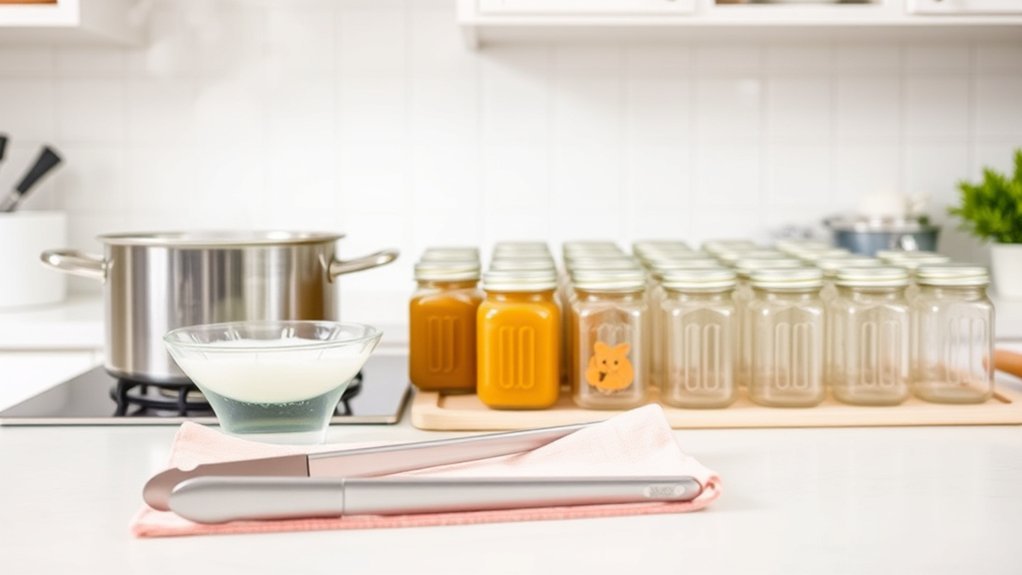
To sanitize baby food jars and containers, start by disassembling lids and components. Wash them with hot, soapy water and rinse thoroughly to remove soap residue. Choose a sanitization method, like boiling for 5 minutes, using a dishwasher’s sanitize cycle, or a food-safe sanitizer. Afterward, let jars air-dry upside down in a clean area. Make certain they’re stored properly to keep them germ-free. Keep going to discover common mistakes to avoid and best storage solutions.
Key Takeaways
- Disassemble jars and lids, rinsing all components under warm water to remove loose food particles before sanitization.
- Wash jars and lids with hot, soapy water using a clean sponge, ensuring thorough scrubbing of all surfaces.
- Choose a sanitization method: boil jars for 5 minutes, use a dishwasher’s sanitize cycle, or apply a food-safe sanitizer.
- Allow jars to air-dry completely in a clean, dust-free area to prevent moisture buildup that encourages bacteria growth.
- Store sanitized jars in a designated, clean cabinet away from contaminants, ensuring they remain free from germs before use.
The Importance of Sanitizing Baby Food Jars
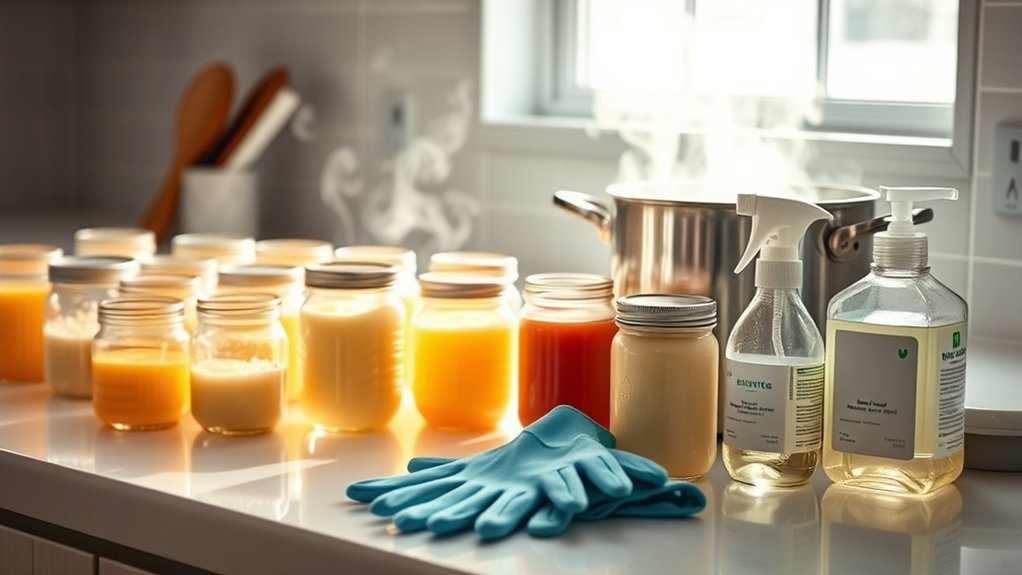
Sanitizing baby food jars is essential for safeguarding your baby’s health. Infants have developing immune systems, making them more vulnerable to harmful bacteria and foodborne illnesses.
By regularly sanitizing these jars, you greatly reduce the risk of contamination from leftover food particles, ensuring your homemade baby food remains fresh and safe. This process effectively kills nearly all microorganisms, creating a secure feeding environment for your little one.
It’s vital to sanitize jars before their first use and after each cleaning to maintain food safety. Implementing proper techniques, like boiling or using a dishwasher with a sanitize setting, contributes to your baby’s overall health and well-being.
Prioritize this step to protect your child and promote a healthy start in life.
Gather Your Supplies for Sanitization
Before you begin the sanitization process, gather all necessary supplies to guarantee everything runs smoothly. You’ll need clean baby food jars or various container types, a clean basin, and a sanitizing solution, either an unscented bleach mixture (1 tablespoon per gallon of water) or a commercial food-safe sanitizer.
Ascertain you have access to hot water for rinsing and a drying rack for air-drying sanitized containers thoroughly. Keep a clean dishcloth or paper towels handy to wipe down surfaces, preventing contamination.
Using gloves is a smart choice to avoid direct contact with sanitized items, enhancing your sanitization frequency. By having everything ready, you’ll streamline the process and ascertain a hygienic environment for your little one’s food.
Step 1: Disassemble Lids and Components
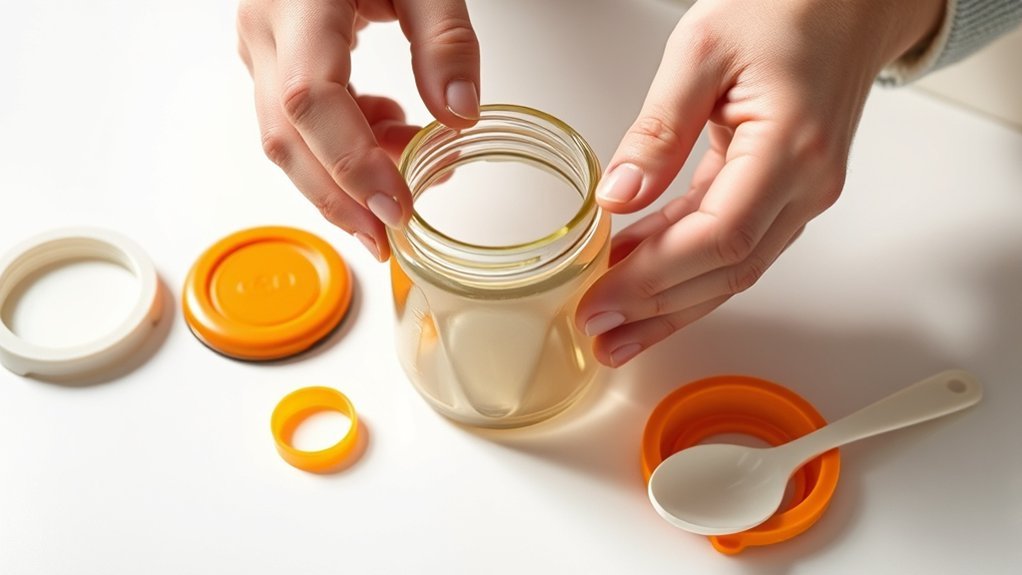
To guarantee a thorough sanitization process, start by disassembling all lids, seals, and detachable components from the baby food jars. This step is essential for effective cleaning and allows for proper component inspection.
Here are some disassembly techniques to follow:
- Remove lids and seals carefully to avoid damage.
- Check each component for food residue or buildup.
- Rinse disassembled parts under warm water to eliminate loose particles.
- Ascertain all components are completely separated for better access.
- Keep the inside of the jars and lids free from contamination by avoiding contact with unclean surfaces or hands.
Step 2: Wash With Hot Soapy Water
Start by rinsing the baby food jars and lids with warm water to loosen any leftover food particles.
Next, grab a clean sponge or dishcloth and fill a basin with hot, soapy water. Use a mild dish soap, as it’s effective and safe.
Employ effective cleaning techniques and scrub all surfaces, paying special attention to the threads and crevices where food can hide. These areas are vital, as they can harbor bacteria. Verify no food particles remain.
Once you’ve scrubbed thoroughly, rinse the jars and lids under running water to guarantee all soap is washed away. This step is essential for safe food storage.
Finally, let them air-dry completely on a clean surface to prevent bacterial growth.
Step 3: Rinse Off Any Soap Residue
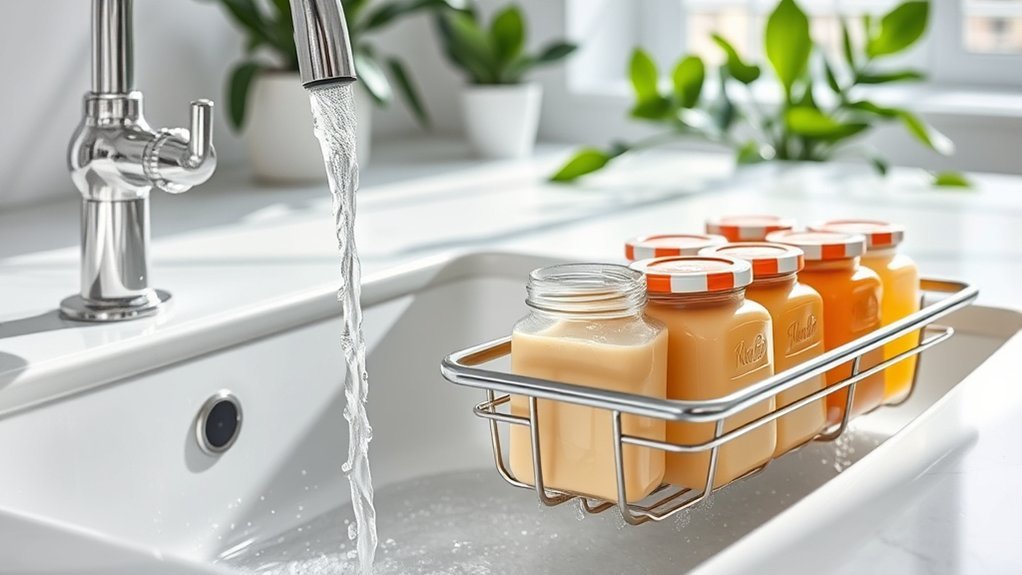
After washing your baby food jars, it’s essential to rinse them thoroughly to remove any soap residue.
Use clean, running water and rinse multiple times to guarantee all soap is eliminated, as even small amounts can pose health risks to your infant.
Once rinsed, check that the jars feel clean and let them air-dry completely before storing or using them.
Importance of Rinsing Thoroughly
While it might seem like a simple step, rinsing thoroughly is crucial to guarantee the safety of baby food jars. Residual soap can pose serious soap dangers if ingested, potentially leading to gastrointestinal issues or allergic reactions in sensitive infants.
Here are some key reasons to emphasize thorough rinsing techniques:
- Removes harmful soap residue.
- Reduces the risk of contamination.
- Assures baby food stays safe and healthy.
- Uses hot water for better effectiveness.
- Visual inspection confirms cleanliness.
Rinse jars and containers under clean, running water for at least 30 seconds. Always check for any lingering soap bubbles or film before using or storing your baby food jars.
Your baby’s health depends on these simple yet critical steps!
Techniques for Effective Rinsing
Thorough rinsing sets the stage for the next important step: rinsing off any soap residue from baby food jars.
To achieve effective rinsing, use warm water, as it dissolves soap better than cold. Rinse each jar and container multiple times until no soap bubbles or film remain.
Pay special attention to corners and crevices where residues can hide. For those hard-to-reach areas, consider using a clean brush to scrub, ensuring complete soap removal.
After scrubbing, follow up with a final rinse under running water to guarantee all soap is gone.
This careful attention to detail not only protects your baby from potential chemical ingestion but also prepares your jars for safe storage or sterilization.
Avoiding Contamination Risks
To avoid contamination risks, you need to make rinsing off any soap residue a priority. Even tiny amounts of soap can impact the taste and safety of your baby food.
Here’s how to guarantee your containers are free from harmful contamination sources:
- Use hot water to help eliminate lingering soap particles.
- Rinse thoroughly, guaranteeing all surfaces are covered.
- Visually inspect containers for any soap bubbles or film.
- Allow containers to air-dry completely to minimize bacterial growth.
- Store your sanitized jars in a clean, dry area to maintain safe storage.
Select a Sanitization Method: Boiling, Dishwasher, or Microwave
When choosing a method to sanitize baby food jars, you can opt for boiling or using a dishwasher.
Boiling involves submerging disassembled jars in water for at least five minutes, while the dishwasher’s sanitize cycle effectively eliminates germs with high temperatures.
Consider your available resources and select the method that best fits your needs.
Boiling Water Method
If you’re looking for an effective way to sanitize baby food jars, the boiling water method is a reliable choice. This technique maximizes boiling efficiency by guaranteeing the water temperature is high enough to eliminate harmful bacteria.
Here’s how to do it:
- Disassemble all parts of the jars.
- Submerge them in a pot of boiling water for at least 5 minutes.
- Make sure the water completely covers the jars; don’t add salt or other substances.
- Use clean tongs to remove jars, as they’ll be hot, and place them on a clean, dry surface.
- Rinse the jars with clean water after boiling to remove any residual contaminants before air-drying.
Regular sanitization is essential, especially for infants under 2 months or those with weakened immune systems.
Dishwasher Sterilization Process
While you can effectively sanitize baby food jars using a dishwasher, verifying they’re labeled as dishwasher-safe is essential for best results.
Start by removing all lids and non-dishwasher-safe components. Rinse the jars to eliminate any food residue, preventing cross-contamination.
Place the jars on the top rack, as this positioning protects them from high heat at the bottom. Select the “sanitize” dishwasher setting, which typically heats water to at least 150°F (65°C) to eliminate harmful bacteria and germs.
Once the cycle’s complete, let the jars air-dry in a clean, dust-free area to maintain their sterility. Following these steps will verify your baby food jars are safe and ready for use!
How to Properly Air-Dry and Store Sanitized Containers
To guarantee your sanitized baby food jars remain free from contaminants, it’s crucial to air-dry them completely on a clean, unused dish towel or a drying rack.
Use these air dry techniques to make certain they dry thoroughly:
- Set jars upside down to drain excess water.
- Place them in a dust-free area to maintain sterility.
- Avoid rubbing with towels; let them dry naturally.
- Store them in a clean, dry, designated space.
- Check storage areas regularly for cleanliness.
For ideal storage solutions, keep the sanitized containers in a closed cabinet away from contaminated surfaces.
This approach helps maintain the cleanliness and safety of your baby food jars, providing peace of mind for you and your little one.
Tips for Keeping Your Baby Food Jars Germ-Free
Even after properly sanitizing your baby food jars, keeping them free from germs requires ongoing attention.
Start by thoroughly washing jars with hot, soapy water before each use to eliminate any food residue. For effective storage solutions, place jars in a clean, dry area away from direct sunlight and contaminants. Make certain they’re completely dry before sealing to prevent moisture buildup, which can foster bacteria.
Regularly inspect your jars for cracks or damage; discard any compromised containers to maintain food safety. Additionally, practice good jar organization by keeping the sanitized jars separate from other items, minimizing cross-contamination.
Common Mistakes to Avoid When Sanitizing Baby Food Jars
When sanitizing baby food jars, it’s crucial to avoid common mistakes that can undermine your efforts. Here are some pitfalls to watch out for:
- Skipping thorough cleaning before sanitizing; food residue can harbor harmful bacteria.
- Using bleach without proper dilution or rinsing, risking chemical residue.
- Not allowing jars to air-dry completely, leading to moisture that encourages bacteria growth.
- Overlooking lids and other container parts; they also need sanitization to prevent contamination.
- Ignoring manufacturer instructions on sanitization methods or temperatures, compromising effectiveness.
Frequently Asked Questions
How Often Should I Sanitize Baby Food Jars?
You should sanitize baby food jars before each use and whenever they’ve been stored for an extended period. Consistent sanitation frequency guarantees your baby food storage remains safe and free from bacteria or contaminants.
Can I Use Bleach to Sanitize Baby Food Jars?
You can use bleach to sanitize baby food jars, but be cautious about bleach safety. Instead, consider alternative sanitizers like vinegar or hydrogen peroxide for a safer, effective option that protects your little one’s health.
Are There Any Specific Jar Types to Avoid?
You should avoid plastic jars, especially those not labeled as food-safe. For glass, choose sizes that fit your storage needs. Smaller jars are easier to clean and manage, while larger ones may harbor bacteria.
What Should I Do if Jars Have Stubborn Stains?
If jars have stubborn stains, use a mixture of baking soda and vinegar for stain removal. Scrub gently with a cloth, then rinse thoroughly. Natural cleaners work wonders, leaving your jars fresh and ready to use!
Can I Reuse Baby Food Jars for Other Purposes?
Yes, you can reuse baby food jars for craft projects or storage solutions. They’re great for organizing small items or creating unique DIY decorations. Just make sure they’re thoroughly cleaned and sanitized before repurposing.
Conclusion
By following these steps, you guarantee your baby food jars are cleaner than a whistle, providing a safe environment for your little one’s meals. Proper sanitization not only protects your baby from harmful germs but also extends the life of your containers. Remember, consistency is key—make sanitizing a routine to keep those jars germ-free. With just a little effort, you’ll give your baby the best start possible, one clean jar at a time!