
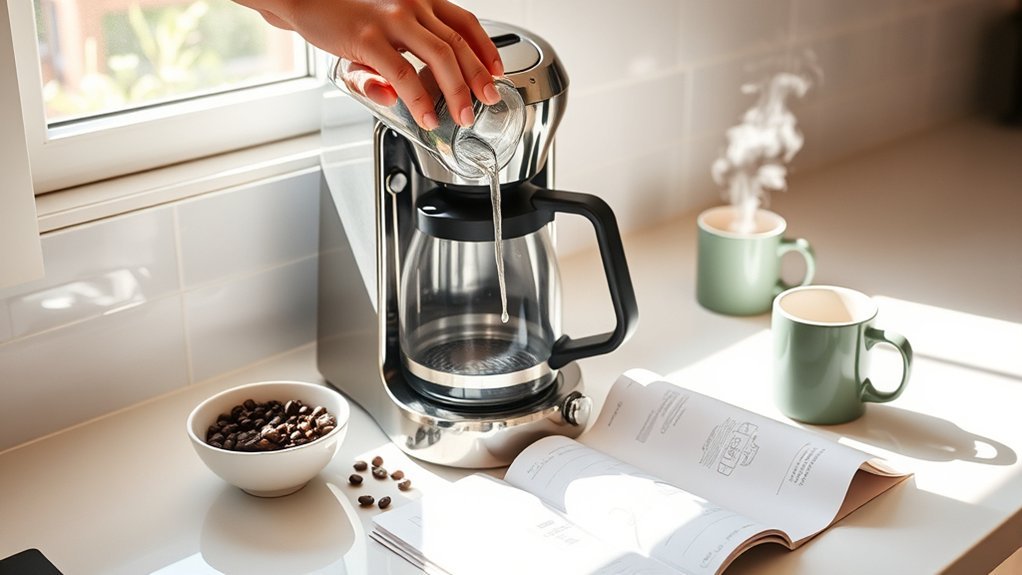
To set up your new coffee maker, first unpack it and remove any shipping materials or obstructions. Clean it by running a mixture of equal parts distilled vinegar and water through the machine to eliminate residues, then rinse thoroughly with fresh water. Next, choose a medium grind coffee, measure 1 to 2 tablespoons per 6 ounces of water, fill the reservoir, and start your first brew. Keep exploring for more tips to enhance your brewing experience.
Key Takeaways
- Remove all shipping materials and check inside the coffee maker for any packing items before use.
- Clean the coffee maker using a mixture of equal parts distilled vinegar and water to eliminate manufacturing residues.
- Rinse the machine thoroughly with fresh water after cleaning to avoid any lingering vinegar taste.
- Fill the water reservoir with fresh, filtered water and measure 1 to 2 tablespoons of coffee per 6 ounces of water.
- Adjust the brew temperature to between 195°F and 205°F for optimal coffee extraction during your first brew.
Unpacking Your New Coffee Maker

Unpacking your new coffee maker is the first step in guaranteeing it operates smoothly. Start by carefully removing all shipping materials, as these unpacking essentials can obstruct functionality.
Check inside the coffee maker for any additional cardboard or packing materials that might’ve been overlooked. It’s vital to inspect and remove these items to prepare the machine for use.
Inspect the coffee maker for any hidden packing materials to ensure it’s ready for brewing your perfect cup.
Next, make sure the hot plate is clear of any obstructions before placing the coffee maker on a stable surface. Open the coffee maker and conduct a thorough check of all components to confirm that it’s clean and free from foreign materials.
This attention to detail sets the foundation for a seamless coffee-making experience.
What to Look for When Unpacking Your Coffee Maker?
When you’re ready to set up your new coffee maker, it’s essential to verify that everything is in order.
Start by carefully removing all shipping and packing materials to guarantee there are no obstructions. Check the inside of the coffee maker for any leftover cardboard or packing items that could interfere with operation.
Pay special attention to the hot plate; it should be clear for proper heating during brewing. Use these unpacking tips to inspect the coffee maker components, confirming that the carafe and filter basket are included and undamaged.
Opening the coffee maker allows you to find any additional shipping items that may have been overlooked, verifying a smooth setup process.
Clean Your Coffee Maker With Vinegar
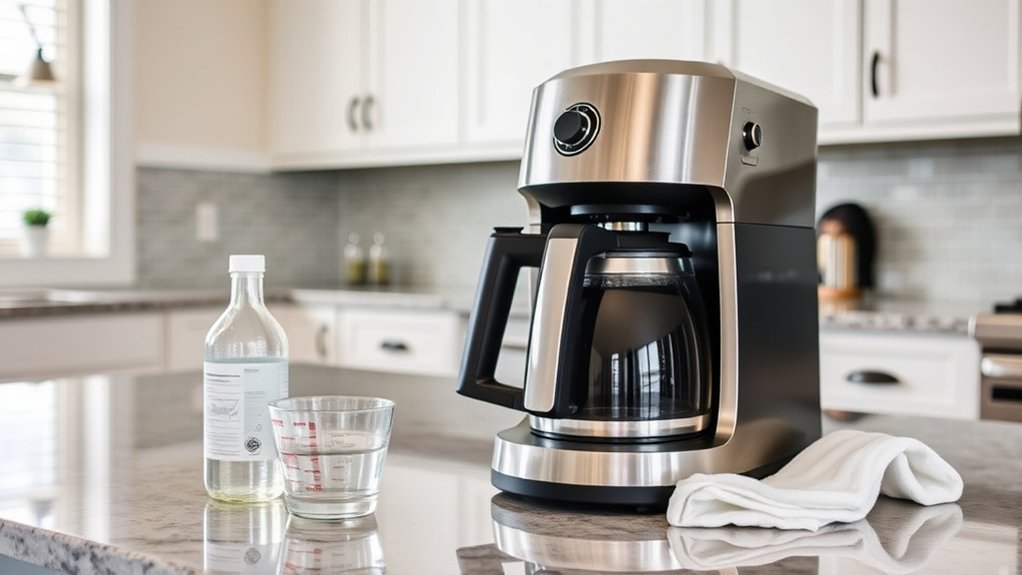
Cleaning your coffee maker before its first use is essential for best performance and taste. To do this, mix equal parts of distilled vinegar and water. Pour this solution into the coffee maker’s reservoir and turn it on. Let the vinegar run through the machine to effectively remove any manufacturing residues.
| Step | Action | Purpose |
|---|---|---|
| 1 | Mix vinegar and water | Clean surfaces |
| 2 | Pour into reservoir | Start cleaning process |
| 3 | Run the cycle | Remove residues |
| 4 | Dispose of the mixture | Prevent lingering vinegar taste |
After finishing the cycle, dispose of the mixture. Regular cleaning frequency with vinegar boosts performance, ensuring your coffee tastes great every time.
Rinse Your Coffee Maker for a Fresh Start
Rinsing your coffee maker is essential to remove any lingering vinegar and guarantee a clean brewing environment.
Start by preparing a vinegar solution and running it through the machine to clean out any manufacturing residues.
After this cleaning cycle, a thorough rinse with fresh water is necessary to finalize the process and get your coffee maker ready for use.
Importance Of Rinsing
To guarantee your coffee maker delivers the best flavor right from the start, rinsing it thoroughly is vital. This process helps remove residual materials from shipping and guarantees a clean brewing environment.
Here’s why rinsing is essential:
- Eliminates Residual Shipping Materials: It guarantees no contaminants affect your coffee.
- Removes Cleaning Solution Residue: A thorough rinse prevents any unwanted taste from vinegar or other solutions.
- Prepares for Peak Performance: Rinsing guarantees all components are clean and ready for brewing.
- Enhances Flavor Quality: A clean coffee maker leads to improved flavor enhancement in your first cup.
Cleaning Solution Preparation
Before you start brewing coffee, preparing a proper cleaning solution is essential to guarantee your new coffee maker operates effectively.
Begin by mixing equal parts of distilled vinegar and water in a bowl or measuring cup. This solution is a key part of effective cleaning techniques.
Next, pour the vinegar and water mixture into the coffee maker’s reservoir. Plug in the device and turn it on, allowing the mixture to run through the machine as part of the cleaning cycle.
Once completed, remove the vinegar solution, ensuring the reservoir is empty.
For ideal maintenance tips, fill the reservoir with fresh water and run a complete cycle to eliminate any remaining vinegar residue before your first brew.
Rinse Cycle Steps
It’s important to guarantee your coffee maker is properly rinsed after the initial cleaning cycle to eliminate any lingering vinegar taste.
Follow these rinse cycle steps for effective coffee maker maintenance:
- Fill the reservoir with a mixture of half water and half distilled vinegar.
- Plug in the coffee maker and turn it on, allowing the solution to run through the machine.
- After the cleaning cycle, turn off the coffee maker and dispose of the vinegar mixture down the drain.
- Fill the reservoir with 12 cups of regular water and run another cycle to rinse out any remaining vinegar residue.
Dispose of the rinse water, and your coffee maker is ready for brewing fresh coffee.
If you prefer, you can also explore vinegar alternatives for cleaning!
Set Up Your First Brew
Setting up your first brew with a new coffee maker is an exciting step toward enjoying fresh coffee at home.
First, choose your preferred coffee grind; a medium grind works well for most drip coffee makers. Measure out the right amount of coffee based on your desired strength, typically one to two tablespoons per six ounces of water.
Next, fill the water reservoir with fresh, filtered water, ensuring it matches your coffee maker’s capacity.
Now, adjust the brew temperature if your machine allows it, aiming for around 195°F to 205°F for ideal extraction.
Finally, hit the brew button and watch your first pot of coffee come to life, filling your home with its rich aroma. Enjoy!
Enjoying Your First Brew of Coffee

Now that your coffee maker is ready, it’s time to focus on perfecting your brew.
Start by measuring the right coffee-to-water ratio and selecting high-quality beans that suit your taste.
Don’t hesitate to experiment with different flavors to find your ideal cup.
Perfecting Your Coffee Ratio
To perfect your coffee ratio, start by understanding that the standard recommendation is 1 to 2 tablespoons of ground coffee for every 6 ounces of water. However, you can adjust this based on your taste preferences.
Here are some key points to take into account:
- Use freshly ground coffee beans for enhanced flavor.
- Opt for a medium to medium-coarse coffee grind for drip coffee makers.
- Make sure your brew temperature stays between 195°F and 205°F for ideal extraction.
- Experiment with different blends and roast levels to find your ideal flavor profile.
Using filtered water can also improve your coffee’s taste while preventing mineral buildup.
Keep these factors in mind to enjoy a perfectly brewed cup every time.
Choosing Quality Coffee Beans
Choosing quality coffee beans is essential for crafting a delightful brew that highlights the nuances of flavor and aroma. Opt for freshly roasted beans, ideally within two weeks, to guarantee maximum taste. Look for a clear roast date on the packaging, which confirms freshness. Whole beans are preferable over pre-ground options; grind them just before brewing for peak flavor.
| Coffee Bean Types | Roast Levels |
|---|---|
| Arabica | Light |
| Robusta | Medium |
| Ethiopian | Dark |
| Colombian | Light-Medium |
| Sumatra | Dark |
Experiment with different bean blends and roast levels to find your preferred flavor profile that suits your brewing style. Quality beans make all the difference in your first cup.
Experimenting With Flavor Profiles
As you commence your coffee journey, experimenting with flavor profiles can transform your morning routine into an exploration of taste.
Here are some ways to enhance your coffee experience:
- Try different coffee bean types: Experiment with Arabica for smoothness or Robusta for strength to find your favorite.
- Adjust the grind size: Use a coarser grind for a milder brew and a finer grind for more intense flavor extraction.
- Vary the coffee-to-water ratio: Start with 1 to 2 tablespoons of coffee per 6 ounces of water to discover the strength you prefer.
- Infuse unique flavors: Add spices like cinnamon or nutmeg to the grounds before brewing to elevate aroma and taste.
These adjustments can lead to a personalized and enjoyable coffee experience.
Frequently Asked Questions
Can I Use Tap Water Instead of Distilled Vinegar for Cleaning?
You can’t use tap water for cleaning instead of distilled vinegar. While tap water has benefits, vinegar alternatives like citric acid or lemon juice effectively remove mineral buildup, ensuring your coffee maker stays clean and functional.
How Often Should I Clean My Coffee Maker After the First Use?
Think of your coffee maker as a cherished garden; regular maintenance keeps it thriving. Clean it every 30 days to guarantee peak performance. Follow these maintenance tips for a flavorful brew and longevity in your coffee ritual.
What Type of Coffee Grounds Should I Use for Best Results?
For best results, use a medium grind type for balanced brew strength. If you prefer a stronger flavor, opt for a finer grind. Experiment with different coffee grind types to find your ideal brew strength.
Is It Safe to Leave the Coffee Maker Plugged in Overnight?
It’s not generally safe to leave your coffee maker plugged in overnight due to safety concerns and unnecessary energy consumption. Unplugging it when not in use helps prevent potential hazards and saves electricity.
Can I Use My Coffee Maker to Brew Tea?
Yes, you can use your coffee maker for tea brewing. Just replace coffee grounds with tea bags or loose leaf. This method enables ideal flavor infusion, ensuring you get the best taste from your chosen tea.
Conclusion
Now that you’ve set up your coffee maker and brewed your first cup, you might think it’s too complicated for daily use. However, once you’ve mastered the initial steps, the process becomes quick and effortless. Regular cleaning and maintenance will keep your machine in top shape, ensuring every cup is as delicious as the first. Embrace this new routine—it’ll enhance your mornings and make brewing coffee a simple pleasure you look forward to. Enjoy!