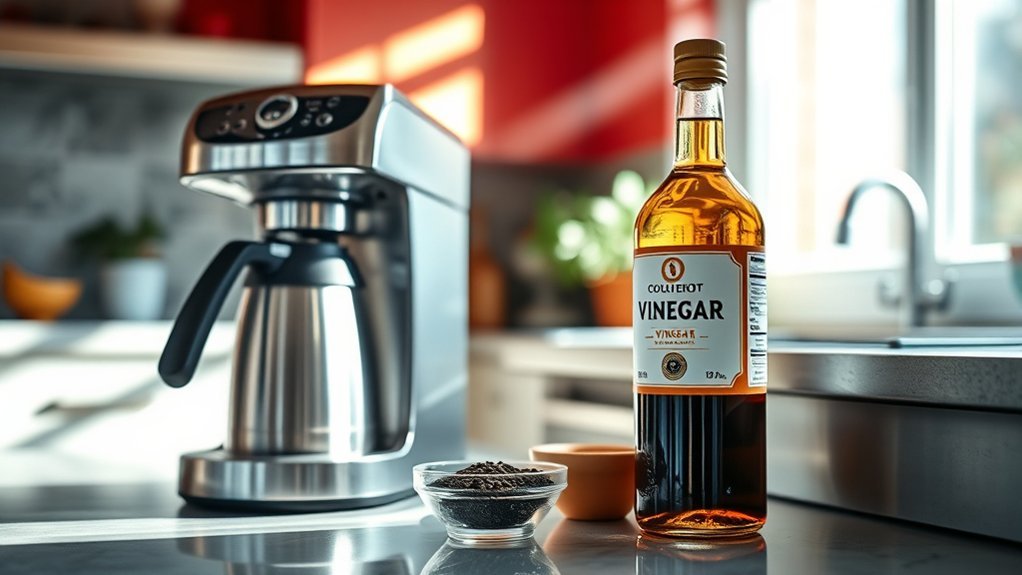
Yes, it’s safe to clean your coffee maker with vinegar! Distilled white vinegar effectively dissolves mineral buildup and gunk without harmful residues. It also helps prevent mold and bacteria growth, ensuring a healthier brew. For ideal results, mix equal parts vinegar and water, run a half brew cycle, let it sit for an hour, then complete the brew cycle and rinse thoroughly. If you want to know more cleaning tips and best practices, keep exploring!
Key Takeaways
- Distilled white vinegar is safe for cleaning coffee makers, effectively dissolving mineral buildup without harmful substances.
- It prevents mold and bacteria growth, promoting healthier coffee.
- Vinegar is non-toxic and leaves no harmful residues in the coffee maker.
- Rinsing the machine thoroughly after cleaning is essential to remove any vinegar residue.
- Regular vinegar cleaning helps maintain machine efficiency and prolongs its lifespan.
How to Clean Your Coffee Maker With Vinegar

Cleaning your coffee maker with vinegar is a simple yet effective way to maintain its performance and enhance the flavor of your brews.
To start, create a solution of equal parts water and white vinegar, and pour it into the water chamber. Run a half brew cycle, then turn off the machine and let it sit for an hour to effectively dissolve mineral buildup.
After the hour, complete the brew cycle and discard the vinegar-water solution from the carafe. To guarantee all vinegar residue is removed, rinse the coffee maker by running two to three cycles of plain water.
Regular cleaning with vinegar not only enhances the taste of your coffee but also prolongs the lifespan of your coffee maker, maximizing your coffee maker maintenance efforts.
Why Vinegar Is Safe for Your Coffee Maker
When it comes to cleaning your coffee maker, using vinegar is a safe and effective choice. Distilled white vinegar contains acetic acid, which dissolves mineral buildup and gunk without introducing harmful substances. This not only enhances cleaning effectiveness but also provides several vinegar benefits, like preventing mold and bacteria growth for a healthier brew.
| Benefit | Description |
|---|---|
| Cost-Effective | Prices average around $3 for a half gallon. |
| Non-Toxic | No harmful residues to contaminate your coffee. |
| Proven Effectiveness | Community feedback supports its use for cleaning. |
Key Rinsing Tips for Your Coffee Maker
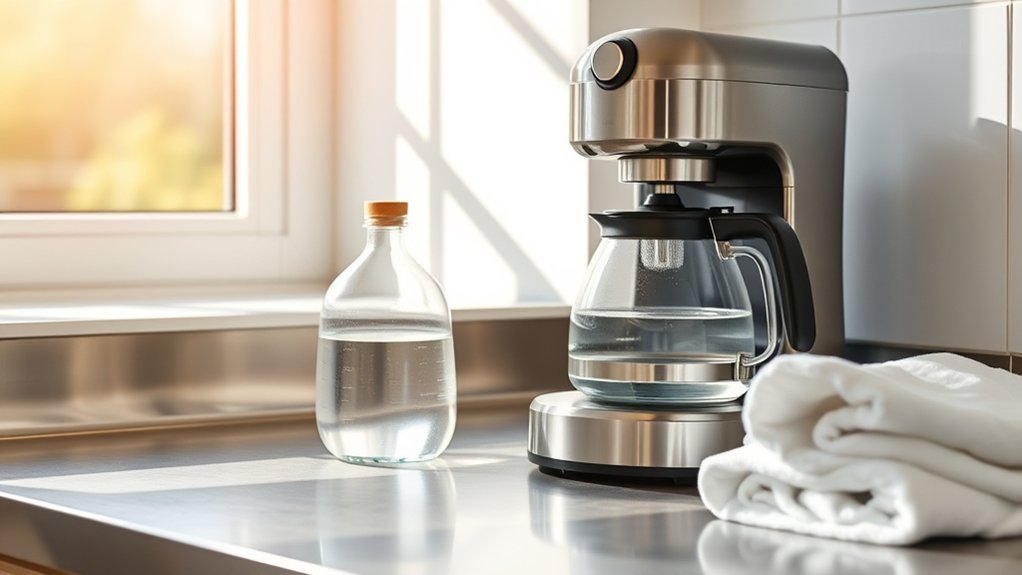
After running a vinegar solution through your coffee maker, it’s essential to follow a thorough rinsing process to guarantee a clean brew.
Start by filling the water chamber with fresh water and run at least two to three brew cycles. This rinsing technique guarantees all vinegar residue is eliminated.
Fill the water chamber with fresh water and run two to three brew cycles to eliminate all vinegar residue.
Allow the machine to cool slightly between cycles to avoid thermal stress on components.
Don’t forget to wash the carafe and filter basket with hot, soapy water during this process to maintain hygiene.
If you prefer vinegar alternatives, consider using citric acid or baking soda, but always rinse thoroughly.
Finally, make sure all parts are completely dry before reassembling to prevent mold and bacteria growth.
Recommended Cleaning Frequency for Coffee Makers
To keep your coffee maker in prime condition, daily maintenance is crucial. Follow a consistent cleaning schedule to enhance your coffee’s taste and longevity. Here are some maintenance tips:
| Frequency | Action |
|---|---|
| Daily | Clean with warm, soapy water after each use. |
| Biannually | Deep clean with vinegar to remove mineral buildup. |
| As Needed | Increase frequency if you notice a white film or decreased brewing efficiency. |
If you’re a heavy coffee drinker, consider cleaning more often to avoid rancid coffee oils. Manufacturers recommend descaling after one full pack of filters (about 100). Stay proactive to guarantee peak performance!
Common Mistakes to Avoid When Cleaning With Vinegar

Cleaning your coffee maker with vinegar can effectively remove mineral buildup, but several common mistakes can hinder the process and impact your coffee’s flavor.
One major error is using cleaning vinegar instead of distilled white vinegar, which can leave harmful residues. Always rinse your coffee maker thoroughly with plain water after using vinegar solutions to avoid a lingering taste.
Don’t forget to let the vinegar sit for the recommended hour; rushing this step reduces descaling effectiveness. Additionally, clean the carafe and filter basket separately to remove coffee oils.
Finally, avoid using too much vinegar, as excessive amounts can lead to buildup that affects your coffee maker’s performance. Stick to the right vinegar types for best results.
Frequently Asked Questions
Can Vinegar Damage My Coffee Maker’s Internal Components?
Vinegar types, like white or apple cider, generally won’t damage your coffee maker’s internal components if used correctly. Regular coffee maker maintenance with vinegar can effectively clean and prolong your machine’s lifespan without harm.
Is There a Specific Type of Vinegar to Use?
You should use white vinegar for cleaning your coffee maker, as it’s effective and widely recommended. Apple cider vinegar can work too, but its residue might affect the taste of your coffee. Stick with white vinegar for best results.
How Long Should I Let the Vinegar Sit?
Let the vinegar sit for about 30 minutes to maximize its effectiveness. Regular cleaning frequency—every month—ensures your coffee maker stays in top shape, preventing buildup and maintaining the quality of your brews.
Can I Use Vinegar for Other Kitchen Appliances?
Yes, you can use vinegar for other kitchen appliances. Its benefits include cutting grease and eliminating odors. Try these kitchen hacks for cleaning microwaves, dishwashers, and refrigerator surfaces, ensuring they stay fresh and spotless.
What Happens if I Forget to Rinse After Cleaning?
If you forget to rinse after cleaning, your coffee might taste sour or off. Additionally, lingering vinegar could lead to potential health effects, especially if consumed regularly. Always verify thorough rinsing for ideal flavor and safety.
Conclusion
So, if you’re keen on making your coffee machine sparkle while enhancing your brew, vinegar’s your trusty sidekick. Remember, it’s not a superhero—so don’t expect it to save the world, just your morning ritual. Clean it regularly, rinse thoroughly, and avoid the temptation to skip steps. After all, no one wants a cup of coffee that tastes like a salad. With a little care, you’ll have a coffee maker that’s as happy as you are with that first sip.