

If your Keurig’s descale light won’t turn off, it likely indicates persistent scale buildup or a descaling error. Start by performing a thorough descaling process using the right solution and make sure you run a proper rinse cycle afterward. Reset the descale light by pressing the 8oz and 10oz buttons together. Check for clogs in the entrance and exit needles, and if issues persist, follow additional troubleshooting steps for further assistance. More insights await you.
Key Takeaways
- Ensure you have thoroughly descaled the machine, as significant scale buildup may require multiple descaling cycles.
- Check for clogs in the entrance or exit needles that could obstruct water flow.
- Rinse the machine well after descaling, as residual solution can keep the descale light on.
- Reset the descale light by pressing the 8oz and 10oz buttons together after completing the descaling process.
- If the light persists, consider unplugging the machine for 15-20 minutes or consult Keurig support for further assistance.
What Does the Descale Light Mean?

The descale light on your Keurig machine indicates that mineral scale has built up, which can clog water flow and impair performance.
This light serves as a vital reminder for you to perform regular maintenance through descaling. The descaling benefits are significant; it helps remove mineral buildup that can affect the machine’s efficiency and longevity.
To maintain ideal functionality, you should descale your Keurig approximately every three months. If the descale light remains on after you’ve completed this process, it may imply that further cleaning or troubleshooting is necessary.
After successful descaling, you can reset the light manually by pressing and holding the appropriate buttons, ensuring your machine is ready for use again.
Common Causes for the Descale Light Staying On
While descaling your Keurig is vital for maintaining performance, several factors can cause the descale light to remain on even after you’ve followed the necessary steps.
One common issue is significant scale buildup, which may require multiple descaling cycles if the machine hasn’t been regularly maintained.
Significant scale buildup may necessitate multiple descaling cycles for machines lacking regular maintenance.
Clogged exit or entrance needles can obstruct water flow, preventing the machine from recognizing that descaling is complete.
If residual descaling solution isn’t rinsed out thoroughly, it can also trigger the light.
Additionally, failing to reset the machine after descaling leaves the light illuminated.
Finally, an internal hardware issue, such as a malfunctioning control board, might be the culprit.
Stay informed and avoid descaling myths with these vital maintenance tips.
Step-by-Step Descaling Guide

To start the descaling process, you need to use the proper descaling solution mixed with equal parts water.
After powering on your machine and entering descaling mode, run the solution through until the reservoir is empty, followed by an essential rinse cycle with fresh water.
If the descale light stays on after this, you’ll need to reset it by pressing the 8oz and 10oz buttons together again.
Proper Descaling Solution Usage
Before diving into the descaling process, make certain your Keurig is powered on and the water reservoir is filled with a descaling solution, mixed according to the manufacturer’s instructions.
This typically involves using specific descaling solutions or vinegar alternatives. Remove any water filter from the reservoir to guarantee the solution effectively reaches all internal components.
Start the descaling cycle by pressing the 8oz and 10oz buttons to enter descaling mode. Allow the solution to run through the machine as directed.
Once completed, thoroughly rinse the water reservoir and run at least two full reservoirs of clean water through the machine to remove residual descaling solution.
If the descale light stays on, reset by holding the 8oz and 10oz buttons for 3-5 seconds.
Essential Rinse Cycle Steps
After completing the descaling process, running a rinse cycle is essential for ensuring your Keurig is free from any residual descaling solution. Follow these steps for an effective rinse:
| Step | Action |
|---|---|
| 1 | Fill the water reservoir with clean water to the maximum fill line. |
| 2 | Place a cup under the brew head. |
| 3 | Select the largest brew size to start the rinse cycle. |
| 4 | Repeat the rinse cycle at least twice, using fresh water each time. |
| 5 | Monitor the descaling light; if it stays on, further troubleshooting may be needed. |
Resetting The Descale Light
Resetting the descale light on your Keurig is a straightforward process, provided you’ve completed the descaling and rinsing steps correctly.
First, power on your machine. For the K-Duo, press and hold the 8oz and 10oz buttons together for 3-5 seconds until the descale light flashes and turns off.
If the light remains on, unplug the machine for 15-20 minutes to allow the electronics to discharge, then retry the reset.
For alternative models, use the 8-cup and 10-cup buttons in the same manner.
Regular machine maintenance, including descaling every three months, can help prevent the descale light from activating again, ensuring peak performance and longevity of your Keurig.
How to Reset the Descale Light on Keurig Duo Models
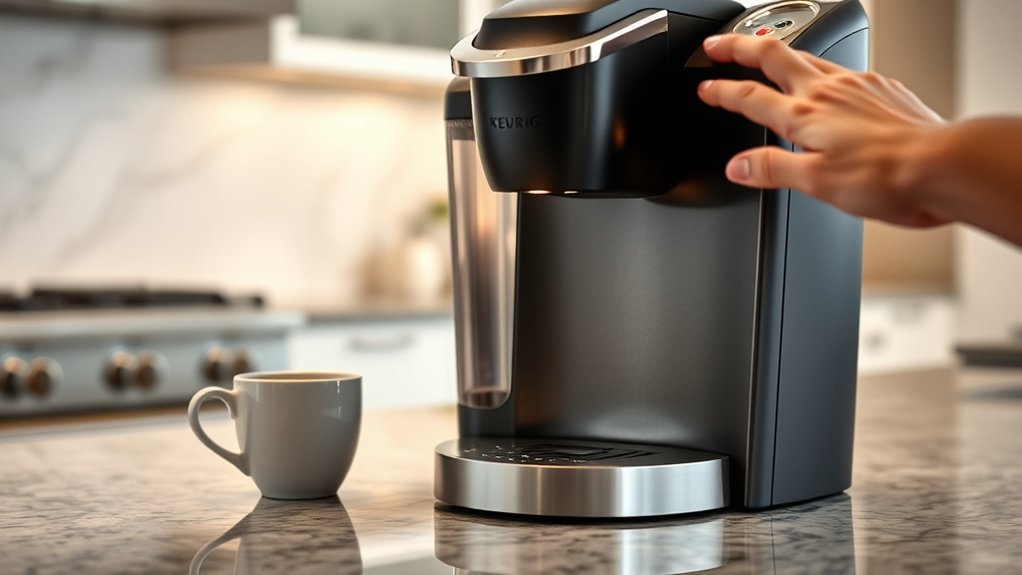
To reset the descale light on Keurig Duo models, power on your machine and press and hold the 8oz and 10oz buttons simultaneously for 3-5 seconds until the light flashes and turns off.
If that doesn’t work, try pressing and holding the 8-cup and 10-cup buttons for the same duration.
Verify you’ve thoroughly completed the descaling process and rinsed the machine with fresh water before resetting.
If the descale light remains on, perform a hard reset by unplugging the machine for 15-20 minutes.
Regular maintenance tips, like descaling every three months, can help prevent future issues with the descale light and guarantee your machine features function at peak performance.
Tips for Cleaning the Exit Needle and Water Reservoir
Cleaning the exit needle and water reservoir is essential for maintaining your Keurig’s brewing efficiency. Clogs in the exit needle can hinder water flow, resulting in poor coffee extraction. Use a sewing needle or paper clip to gently dislodge any blockages. For the water reservoir, wash it with warm, soapy water to prevent bacterial growth and guarantee peak water quality. Always rinse thoroughly to eliminate soap residue.
| Cleaning Technique | Frequency | Maintenance Tip |
|---|---|---|
| Clear exit needle | Every few months | Use a sewing needle or paper clip |
| Wash water reservoir | Monthly | Use warm, soapy water |
| Rinse water reservoir | After each wash | Verify no soap remains |
| Inspect for blockages | Monthly | Check for coffee grounds |
| Schedule regular cleaning | Every few months | Keep a calendar reminder |
What to Do When Your Descale Process Fails?
What should you do if the descale light won’t turn off after following the descaling process?
First, check for significant scale buildup that may require multiple cycles or stronger descale solutions like vinegar or citric acid.
Verify the descaling solution sits for 1-2 hours to effectively dissolve stubborn clogs.
Inspect your machine for blockages, especially around the entrance and exit needles, as these can hinder water flow and affect descaling.
After descaling, run a thorough rinse cycle with fresh water to clear any residual solution, which might help reset the light.
If the light remains on, try the 8oz and 10oz button reset method again.
If that fails, unplug the machine for 15-20 minutes before retrying.
When to Seek Professional Help for Your Keurig?
How can you tell when it’s time to call a professional for your Keurig? If the descale light won’t turn off after multiple resets, you might need a professional assessment.
Here are three signs that indicate it’s time to seek help:
- The descale light persists even after descaling multiple times, suggesting an underlying issue.
- Your machine is over three years old and you suspect a malfunctioning electronic control board.
- You’ve maintained your Keurig properly, yet the descale light remains on, possibly indicating a need for replacement rather than repair.
Consider your warranty status as well, since out-of-warranty repairs may come with additional costs.
It’s best to consult Keurig support for specialized troubleshooting in these cases.
How Often Should You Descale Your Keurig?
You should descale your Keurig every three months to maintain its performance and prevent mineral buildup.
If you notice slower water flow or brewing issues, it might indicate scale buildup, prompting you to descale more frequently.
Keeping a regular descaling schedule will enhance your coffee experience and extend your machine’s lifespan.
Recommended Descaling Frequency
To keep your Keurig running smoothly, descaling every three to six months is crucial for peak performance.
The frequency may vary based on water hardness, so if you live in an area with hard water, you might need to descale more often, possibly every two to three months.
Here are some key points to think about:
- Descaling Benefits: Regular maintenance guarantees ideal water flow and brewing functionality.
- Water Hardness: Hard water can lead to faster scale buildup, necessitating more frequent descaling.
- Heavy Usage: After busy coffee-drinking seasons, increase descaling frequency to manage buildup effectively.
Following these guidelines not only enhances your Keurig’s lifespan but also improves the quality of your brewed coffee.
Signs of Scale Buildup
Noticing signs of scale buildup in your Keurig can be critical for maintaining its performance and longevity.
Common scale buildup symptoms include a noticeable decrease in water flow, longer brewing times, and the descaling light staying on despite your cleaning efforts. These issues often stem from mineral accumulation effects, especially if you’re using hard water, which can speed up the buildup process.
Regular descaling every three months helps alleviate these problems and guarantees ideal brewing temperature and flavor. If you encounter clogging or poor performance before the three-month mark, it’s wise to descale immediately.
Ignoring these signs may lead to further complications, diminishing your coffee experience and the machine’s lifespan.
Troubleshooting Other Common Keurig Issues
While enjoying your Keurig, it’s essential to address common issues that can arise, as they can greatly impact your brewing experience.
Regular Keurig maintenance is key to ensuring brewing consistency. Here are three common problems you might encounter:
- Clogged Needles: If your coffee isn’t flowing, try cleaning the needles with a paper clip or sewing needle.
- Water Flow Problems: Incomplete brewing cycles often signal a need for descaling and internal cleaning.
- Inadequate Heating: If your machine isn’t heating water properly, it may be due to mineral buildup or a faulty heating element.
To maintain peak performance, descale every three months and check water filters regularly to prevent clogs and enhance functionality.
Frequently Asked Questions
Can I Use Regular Vinegar for Descaling My Keurig?
You can use regular vinegar for descaling your Keurig, but consider vinegar alternatives for better results. Regular descaling frequency helps maintain performance, ensuring your coffee maker runs efficiently and prolongs its lifespan.
How Long Does the Descaling Process Take?
Descaling typically takes about 30 minutes, depending on your model. For instance, if you descale every three months, the descaling duration remains consistent. Regular maintenance guarantees peak performance and extends your coffee maker’s lifespan.
Will Descaling Affect the Taste of My Coffee?
Descaling your machine won’t negatively affect your coffee flavor; in fact, it can enhance brewing quality. Regular descaling removes mineral buildup, ensuring your coffee tastes fresh and maintains ideal extraction for the best flavor experience.
Can I Descale My Keurig Without a Descaling Solution?
Yes, you can descale your Keurig without a descaling solution. Use a mixture of equal parts vinegar and water as a viable alternative. Follow Keurig maintenance tips to guarantee peak performance and longevity of your machine.
What Should I Do if My Keurig Leaks After Descaling?
If your Keurig leaks after descaling, check for loose connections or damaged parts. Confirm the water reservoir’s properly seated. Regular maintenance helps with leak prevention, so inspect seals and clean components regularly to avoid issues.
Conclusion
To sum up, if your Keurig’s descale light won’t turn off, don’t let it brew frustration. By following the troubleshooting steps outlined above, you can restore your machine’s performance and enjoy your favorite coffee again. Remember, regular maintenance is key—descaling isn’t just a chore; it’s an investment in your coffee experience. If problems persist, seeking professional help might be the best option. Keep your Keurig in top shape, and savor every sip!