


To maintain a high-quality coffee experience in your office, establish a cleaning schedule. Daily, rinse the carafe and clean the filter basket. Weekly, wash the carafe and soak the filter components. Monthly, descale using a vinegar-water solution and clean detachable parts. Watch for signs like strange tastes or slow brewing, which indicate it’s time for extra attention. Keeping your coffee station spotless enhances machine performance and employee satisfaction. Discover further insights for ideal maintenance practices ahead.
Key Takeaways
- Establish a daily routine to rinse the carafe, clean the filter basket, and wipe the machine’s exterior for hygiene.
- Schedule weekly tasks such as washing the carafe and descaling the machine to prevent mineral buildup.
- Use equal parts vinegar and water for monthly descaling and ensure thorough rinsing afterward to eliminate residues.
- Regularly inspect and clean grinder parts to maintain consistent grind size and prevent clogs.
- Monitor for signs like strange tastes, slow brewing, or visible stains to prompt immediate cleaning.
Why Skipping Coffee Maker Maintenance Could Ruin Your Coffee Experience

When you skip regular maintenance on your office coffee maker, you risk ruining your coffee experience entirely. Over time, mineral deposits build up, slowing down brewing and compromising coffee extraction.
Neglecting regular maintenance on your office coffee maker can ruin your coffee experience, leading to slow brewing and compromised flavor extraction.
This neglect allows old coffee oils and residues to accumulate, imparting unpleasant flavors and odors to your freshly brewed cup. Additionally, failing to replace water filters can introduce impurities, further degrading the coffee’s taste and quality.
Inconsistent brewing temperatures and pressures result from lack of maintenance, leading to under-extraction or over-extraction that distorts the coffee flavor profile.
Regular maintenance is essential, as it also prevents bacteria and mold growth, ensuring that every cup served remains safe and hygienic for all employees.
Prioritize maintenance importance to safeguard your coffee experience.
Daily Cleaning Tasks to Keep Your Coffee Maker Fresh
To keep your coffee maker in top shape, start by rinsing the carafe thoroughly after each brew.
Next, empty and clean the filter basket daily to prevent any stale odors from affecting your coffee.
Finally, don’t forget to wipe down the exterior of the machine regularly to maintain hygiene and enhance your overall coffee experience.
Rinse Carafe After Brewing
Rinsing the carafe immediately after brewing is an important step in maintaining the quality of your office coffee. By quickly rinsing the carafe with hot water, you can effectively eliminate coffee residues and oils that lead to unpleasant flavors in subsequent batches.
This daily carafe maintenance task takes less than a minute, making it easy to incorporate into your routine. Regular rinsing not only prevents the buildup of stale odors but also enhances coffee freshness, contributing to a more enjoyable experience during breaks.
Additionally, a clean carafe improves the visual appeal of your coffee service, making it more inviting for employees. Prioritize this simple yet important step to guarantee consistently great-tasting coffee in the office.
Clean Filter Basket Daily
Maintaining a clean filter basket is just as important as rinsing the carafe, as it plays a significant role in the overall quality of your office coffee.
To guarantee ideal coffee freshness, clean the filter basket daily by rinsing it thoroughly with hot water after each use. This practice eliminates coffee grounds and oils, preventing stale odors that can spoil your brew.
Regularly emptying and cleaning the filter basket also helps prevent bacterial growth in moist environments.
Remember, effective filter maintenance not only enhances the flavor of your coffee but also extends the lifespan of your coffee maker.
Incorporating this daily cleaning task into your routine is vital for keeping your coffee machine operating efficiently.
Wipe Machine Exterior Regularly
Regularly wiping down the exterior of your coffee machine is essential for maintaining a clean and inviting office kitchen. This simple task helps remove spills, stains, and dust, ensuring both exterior hygiene and a professional appearance.
By dedicating less than five minutes daily to this routine, you prevent the buildup of coffee oils and residue that can lead to unpleasant odors. A clean exterior not only enhances coffee station aesthetics but also encourages employees to keep the surrounding area tidy.
Additionally, consistent attention to the machine’s exterior minimizes the risk of bacteria and mold growth, promoting a healthier environment for coffee preparation and consumption.
Make this quick cleaning task a priority to elevate your office’s coffee experience.
Weekly Cleaning Duties for Optimal Coffee Quality
To guarantee your office coffee maker consistently brews high-quality coffee, implementing a weekly cleaning schedule is essential.
Start with thorough carafe care; wash it with warm water and dish soap or baking soda to eliminate odors and residues. Next, soak the filter basket and lid in warm, soapy water to remove built-up coffee oils, preventing bitter brews.
Don’t forget grinder maintenance; regularly inspect and clean the grinder parts to remove oils and residue, ensuring a consistent grind size.
Additionally, descale the coffee machine weekly to eliminate calcium deposits, maintaining ideal water flow.
These weekly cleaning tasks greatly enhance your coffee’s flavor, prolong the machine’s lifespan, and minimize costly repairs, ensuring a great coffee experience for everyone.
Essential Monthly Descaling and Cleaning Steps

Every month, dedicating time to descale and clean your coffee maker is essential for its performance and longevity.
Start by using effective descaling techniques, such as mixing equal parts of vinegar and water, or consider vinegar alternatives like citric acid or commercial descalers. Pour the solution into the water reservoir and run a brew cycle to eliminate mineral buildup that can restrict water flow.
After descaling, run several cycles of clean water to rinse out any vinegar residue and prevent flavor contamination.
Don’t forget to clean removable components like water reservoirs and drip trays to maintain hygiene. Finally, inspect and clean built-in grinder parts to prevent oil buildup.
This routine not only enhances coffee quality but also extends your machine’s lifespan.
Immediate Signs Your Coffee Maker Needs Attention?
After completing your monthly descaling and cleaning routine, it’s important to stay vigilant for signs that your coffee maker needs immediate attention.
If you notice strange tastes or odors in your coffee, it usually means old coffee oils or residues are present, indicating an urgent need for cleaning.
Additionally, slow brewing often results from mineral deposits restricting water flow, which can diminish brewing efficiency.
Look for visible stains or mold inside the machine, as these highlight hygiene concerns that must be addressed.
Frequent clogging signals a buildup of coffee grounds or oils, while error messages or malfunctioning equipment mean it’s time for troubleshooting and cleaning to restore ideal coffee flavor and performance.
Effective Tips for a Spotless Coffee Station
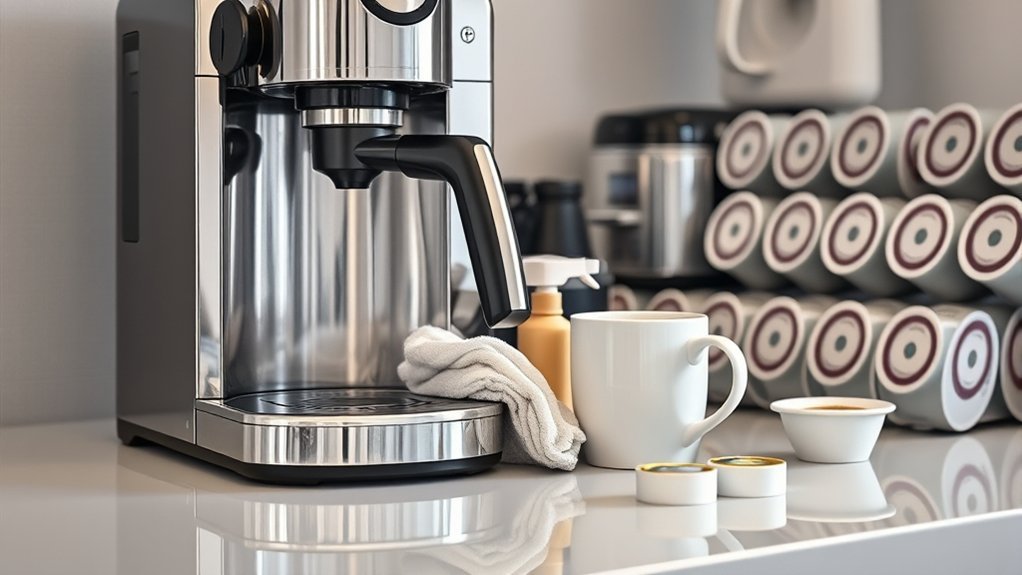
While keeping a coffee station spotless might seem like a small task, it greatly enhances the overall experience for everyone in the office.
Start by wiping down countertops and the coffee machine daily to eliminate spills and stains, maintaining a hygienic environment. Rinse the carafe and filter basket to prevent stale odors and guarantee a fresh coffee flavor.
Schedule a weekly deep clean to scrub components and soak removable parts, preventing buildup that could harm machine performance. Use eco-friendly descalers and specialized cleaners to tackle mineral deposits effectively.
Finally, keep the coffee station organized by regularly checking and restocking supplies. A tidy coffee station not only boosts employee productivity but also creates a pleasant atmosphere for all.
Creating an Effective Cleaning Schedule for Your Team
To maintain a consistently clean and functional coffee maker, it’s essential to create an effective cleaning schedule tailored to your team’s needs.
Start by establishing a daily cleaning routine that includes rinsing the carafe, emptying the filter basket, and wiping down the exterior. This prevents buildup and guarantees hygiene.
Implement a weekly deep cleaning schedule, which involves scrubbing the carafe, soaking the filter basket, and descaling the machine.
Designate specific team members for each task to guarantee team accountability.
Utilize a cleaning checklist or calendar system to track completed tasks, promoting consistency and making it easy to identify missed responsibilities.
Regularly review and adjust the schedule based on usage and feedback to maintain peak coffee quality and machine longevity.
Avoid These Common Mistakes When Cleaning Your Coffee Maker
When it comes to cleaning your coffee maker, overlooking common mistakes can lead to diminished coffee quality and machine performance.
First, always follow the manufacturer’s cleaning instructions; ignoring them can cause damage. Regular descaling is essential to prevent mineral buildup that obstructs water flow.
Establish a cleaning frequency to guarantee you don’t skip daily tasks like rinsing the carafe and cleaning the filter basket, which helps avoid stale odors.
Use only approved cleaning agents, as harsh chemicals can leave residues that affect taste and harm internal components.
Finally, don’t forget to clean the grinder and brewing parts; neglecting these can lead to clogs and uneven grind sizes, impacting both flavor and efficiency.
Stick to proper techniques for best results.
The Positive Impact of a Clean Coffee Machine on Employee Satisfaction
A clean coffee machine not only enhances the quality of the beverage but also plays an integral role in boosting employee satisfaction. Regular cleaning considerably reduces bacteria and mold, creating a healthier workplace that employees appreciate.
When machines are well-maintained, satisfaction with coffee quality increases by 65%, ensuring flavorful and aromatic brews that elevate the coffee experience. Moreover, a clean machine prevents unpleasant tastes and odors from built-up residues, making every coffee break enjoyable.
Efficient performance through regular upkeep minimizes breakdowns, which can disrupt coffee service and negatively impact employee morale. Ultimately, consistent access to high-quality coffee fosters a positive environment, enhancing overall productivity and satisfaction among employees.
Regular upkeep of coffee machines prevents disruptions, ensuring a steady supply of quality brews that boost employee morale and productivity.
Keeping your coffee machine clean is vital for a happy workplace.
Frequently Asked Questions
How Often Should I Replace the Coffee Maker’s Water Filter?
You should replace the coffee maker’s water filter every two to three months for ideal water filter maintenance. Regular filter replacement frequency guarantees better tasting coffee and prolongs the life of your coffee maker.
Can I Use Vinegar for Descaling My Coffee Maker?
Yes, you can use vinegar for descaling your coffee maker. It’s effective due to its acidity and should be done every three to six months for ideal performance and to enjoy the vinegar benefits in maintaining cleanliness.
What Is the Best Way to Store Coffee Beans?
To guarantee ideal coffee storage, keep your beans in an airtight container, away from light, moisture, and heat. This method maintains bean freshness, allowing you to enjoy rich flavors and aroma in every cup.
How Can I Tell if My Coffee Maker Is Brewing Properly?
To tell if your coffee maker’s brewing properly, check the brewing temperature; it should be between 195°F and 205°F. Monitor the coffee extraction, ensuring it’s balanced—not too weak or overly bitter. Adjust settings if needed.
Are There Specific Cleaning Products I Should Avoid?
Yes, avoid harsh chemicals like bleach or ammonia for cleaning safety. Instead, use vinegar or baking soda. Notably, 70% of coffee makers harbor bacteria, so proper cleaning products can enhance both safety and taste.
Conclusion
In the same way a well-tuned instrument produces harmonious music, a clean coffee maker guarantees every cup you brew sings with flavor. By following the cleaning schedule and rules outlined, you’re not just maintaining a machine; you’re elevating the entire coffee experience for you and your team. Remember, a little effort goes a long way in preventing bitterness, both in your coffee and workplace morale. Keep that coffee station sparkling, and watch satisfaction soar!