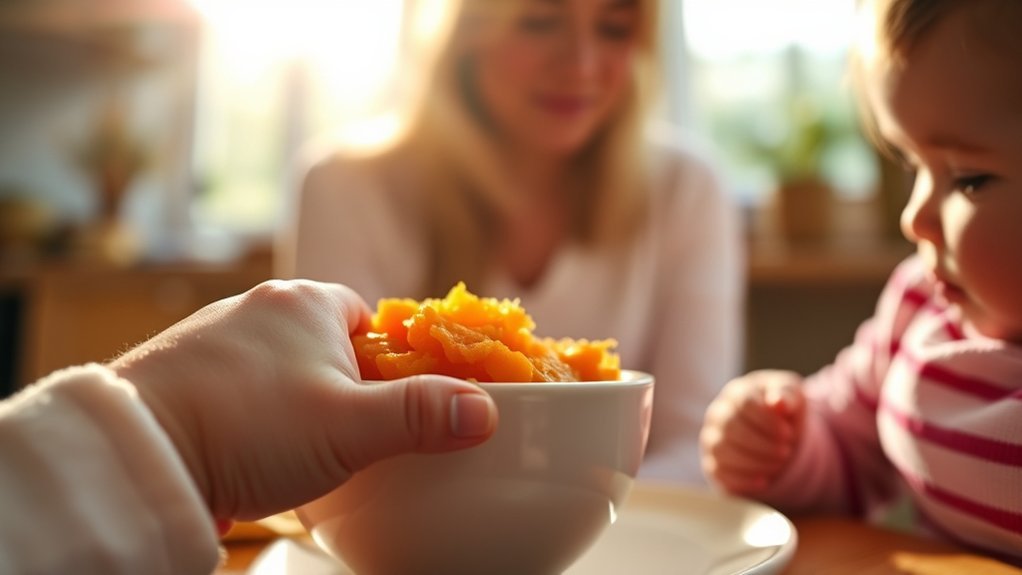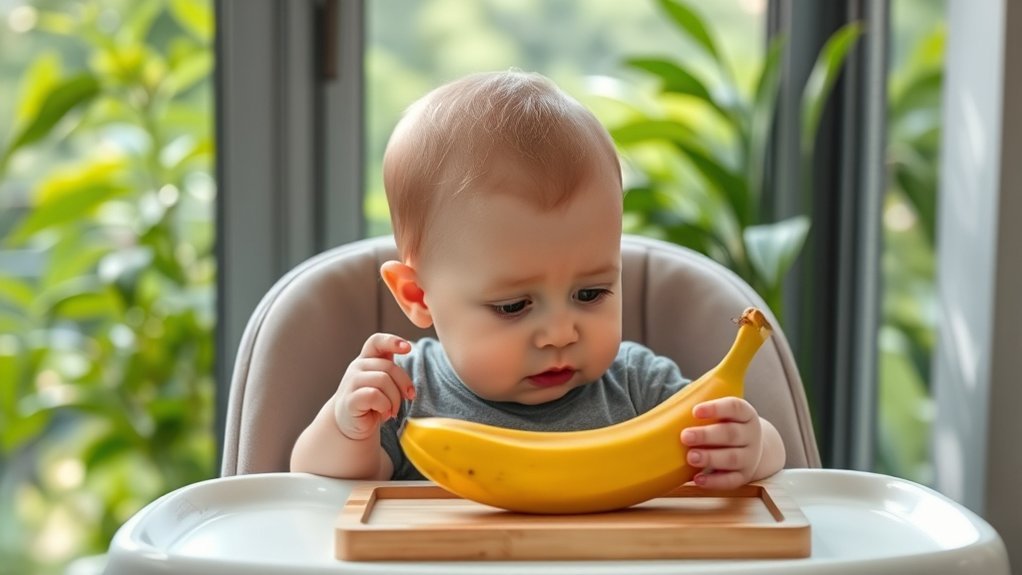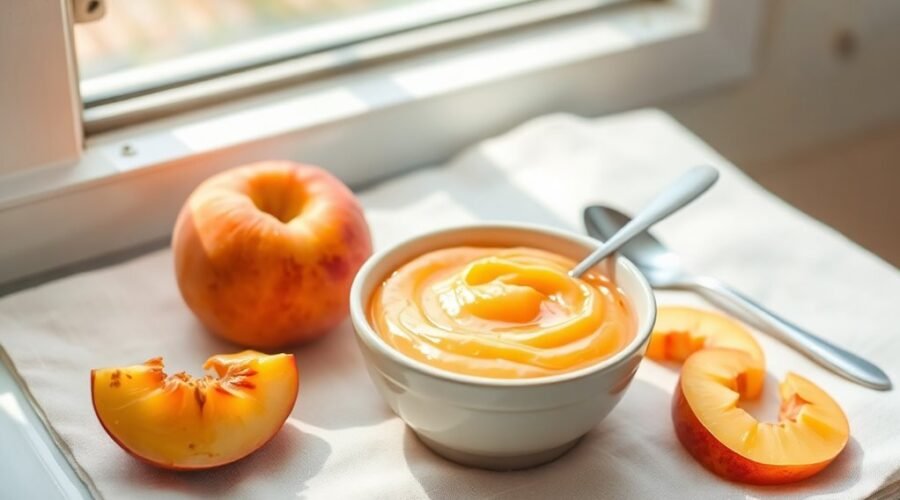
You can introduce peach baby food as soon as your baby is ready for solid foods, usually around 6 months of age. Wash ripe peaches under running water, remove the pit completely, and mash or blend soft flesh—or simmer firmer fruit for 5 to 8 minutes until fork-tender. Start with smooth puree or very soft mash at 6 months, then progress to bite-sized soft pieces around 9 months and soft wedges by 12 months.
Quick Answer
Peach baby food is safe around 6 months once your baby sits with support and shows readiness for solids. Always remove the pit, soften firm fruit by simmering or steaming, match the texture to your baby’s developmental stage (6m, 9m, 12m+), and refrigerate homemade puree for 1–2 days or freeze for 1–2 months.
Why Peach Baby Food Makes a Good First Food
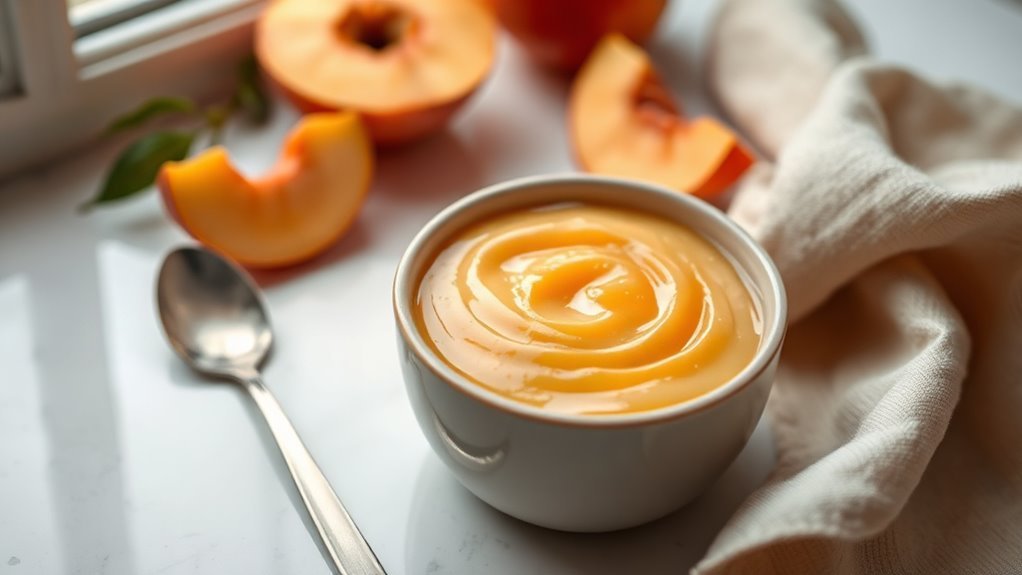
Ripe peaches are naturally soft, juicy, and lightly sweet, making them an easy fruit for early eaters. They provide water, fiber, potassium, and vitamin C, which helps the body absorb iron from plant foods and fortified cereals according to the NIH Office of Dietary Supplements. Because peaches are low in iron and protein, serve them alongside nutrient-dense options like iron-fortified oatmeal or well-cooked meats and fish—our salmon baby food guide covers an easy protein pairing.
You do not need to serve fruit in a strict order before or after vegetables. Breast milk or infant formula remains the main source of nutrition during the first year, while solid foods build flavor exposure and oral motor skills.
How to Choose Ripe Peaches and Make Peach Puree
Pick whole yellow or white peaches that yield slightly near the stem, smell pleasantly fruity, and have no mold, splits, or deep bruises. Let firm peaches ripen at room temperature on the counter, then refrigerate once ripe.
- Wash without soap: Rinse peaches under cool running water before peeling or cutting, following FDA produce safety guidance.
- Remove the pit and peel if tough: Halve the peach, twist out the pit completely, and peel fuzzy or tough skin if your baby is just starting solids.
- Soften firm fruit: Very ripe peaches can be mashed raw. If the flesh feels firm, simmer sliced pieces with a splash of water for 5 to 8 minutes until easily squished with a fork.
- Blend or mash to stage: Puree until silky for beginners, or mash with a fork for a thicker texture. Thin only the serving you plan to feed with water, breast milk, or prepared formula, and cool completely before serving.
Skip added sugar, honey (unsafe under 12 months), salt, and fruit juice. If you want another quick, no-cook fruit option, check out our foolproof banana baby food method.
Peach Baby Food Texture Progression (6, 9, and 12 Months)
Always follow your baby’s eating skills rather than a rigid calendar, and make sure any raw peach piece passes the “squish test” (easily mashed between your thumb and forefinger). Per CDC and NHS weaning guidance, gradually transition from smooth purees to soft lumps and finger foods as chewing and grasping mature.
| Age Stage | Safe Preparation | Safety Notes |
|---|---|---|
| 6 months+ | Smooth puree, well-mashed ripe peach, or (for baby-led weaning) a peeled very ripe half rolled in infant cereal for grip | Must squish easily between fingers; cook if firm. Never serve hard chunks. |
| 9 months+ | Soft, bite-sized diced pieces (about chickpea-sized) or thicker lumpy mash | Supports developing pincer grasp; remove tough skin if baby gags on peels. |
| 12 months+ | Thin soft slices, wedges, or chopped ripe peach with soft skin left on | Always remove the pit completely and supervise seated upright. |
Choking Warning: Hard raw peach chunks and pits are serious choking hazards. Keep your baby seated upright in a high chair, supervise every bite following CDC choking-prevention guidance, and seek emergency help immediately if a baby cannot breathe, cry, or make a sound.
Best Peach Pairings for Babies
Once your baby has tried each ingredient separately without a reaction, peaches blend smoothly with several everyday foods:
- Peach and oatmeal: Adds iron and reduces slipperiness for easier self-feeding.
- Peach and banana: Creates a thicker, naturally sweet mash with potassium and fiber.
- Peach and cooked apple or ripe pear: Provides gentle fiber; steam firm apple or pear pieces until soft before mashing.
- Peach and plain whole-milk yogurt: Adds calcium and protein once dairy has been introduced.
Balancing fruit with mineral-rich foods helps cover key nutrients during weaning—see our overview on why zinc is important when starting solids.
Safe Storage and Peach Allergy Signs
Cool homemade peach puree promptly and refrigerate or freeze it within 2 hours in clean, dated, covered containers. According to FoodSafety.gov, homemade baby food keeps for 1 to 2 days in the refrigerator and 1 to 2 months in the freezer. Per NHS guidelines, use thawed puree within 24 hours, reheat cooked food only once, and throw away leftovers from a spoon-fed bowl.
Although peach is not among the most common childhood food allergens, reactions can still occur. Per AAP food allergy guidance, watch for hives, lip or face swelling, repeated vomiting, persistent coughing, wheezing, or sudden limpness. Stop offering peach and contact your pediatrician for mild symptoms, or call emergency services immediately for breathing difficulty or severe swelling.
Frequently Asked Questions
Can I Use Frozen Peaches for Baby Food?
Yes. Choose plain frozen peaches with no added sugar or syrup. Thaw them safely in the refrigerator or microwave, or simmer until soft, then blend or mash to match your baby’s stage. Serve once cool, and never leave thawing fruit on the counter.
Do Peaches Need Peeling Before Pureeing?
Not always. Very soft peach skin can blend into a smooth puree, but fuzzy or tough skin can leave bits that new eaters struggle with. Peel the fruit if the skin stays stringy or firm. Peeling does not prevent a food allergy, so watch for symptoms either way.
Can I Mix Peach Puree With Oatmeal?
Yes. Stir peach puree into smooth, cooked, unsweetened oatmeal or iron-fortified infant oat cereal. Thin with a little water, breast milk, or prepared formula if needed. Offer peach and oats separately first so any reaction is easy to spot.
How Much Peach Puree Should I Serve at First?
Start with 1 to 2 teaspoons as an introductory taste. If your baby seems interested and swallows comfortably, offer a little more without pressure. Breast milk or infant formula remains the main source of nutrition throughout the first year.
Can Peach Baby Food Be Reheated Safely?
Yes, if it was stored properly and has not already been reheated. Heat the portion until steaming hot throughout, stir well to eliminate hot spots, and let it cool to a safe temperature before serving. Never reheat the same portion twice, and discard any puree left in a used bowl.
Can a Baby Eat Raw Peaches?
Yes. A very ripe, soft peach that easily squishes between your fingers can be served raw after washing and removing the pit. Mash or puree it for beginners, or serve safe soft pieces as skills grow. If the flesh feels firm, simmer or steam it until fork-tender.
Can Peaches Affect My Baby’s Stools?
Yes. The natural fiber and water in peaches can soften or change stool texture, especially when solids are new. Mild changes are normal, but persistent diarrhea, blood in the stool, repeated vomiting, or signs of dehydration require prompt medical advice.
Conclusion
Peach baby food is an approachable early fruit when you choose ripe peaches, remove the pit, and adjust textures across 6, 9, and 12 months. Pair peaches with iron- and protein-rich foods for balanced meals, follow safe refrigerator and freezer limits, and contact your pediatrician if feeding or allergy concerns arise.
Sources
- CDC: When, What, and How to Introduce Solid Foods: Starting age and readiness signs.
- NIH Office of Dietary Supplements: Iron: Vitamin C and plant-based iron absorption.
- FDA: Selecting and Serving Produce Safely: Washing fresh produce without soap.
- NHS: Feeding From Around 6 Months: Texture progression and soft finger foods.
- CDC: Choking Hazards: Safe food prep and supervision.
- FoodSafety.gov: Children Under Five: Homemade baby food storage limits.
- NHS: Storing and Reheating Food: Thawing, reheating, and leftover rules.
- HealthyChildren.org (AAP): Food Allergies in Children: Recognizing allergic reactions.