

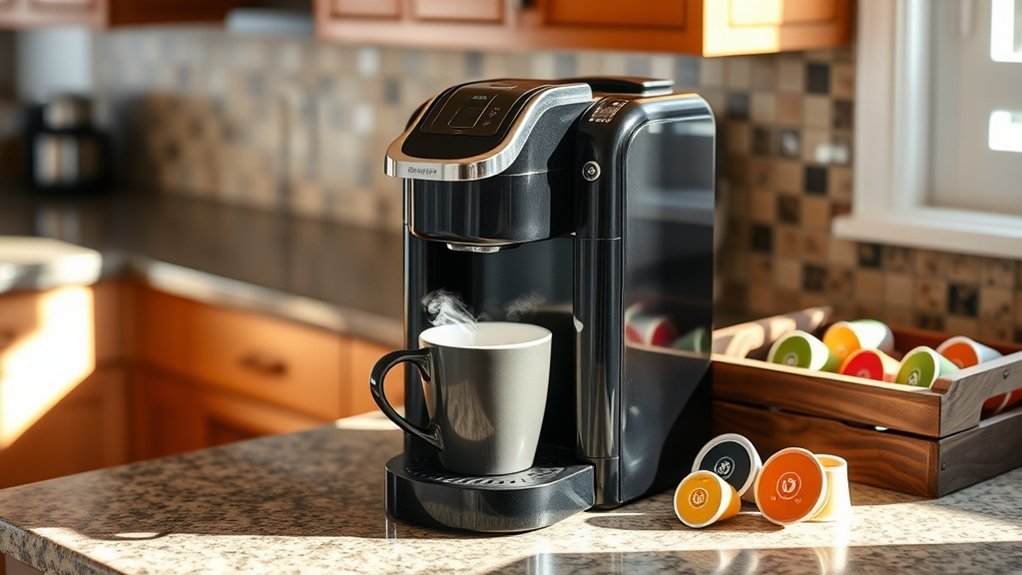
A single-serve coffee maker brews one cup using pre-packaged pods, making it a quick and convenient option. The machine punctures the pod and forces heated water at 88-96°C through the coffee grounds, creating a flavorful cup in minutes. Its key components include a water tank, a heating element, and a pump that operates at 12 bars of pressure, ensuring espresso-quality coffee. There’s more to discover about its components, brewing process, and environmental impacts.
Key Takeaways
- A single-serve coffee maker brews one cup using pre-packaged coffee pods for convenience and quick preparation.
- It heats water to an optimal temperature of 88-96°C and brews coffee under 12 bars of pressure.
- The machine typically features a water tank that holds about 1.5 liters and offers multiple cup size options.
- Maintenance is crucial for ensuring brew quality and preventing residue buildup in the system.
- Environmental concerns arise from disposable pods; opting for compostable or reusable options can mitigate impact.
What’s a Single-Serve Coffee Maker and How Does It Work?

A single-serve coffee maker is a streamlined appliance designed to brew one cup of coffee using pre-packaged pods, making your morning routine quicker and hassle-free.
These machines utilize various coffee pod types, each containing ground coffee sealed for freshness. The brewing techniques involve puncturing the pod, heating water to 88-96°C, and forcing it through the coffee grounds at approximately 12 bars of pressure. This process extracts flavors efficiently, ensuring a robust cup in minutes.
Single-serve coffee makers puncture pods, heat water, and brew under pressure, delivering a flavorful cup in minutes.
Most models feature a water reservoir, typically holding 1.5 liters, and allow you to select cup sizes—commonly 8, 10, or 12 ounces—tailoring the strength and flavor to your preference.
Their growing popularity reflects a shift toward convenience in coffee preparation.
Key Components of a Pod Coffee Maker
Understanding the functionality of single-serve coffee makers requires familiarity with their key components.
At the heart of these machines is the water tank, which typically holds around 1.5 liters of water, essential for brewing. The heating element plays a vital role, heating the water from approximately 20°C to 85°C in under a minute, ensuring a quick brew.
A water pump complements this setup, moving water at nearly one liter per minute to facilitate efficient coffee preparation. Operating at 12 bars of pressure, pod coffee makers can achieve espresso-quality coffee.
Additionally, an air compressor is included to clear pipes after brewing, preventing residue buildup and ensuring a seamless shift to your next cup. Each component contributes to a streamlined coffee-making experience.
Brewing the Perfect Cup of Coffee

Brewing the perfect cup of coffee with a single-serve coffee maker hinges on precise control over temperature and water volume. Aim for a brewing temperature between 88-96°C (190-205°F) to optimize flavor extraction.
The amount of water you fill in the reservoir directly influences coffee strength; choose from cup size options of 8, 10, or 12 ounces depending on your preference. After selecting your desired size, press the brew button to activate the machine’s automatic cycle.
Confirm that the pod brew light is illuminated before starting to verify readiness. Regular maintenance, like cleaning the coffee maker and checking the water reservoir, is vital for enhancing the quality of your brew and achieving that perfect cup every time.
Pros and Cons of Single-Serve Coffee Makers
While single-serve coffee makers simplify your morning routine, they come with both advantages and disadvantages that are worth considering.
| Pros | Cons |
|---|---|
| Quick and easy preparation | Higher cost per cup |
| Minimal cleanup | Limited control over brewing |
| Variety of flavors | Specific brand limitations |
| Ideal for busy lifestyles | Environmental concerns |
| Convenient for individuals | Less personalized taste |
In your cost analysis, you’ll find that the convenience often leads to a higher long-term expense. Although you gain access to a range of flavor variety, you sacrifice some brewing control, resulting in a less tailored coffee experience compared to traditional methods. Balancing these factors can help you decide if a single-serve maker fits your lifestyle.
How to Reduce the Environmental Impact of Coffee Pods

As consumers increasingly embrace single-serve coffee makers, they must also recognize the environmental consequences of disposable coffee pods.
As single-serve coffee makers gain popularity, it’s crucial to consider the environmental impact of disposable coffee pods.
To minimize this impact, consider the following strategies:
- Choose compostable pods that break down more easily than traditional plastic options.
- Opt for brands with effective recycling programs, even though only a small percentage of pods are recycled.
- Invest in reusable systems, allowing you to fill pods with your choice of freshly ground coffee.
- Support brands that prioritize sustainable sourcing and eco-friendly packaging.
Frequently Asked Questions
Can I Use My Own Coffee Grounds in a Single-Serve Coffee Maker?
Yes, you can use your own coffee grounds in a single-serve coffee maker, provided it supports custom coffee options. Confirm you select compatible ground options to assure ideal brewing and flavor extraction for your coffee.
How Often Should I Clean My Single-Serve Coffee Maker?
You should clean your single-serve coffee maker every three to six months, depending on usage. Regular maintenance tips include descaling and washing removable parts to guarantee peak performance and taste, preventing buildup and operational issues.
What Is the Average Lifespan of a Single-Serve Coffee Maker?
“An ounce of prevention is worth a pound of cure.” The average lifespan of a single-serve coffee maker is about 5 years. Regular maintenance tips, like descaling, can extend its longevity and performance.
Are Single-Serve Coffee Makers Energy Efficient?
Yes, single-serve coffee makers can be energy efficient due to their low energy consumption and brewing efficiency. They heat water only when needed, minimizing energy waste compared to traditional coffee machines that remain on longer.
Can I Make Tea With a Single-Serve Coffee Maker?
Yes, you can brew tea with a single-serve coffee maker. By using compatible tea pods, you access various flavor options, enhancing your tea brewing experience. Just verify you clean your machine to avoid coffee residue contamination.
Conclusion
In the world of coffee, the single-serve coffee maker stands out for its convenience and efficiency, but it also raises concerns about environmental impact. While you enjoy that quick cup, consider the reality of coffee pods piling up in landfills. By exploring sustainable options, you can savor your brew while making a positive choice for the planet. The truth is, every cup counts—your decision can either contribute to waste or help shape a greener future.