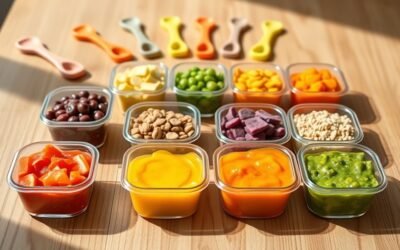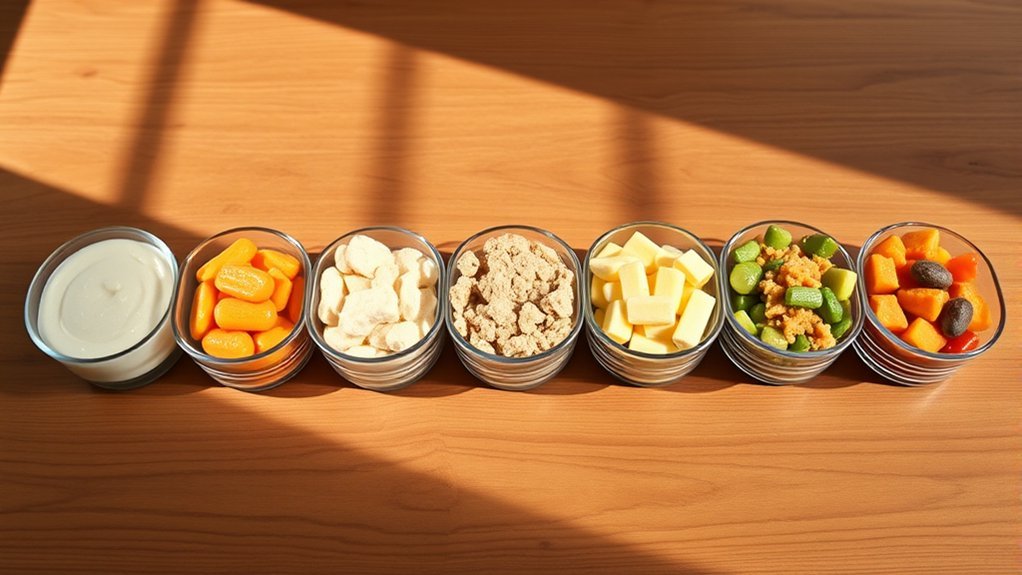
Understanding baby food textures by age is essential for your child’s development. Start with smooth purees at 4-6 months, moving on to soft mashed foods by 6-8 months. At 8-10 months, introduce finger foods that encourage self-feeding. By 10-12 months, offer varied textures with small, soft chunks. Pay attention to your baby’s readiness for each stage and guarantee mealtime safety. There’s more to learn about fostering independence and making mealtimes enjoyable along the way.
Key Takeaways
- Stage 1 (4-6 Months): Begin with smooth purees like sweet potatoes and apples for gentle introduction to solid foods.
- Stage 2 (6-8 Months): Transition to thicker purees and soft mashed foods, including mashed bananas and well-cooked vegetables, for texture exploration.
- Stage 3 (8-10 Months): Introduce finger foods like soft cooked veggies and small fruit pieces to enhance self-feeding and chewing skills.
- Stage 4 (10-12 Months): Offer mixed textures with small chunks, such as bite-sized pasta and shredded chicken, to boost oral motor skills.
- Safety Tips: Opt for stick-shaped foods, supervise meals, and allow messiness to encourage independent self-feeding while reducing choking risks.
The Importance of Textures in Baby Food
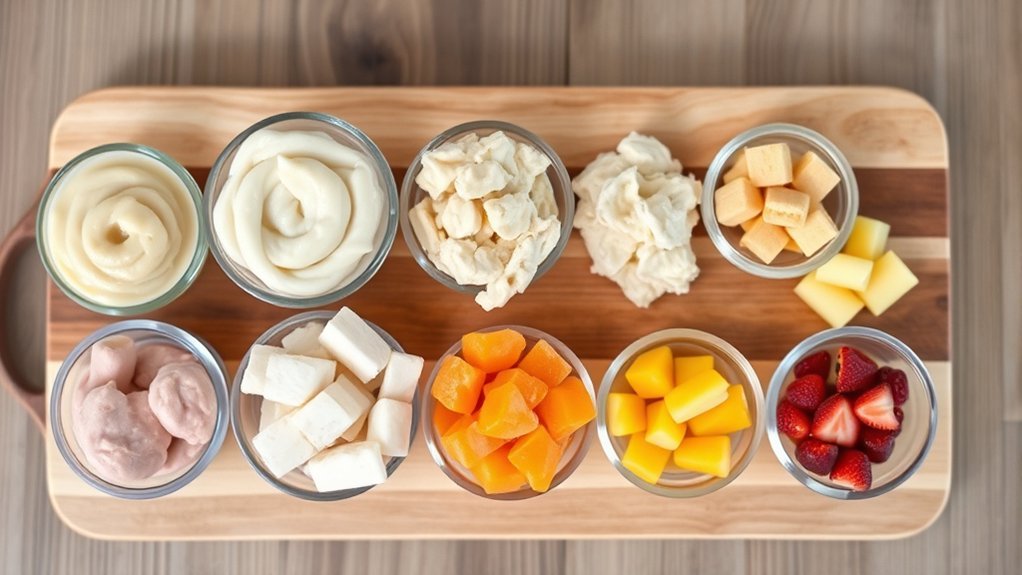
As you introduce solid foods to your baby, understanding the importance of textures becomes essential.
Texture exploration plays a key role in your child’s sensory development. By gradually shifting from smooth purees to thicker textures and soft chunks, you encourage chewing and self-feeding behaviors. This approach not only aids in developing critical oral motor skills but also prepares your little one for family meals as they grow.
Research shows that exposing babies to various textures influences their long-term food preferences and dietary choices. Offering a range of textures fosters a relaxed, exploratory mealtime environment, making eating a joyful experience.
Embrace this journey, knowing that each new texture contributes greatly to your baby’s growth and independence.
How to Identify When Your Baby Is Ready for New Textures?
How can you tell when your baby is ready to explore new textures? Observing your baby’s cues is vital for understanding their texture readiness during baby feeding. Here are some signs to look for:
- Steady head control: Your baby can sit up independently, showing they’re ready for new challenges.
- Interest in food: Reaching for food or mimicking chewing motions indicates curiosity about textures.
- Handling thin purees: If your baby manages thin purees well, they may be ready for thicker options.
- Confidence in gumming: Gumming soft foods without teeth shows they’re capable of handling varied textures.
Encouraging this exploration helps your baby develop essential eating skills and fosters a positive relationship with food.
Stage 1: Smooth Purees (4-6 Months)

As you introduce your baby to solid foods, smooth purees are the perfect starting point for infants aged 4 to 6 months.
These single-ingredient options, like sweet potatoes and apples, are gentle on their developing digestive systems and help them explore new flavors.
You’ll find that preparing these purees is simple, setting a solid foundation for your baby’s future eating experiences.
Benefits Of Smooth Purees
Smooth purees offer numerous benefits for infants aged 4-6 months, making them an excellent choice for first foods.
These purees not only provide essential nutritional benefits but also support your baby’s developmental milestones. Here are some key advantages:
- Gentle Digestion: Smooth textures are easy on tiny tummies, reducing digestive discomfort.
- Flavor Exploration: Single-ingredient purees allow your baby to experience distinct flavors without allergen risks.
- Easy Swallowing: The smooth consistency helps babies learn to enjoy mealtime without overwhelming them.
- Skill Development: These purees lay the groundwork for progressing to thicker textures and more complex foods later on.
Ideal First Foods
Introducing your baby to solid foods can be an exciting milestone, and choosing the right first foods is vital for their development.
At 4-6 months, smooth purees are ideal, providing gentle nutrition that supports digestion. Start with single-ingredient purees like sweet potatoes, apples, and peas to guarantee a nutrient variety while introducing new flavors.
Offer just 1-2 teaspoons at first, gradually increasing to 1-2 tablespoons as your baby becomes more comfortable.
It’s important to introduce one new food at a time, allowing you to monitor for allergies and create a relaxed mealtime environment.
This thoughtful approach lays the groundwork for future eating preferences and helps your baby explore a world of taste with confidence.
Preparation Tips And Techniques
Once you’ve selected the right first foods for your baby, it’s time to focus on how to prepare those smooth purees effectively.
Mastering food preparation with the right blending techniques guarantees your baby enjoys nutritious meals. Here are some tips to get you started:
- Choose single-ingredient foods like sweet potatoes, apples, or peas for gentle digestion.
- Cook thoroughly by steaming or boiling to soften the ingredients before blending.
- Blend until smooth, adding small amounts of water or breast milk for desired consistency.
- Introduce new foods one at a time, waiting 3-5 days to monitor for allergies.
Stage 2: Soft Mashed Baby Food Textures (6-8 Months)

As your baby reaches 6-8 months, you’ll notice a delightful shift to Stage 2 baby food textures that include thicker purees and soft mashed options.
This stage is perfect for introducing soft food combinations like mashed bananas, avocados, and well-cooked carrots or sweet potatoes. These nutrient-rich choices not only support your baby’s growth but also encourage texture exploration, allowing them to practice their chewing skills.
Consider offering small pieces of soft fruits and cooked vegetables as finger foods to promote self-feeding and coordination.
Maintaining a relaxed mealtime environment is key—let your little one take their time to explore and enjoy the variety of soft mashed foods. This approach fosters independence and a positive relationship with food.
Stage 3: Finger Foods (8-10 Months)
At 8-10 months, your baby is ready to explore finger foods that promote self-feeding and enhance chewing skills.
Ideal choices like soft cooked veggies, small fruit pieces, and well-cooked pasta can make mealtime exciting and engaging.
Just remember to cut foods into manageable sizes and keep a close eye on them to guarantee safe exploration.
Ideal Finger Food Choices
When your baby reaches stage 3 (8-10 months), it’s an exciting time to introduce ideal finger food choices that promote self-feeding and exploration.
These finger food combinations support texture exploration and help your little one develop essential skills. Here are some great options:
- Soft, bite-sized cooked vegetables like sweet potato or carrot.
- Small pieces of ripe banana, avocado, or soft cheese for easy handling.
- Cooked pasta shapes, such as small shells or elbow macaroni.
- Manageable slices of soft fruits like peach or pear, along with small bits of well-cooked poultry or fish.
These choices not only provide crucial nutrients but also encourage your baby to practice chewing, making mealtime both fun and beneficial!
Encouraging Self-Feeding Skills
Introducing finger foods opens up a world of exploration for your baby, allowing them to practice self-feeding skills. At this age, focus on soft, manageable options like small pieces of cooked vegetables, ripe fruits, and soft pasta. These choices not only promote independence but also encourage essential self-feeding techniques.
Offer foods that are easy to pick up, such as avocado slices or small pancake pieces, to foster food exploration. Variety is key—incorporating different textures helps develop oral motor skills and encourages chewing practice.
As your baby gains confidence, keep a close eye to guarantee they manage bites effectively, reinforcing safe eating habits. This stage is all about empowering your little one to enjoy mealtime!
Safety Tips for Exploration
As your baby begins the exciting journey of self-feeding, safety becomes paramount during mealtime. Here are crucial safety tips to guarantee choking prevention while fostering food exploration:
- Cut food into small pieces: Aim for pieces about the size of two adult fingers pressed together to minimize choking risks.
- Offer soft finger foods: Include well-cooked vegetables and ripe fruits to encourage chewing skills and texture acceptance.
- Supervise during meals: Always watch your baby as they self-feed, encouraging them to take small bites for safer management.
- Avoid high-risk foods: Stay clear of whole grapes, nuts, and popcorn, modifying any food as necessary to ensure it’s safe for your little one.
Embrace this journey with confidence!
Stage 4: Exploring Varied Textures (10-12 Months)
At 10-12 months, your baby is ready to plunge into a world of mixed textures that combine different consistencies, enhancing their sensory experiences at mealtime.
This stage is all about texture variety, featuring small, soft chunks like bite-sized pasta, shredded chicken, and diced fruits and vegetables.
These foods not only encourage sensory exploration but also help develop their oral motor skills as they tackle more complex shapes.
By introducing varied textures gradually, you’re boosting their chewing skills and enticing them to experiment with new flavors.
You’ll likely notice your little one gaining confidence in self-feeding, indicating they’re ready for a broader range of food options, making family meals even more enjoyable together.
Safety Tips for Introducing Finger Foods
When you start offering finger foods, it’s essential to choose items that are both safe and manageable for your baby.
Here are some safety tips for finger food preparation to guarantee safe eating:
- Opt for stick-shaped or large pieces, about the size of two adult fingers pressed together, to reduce choking risks.
- Include soft foods like cooked broccoli florets, mango spears, or strips of pancakes that are easy for your baby to grasp and chew.
- Avoid foods that can create a sticky plug, such as whole grapes or sticky nut butters.
- Always monitor your baby while they eat, encouraging exploration but avoiding direct intervention to minimize choking hazards.
These practices will help nurture your baby’s self-feeding journey confidently.
Encouraging Self-Feeding: Tips for Parents
Encouraging your baby to self-feed can be a rewarding experience that fosters independence and confidence. Here are some effective self feeding techniques to enhance food exploration:
| Food Type | Texture | Suggested Age |
|---|---|---|
| Cooked Sweet Potato Fries | Soft, stick-shaped | 6-8 months |
| Banana Strips | Soft, easy to grasp | 6-8 months |
| Soft Cubes | Bite-sized | 8-10 months |
| Meltable Solids | Dissolvable | 8-10 months |
| Family Meals | Same as family | 10+ months |
Allow your baby to get messy during meals; it’s a crucial part of learning. Introduce a variety of textures gradually, and watch for signs of readiness for smaller pieces as they develop their pincer grasp.
Common Choking Risks and How to Avoid Them
Understanding common choking risks is vital for keeping your baby safe during mealtime. Certain foods pose choking hazards, so it’s important to make appropriate food modifications.
Here are key choking risks to watch for:
- Hard candies – They can easily get stuck in your baby’s throat.
- Whole grapes – Their shape and size can block airways.
- Peanut butter – This sticky substance can create a plug.
- Large pieces of food – While generally safe, verify they’re manageable for your baby’s age.
Always supervise your baby while eating and never reach into their mouths.
For more guidance, consult resources like “What to Do When Your Baby Takes a Big Bite.” Being informed empowers you to create a safe eating environment.
Frequently Asked Questions
Can I Mix Different Textures in Baby Food?
Yes, you can mix different textures in baby food! Experimenting with texture combinations helps create appealing flavors and encourages your baby’s development. Just make certain the baby food consistency is safe and comfortable for their stage.
What Are the Best First Foods for My Baby?
The best first food options include single-grain cereals, pureed fruits, and vegetables. You can create baby food combinations by mixing these ingredients, offering your baby a variety of flavors while ensuring balanced nutrition and encouraging exploration.
How Do I Store Homemade Baby Food?
Store homemade baby food in airtight storage containers to keep it fresh. Use freezing tips like portioning into ice cube trays, then transfer to bags. This way, you’ll always have nutritious meals ready for your little one.
When Can I Introduce Allergens to My Baby’s Diet?
You can introduce allergens around six months, ensuring baby food safety. Start with small amounts, observing for reactions. Gradually incorporate various allergens to support your baby’s development while enjoying mealtime exploration together.
What Should I Do if My Baby Refuses New Textures?
If your baby refuses new textures, don’t worry! Gradual exposure helps with texture acceptance. Keep offering different foods, and celebrate small victories. Your patience and encouragement will empower your baby to explore and enjoy new experiences.
Conclusion
As you navigate your baby’s journey through food textures, remember that introducing new textures isn’t just about nutrition—it’s also about development. Research suggests that exposing your baby to a variety of textures can enhance their eating skills and sensory experiences. Trust your instincts, watch for your baby’s cues, and make mealtime a fun exploration. By doing so, you’re not only feeding them but also laying the foundation for healthy eating habits in the future. Enjoy this exciting stage!