
Yes, babies can safely eat cold baby food from the fridge. Many little ones enjoy the invigorating taste of cold purees and yogurt. Just make certain to check that the food has been stored properly, consuming it within two days of refrigeration. It’s important to monitor your baby’s reactions to new flavors and textures and guarantee safe storage to prevent contamination. For more tips on warming and storing baby food, keep exploring!
Key Takeaways
- Cold purees can be safely served to babies, as many enjoy the taste and texture of cold fruit purees and yogurt.
- Ensure refrigerated purees are consumed within two days and frozen purees within 24 hours after thawing.
- Verify proper storage to prevent contamination and consume food within two hours after removing it from the fridge.
- Monitor your baby’s reactions to cold food; some may prefer it while others might need warmer options.
- Always heat baby food to at least 165°F when reheating to eliminate harmful bacteria, and avoid reheating more than once.
Can Babies Safely Eat Cold Puree From the Fridge?
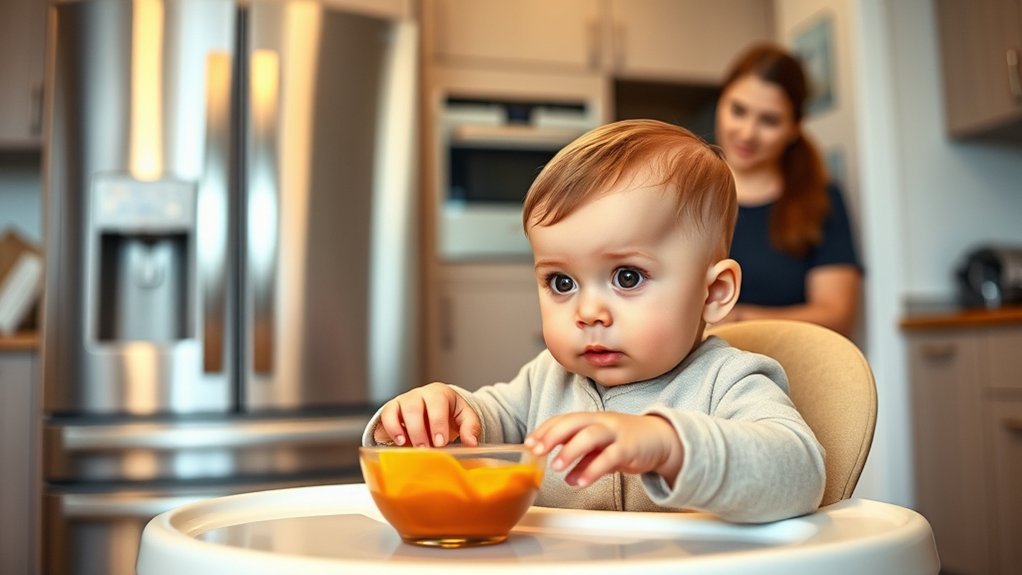
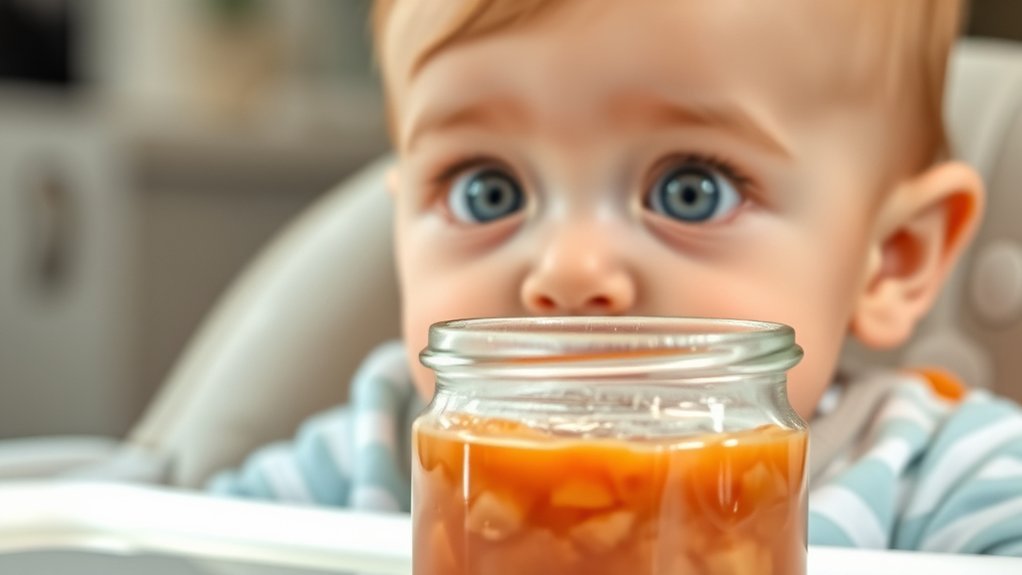
Wondering if your baby can enjoy cold puree straight from the fridge? You’ll be pleased to know that cold purees can be safely served to your little one.
Many parents report that their babies love the invigorating taste of cold fruit purees and yogurt. Just make certain you’ve stored the puree properly and consumed it within two days if refrigerated, or within 24 hours if it was previously frozen.
Many parents find that their babies enjoy the refreshing flavors of cold fruit purees and yogurt.
The temperature doesn’t typically affect your baby’s swallowing ability, and cold purees usually don’t lead to coughing or health issues. In fact, some babies even prefer the texture and flavor of cold options.
Always prioritize food quality to secure safe serving. Enjoy exploring the cold puree benefits with your baby!
How to Warm Up Baby Food for Safe Consumption
Serving cold purees can be a delightful option for your baby, but there are times when warming up baby food is necessary for maximum enjoyment and safety.
Use a microwave-safe bowl to warm the food in 15-second intervals for every four ounces, stirring well to eliminate hot spots. Always check that the internal temperature reaches at least 165°F to kill harmful bacteria.
Remember, you should only reheat leftover baby food once and consume it within two hours to prevent bacterial growth. Avoid microwaving directly in the jar, as this can lead to uneven heating and burns.
After reheating, let the food cool to a safe temperature before serving to guarantee your little one enjoys it safely.
Recognizing Risks of Cold Baby Food
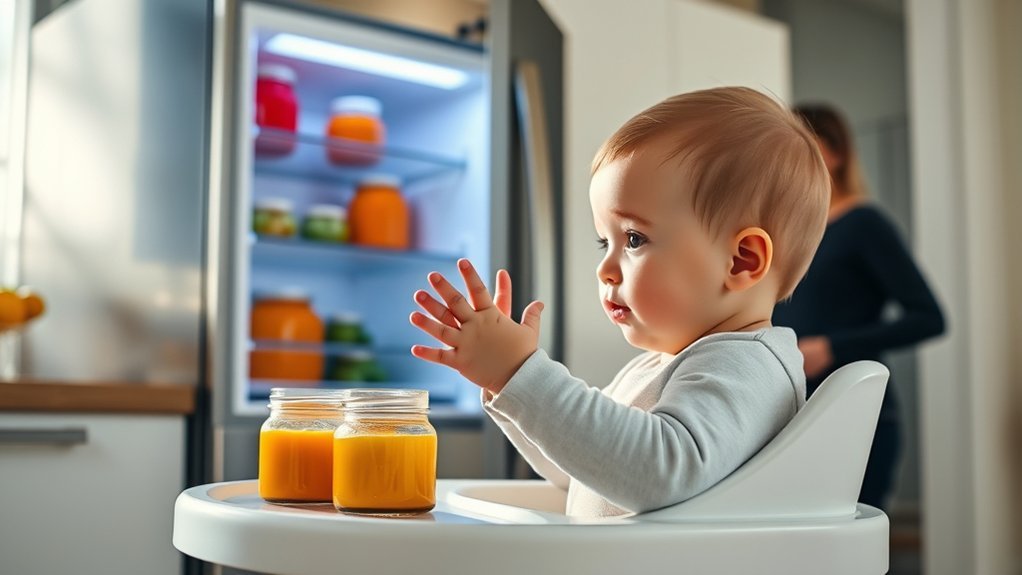
While cold baby food can be a safe and enjoyable option for your little one, it’s important to recognize the potential risks associated with serving it. The primary concern isn’t the temperature of cold food but its quality.
Always verify that the food has been stored properly and consumed within two hours of removal from the fridge. Monitor your baby for any adverse reactions when introducing new flavors, regardless of temperature.
Some babies may prefer cold purees or yogurt, but it’s essential to adjust to their preferences carefully. Remember, safe ingredients and proper storage are critical to avoid any issues.
How to Observe Your Baby’s Preferences for Cold Food
To discover your baby’s preferences for cold food, start by observing their reactions during mealtime. Pay attention to how they respond to different baby food textures, especially soft options like fruit purees and yogurt served straight from the fridge.
Some babies may enjoy these invigorating choices, particularly while teething. Introduce various food temperatures to gauge what excites their palate; preferences can differ widely among infants.
Monitor their cold food reactions closely—if they seem happy and have no adverse responses, it’s safe to include these options in their diet.
Just remember to avoid serving raw crunchy vegetables, as these can pose choking hazards. Observing and adjusting will help you cater to your baby’s unique tastes.
Tips for Storing and Reheating Baby Food Safely
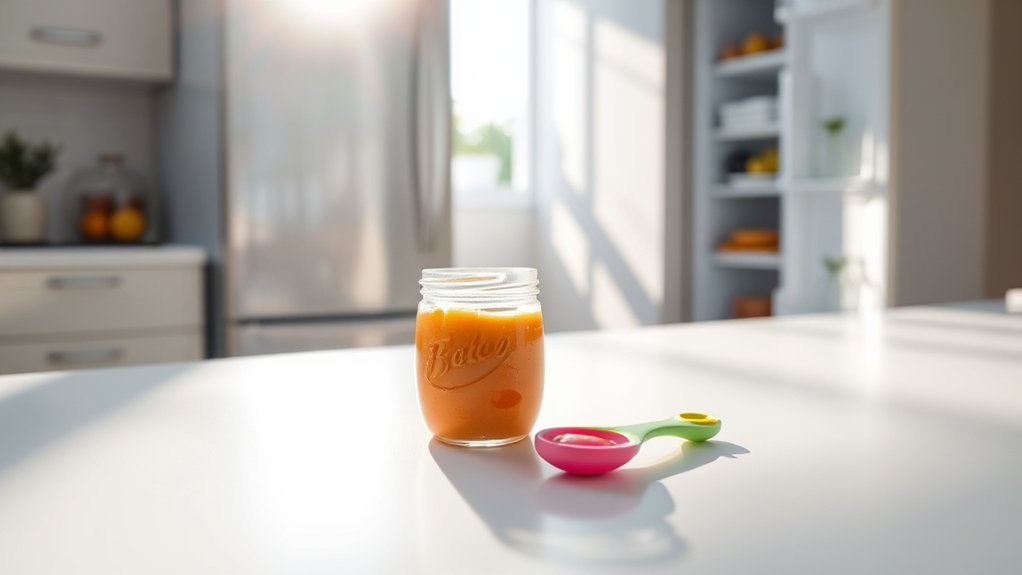
When introducing cold baby food options, it’s just as important to focus on how you store and reheat them safely. Proper baby food storage and reheating techniques not only protect your little one but also guarantee their meals are enjoyable.
Here are some tips:
- Refrigerate quickly: Store opened baby food within two hours and consume it within 48 hours to prevent contamination.
- Reheat thoroughly: Heat food to at least 165°F to eliminate harmful bacteria. Use microwave-safe containers, and stir well to avoid hot spots.
- Limit reheating: Reheat only once and serve within two hours to maintain safety.
Frequently Asked Questions
Can Babies Eat Cold Fruits and Vegetables From the Fridge?
Yes, babies can enjoy cold fruits and vegetables straight from the fridge. Cold food benefits include invigorating textures and flavors, catering to your baby’s taste preferences while introducing them to diverse, healthy options for their diet.
What Are the Signs of Food Aversion in Babies?
If your baby shows refusal to eat certain foods, grimaces, or turns their head away, they might be expressing food aversion. Pay attention to these reactions; they’re key to understanding your baby’s developing food preferences.
How Can I Tell if My Baby Prefers Warm Food?
You’ll notice your baby’s delight in warm baby food temperature, often smacking their lips or reaching enthusiastically. If they turn away from chilled meals, it’s a sign their taste preferences lean toward cozy warmth.
Are There Any Exceptions for Serving Cold Baby Food?
Yes, some babies might prefer cold food, especially during teething. You can experiment with different baby food temperatures and observe your baby’s reactions to find what they enjoy most. Always prioritize their comfort and preferences.
Is It Safe to Freeze and Reheat Baby Food Multiple Times?
Freezing baby food and reheating it multiple times is like passing a baton in a race; it can compromise quality. Stick to freezing once and reheating only once to keep nutrients intact for your little one.
Conclusion
In the world of baby food, cold purees can be a chilly delight or a frosty faux pas. While some little ones may enjoy the invigorating taste of cold food, it’s essential to guarantee their safety first. Always warm up leftovers to a cozy temperature, keeping an eye on your baby’s preferences. With proper storage and reheating techniques, you can create a delightful dining experience that nourishes and comforts, making mealtime a happy adventure for your little one.