
If your coffee tastes burnt from your coffee maker, several factors could be at play. Over-roasted beans create a scorched flavor, while excessive heat can lead to bitter notes. An inconsistent grind size may also cause over-extraction, resulting in unwanted bitterness. Finally, neglecting maintenance can lead to buildup that affects taste. By addressing these issues, you can enjoy a better brew. Discover how to optimize water temperature and grind size for the perfect cup ahead.
Key Takeaways
- Over-roasted coffee beans can lead to a burnt taste; choose high-quality, freshly roasted beans to avoid this issue.
- Brewed coffee left on a warming plate continues to cook, creating a scorched flavor; remove it promptly after brewing.
- Inconsistent water temperature can scorch coffee grounds; maintain a brewing temperature between 195°F and 205°F for optimal flavor.
- Adjusting grind size can prevent over-extraction; use coarse grinds for French press and fine grinds for espresso to optimize flavor.
- Regular maintenance of your coffee maker, including descaling and cleaning, prevents buildup that can negatively affect taste.
Identifying Causes of Burnt Coffee and How to Fix Them
Burnt coffee can be a frustrating experience for any coffee lover, but identifying the causes can help you reclaim your brew’s rich flavors.
One major factor is using over-roasted beans; opting for medium roasts maintains coffee freshness and avoids that scorched taste.
Additionally, if you leave brewed coffee on a warming plate, it can continue cooking, leading to bitterness. To counteract this, transfer your coffee to an insulated carafe immediately.
Inconsistent water temperature during brewing can also scorch your grounds; aim for 195°F to 205°F for ideal extraction.
Finally, verify your grind size matches your brewing technique—grinding too fine can slow water flow, causing over-extraction.
Regular maintenance of your coffee maker will also prevent taste issues from built-up residue.
How Water Temperature Affects Coffee Flavor
The temperature of the water you use for brewing greatly influences the flavor profile of your coffee. Ideal temperatures range from 195°F to 205°F. Here’s how it impacts flavor extraction:
- Too Hot: Scorching coffee grounds can lead to bitter, burnt flavors, masking the coffee’s natural sweetness.
- Too Cold: Brewing with water below 195°F results in under-extraction, leaving your coffee weak and sour.
- Consistent Techniques: Using controlled pouring methods guarantees water stays within the perfect range, enhancing flavor extraction.
To achieve the best results, let boiling water sit for about 30 seconds before brewing, or use a thermometer.
Mastering these brewing techniques can dramatically elevate your coffee experience.
How Over-Roasting Beans Causes Burnt Coffee
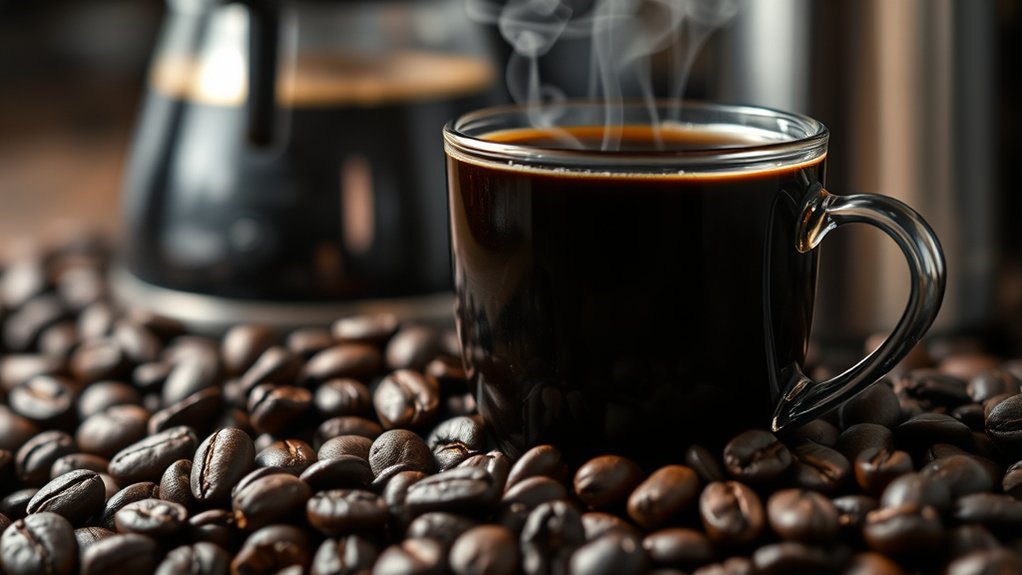
When brewing coffee, the choice of beans plays a significant role in determining the final flavor, and over-roasting can lead to undesirable burnt notes.
Over-roasting results in dark, oily surfaces and a scorched taste due to excessive caramelization of natural sugars. This process disrupts the delicate balance of flavors, making it challenging to preserve the coffee’s intrinsic characteristics.
Reputable roasters practice precise roast profiling to guarantee that flavors are preserved; they avoid producing shiny beans, which signal over-roasting.
Exploring different roast levels can help you identify your preferences while minimizing the risk of burnt flavors. Techniques like air roasting can also prevent scorching by guaranteeing even heating, ultimately enhancing your coffee experience.
Why Grinding Size Matters for Avoiding Burnt Coffee
Understanding grind size is essential for achieving the perfect cup of coffee, as it directly influences extraction and flavor. The grind consistency impacts how water interacts with coffee grounds, which can prevent that burnt taste.
Here are three key considerations:
- Brewing Methods: Use coarse grinds for French press, medium for drip coffee, and fine for espresso to optimize extraction without bitterness.
- Water Flow: Grinding too fine can slow water flow, causing over-extraction and resulting in a burnt flavor.
- Burr Grinders: Investing in a burr grinder guarantees even grounds, promoting consistent brewing and flavor, which helps avoid burnt notes associated with uneven grinds.
Adjusting your grind size according to these factors can dramatically enhance your coffee experience.
Maintenance Tips for Your Coffee Maker
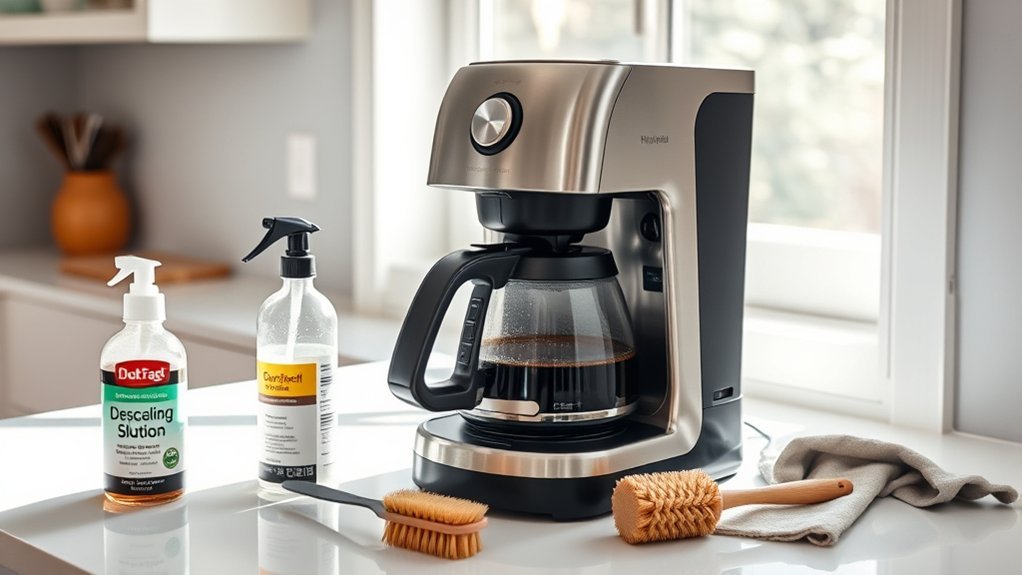
Maintaining your coffee maker is just as important as selecting the right grind size for your beans.
Regularly employ effective cleaning techniques, such as running a cycle with a vinegar and water mixture, to eliminate buildup that can negatively impact flavor. Descale your coffee maker every few months to prevent mineral deposits from interfering with brewing temperature and taste.
Don’t forget filter replacement; following the manufacturer’s recommendations guarantees ideal water quality, which is essential for avoiding bitterness. Additionally, frequently wipe down the coffee pod holder and drip tray to remove old coffee residue that can contribute to off-flavors.
Adhering to the manufacturer’s maintenance guidelines helps your coffee maker function properly and prolongs its lifespan, guaranteeing consistently great brews.
Frequently Asked Questions
Can Coffee Pods Expire or Go Stale?
Yes, coffee pods can expire or go stale. To maintain coffee pod freshness, store them in a cool, dry place, away from light and moisture, ensuring you enjoy peak flavor and aroma with each brew.
What Water Hardness Levels Are Ideal for Brewing Coffee?
What’s the secret to great coffee? Ideally, water hardness levels between 50-150 ppm enhance water quality and brewing temperature, ensuring a balanced extraction. Too soft or hard water can ruin your perfect cup!
Does the Type of Coffee Maker Affect Burnt Taste?
Yes, the type of coffee maker impacts burnt taste. Different machines brew at varying temperatures and affect the coffee grind’s extraction, which can lead to over-extraction and that unpleasant burnt flavor you might experience.
How Often Should I Descale My Coffee Maker?
You should descale your coffee maker every three to six months. Regular descaling can improve flavor by up to 30%. Incorporating this maintenance tip guarantees consistent performance and extends your machine’s lifespan.
Can Burnt Coffee Flavor Be Masked With Milk or Sugar?
You can mask burnt coffee flavors with milk alternatives and sugar substitutes. However, while they may improve taste temporarily, addressing the root cause is essential for enjoying a truly satisfying cup of coffee.
Conclusion
In the world of coffee, your machine is like an artist, and each brew is a canvas. If your coffee tastes burnt, it’s time to examine the palette—water temperature, bean quality, grind size, and machine maintenance are all essential strokes in creating that perfect cup. By addressing these factors, you can transform bitter notes into a symphony of rich flavors. Remember, a well-cared-for coffee maker is the key to revealing the masterpiece hidden within those beans.