For drip coffee makers, stick to a coffee-to-water ratio of 1:17 for balanced flavor. This means using about 55 grams of coffee per liter of water. You can adjust the ratio slightly for your preference; a 1:16 ratio offers a stronger brew, while 1:18 is milder. Using a scale for precise measurements guarantees a consistent outcome. Interested in knowing how different coffee types can impact your brew? Let’s explore further.
Key Takeaways
- The recommended coffee-to-water ratio for drip coffee makers is 1:17, providing a balanced flavor.
- For stronger coffee, use a 1:15 ratio (60 grams of coffee per liter).
- For milder coffee, opt for a 1:18 ratio (55 grams of coffee per liter).
- Consistency in measurements using a kitchen scale ensures optimal extraction and flavor.
- Adjust grind size and brewing time along with ratios for enhanced coffee quality.
Understanding the Coffee-to-Water Ratio

When brewing coffee, understanding the coffee-to-water ratio is essential for achieving the right flavor and strength. The generally recommended standard is 1:17, meaning one part coffee to 17 parts water.
Understanding the coffee-to-water ratio is crucial for brewing the perfect cup, with a standard of 1:17 for optimal flavor.
For drip coffee makers, you’ll find an ideal range between 1:16 and 1:18, allowing for personal adjustments based on your preferred flavor profiles.
Accurate measurements matter, so use a scale to weigh your coffee in grams instead of relying on volume—remember, one scoop is about 10 grams.
Consistency is key in brewing techniques; maintaining precision in your coffee-to-water ratio can greatly affect extraction.
Lower ratios produce stronger brews, while higher ratios yield milder flavors, so experiment to find your perfect balance.
What’s the Best Ratio for Flavorful Coffee?
To brew flavorful coffee, you should aim for a coffee-to-water ratio between 1:16 and 1:18, with 1:17 being a solid standard.
By adjusting this ratio, you can customize the strength and flavor profile of your brew to suit your taste preferences.
Consistent measurements using a kitchen scale will help guarantee that you achieve the desired extraction and flavor development with every cup.
Ideal Brew Ratios Explained
Finding the right coffee-to-water ratio is essential for brewing flavorful coffee that suits your taste. The ideal ratio for drip coffee makers typically ranges from 1:16 to 1:18, with 1:17 often recommended for a balanced flavor profile.
Using 55 grams of coffee per liter of water aligns with the Golden Ratio of 1:18, creating a solid foundation for flavor. If you prefer a richer brew, adjusting to a 1:15 ratio enhances the robustness, while leaning towards 1:18 produces a milder cup.
For a standard 10-cup maker, aim for 74-79 grams of coffee. Consistency in your measurements is vital; incorrect ratios can lead to under-extraction, resulting in sourness, or over-extraction, causing bitterness, ultimately affecting your coffee experience.
Adjusting For Personal Taste
Adjusting the coffee-to-water ratio allows you to tailor your brew to your unique taste preferences, ultimately enhancing your coffee experience.
The standard ratio of 1:17 balances flavors well, but if you’re seeking a bolder cup, try 1:15. For a milder taste, 1:18 may be your go-to. This experimentation highlights different coffee flavor profiles, catering to your personal brewing preferences.
Remember, measuring coffee by weight guarantees consistent results and ideal flavor extraction, so investing in a kitchen scale is wise.
Additionally, keep in mind that grind size and brewing time also impact the final flavor. You might need to adjust these factors alongside the coffee-to-water ratio for the perfect cup tailored just for you.
Customizing Ratios for Your Taste

Customizing your coffee-to-water ratio can greatly enhance your brewing experience, allowing you to tailor the flavor and strength of your cup to match your personal preferences.
Enhancing your brewing experience starts with customizing your coffee-to-water ratio for a perfect cup tailored to your taste.
Start with the recommended ratio of 1:17 for a balanced flavor, and adjust as needed. Here are some guidelines to take into account:
- Stronger Brew: Use a 1:15 ratio (60 grams of coffee per liter of water) for increased coffee strength.
- Milder Cup: Try a 1:18 ratio (55 grams of coffee per liter) to highlight more subtle flavor nuances.
- Experimentation: Adjust ratios between 1:16 to 1:18 to find your ideal balance.
- Other Factors: Remember that grind size and brewing time also impact flavor, so tweak them alongside your ratios for best results.
Avoiding Common Brewing Mistakes
While brewing a perfect cup of coffee, many overlook common mistakes that can undermine their efforts.
First, stick to the recommended coffee-to-water ratio of 1:17, using a scale to measure 16.5 grams of coffee for every 280 grams of water. This precision prevents over-extraction, which leads to bitterness, or under-extraction, resulting in sour flavors.
Pay attention to brewing temperature; ideally, it should be between 195°F and 205°F for prime extraction. Additionally, make sure your coffee is fresh—stale beans can ruin the taste.
Don’t forget to clean your coffee maker regularly; residue can negatively impact flavor.
Troubleshooting Tips for Brewing Mistakes

When brewing coffee, you might encounter common errors that affect flavor, such as weak or bitter tastes.
Adjusting your brew ratio and grind size can greatly enhance your results, ensuring a balanced and enjoyable cup.
Let’s explore how to troubleshoot these issues effectively for a better brewing experience.
Common Brewing Errors
Understanding common brewing errors is crucial for achieving the perfect cup of coffee. Mistakes in brewing techniques can greatly impact flavor profiles. Here are some common errors to watch out for:
- Incorrect Coffee-to-Water Ratio: Straying from the recommended 1:17 can lead to sour or bitter flavors.
- Weak Coffee: If your brew tastes weak, try a 1:15 ratio for a more robust flavor.
- Over-Extraction: A bitter cup often results from too fine a grind or prolonged brewing, so adjust your grind size or reduce brew time.
- Improper Water Temperature: Verify your water is between 195°F and 205°F to prevent bland extraction.
Regularly cleaning your coffee maker also helps maintain ideal flavor.
Adjusting Brew Ratios
Adjusting your brew ratios can greatly enhance your coffee experience, especially if you’re facing common brewing mistakes.
If your coffee tastes bitter, try increasing the coffee-to-water ratio; a lower ratio often leads to over-extraction and undesirable flavors.
Conversely, for weak or watery coffee, reduce the water or increase the coffee amount to improve brew strength, aiming for a ratio around 1:15 for a richer taste.
Regularly calibrate your measurements by weighing coffee and water to guarantee consistency in flavor balance.
If sediment is a problem, verify you’re using the correct grind size and filter method.
Grind Size Impact
Although many factors can influence your coffee’s taste, grind size plays an essential role in extraction. Here’s how to achieve extraction balance through grind adjustments:
- Bitter Taste: If your coffee tastes bitter, it might be over-extracted from a too-fine grind. Switch to a coarser grind to enhance flavor.
- Weak or Sour Flavor: This often indicates under-extraction. Use a finer grind or extend brewing time for better flavor development.
- Recommended Grind: For drip coffee makers, a medium grind is ideal. It prevents clogging the filter while ensuring peak extraction.
- Monitor and Adjust: Continuously assess your brew. Small grind adjustments can notably enhance your coffee’s overall flavor, leading to a more enjoyable cup.
How to Measure Coffee and Water Accurately
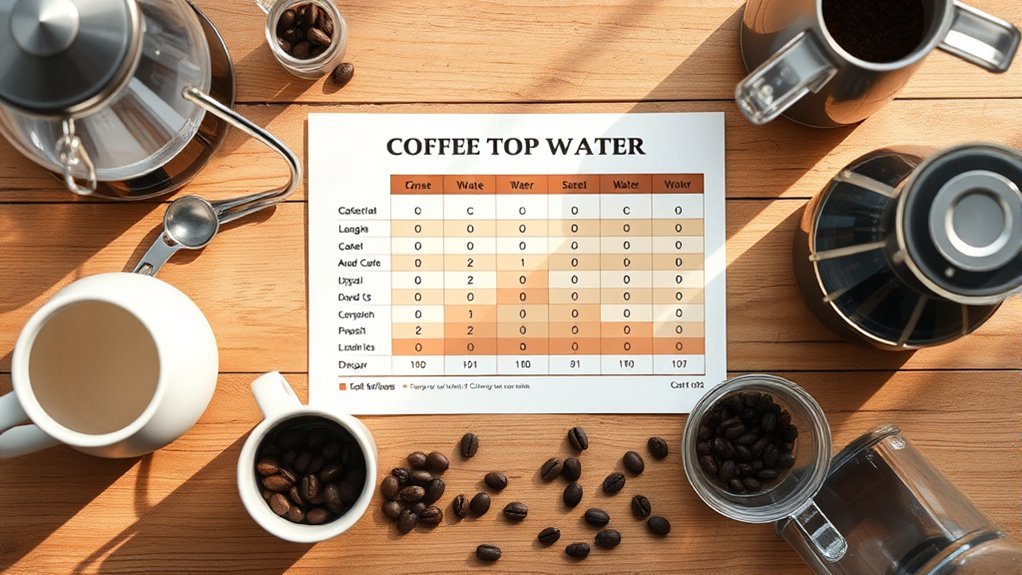
Measuring coffee and water accurately is essential for brewing the perfect cup of drip coffee. Using a kitchen scale is the best way to guarantee precise measurements. The standard coffee-to-water ratio ranges from 1:16 to 1:18. For an 8-cup drip coffee maker, aim for 74-79 grams of coffee. If you don’t have a scale handy, remember that a typical scoop is about 10 grams.
| Coffee (grams) | Water (grams) | Ratio |
|---|---|---|
| 74 | 1258 | 1:17 |
| 79 | 1343 | 1:17 |
| 60 | 1020 | 1:17 |
| 80 | 1360 | 1:17 |
Always measure water based on your coffee-to-water ratio for best flavor extraction.
How Different Coffee Types Affect Flavor
When exploring the world of coffee, you’ll find that the type of beans you choose can dramatically alter your brewing experience. The coffee origins and their unique characteristics shape distinct flavor profiles.
Here’s how different types of coffee impact your cup:
- Arabica vs. Robusta: Arabica offers a sweeter, complex taste, while Robusta delivers a stronger, bitter flavor.
- Roast Level: Light roasts preserve acidity and floral notes, whereas dark roasts present deeper, bolder flavors.
- Origin Influence: Beans from Ethiopia often exhibit fruity, wine-like notes, while Colombian varieties provide a balanced, nutty profile.
- Grind Size: Finer grinds yield concentrated flavors for espresso, while coarser grinds in French press create a full-bodied brew.
Understanding these factors enhances your coffee journey.
Best Practices for Consistent Coffee Brewing
To brew the perfect cup of coffee consistently, you need to focus on several key practices that enhance flavor and extraction.
Start by maintaining a coffee-to-water ratio of 1:17, ensuring balanced flavor extraction. Use a kitchen scale to measure coffee in grams—approximately 68-75 grams for a 10-cup drip coffee maker.
Regularly clean your equipment to prevent oil buildup, which can compromise coffee freshness. Experiment with grind size; a medium grind generally optimizes extraction.
Finally, monitor water temperature, aiming for 195°F to 205°F, as this greatly influences the flavor profile.
Frequently Asked Questions
Can I Use Pre-Ground Coffee Instead of Whole Beans?
Yes, you can use pre-ground coffee instead of whole beans, but consider the freshness factor. Pre-ground coffee may lack flavor, and the grind size can affect extraction, so adjust your brewing time accordingly for ideal results.
How Does Water Temperature Affect Coffee Extraction?
Water temperature greatly impacts coffee extraction timing. Ideal temperature ranges between 195°F to 205°F. If it’s too low, extraction takes too long, leading to underwhelming flavors; if too high, it can result in bitterness.
What Type of Water Is Best for Brewing Coffee?
Filtered water’s typically best for brewing coffee, as it removes impurities that can affect flavor. Bottled water can work too, but make certain it’s mineral-balanced; otherwise, it might dilute your coffee’s richness and aroma.
How Long Should Coffee Brew in a Drip Maker?
How long do you think the perfect cup takes? Ideally, a brew time of four to six minutes guarantees ideal strength. This allows flavors to fully develop without resulting in bitterness or under-extraction.
Can I Store Brewed Coffee for Later Use?
You can store brewed coffee for later use, but its flavor preservation diminishes over time. Keep it in an airtight container in the fridge for up to a week to maintain some quality.
Conclusion
In coffee brewing, as the saying goes, “you reap what you sow.” By understanding and adjusting your coffee-to-water ratio, you can open up a world of flavors tailored to your palate. Avoid common pitfalls and measure accurately to guarantee consistency in every cup. Remember, experimentation is key—fine-tune your ratios and discover what works best for you. With these insights, you’re well on your way to mastering the art of drip coffee, one brew at a time.