Coffee makers generally last between 3 to 15 years, depending on the type and how well you maintain them. Drip and single-serve machines typically last 3 to 5 years, while espresso machines may extend to 15 years with care. Signs it’s time for a replacement include a decline in coffee quality, frequent breakdowns, and inability to maintain proper brewing temperatures. Understanding these factors can help you make informed choices about your coffee-making needs. There’s more to explore on maximizing your coffee maker’s lifespan.
Key Takeaways
- Coffee makers typically last between 3 and 15 years, influenced by type and maintenance practices.
- Regular cleaning and descaling can significantly extend a coffee maker’s lifespan beyond the average.
- Signs of replacement include a decline in coffee quality, frequent mechanical issues, and inability to maintain brewing temperatures.
- Higher-quality models may require a larger initial investment but offer greater durability and long-term savings.
- Usage frequency affects longevity; daily use helps maintain functionality, while infrequent use can lead to deterioration.
How Long Should You Expect Your Coffee Maker to Last?
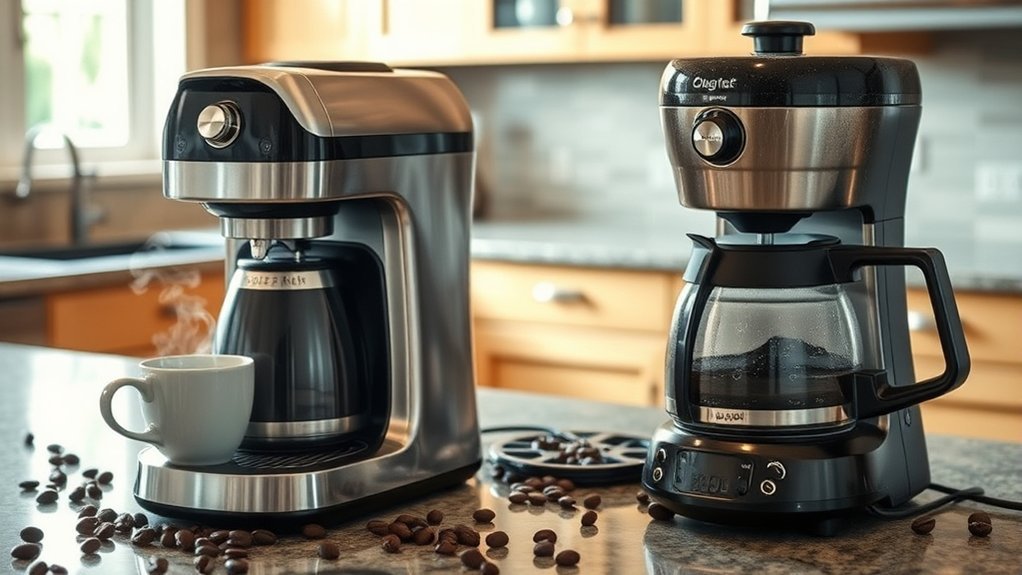
When you invest in a coffee maker, you might wonder how long you can expect it to perform at its best. The lifespan of coffee maker types varies considerably; drip coffee makers and single-serve machines usually last between 3 to 5 years with proper care.
In contrast, espresso machines can endure much longer, boasting a lifespan of 5 to 15 years, depending on the model and maintenance. Regular cleaning and descaling are essential for extending longevity across all brewing methods.
Notably, frequent use can enhance a coffee maker’s functionality, as it keeps internal components moving and prevents stagnation. By understanding these factors, you can better gauge the lifespan of your coffee maker and maximize its performance.
Factors That Influence Coffee Maker Longevity
Your coffee maker’s longevity hinges on two main factors: how often you use it and how well you maintain it.
Regular use can actually enhance its lifespan, while neglecting maintenance leads to potential breakdowns.
Usage Frequency Impact
Although many coffee lovers might assume that more frequent brewing always leads to a shorter lifespan for their machines, the reality is more nuanced.
When you engage in daily brewing, your coffee maker’s components remain in regular motion, which helps maintain their functionality and can extend its lifespan.
In contrast, infrequent usage can actually shorten a coffee maker’s life, as stagnant components may deteriorate from lack of use.
Machines that sit idle for long periods often face issues due to lack of maintenance and operational wear.
As a result, establishing a routine of consistent brewing not only enhances your coffee experience but also guarantees that your machine stays in ideal working condition, highlighting the importance of frequency in its longevity.
Maintenance Practices Importance
While many may overlook the importance of regular maintenance, it plays a crucial role in determining the longevity of your coffee maker.
Establishing effective cleaning routines is necessary; monthly cleaning and descaling can help your machine exceed the average lifespan of 3-5 years. Using filtered water reduces mineral buildup, protecting internal components and enhancing flavor.
Daily routines, like wiping the brew group and flushing water, prevent residue accumulation, which can lead to mechanical issues. Stick to maintenance schedules, replacing gaskets and seals every six months to guarantee proper sealing and prevent leaks.
Additionally, monitoring key components such as temperature sensors and pressure gauges helps maintain consistent performance and prevents damage from incorrect readings.
Issues Indicating a Coffee Maker Replacement
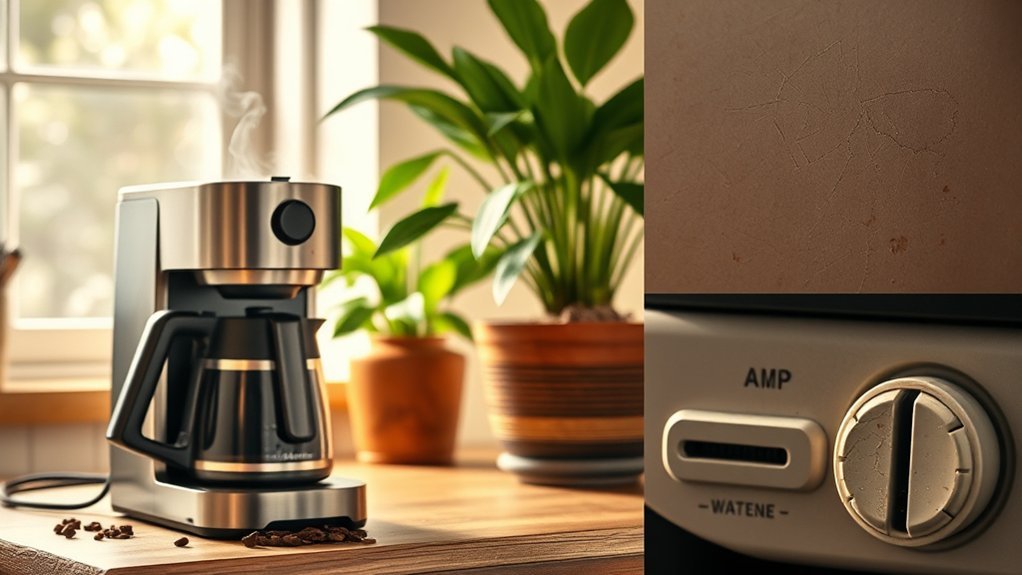
If you notice a decline in your coffee’s quality, like a consistently weak or bitter taste, it might be time to contemplate replacing your coffee maker.
Frequent mechanical issues, such as leaks or unusual noises, also signal that multiple components are failing and could lead to costly repairs.
Deteriorating Coffee Quality
As you brew your daily cup of coffee, you might notice subtle changes in flavor that can indicate it’s time to contemplate a replacement for your coffee maker.
A significant decline in coffee flavor, whether it tastes weak or overly bitter, often signals that essential components are wearing out. If your coffee lacks expected crema or richness, it may point to failing heating elements or an inefficient extraction process.
Additionally, if your coffee maker struggles to maintain ideal brewing temperatures of 195-205°F (90.6-96.1°C), poorly extracted coffee will result. Consistent under-extraction or over-extraction can further indicate mechanical issues, suggesting that an upgrade is necessary to meet evolving brewing techniques and quality standards.
Frequent Mechanical Issues
When you notice frequent mechanical issues with your coffee maker, such as leaks, unusual noises, or persistent heating problems, it often indicates that replacement might be more prudent than trying to repair the machine.
Mechanical failures can lead to brewing inconsistencies, particularly if your coffee maker struggles to heat water to the ideal range of 195-205°F (90.6-96.1°C).
If your machine stops brewing altogether, critical failures like pump malfunctions or internal leaks usually point toward the need for a new unit.
Regular breakdowns, especially when multiple components show wear, signal that your coffee maker is nearing the end of its lifespan.
If coffee quality deteriorates, like producing weak or bitter shots, it’s time to contemplate an upgrade.
Signs Your Coffee Maker Is Losing Lifespan
Over time, your coffee maker may show several signs that it’s losing its lifespan and effectiveness. A noticeable decline in coffee flavor—whether it’s weak or overly bitter—often indicates that the brewing process is faltering.
If your machine struggles to reach ideal brewing temperatures between 195-205°F, it may mean the heating elements are failing, which directly affects your brew’s quality.
Additionally, consistent mechanical issues like leaks or odd noises suggest internal components are wearing out. Frequent breakdowns or costly repairs can also signal that it’s time for a replacement.
Finally, if you find specific coffee pods for your single-serve maker increasingly hard to get, it may indicate obsolescence, prompting a new purchase.
How to Make Your Coffee Maker Last Longer
To guarantee your coffee maker serves you well for years, it’s vital to adopt a few key maintenance habits.
Regular cleaning techniques, including washing the brew group and water tank, help prevent residue buildup that can compromise flavor and performance. Descaling your machine every 2-3 months is essential, especially if you live in an area with hard water, as it removes harmful mineral deposits.
Additionally, replace gaskets and seals every six months to guarantee effective sealing and prevent leaks. Using filtered water not only reduces mineral buildup but also enhances the taste of your coffee, contributing to the machine’s longevity.
Finally, remember to turn off your coffee maker after each use to minimize wear on its internal components.
Alternatives to Traditional Coffee Makers for Different Needs
Maintaining your coffee maker is important, but sometimes you may want to explore alternatives that better suit your lifestyle or taste preferences.
Here are some great options to reflect on:
- Single-cup machines: Convenient for individuals or small households, but be mindful of pod availability.
- Pour-over techniques: Allow you to control water flow and brewing time for a customizable flavor profile.
- French presses: Budget-friendly and perfect for those who enjoy rich, full-bodied coffee.
- Moka pots: Ideal for brewing strong coffee with an espresso-like experience without the cost of an espresso machine.
- Cold brew systems: Offer smooth, less acidic coffee, perfect for warmer weather and chilled beverage lovers.
Exploring these methods can enhance your coffee experience considerably.
Frequently Asked Questions About Coffee Maker Lifespans
How can you guarantee your coffee maker serves you well over the years? Start by choosing reputable coffee maker brands known for durability.
The average lifespan is 3 to 5 years, but you can extend it with proper maintenance. Regularly clean your machine, descaling it every 2-3 months to prevent mineral buildup.
You’ll find that heavier daily brews can actually enhance longevity, as regular operation keeps components in better shape.
Watch for signs of decline—deteriorated coffee quality, leaks, or inadequate heating indicate it might be time for a replacement.
Finally, consider the brewing methods your coffee maker supports; higher-quality models often offer superior performance and longevity, making them a worthy investment for coffee enthusiasts.
Frequently Asked Questions
Can I Repair My Coffee Maker Instead of Replacing It?
Yes, you can repair your coffee maker instead of replacing it. Conduct a cost analysis to determine if repair techniques, like replacing a faulty part, are more economical than purchasing a new machine.
What Are the Best Brands Known for Longevity?
Brewing coffee for years, a friend swears by Breville. Durable brands like Breville consistently receive positive user reviews for longevity, showcasing how investing in quality can save you money and hassle in the long run.
How Often Should I Clean My Coffee Maker?
You should clean your coffee maker every month for ideal performance. Establish a cleaning schedule to prevent buildup, and use maintenance tips like vinegar or descaling solutions to keep it running smoothly and tasting great.
Are There Coffee Makers Specifically Designed for Heavy Use?
Yes, there are coffee makers specifically designed for heavy use. Commercial coffee makers often include heavy-duty features, ensuring durability and efficiency, making them ideal for cafes or offices where demand is consistently high.
What Warranty Options Are Available for Coffee Makers?
When choosing a coffee maker, you’ll find various warranty types, including limited and extended warranties. Warranty coverage often varies by brand, so it’s essential to review the specifics to guarantee you’re adequately protected.
Conclusion
To summarize, understanding your coffee maker’s lifespan and the signs of wear can help you make informed decisions. By recognizing when it’s time to replace your machine, you can maintain your coffee experience. Additionally, practicing good maintenance techniques can extend its life. Whether you choose to invest in a new coffee maker or explore alternatives, staying aware of your needs guarantees you’ll enjoy your perfect cup of coffee for years to come.