

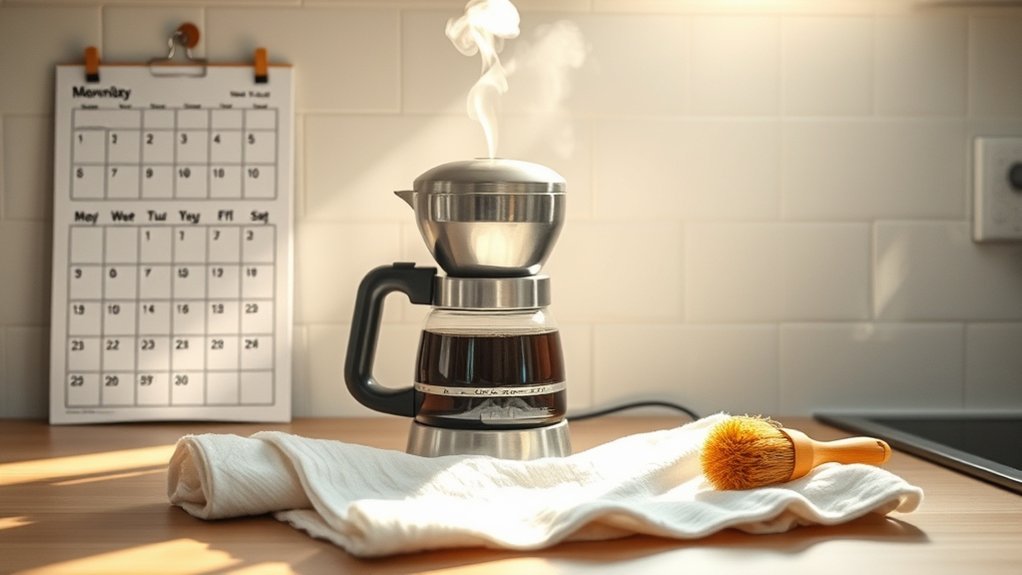
To keep your coffee maker performing at its best, clean it every 30 days. If you’re a heavy user, aim for every two weeks. Daily maintenance includes discarding coffee grounds and wiping surfaces. Monthly, run a mixture of equal parts white vinegar and water through the machine to descale it. Watch for signs like bitter coffee or slow brewing, which indicate it’s time for cleaning. Discover expert tips on maintaining your machine for ideal flavor and longevity.
Key Takeaways
- Clean your coffee maker every 30 days for optimal performance and taste.
- Increase cleaning frequency to every two weeks if used heavily.
- Descale the machine every three to six months based on water mineral content.
- Always refer to the manufacturer’s guidelines for specific cleaning recommendations.
- Regular maintenance prevents bitter coffee and extends the machine’s lifespan.
Why Regular Cleaning Is Essential for Your Coffee Maker
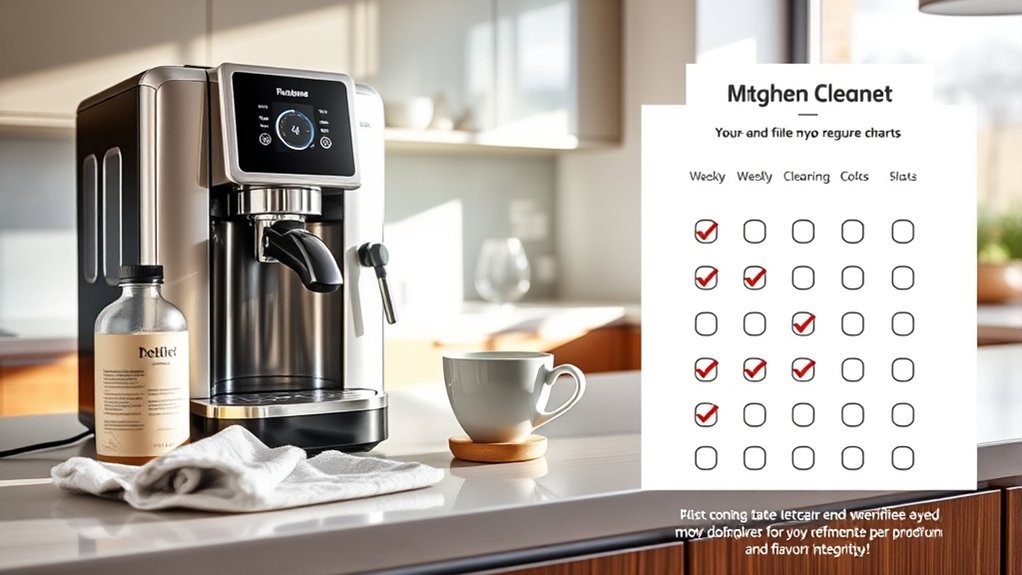
Although you may enjoy your daily cup of coffee, neglecting to clean your coffee maker can compromise both its performance and your health.
Regular cleaning methods are crucial in preventing the buildup of mineral deposits, yeast, and mold, which can contaminate your brew and diminish its taste. Studies reveal that about 50% of coffee machines harbor yeast and mold, underscoring the significant health risks associated with neglect.
Additionally, coffee makers rank as the fifth germiest item in kitchens, making consistent cleaning imperative to reduce bacteria growth. A dirty coffee maker not only leads to weak, off-tasting coffee but also prolongs brewing times.
How Often Should You Clean Your Coffee Maker?
To keep your coffee maker performing at its best, you should clean it every 30 days.
If you use it frequently, increasing the cleaning frequency will help prevent unwanted buildup that can affect flavor.
Always check the manufacturer’s guidelines for specific recommendations tailored to your model.
Regular Cleaning Schedule
Cleaning your coffee maker every 30 days is crucial for maintaining peak performance and enhancing flavor.
Regular cleaning not only prevents buildup but also guarantees your coffee tastes fresh and rich. Use effective cleaning techniques, such as vinegar or a dedicated coffee maker cleaner, to break down residue.
Additionally, refer to the manufacturer’s manual for specific maintenance tips tailored to your model. If you use your coffee maker heavily, consider cleaning it every two weeks to avoid flavor compromise.
Remember to descale your machine every three to six months, depending on your water’s mineral content.
Heavy Use Considerations
For those who rely on their coffee makers multiple times a day, understanding the cleaning frequency becomes increasingly important.
With heavy usage, it’s recommended to clean your coffee maker every 30 days to prevent the buildup of oils and mineral deposits. If you’re brewing coffee more than once daily, consider increasing your cleaning frequency to every two weeks.
This not only guarantees better-tasting coffee but also extends the lifespan of your machine. Heavy usage accelerates the accumulation of bacteria and mold, making regular cleaning critical.
Always check your manufacturer’s guidelines for specific cleaning schedules tailored to your coffee maker’s model and usage frequency, promoting peak performance for your daily brews.
Daily Cleaning Routine: Quick Steps for Freshness

To keep your coffee maker in top shape, discard the coffee grounds and dirty filters right after each brew.
Regularly wiping down the exterior surfaces prevents residue buildup and maintains a fresh appearance.
Discard Coffee Grounds Daily
Discarding coffee grounds daily is essential for maintaining the freshness of your brew. By removing used coffee grounds and filters after each use, you prevent stale coffee flavors from lingering in your machine.
This practice also minimizes residue buildup, which can compromise brewing efficiency and the overall quality of your coffee.
To guarantee cleanliness, wipe down any coffee residue inside and around the brew basket with a clean, damp towel.
Allow the water reservoir to air dry with the latch open, preventing moisture buildup and potential mold growth.
Wipe Exterior Surfaces Regularly
Regularly wiping down the exterior surfaces of your coffee maker is essential for maintaining its appearance and hygiene. A quick daily clean prevents coffee stains and germ buildup, ensuring a welcoming kitchen environment. Here’s a simple routine to enhance your hygiene maintenance:
| Cleaning Task | Frequency | Tips |
|---|---|---|
| Wipe Exterior | Daily | Use a soft, damp cloth |
| Use Mild Soap | As needed | Avoid harsh cleaners |
| Unplug Machine | Before | Always unplug for safety |
| Check for Stains | Daily | Address stains immediately |
Incorporating this quick cleaning routine contributes greatly to your coffee maker’s longevity and hygiene. Don’t overlook the importance of interior cleaning; a clean exterior reflects a well-maintained machine.
Monthly Cleaning: A Simple Descaling Guide
While many coffee enthusiasts relish the perfect brew, neglecting the monthly cleaning of your coffee maker can lead to diminished flavor and efficiency over time.
To maintain peak performance, follow these descaling tips: Start by mixing equal parts white vinegar and water to create a vinegar solution. Pour this mixture into the reservoir and run a brew cycle without coffee grounds.
After 30 seconds, pause the cycle and let the solution sit for 30 minutes to dissolve mineral deposits. Complete the brew cycle, then run 2 to 3 additional cycles with clean water to flush out any vinegar residue.
Regular monthly descaling not only enhances your coffee’s taste but also extends your coffee maker’s lifespan by preventing harmful buildup.
Signs Your Coffee Maker Needs Cleaning

If your coffee tastes bitter or off, it’s a clear sign that your coffee maker needs cleaning.
Similarly, a noticeable slowdown in the brewing process often points to mineral buildup that requires immediate attention.
Ignoring these signs can compromise both the flavor of your coffee and the machine’s efficiency.
Unpleasant Coffee Taste
Many coffee lovers mightn’t realize that an unpleasant taste in their brew can signal a need for a thorough cleaning of their coffee maker. If you notice a bitter or stale flavor, it’s time to investigate.
Here are some signs to watch for:
- Bacterial buildup: Neglected machines can harbor yeast and mold, impacting coffee freshness.
- Mineral deposits: Hard water can create blockages, affecting brewing temperature and efficiency.
- Oily residue: Accumulated coffee grounds in the brew basket alter flavor profiles.
- Longer brewing times: Changes in brewing cycles often indicate mineral buildup, hindering flavor extraction.
Regular cleaning not only guarantees better taste but also enhances your overall coffee experience.
Don’t ignore those warning signs!
Slow Brewing Process
When you notice your coffee maker taking longer to brew than it used to, it’s often a clear indication that it’s time for a thorough cleaning.
A slow brewing process typically signals mineral buildup within the machine, which clogs tanks and tubes, greatly reducing brewing speed.
If you observe an uneven flow of coffee, with some areas brewing faster than others, that’s another sign that your coffee maker needs attention.
Regularly cleaning and descaling your machine every 30 days can prevent these issues, ensuring peak performance and maintaining coffee quality.
Neglecting this maintenance will lead to a consistent decline in brewing speed, ultimately affecting the taste and richness of your daily cup.
Keep your coffee maker clean for the best brew possible.
How Mineral Buildup Can Mess With Your Coffee
Mineral buildup can greatly impact your coffee’s quality and your coffee maker’s performance.
Hard water contains minerals like calcium and magnesium that can alter your coffee flavor, leading to bitter or off-tasting brews.
To understand how mineral effects disrupt your coffee, consider these key points:
- Clogs: Mineral deposits can accumulate, causing clogs that slow down brewing.
- Heating Efficiency: Buildup can hinder heating elements, extending brewing times.
- Contamination: A study found 50% of coffee machines showed mineral-related contamination.
- Regular Maintenance: Monthly cleaning with a vinegar solution can mitigate these issues.
Cleaning Different Types of Coffee Makers
Cleaning your coffee maker is essential not only for maintaining its performance but also for ensuring the finest flavor in your brews. Different coffee maker types require specific cleaning methods to function effectively. For instance, drip coffee makers need a vinegar solution every 30 days, while single-serve models like Keurig should be cleaned monthly. Espresso machines demand more frequent attention, with daily portafilter cleaning and a monthly deep clean. French presses should be disassembled and washed after each use.
| Coffee Maker Type | Cleaning Frequency | Recommended Cleaning Method |
|---|---|---|
| Drip | Every 30 days | Vinegar and water solution |
| Single-Serve | Monthly | Vinegar and water mixture |
| Espresso | Daily & Monthly | Daily portafilter, monthly deep clean |
Recommended Cleaning Supplies for Your Coffee Maker
To maintain your coffee maker’s performance and flavor, using the right cleaning supplies is key. Choosing safe materials guarantees you preserve your machine while keeping it clean.
Maintaining your coffee maker’s performance requires using safe and effective cleaning supplies for optimal flavor and longevity.
Here are four essential cleaning tools:
- White vinegar – A natural descaler that effectively removes mineral deposits.
- Baking soda – A gentle abrasive for tackling stubborn stains inside the carafe or coffee maker.
- Soft cloth or sponge – Ideal for scrubbing without damaging the surfaces.
- Filtered water – Reduces mineral buildup and enhances the cleaning process.
Avoid abrasive cleaners or harsh chemicals, as they can erode your coffee maker’s components.
Effective Strategies to Prolong Your Coffee Maker’s Lifespan
While you mightn’t think about it often, taking proactive steps to extend your coffee maker’s lifespan can save you money and enhance your brewing experience.
Regular coffee maker maintenance, such as cleaning your machine every 30 days, helps prevent mineral deposits and bacteria buildup. Descaling with a vinegar and water solution every three to six months greatly reduces clogs in tanks and tubes.
Choosing filtered water over tap water will minimize mineral accumulation, improving coffee taste and machine longevity. Hand wash detachable components after each use and air dry them to prevent moisture-related mold and bacteria.
Finally, always follow your manufacturer’s cleaning techniques and guidelines to guarantee peak performance and avoid any potential damage.
Avoid These Common Mistakes When Cleaning Your Coffee Maker
When maintaining your coffee maker, it’s easy to overlook some common pitfalls that can detract from your brewing experience.
Avoid these mistakes to guarantee your coffee tastes great and your machine lasts longer:
- Neglecting the brew basket and water reservoir: Regular cleaning prevents oily residue, which can make your coffee taste bitter.
- Skipping descaling: Mineral buildup can clog tanks and tubes, affecting brewing performance.
- Using abrasive cleaners: Scouring pads can damage surfaces, compromising functionality and lifespan.
- Forgetting the carafe: Clean it after each use to prevent stains and odors that impact future brews.
Incorporate these maintenance tips and cleaning techniques into your routine for ideal performance and flavor.
Frequently Asked Questions
Can I Use Other Cleaning Agents Instead of Vinegar?
Yes, you can use alternative cleaning solutions like baking soda or citric acid. However, make sure you prioritize chemical safety; some agents might damage your coffee maker or leave harmful residues if not properly rinsed.
How Can I Tell if My Coffee Maker Is Clean?
You can tell your coffee maker’s clean by checking for smooth water flow, absence of residue, and no lingering odors. Use these cleaning indicators as maintenance tips to guarantee your coffee’s taste remains exceptional.
Is It Safe to Clean My Coffee Maker in the Dishwasher?
It’s generally not safe to clean your coffee maker in the dishwasher. The cleaning materials and high heat can damage components. Instead, use mild soap and warm water for thorough, effective cleaning while preserving your machine’s integrity.
What Happens if I Forget to Clean My Coffee Maker?
If you forget to clean your coffee maker, you’ll likely notice a decline in coffee taste, and mold growth could become an issue. Regular maintenance guarantees peak flavor and a healthy brewing environment for your daily cup.
Can I Clean My Coffee Maker With Baking Soda?
Yes, you can clean your coffee maker with baking soda. Its natural cleaning properties help eliminate odors and stains, making it an effective choice. Plus, using baking soda offers a non-toxic alternative for maintaining your machine’s hygiene.
Conclusion
In summary, regular cleaning of your coffee maker isn’t just a chore; it’s crucial for peak performance and flavor. While you might think occasional cleaning suffices, neglecting this routine can lead to buildup that affects your coffee’s taste and your machine’s lifespan. By following a simple schedule, you guarantee a consistently enjoyable brew while avoiding costly repairs. Investing a little time in maintenance now pays off with every delicious cup you savor. Don’t overlook this essential aspect of coffee enjoyment!


