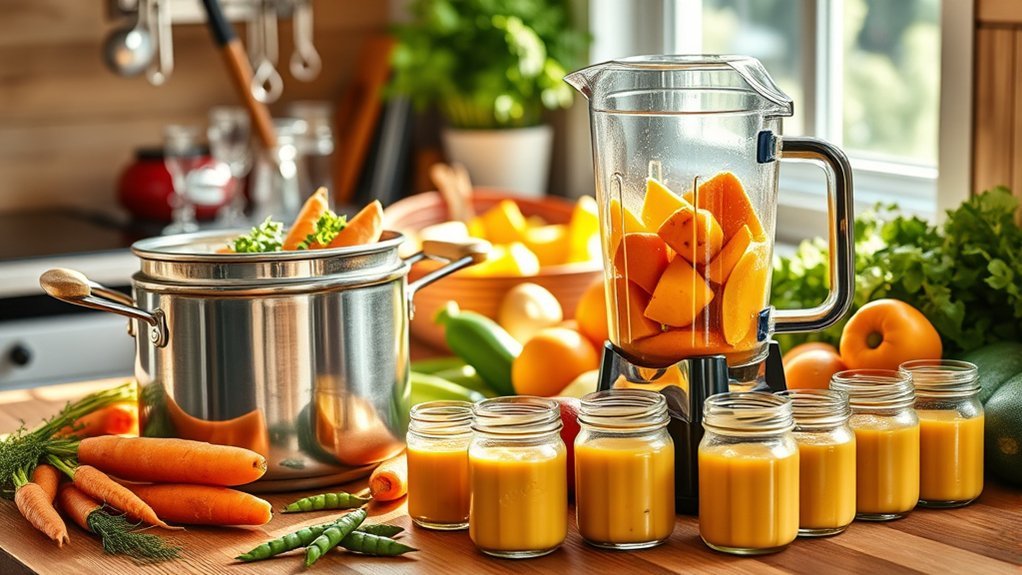
To make a mixed vegetable baby food puree, start by selecting fresh or frozen veggies like green beans and sweet potatoes. Wash, peel, and chop them, then steam until very soft, about 12-15 minutes. Blend the cooked vegetables until smooth, adding reserved cooking water or breast milk for the right consistency. Store in airtight containers in the fridge for up to 3 days or freeze for up to 3 months. Discover more tips on introducing new flavors and ingredients.
Key Takeaways
- Select a variety of fresh or frozen vegetables, wash, peel, and cut them into uniform pieces for even cooking.
- Steam the vegetables until soft, approximately 12-15 minutes, and reserve some cooking water for blending.
- Blend the cooked vegetables with reserved water or breast milk until smooth, adjusting consistency as needed.
- Store the puree in airtight containers in the refrigerator for up to 3 days or freeze in ice cube trays for up to 3 months.
- Introduce one new vegetable at a time, waiting 3-5 days between additions to monitor for any allergic reactions.
How to Make Mixed Vegetable Baby Food Puree
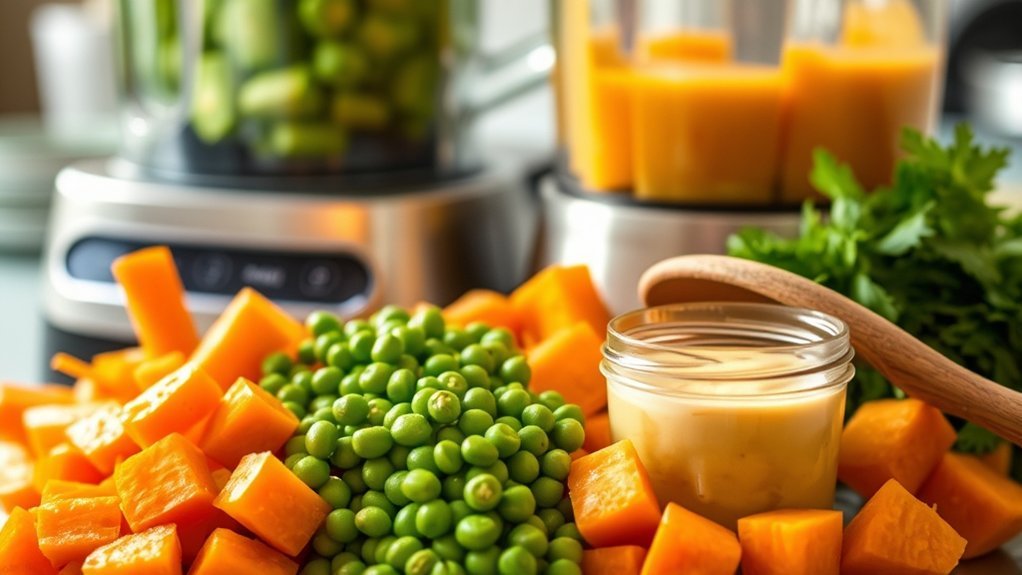
When you’re ready to introduce your baby to mixed vegetable purees, start by selecting a variety of fresh or frozen vegetables like green beans, broccoli, and sweet potatoes.
Make sure they’re washed and cut into uniform pieces for even cooking. Steam the vegetables until they’re very soft, about 12-15 minutes, to preserve nutrients and colors.
Ensure vegetables are washed and cut into uniform pieces; steam until very soft to maintain their nutrients and vibrant colors.
Once cooked, blend the vegetables in a food processor or blender, adding a small amount of reserved cooking water or breast milk for a smooth consistency.
Store the mixed vegetable puree in airtight containers for up to 3 days in the refrigerator, or freeze in ice cube trays for up to 3 months.
Introduce the puree gradually, watching for any allergic reactions while making certain the texture suits your baby’s developmental needs.
Essential Ingredients for Mixed Vegetable Purees
Creating a balanced mixed vegetable puree for your baby hinges on the selection of high-quality ingredients. Opt for a variety of fresh or frozen vegetables like green beans, zucchini, broccoli, and sweet potatoes. These vegetable combinations provide essential nutritional benefits, ensuring your baby receives a well-rounded diet.
Wash all vegetables thoroughly and cut them into uniform pieces for even cooking. Steam them until they’re very soft—around 12-15 minutes—to preserve their vitamins.
Once cooked, blend the vegetables, adding a bit of reserved cooking water or breast milk to reach your desired consistency. Store leftovers in airtight containers in the fridge for up to three days or freeze in portions for long-term use, maintaining those crucial nutrients for your little one.
Step-by-Step Guide to Steaming Vegetables
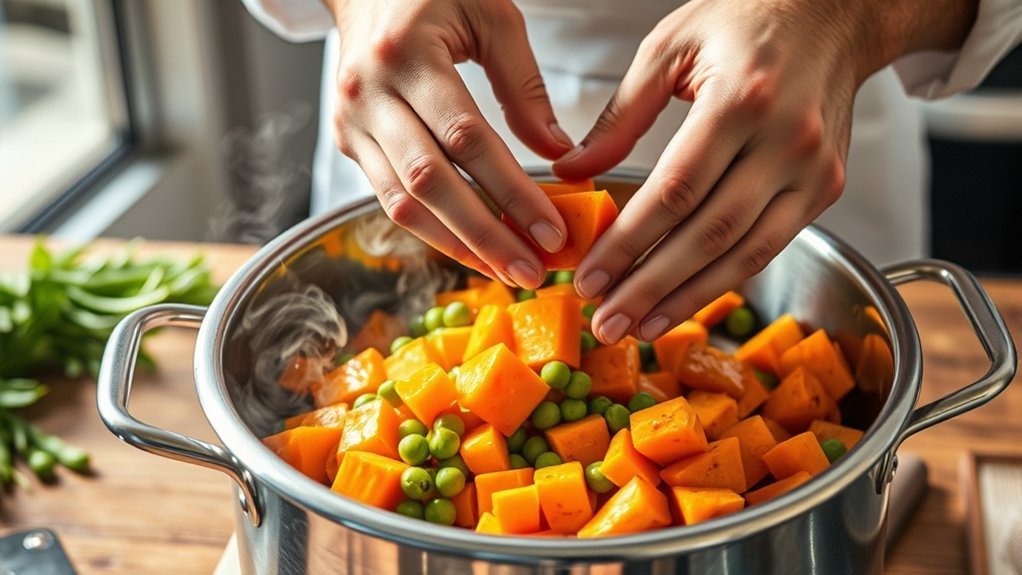
Steaming vegetables is a simple yet effective method for preserving their nutrients while enhancing flavor and texture.
To start, cut your vegetables into uniform pieces, ensuring even cooking. Place them in a steamer basket over boiling water, and cover with a lid to trap steam, which speeds up the cooking process.
Cut vegetables into uniform pieces for even cooking, then steam them over boiling water with a lid to trap the steam.
Most vegetables need about 12-15 minutes to become very soft, while leafy greens like spinach might only require a minute. Remember, denser vegetables like carrots and potatoes need longer.
After steaming, reserve a small amount of the cooking water; this can help adjust the puree’s consistency later.
With these steaming techniques, you’ll achieve perfect vegetable textures, making your baby food nutritious and delicious.
Blending Techniques for the Perfect Consistency
To achieve the perfect consistency for your mixed vegetable baby food puree, it’s crucial to guarantee that all vegetables are thoroughly cooked until very soft.
Use a high-quality blender or food processor and gradually add reserved cooking water or liquid to reach your desired consistency. If you need better control over smoothness, blend in small batches.
For texture variations, pulse the blender instead of continuous blending to keep some larger pieces.
After blending, always check for lumps and re-blend as necessary to confirm the puree is suitable for your baby’s age and eating stage.
These blending methods will help you create a delicious and nutritious meal that your little one will love!
Storing and Reheating Baby Food Safely
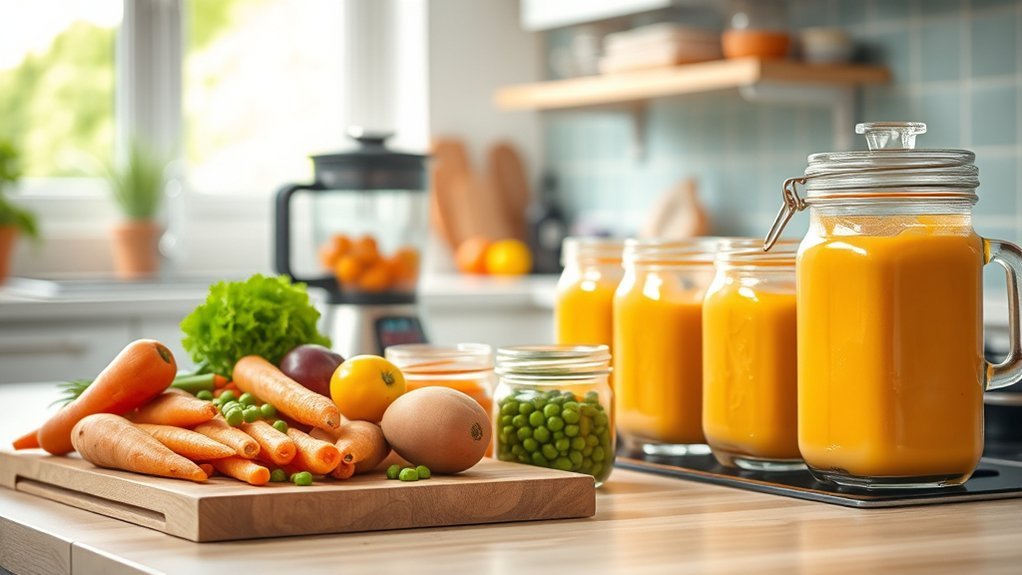
When it comes to storing and reheating your homemade baby food, safety is key.
You should always use airtight containers for refrigeration and freeze leftovers in small portions for convenience.
Proper thawing and reheating techniques guarantee your little one enjoys fresh and safe meals every time.
Safe Storage Practices
Storing and reheating homemade baby food safely is essential to confirm your little one stays healthy.
Use safe container types like glass or BPA-free plastic for storage. Refrigerate purees in airtight containers and consume them within 3 days, or freeze portions in ice cube trays for 3-6 months.
Employ food labeling tips by marking each container with the preparation date to monitor freshness.
When you’re ready to serve, reheat the food on the stove or microwave until it’s piping hot. Remember to cool it down to a safe temperature before feeding your baby.
Discard any uneaten food from the bowl to avoid bacterial contamination and confirm your child’s safety.
Stay vigilant for a healthy baby!
Proper Thawing Techniques
After guaranteeing your homemade baby food is stored properly, the next step is thawing it safely.
Use thawing methods that maintain food safety, like placing the sealed container in the refrigerator overnight. This helps prevent bacterial growth. If you need to thaw quickly, submerge the sealed container in warm water, making sure it doesn’t leak.
Avoid using a microwave, as it can create hot spots that may burn your baby’s mouth. Once thawed, consume the puree within 24 hours and never refreeze it. Discard any leftovers after serving to prevent contamination.
Always check the temperature before serving; it should be warm but not hot. These safety tips guarantee your baby enjoys nutritious meals without risk.
Reheating Guidelines
To guarantee your baby’s meals are safe and nutritious, it’s essential to follow proper reheating guidelines.
Store your homemade purees in airtight containers; they last three days in the fridge or up to three months in the freezer.
When you’re ready to serve, thaw frozen portions in the refrigerator overnight for even defrosting.
Use reheating methods like the stove or microwave, but remember to stir well to eliminate hot spots.
Always conduct temperature checks; the puree should be warm, ideally at body temperature, to keep your little one safe.
Finally, discard any uneaten food from the bowl to prevent bacterial growth and foodborne illnesses.
Your baby’s health is worth the extra care!
Introducing New Vegetables: What to Watch For?
When introducing new vegetables to your baby, how can you guarantee a safe and smooth change? Start by introducing one new vegetable at a time, waiting 3-5 days before adding another. This way, you can monitor for allergy symptoms effectively.
- Look out for rashes, hives, vomiting, or fussiness after eating.
- Keep a record of what vegetables you’ve introduced and any reactions.
- Begin with less sweet vegetables like green beans or zucchini to gauge acceptance.
Using a vegetable rotation strategy helps you identify potential allergens while ensuring a diverse diet.
If you notice concerning reactions, consult your pediatrician for guidance on allergenic foods. This careful approach fosters a positive eating experience for your baby.
Creative Meal Ideas Using Mixed Vegetable Purees
As you explore creative meal ideas with mixed vegetable purees, you’ll discover versatile options that not only boost nutrition but also make mealtime enjoyable for your little one.
These purees can serve as a nutritious base for soups, adding flavor and essential vitamins. You can also mix them into pasta sauces, enhancing the nutritional content and introducing new flavors for older children.
Elevate your meals by using mixed vegetable purees as a flavorful, nutritious base for soups and pasta sauces.
For snack time, consider using purees as dips for whole grain crackers or veggie sticks. In the morning, combine them with scrambled eggs or omelets for a colorful breakfast.
Finally, blend mixed vegetable purees with grains like quinoa or rice, creating wholesome side dishes that encourage flavor exploration and diverse eating habits in your family.
Troubleshooting Common Puree Problems
Creating the perfect mixed vegetable puree for your baby can sometimes present challenges that need addressing. Here are some common issues and solutions to guarantee ideal puree consistency and flavor balancing:
- Too thick? Gradually add water, breast milk, or formula to achieve the right consistency without losing nutrients.
- Lumpy texture? Cook vegetables until very soft and blend thoroughly to eliminate any chunks.
- Bitter taste? Mix in sweeter vegetables like sweet potatoes or carrots to enhance flavor.
Additionally, if your puree turns out too watery, use less cooking water next time or add a thickening agent like potato.
Always store leftovers in airtight containers and consume within 3-4 days refrigerated or up to 3 months when frozen for freshness.
Frequently Asked Questions
Can I Use Frozen Vegetables Instead of Fresh?
Yes, you can use frozen vegetables instead of fresh. Frozen benefits include preserved nutrients and convenience, though texture differences may affect the final puree. Choose high-quality frozen options for the best results in baby food.
How Can I Enhance the Flavor of the Puree?
To elevate your puree, think of spices as your secret garden. Experiment with cinnamon, nutmeg, or garlic for warmth, while pairing sweet potatoes with carrots or peas. These flavor pairings will create a delightful sensory journey!
What Age Is Suitable for Introducing Mixed Vegetable Purees?
The ideal age for introducing mixed vegetable purees is around six months, when your baby shows readiness by sitting up, reaching for food, and displaying interest. Always consult your pediatrician before starting new foods.
Are There Any Vegetables to Avoid for Babies?
Certain vegetables, like raw carrots or spinach, can be tough for baby digestion, much like trying to chew through a rubber band. Stick to gentler options to guarantee a smooth introduction to solid foods.
How Do I Know if My Baby Is Allergic?
To know if your baby’s allergic, watch for allergy symptoms like hives, vomiting, or difficulty breathing after introducing first foods. Consult your pediatrician if you notice any concerning reactions to guarantee your baby’s safety.
Conclusion
In summary, making mixed vegetable baby food puree is not just a fun activity; it’s an essential step in introducing your little one to healthy eating. Research shows that early exposure to a variety of vegetables can help develop lifelong healthy habits. By following the steps outlined above, you’ll make certain your baby enjoys nutritious meals while you explore different flavors together. So, don’t hesitate—start blending those veggies and watch your child’s palate grow!