Making your own baby food is easy! Start by choosing single-ingredient foods like avocado or banana. Wash, peel, and cook them until tender, then blend or mash to your desired smoothness, adding water, breast milk, or formula for consistency. Store the food in airtight containers and freeze in portions. Always introduce new foods one at a time to monitor for allergies. For more tips on nutrition, flavor variations, and troubleshooting, keep going!
Key Takeaways
- Choose a single ingredient like avocado or banana to start making baby food, introducing new foods one at a time.
- Wash, peel, and cook ingredients until tender using steaming or microwaving methods to preserve nutrients.
- Blend or mash the cooked food, adding water, breast milk, or formula to achieve the desired consistency.
- Store homemade baby food in clean, airtight containers, refrigerating for 1-2 days or freezing for longer storage.
- Monitor for allergies by introducing new foods one at a time and waiting three to five days before adding another.
Your Step-By-Step Guide to Making Homemade Baby Food
Making homemade baby food is a rewarding process that guarantees your little one gets nutritious, fresh meals tailored to their needs.
Start by choosing single-ingredient foods like mashed avocado or banana, introducing them one at a time to watch for allergies.
Begin with single-ingredient foods like mashed avocado or banana, introducing them one at a time to monitor for allergies.
Prepare your ingredients by washing, peeling, and cooking until tender using cooking methods like steaming or microwaving. This assures a smooth texture for easy consumption.
Blend or mash the cooked foods, adding water, breast milk, or formula to reach the desired consistency. Remember, avoid added sugars or salt for infants under one year.
Store the baby food in covered containers in the refrigerator for up to two days or freeze in ice cube trays for three months, labeling them for freshness.
How to Keep Your Baby Food Safe and Fresh?
To keep your homemade baby food safe and fresh, you need to focus on proper storage techniques and safe thawing methods.
Always refrigerate or serve the food right after preparation, and store it in covered containers for short-term use.
When freezing, remember to label your bags with the preparation date and follow safe thawing practices to avoid bacterial growth.
Proper Storage Techniques
Properly storing baby food is essential for keeping it safe and fresh for your little one. Use airtight baby food containers to prevent spoilage and maintain quality.
Stick to refrigeration guidelines: store homemade baby food in the fridge for no more than one to two days. If you want to keep it longer, freeze portions in ice cube trays, then transfer the cubes to labeled freezer bags for up to three months.
When you’re ready to use the frozen food, thaw it overnight in the refrigerator and consume it within 48 hours. Always reheat gently, checking the temperature to avoid hot spots.
And remember, discard any uneaten food that’s touched your baby’s mouth to prevent contamination.
Safe Thawing Methods
Once you’ve stored your homemade baby food correctly, the next step is thawing it safely. To guarantee peak freshness and maintain thawing safety, use these effective thawing techniques:
| Thawing Method | Key Points |
|---|---|
| Refrigerator | Thaw overnight for best quality and safety. |
| Room Temperature | Avoid this method to reduce bacterial growth. |
| Standing Water | Avoid this method to minimize contamination. |
Use thawed baby food within 48 hours, and if it contains meat, consume it within 24 hours. Remember, never refreeze thawed food, as it compromises quality. Always label containers with the date of preparation to monitor freshness and guarantee use within a month for best results.
Essential Tools for Making Baby Food
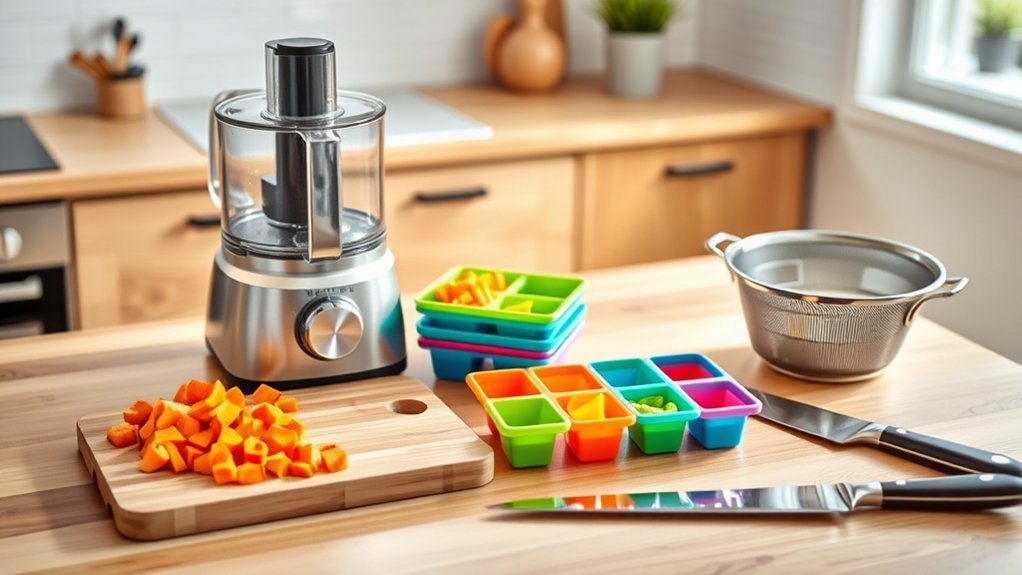
To make baby food efficiently, you’ll need a few essential tools in your kitchen.
A strong blender, a steamer basket, and an ice cube tray will help you create, cook, and store nutritious purees.
Must-Have Kitchen Appliances
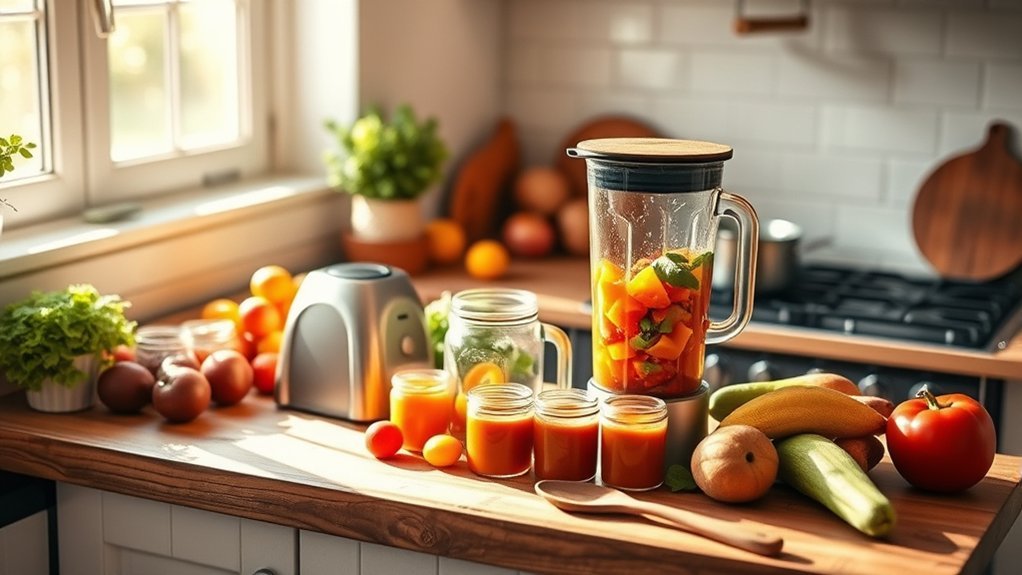
Creating nutritious and delicious baby food at home is a rewarding endeavor, and having the right kitchen appliances can make the process smoother. A strong blender or immersion blender is essential for creating smooth purees, allowing you to customize textures and flavors easily.
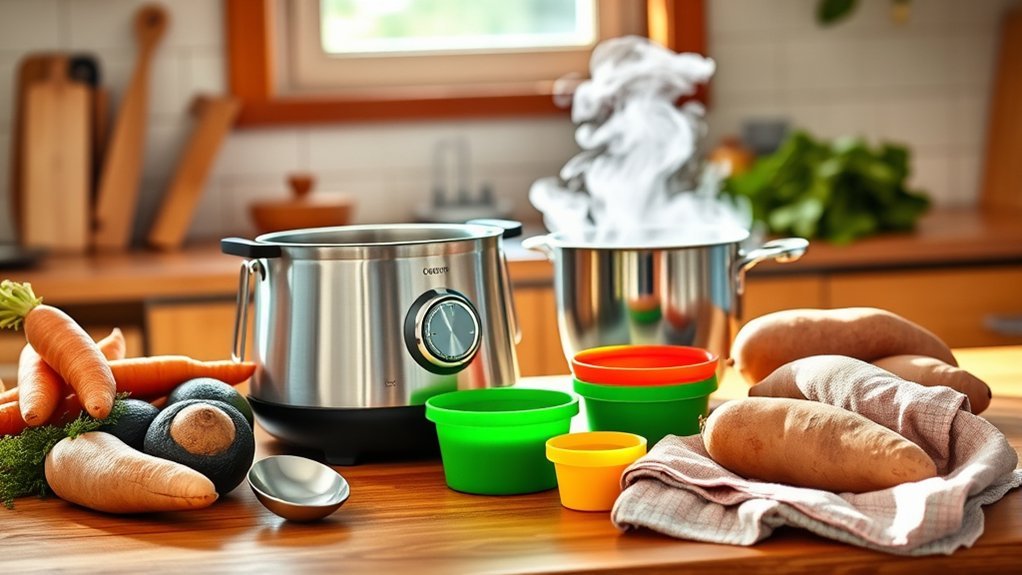
Consider different blender types to suit your needs. A steamer basket is also a must-have; it helps cook fruits and vegetables while preserving their nutrients, thanks to its compact design and extendable handle for easy use.
Don’t forget a knife and cutting board for chopping ingredients, and an ice cube tray—silicone ones are ideal for easy portioning and freezing. Keep water, formula, or breast milk handy to thin purees to your desired consistency.
Essential Storage Containers
When it comes to making and storing baby food, having the right storage containers is essential. The right containers not only keep your food fresh but also make your life easier.
Consider these options:
- Silicone ice cube trays for easy freezing and portioning.
- Airtight containers to maintain freshness in the fridge.
- Glass jars for long-term storage—non-toxic and reusable.
- BPA-free freezer bags that prevent harmful chemicals from leaching.
- Labeling supplies to mark preparation dates, guaranteeing you track freshness.
With these containers, you’ll guarantee your homemade baby food stays safe and nutritious.
Embrace this liberating process, knowing you’re providing the best for your little one!
Recommended Cooking Utensils
Having the right cooking utensils can make all the difference in preparing nutritious baby food efficiently.
For smooth textures, you’ll need a blender or a strong immersion blender to puree fruits and vegetables. A knife is vital for chopping produce into manageable pieces before cooking or blending.
Using a steamer basket allows you to cook fruits and veggies gently, preserving their nutrients while achieving tenderness. Ice cube trays come in handy for portioning homemade baby food, making freezing and storage a breeze.
Finally, airtight containers are essential for storing purees in the refrigerator or freezer, keeping them fresh and preventing contamination.
With these essential cooking tools, you’ll streamline your baby food preparation and guarantee your little one enjoys healthy meals.
Key Nutrients Your Baby Needs in Homemade Food
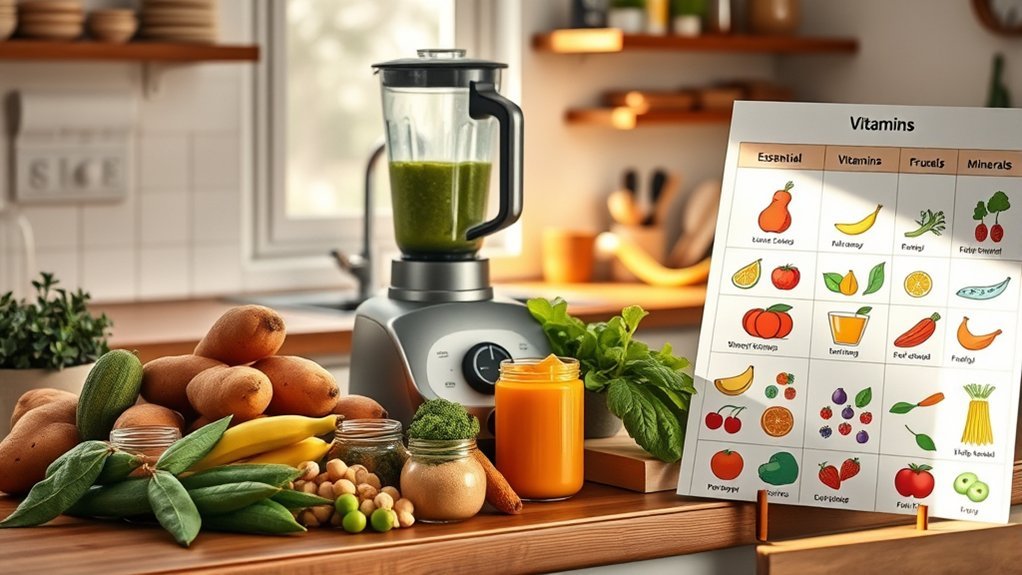
To secure your baby gets the right nutrition from homemade food, it’s essential to focus on key nutrients that support their growth and development.
Here are the fundamental nutrients to take into account for optimal infant nutrition:
- Iron: Found in pureed meats, beans, and fortified cereals, critical for brain development.
- Healthy Fats: Sources like avocados and full-fat yogurt are significant for energy and brain health.
- Vitamin C: Pureed fruits like peaches and strawberries boost immunity and enhance iron absorption.
- Fiber: Present in pureed peas and sweet potatoes, it aids digestion and prevents constipation.
- Protein: Introduce through pureed beans, lentils, and meats for balanced nutrition.
Incorporating these nutrient sources guarantees your baby thrives on homemade food.
Flavor and Texture Variations for Baby Purees
Creating homemade baby food not only guarantees your little one gets the right nutrients but also allows you to introduce a variety of flavors and textures to their diet.
Consider mixing tart puree combinations like berry or kiwi with sweet puree options such as banana or sweet potato to balance tastes. To enhance texture, try introducing small amounts of baby oatmeal or hemp seeds, boosting both nutrition and mouthfeel.
Mixing tart purees like berry with sweet options such as banana creates a delightful balance of flavors for your baby.
Flavor pairing ideas, like combining avocado with banana, create richer profiles and healthy fats. Don’t hesitate to experiment with combinations like apple and spinach or pumpkin and kale.
Finally, you can use breast milk or formula to thin thicker purees, ensuring they’re easier for your baby to enjoy.
Common Problems With Baby Food and How to Fix Them
While making baby food can be a rewarding experience, you might encounter some common issues that can affect its quality and your baby’s enjoyment. Here are some homemade puree troubleshooting tips to assist:
- If the puree is too thick, add water, breast milk, or formula.
- To enhance flavor, mix in naturally sweet fruits like banana or applesauce.
- If the texture is grainy, blend longer or strain through a fine sieve.
- For purees that brown quickly, add a few drops of lemon juice.
- Introduce new foods one at a time and wait three to five days to monitor for allergies.
Addressing these common baby food issues guarantees your baby enjoys every bite!
FAQs on Making Homemade Baby Food
What questions do you have about making homemade baby food? Many parents wonder about nutritional benefits and allergy considerations.
Start by introducing single-ingredient foods, like avocado or banana, to monitor for allergies. Always wash, peel, and cook fruits and vegetables until they’re very tender, ensuring safe, smooth purees for your little one.
Introduce single-ingredient foods like avocado or banana to monitor for allergies, ensuring safe, smooth purees for your baby.
Use a blender or immersion blender to achieve the right consistency, adding water, breast milk, or formula as needed. For long-term storage, freeze purees in ice cube trays and label them with dates to track freshness for up to three months.
Remember to refrigerate any uneaten food that’s been in contact with your baby’s mouth and use it within 48 hours for maximum safety.
Tips for Safe Food Storage of Homemade Baby Food
When it comes to storing homemade baby food, ensuring freshness and safety is essential for your little one’s health. Here are some tips for effective food storage, focusing on food safety and contamination prevention:
- Store homemade baby food in the fridge for no more than 1-2 days.
- Freeze portions in ice cube trays, transferring them to labeled freezer bags for up to three months.
- Thaw frozen food in the fridge overnight, and never refreeze thawed food.
- Use clean, airtight containers for fridge storage, labeling them with names and preparation dates.
- Discard any uneaten food that’s been in contact with your baby’s mouth to prevent contamination.
Following these practices will help keep your baby’s food safe and nutritious!
Frequently Asked Questions
Can I Use Frozen Fruits and Vegetables for Baby Food?
Yes, you can use frozen produce for baby food! They often maintain nutrient retention better than fresh items stored for long periods. Just guarantee you thaw them properly before blending for a smooth consistency.
How Do I Know if My Baby Is Ready for Solids?
Your baby’s ready for solids when they’re eyeing your meals like a hawk! Look for baby food signs like sitting up, showing interest in food, and losing the tongue-thrust reflex. Introduce solids joyfully!
What Are the Best First Foods for My Baby?
The best first foods for your baby include pureed vegetables like sweet potatoes and carrots, single-grain cereals, and mashed fruits like bananas and avocados. Introducing solids gradually helps your baby explore new flavors and textures.
Can I Mix Different Foods in One Puree?
“Variety is the spice of life.” Yes, you can mix different foods in one puree! Combining flavors helps your baby explore texture preferences, making their meals more exciting and nutritious. Just guarantee they’re safe combinations.
How Long Can I Store Homemade Baby Food?
You can store homemade baby food in airtight storage containers for up to three days in the fridge or up to three months in the freezer. Always label your containers to keep track of their shelf life.
Conclusion
Making your own baby food can be a rewarding experience that guarantees your little one gets the best nutrition. By following safe practices and experimenting with flavors and textures, you can cater to your baby’s preferences. For instance, Sarah blended carrots and quinoa for her 8-month-old, and he loved the combination, thriving on the added protein. Remember, with a little creativity and care, you can provide delicious, nutritious meals that support your baby’s growth and development.