To serve leftovers safely to your baby, refrigerate any uneaten food within two hours. When reheating, aim for at least 165°F (73.9°C) and stir well to avoid hot spots. Use microwave-safe dishes and heat in short intervals. After reheating, always test the temperature before serving. Check for signs of spoilage, like unusual odors or mold, and follow best practices to minimize risks. There’s more to learn about storing and monitoring baby food to keep your little one safe.
Key Takeaways
- Refrigerate leftovers within 2 hours in airtight containers to prevent bacterial growth and maintain freshness.
- Reheat leftovers to an internal temperature of 165°F (73.9°C) using a food thermometer.
- Stir food thoroughly after reheating to eliminate hot spots and ensure even heating.
- Check for signs of spoilage, such as odors or bulging packaging, before serving to your baby.
- Monitor your baby for severe symptoms after meals and consult a doctor if any concerning symptoms arise.
Why Serving Leftovers Safely Is Crucial for Babies
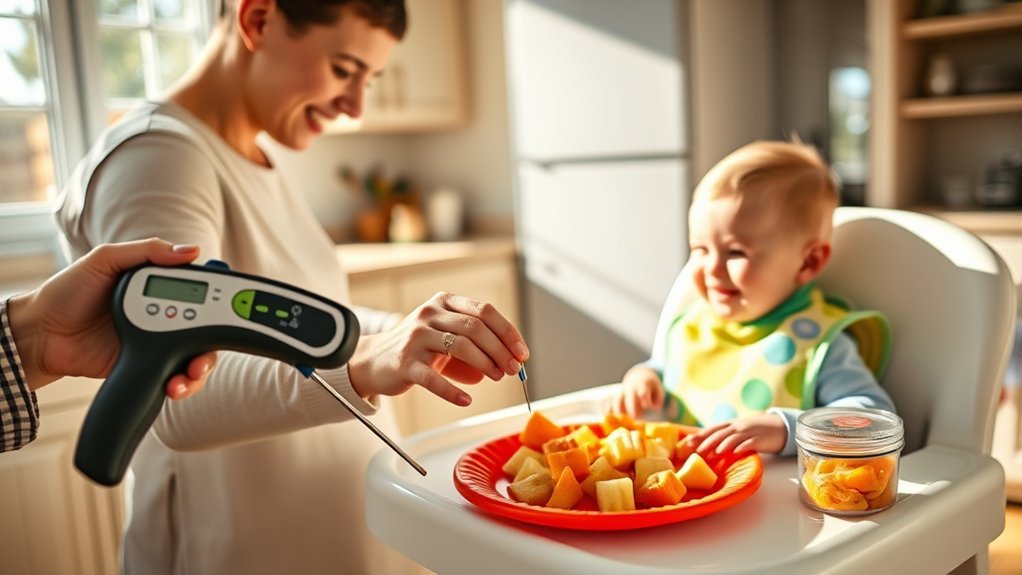
When you serve leftovers to your baby, it’s important to prioritize safety due to their developing immune systems. Babies are particularly vulnerable to foodborne illnesses, which affect around 800,000 children under age 10 annually in the U.S.
Harmful bacteria can thrive on leftover food left at room temperature for more than two hours, increasing the risk of illness. To protect their health, make sure leftovers are stored in the refrigerator and consumed within 1-2 days.
Harmful bacteria can grow on leftovers left out too long, so store them properly and consume within 1-2 days for safety.
Proper reheating to a safe temperature of 165°F is vital for killing any bacteria that may have developed. Additionally, avoid reheating baby food multiple times, as this compromises both safety and nutrition.
Prioritizing these practices guarantees your baby receives safe, nutritious meals.
Understanding Safe Reheating Temperatures for Baby Food
Reheating baby food properly is vital to guarantee it’s safe for your little one. Aim for a safe reheating temperature of 165°F (73.9°C) to effectively kill harmful bacteria that can lead to foodborne illness.
Use a food thermometer to accurately check the temperature before serving. After reheating, stir the food well to ensure even heating and avoid any hot spots that could burn your baby’s mouth.
Remember, it’s important not to reheat baby food more than once, as this can compromise both safety and quality. Discard any uneaten reheated baby food to prevent bacterial growth.
Step-by-Step Guide to Reheating Leftovers
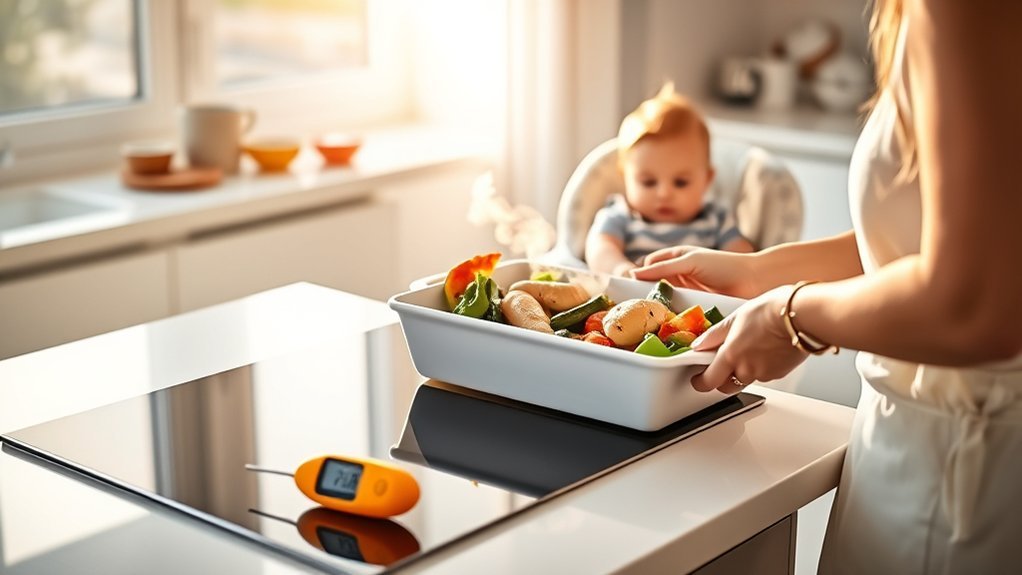
To guarantee your baby’s leftovers are safe and tasty, follow a simple step-by-step guide for reheating.
First, place the baby food in a safe container suitable for microwave or stovetop use. Heat the food to a safe temperature of at least 165°F to eliminate harmful bacteria.
Stir the food well after reheating to make sure even distribution and prevent hot spots that could burn your baby’s mouth. Remember, never reheat baby food more than once; discard any uneaten portions to maintain quality and safety.
Finally, always check the temperature before serving, making certain it’s lukewarm and safe for your baby to eat.
Tips for Preventing Hot Spots When Reheating Baby Food
To prevent hot spots when reheating baby food, transfer the food to a dish for more even heating.
Heat in short intervals of about 15 seconds, stirring thoroughly after each one to guarantee a consistent temperature.
Always test the food’s temperature before serving to make sure it’s safely lukewarm for your baby.
Even Heating Techniques
When it comes to heating baby food, guaranteeing even temperatures is essential for your little one’s safety. To achieve this, follow these microwave safety tips:
| Technique | Description | Purpose |
|---|---|---|
| Transfer to Dish | Always use a microwave-safe dish | Guarantees even heating |
| Short Intervals | Heat in 15-second bursts | Reduces hot spots |
| Stir Thoroughly | Mix well after each interval | Promotes uniform temperature |
| Let Sit | Allow food to rest for 30 seconds | Balances heat throughout |
Using a food thermometer, check that the baby food reaches at least 165°F before serving. Remember, only reheat what your baby can eat in one sitting to maintain quality and safety.
Stirring and Testing Temperature
Ensuring your baby’s food is heated evenly is essential for their safety, especially when reheating in the microwave.
Start by transferring the food to a dish, as jarred containers often heat unevenly. Use proper stirring techniques after microwaving to break up any hot spots that might burn your baby’s mouth.
After heating, let the food stand for at least 30 seconds. This helps achieve an even temperature throughout.
Always perform temperature checks with a food thermometer, ensuring the food reaches at least 165°F to eliminate harmful bacteria.
Finally, taste-test the food yourself to confirm it’s lukewarm. By following these steps, you’ll provide a safe and comfortable eating experience for your little one.
Serving Leftovers Safely to Your Baby
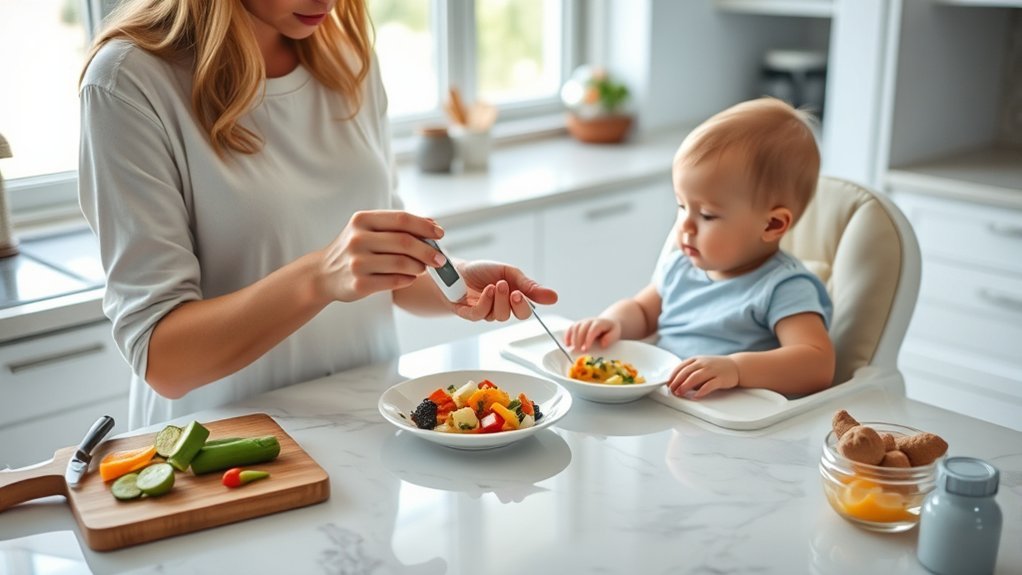
Serving leftovers to your baby can be safe and convenient if you follow essential guidelines. Here’s a quick reference table for handling leftover baby food:
| Action | Guidelines |
|---|---|
| Refrigerate | Store baby food within 2 hours of serving. |
| Reheat | Heat to 165°F and stir well to avoid hot spots. |
| Discard | Toss uneaten reheated food; don’t reheat twice. |
| Storage | Keep in airtight containers; use within 1-2 days. |
Get the Lowdown on Food Safety for Leftovers
To keep your baby’s leftovers safe, you need to focus on proper storage techniques and safe reheating methods.
Always monitor expiration dates to guarantee food quality and safety.
Proper Storage Techniques
When you store leftovers properly, you greatly reduce the risk of spoilage and keep your baby’s food safe. Use airtight containers to maintain freshness, and aim to refrigerate leftovers within 2 hours of cooking.
Label each container with the preparation date to track how long it’s been stored, ensuring you consume it within 1-2 days for ideal safety. For longer storage, focus on freezer organization by using freezer-safe containers or bags.
Portion leftovers into small servings, so you can easily thaw what you need without wasting food. Remember, always thaw frozen leftovers in the refrigerator or a water bath, never at room temperature, to prevent harmful bacteria from growing.
Keeping these techniques in mind will empower you to serve safe, healthy meals.
Safe Reheating Methods
Reheating leftovers safely is essential for keeping your baby’s meals healthy and free from harmful bacteria. Heat baby food to at least 165°F to eliminate any harmful pathogens.
You can use microwave safety measures, but remember to stir well after reheating to avoid hot spots that could cause burns. Stovetop reheating is another excellent option, ensuring even heat distribution.
It’s vital to avoid partial reheating, as food can linger in the danger zone (8°C to 63°C), allowing bacteria to thrive. Don’t reheat baby food multiple times; heat it once and discard any uneaten portions.
Finally, always let the food cool down to a safe temperature before serving to your little one to prevent scalding.
Monitoring Expiration Dates
Keeping an eye on expiration dates is essential for ensuring your baby’s food remains safe and nutritious. Start with expiration tracking on baby food and formula; always check ‘Use By’ dates, as items past this date can be dangerous for infants.
‘Best Before’ dates focus on quality, so assess visually and olfactorily for spoilage signs before using. Opened jars of baby food should be refrigerated and consumed within 1-2 days.
For homemade baby food, date labeling is vital; use it within 3 days when refrigerated or up to 3 months when frozen. Regularly inspect stored food for any unusual odors or colors.
Signs of Spoiled Baby Food to Watch For
To guarantee your baby’s safety, it’s crucial to recognize the signs of spoiled baby food. Start with a visual inspection; check the food appearance for any changes in color or texture, as spoiled food may look darker or have an unusual consistency.
Next, perform odor checks—if you notice sour or rancid smells, it’s a clear sign that the food is no longer safe.
If you detect sour or rancid odors, it’s a strong indication that the baby food is unsafe for consumption.
Also, examine the packaging for any bulging or swelling, which indicates bacterial growth. Look out for mold or unusual growth on the surface; this is a definite no-go.
Finally, always check the “use by” or “best before” dates; consuming food past these dates can elevate the risk of spoilage and foodborne illness.
Best Practices for Preventing Foodborne Illness From Baby Food
After identifying signs of spoiled baby food, it’s important to focus on best practices that can help prevent foodborne illness.
By following these steps, you can guarantee baby food hygiene and effective bacteria prevention:
- Always wash your hands and utensils with hot, soapy water before preparing baby food to avoid transferring harmful bacteria.
- Store leftover baby food in airtight containers in the refrigerator, using them within 1-2 days to maintain safety and nutritional value.
- Never leave baby food at room temperature for more than 2 hours, as harmful bacteria can thrive, increasing the risk of foodborne illness.
When to Consult a Doctor About Food Safety Concerns?
It’s essential to recognize severe symptoms in your baby that could indicate a foodborne illness.
If you notice symptoms like blood in diarrhea, prolonged high fever, or persistent vomiting, don’t hesitate to consult a doctor immediately.
Timely medical advice can make a significant difference, especially if symptoms persist or worsen.
Recognizing Severe Symptoms
How can you tell when your baby’s symptoms warrant a trip to the doctor? Recognizing severe symptoms is essential for your baby’s well-being.
Here are three key signs to watch for:
- Blood in Diarrhea: If you notice any blood in your baby’s diarrhea symptoms, seek medical help immediately, as this may indicate a serious foodborne illness.
- Prolonged High Fever: A temperature over 100.4°F lasting for more than a few hours requires a consultation to rule out infections.
- Allergy Reactions: If new foods cause swelling, difficulty breathing, or hives, consult a healthcare provider right away to address potential allergy reactions.
Being vigilant about these symptoms guarantees your baby stays safe and healthy!
Timing of Symptoms
Monitoring your baby’s health closely after meals is vital, especially when it comes to food safety concerns. Symptoms of foodborne illness can appear within hours to days, so stay vigilant. Recognizing the symptom timeline and symptom variations is important for timely intervention. Consult a doctor immediately if you notice blood in diarrhea, prolonged high fever, or persistent vomiting.
Here’s a quick reference table to guide you:
| Symptom | When to Consult Doctor |
|---|---|
| Blood in diarrhea | Immediately |
| Prolonged high fever | Immediately |
| Signs of dehydration | Immediately |
If symptoms persist beyond 24 hours or worsen, seek medical evaluation to guarantee your baby’s well-being.
When Symptoms Persist
When your baby shows persistent symptoms of foodborne illness, such as ongoing vomiting or diarrhea, don’t hesitate to seek medical advice. Infants are particularly vulnerable, so prompt healthcare consultation is essential for effective symptom management.
Here are three critical signs that require immediate attention:
- Blood in diarrhea: This can indicate a serious issue that needs urgent care.
- Prolonged high fever: If your baby’s fever lasts more than 24 hours, consult a doctor.
- Signs of dehydration: Look for reduced fluid intake or lethargy, and contact a healthcare provider without delay.
Being vigilant and proactive about food safety can help protect your little one’s health.
Storing Baby Food Leftovers Right After Meals
To keep your baby food safe after meals, it’s crucial to store any leftovers in the refrigerator within two hours. This prevents harmful bacteria growth that can occur at room temperature. Use airtight containers for ideal baby food storage, helping to maintain freshness and prevent spoilage. Remember to label each container with the preparation date to track freshness, as homemade baby food should ideally be consumed within 1-2 days.
| Storage Tips | Duration | Container Type |
|---|---|---|
| Refrigerate leftovers | Within 2 hours | Airtight containers |
| Consume homemade food | 1-2 days | Glass or plastic |
| Avoid room temp | No extended time | Sealed tightly |
Frequently Asked Questions
Can I Freeze Leftover Baby Food for Later Use?
Yes, you can freeze leftover baby food for later use. Follow freezing tips like using airtight containers and label them with dates. Stick to storage guidelines to guarantee freshness and safety when serving it later.
How Long Can Baby Food Leftovers Be Stored in the Fridge?
You can store baby food leftovers in the refrigerator for up to 48 hours. Follow baby food storage guidelines to guarantee freshness and safety, keeping your little one healthy and happy with every meal.
Is It Safe to Mix Different Types of Leftovers?
Mixing different types of leftovers can be risky for food safety. If you’re combining leftover combinations, make certain they’re from the same food group, properly stored, and heated thoroughly to avoid potential hazards for your baby.
What Should I Do if My Baby Refuses Reheated Food?
If your baby refuses reheated food, don’t panic! Explore creative meal ideas that cater to their baby food preferences. Mix textures, flavors, or even shapes to entice their taste buds and spark their interest.
Can I Use Leftovers Beyond Their Original Expiration Date?
You shouldn’t use leftovers beyond their original expiration date. For leftover safety, always check for signs of spoilage. Follow expiration tips to guarantee your baby’s meals are safe and nutritious, promoting their health and well-being.
Conclusion
So, you’ve mastered the art of reheating baby food leftovers, but remember, it’s not just about warming them up—it’s about doing it safely. Ironically, while you want your little one to enjoy every bite, you also have to play food detective to avoid any nasty surprises. By following these steps and keeping an eye out for spoilage, you can make leftovers a safe and tasty adventure for your baby. Because who knew feeding them could be such a high-stakes game?