Your coffee maker should brew at temperatures between 195°F and 205°F. This range balances flavor extraction and aroma, preventing bitterness from over-extraction or sourness from under-extraction. Keeping a consistent temperature is essential for achieving the best coffee quality. You might need to adjust the temperature slightly depending on your brewing method. For more insights on better brewing practices and tips to enhance your coffee experience, it’s worth exploring further.
Key Takeaways
- The optimal brewing temperature for coffee is between 195°F and 205°F for balanced flavor extraction.
- Brewing below 195°F can result in weak, sour coffee, while above 205°F may cause bitterness.
- Consistency in maintaining the brewing temperature is crucial for uniform results.
- Different brewing methods may require temperature adjustments; for example, French press benefits from around 180°F.
- Using a thermometer and pre-warming equipment can help achieve the ideal brewing temperature.
Why Brewing Temperature Matters for Your Coffee
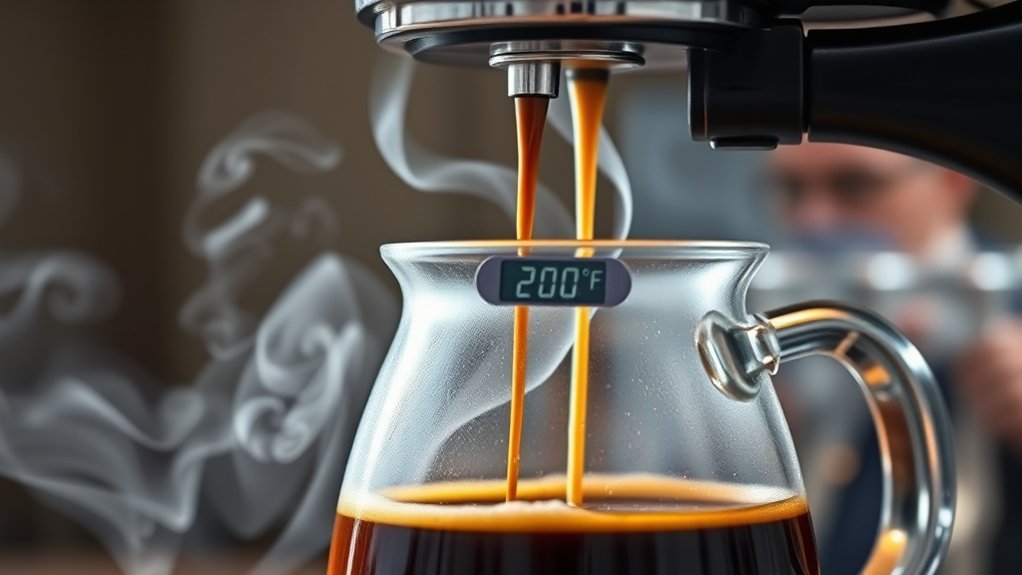
Brewing temperature plays an essential role in the extraction process, directly impacting the flavor and aroma of your coffee. When you brew within the ideal range of 195°F to 205°F, you achieve a balanced extraction of flavors, acids, and oils, yielding a rich cup.
If the temperature exceeds 205°F, you risk over-extraction, resulting in harsh, bitter notes. Conversely, brewing below 195°F leads to under-extraction, producing weak and sour flavors.
Different coffee beans and roast levels may require small adjustments to this temperature range to maintain flavor balance. By employing precise brewing techniques and using equipment like temperature-controlled kettles, you guarantee consistency and enhance the overall quality of your coffee experience.
How to Determine the Ideal Brewing Temperature for Your Coffee?
How can you pinpoint the ideal brewing temperature for your coffee?
Start by understanding that the best range is between 195°F and 205°F.
Using precise brewing equipment, like electric gooseneck kettles or thermometers, allows you to maintain this temperature throughout the brewing process.
Different coffee types also play a role; for instance, lighter roasts tend to benefit from higher temperatures, while darker roasts require lower temperatures to prevent bitterness.
Different coffee roasts require tailored brewing temperatures; lighter roasts thrive at higher temps, while darker ones need cooler settings to avoid bitterness.
Experimenting within this range can help you find the perfect balance for your preferred coffee.
Remember, brewing at temperatures above 205°F may lead to over-extraction, creating harsh flavors, while anything below 195°F might result in weak, sour brews.
Adjust accordingly for the best flavor experience.
How Temperature Affects Flavor Extraction
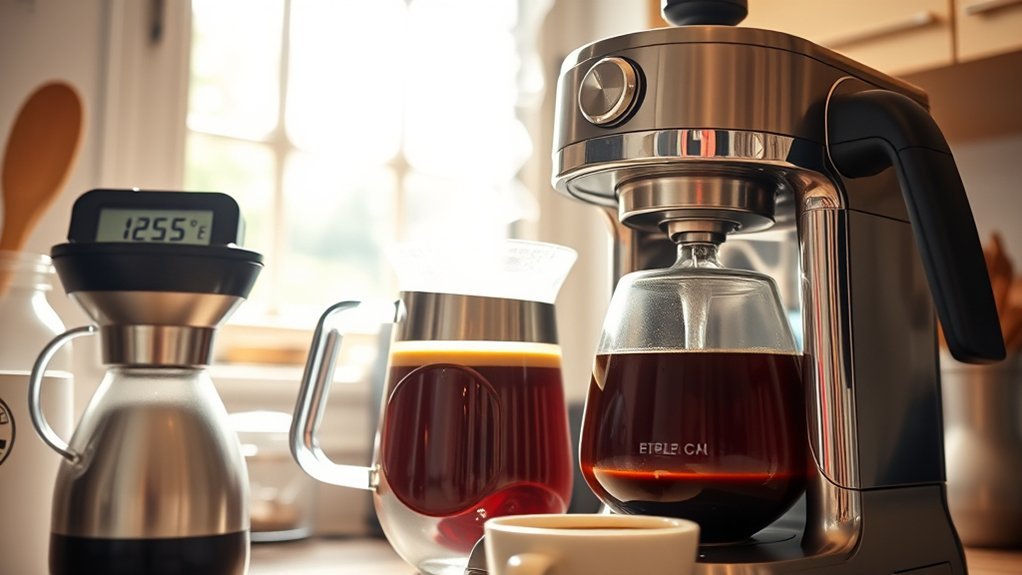
While many factors contribute to the flavor profile of your coffee, temperature plays a pivotal role in the extraction process. The ideal brewing temperature of 195°F to 205°F allows for a balanced extraction of flavors, acids, and oils. Deviating from this range disrupts the brewing science; temperatures above can lead to bitterness, while those below yield sourness.
| Temperature Range | Flavor Outcome |
|---|---|
| 195°F – 205°F | Balanced, complex brew |
| Above 205°F | Harsh, bitter taste |
| Below 195°F | Weak, sour flavor |
Understanding how temperature influences solubility will help you achieve that perfect flavor balance, enhancing your coffee experience. Consistency in temperature is key for ideal results.
Tips for Maintaining Consistent Brewing Temperature
To achieve a consistently great cup of coffee, it’s essential to focus on maintaining the right brewing temperature throughout the process.
Start by pre-warming your cups or carafe with hot water; this helps retain heat during brewing. Use a thermometer to measure water temperature, ensuring it stays within the ideal range of 195°F to 205°F for effective extraction.
Consider investing in electric gooseneck kettles or adjustable temperature kettles for precise temperature control. Before brewing, perform a water dump by running hot water through your coffee maker to stabilize its components.
Finally, regularly check your brewing equipment for temperature accuracy; many standard drip coffee makers may not reach optimal temperatures without certification from the Specialty Coffee Association of America (SCAA).
How Different Brewing Methods Affect Temperature
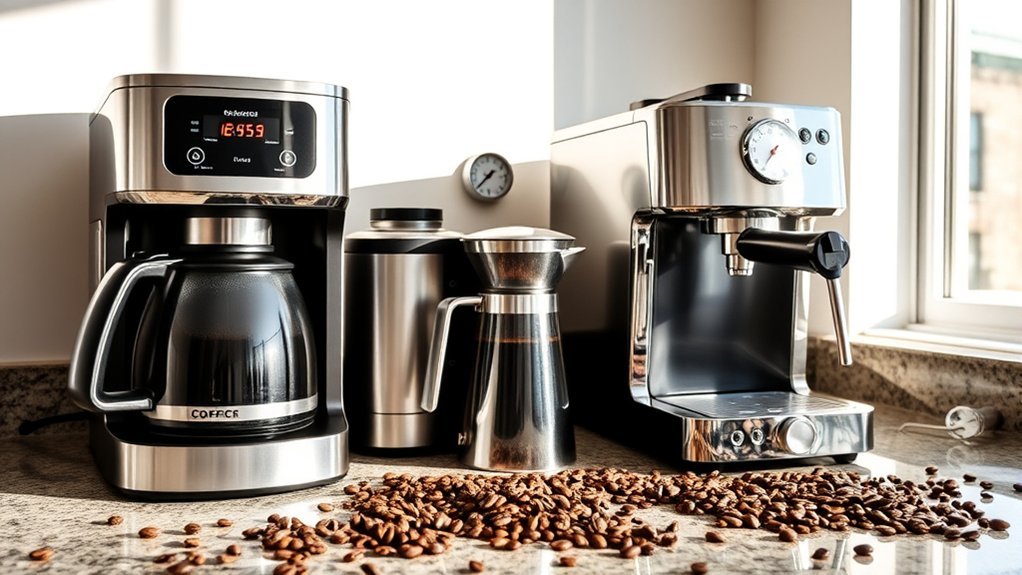
Different brewing methods greatly influence the temperature at which you should brew your coffee, directly impacting flavor extraction.
For instance, pour-over and Aeropress techniques thrive at higher temperatures around 200°F, while French press methods yield smoother profiles at 180°F.
Brewing Method Variations
When brewing coffee, the method you choose plays an essential role in determining the ideal water temperature for flavor extraction.
Different brewing equipment requires specific temperature calibration to achieve the best results:
- Pour-over and Aeropress: 195°F to 205°F for optimal flavor extraction.
- French press: Lower temperatures around 180°F enhance clarity and reduce bitterness.
- Espresso machines: Utilize 190°F to 200°F for quick extraction under pressure, critical for rich flavors.
- Cold brew: Requires extended steeping at room temperature or cooler for 12-24 hours, avoiding high temperatures.
Understanding these variations helps you adjust your brewing technique effectively, ensuring you extract the full potential of your coffee beans.
Ultimately, the right temperature aligns with your chosen method, enhancing your overall coffee experience.
Temperature Impact on Flavor
Although the brewing method you choose considerably influences the temperature at which you extract coffee, understanding how these temperatures affect flavor can enhance your coffee experience.
Each method showcases unique temperature nuances that shape flavor profiles. For instance, using the Aeropress at 175-180°F highlights floral notes while minimizing bitterness.
In contrast, French press brewing at 180°F guarantees smoother flavors, avoiding the harshness from over-extraction at higher temperatures.
Cold brew, steeped at lower temperatures, leans on time for extraction, resulting in a sweeter, less acidic cup.
Brewing above 205°F risks over-extraction, especially with lighter roasts, leading to undesirable bitterness.
Top Mistakes to Avoid in Brewing Temperatures
Understanding the critical role of brewing temperature is essential for achieving the perfect cup of coffee, as many common mistakes can sabotage your efforts.
Here are some key brewing mistakes to avoid:
- Brewing above 205°F leads to over-extraction, causing bitter flavors.
- Brewing below 195°F results in under-extraction, yielding weak and sour coffee.
- Relying on automatic drip coffee makers that often brew around 180°F compromises flavor quality.
- Neglecting heat loss during brewing; water temperature drops considerably upon contact with coffee grounds.
Adjust Your Coffee Maker for Optimal Brewing Temperature
Brewing coffee at the right temperature is pivotal to revealing its full flavor potential, and adjusting your coffee maker can make a significant difference.
To achieve ideal brewing, aim for temperatures between 195°F and 205°F. Unfortunately, many drip coffee makers only reach around 180°F, compromising flavor extraction.
You can improve results by pre-heating your water to at least 170°F and using a thermometer to monitor the water temperature at the brewing source.
If your brewing equipment allows for temperature calibration, like the US 601 model, take advantage of this feature to fine-tune your settings.
This way, you’ll enhance the quality of your coffee, ensuring that each cup showcases the rich flavors you enjoy.
How Additives Affect Your Coffee’s Brewing Temperature
When you add milk, cream, or sweeteners to your coffee, it can greatly dilute the flavor and lower the overall temperature of the beverage.
Understanding additive interactions is key to maintaining flavor balance. To counteract this dilution, it’s essential to brew at the higher end of the ideal temperature range (195°F to 205°F). This helps extract the rich flavors and compounds that might be masked by your additives.
Consider these points:
- Higher brewing temperatures enhance flavor extraction.
- Additives can change how you perceive taste and aroma.
- Adjusting temperature compensates for dilution.
- Maintaining ideal brewing temperature improves overall enjoyment.
Frequently Asked Questions
Can Brewing Temperature Vary by Coffee Bean Type?
Yes, brewing temperature can vary by coffee bean type. Beans from different origins and varying roast levels release flavors best at specific temperatures, so adjusting your brew guarantees you maximize the coffee’s unique characteristics and richness.
What Is the Best Temperature for Cold Brew Coffee?
For cold brew coffee, you’ll want to steep at room temperature or in the fridge, ideally between 60°F and 70°F. This ideal steeping range enhances flavor extraction through various cold brew methods, yielding a smooth, balanced beverage.
Does Altitude Affect Brewing Temperature Preferences?
Yes, altitude affects brewing temperature preferences. Higher altitudes require temperature adjustments for ideal brewing consistency. You’ll need to experiment with different temperatures to find that perfect balance, ensuring your coffee maintains flavor despite altitude variations.
How Can I Check My Coffee Maker’s Brewing Temperature?
To check your coffee maker’s brewing temperature, use a digital thermometer. Brew a pot and measure the water just after it exits the brewing equipment. Ideally, it should hover around 195°F to 205°F for best flavor extraction.
Are There Health Risks With Brewing at High Temperatures?
Brewing coffee at excessively high temperatures can pose health concerns, like potential burns or the extraction of harmful compounds. Ensuring brewing safety means keeping temperatures within recommended limits to enjoy your coffee without risking your well-being.
Conclusion
To sum up, brewing coffee at the right temperature is like tuning a fine instrument; precision matters for achieving the perfect harmony of flavors. Aim for a brewing temperature between 195°F and 205°F to guarantee ideal extraction. By understanding how temperature influences taste and making small adjustments, you can elevate your coffee experience. Avoid common mistakes and keep your brewing consistent, and you’ll enjoy a cup that’s rich, balanced, and truly satisfying every time.